While my training typically demands precise weighing of flour and butter for complex lamination, there is undeniable genius in the ‘dump cake’ method. It relies on the physics of absorption, where the moisture from the fruit filling hydrates the dry mix during the bake, creating a texture remarkably similar to a cobbler with a crisp, buttery crust.

This recipe strips dessert down to its structural essentials: fruit, starch, and fat. By strictly controlling the layering process, we achieve a complex mouthfeel—jammy and soft below, shattering and crisp above—using only three precise components.
Precision in Simplicity
Do not mistake simplicity for a lack of sophistication. This dessert creates a structural marvel where the steam from the fruit interacts with the cake mix to form a tender crumb, while the butter ensures the top layer undergoes the Maillard reaction for a golden, crisp finish. It is an exercise in textural contrast, achieved with minimal intervention and maximum efficiency.
Print
3 Ingredient Dump Cake
- Total Time: 1 hour
- Yield: 12 servings
- Diet: Vegetarian
Description
This effortless three-ingredient dessert utilizes the science of steam and fat absorption to transform a simple cake mix into a crisp, buttery cobbler-style topping over a jammy fruit base. It is a masterclass in textural efficiency, delivering a sophisticated mouthfeel with minimal kitchen intervention.
Ingredients
- 42 oz fruit pie filling (such as cherry)
- 15.25 oz yellow cake mix
- 1 cup unsalted butter
Instructions
- Preheat your oven to 350°F (180°C) and grease a 9×13-inch baking pan.
- Pour the pie filling into the pan and use a spatula to spread it into a perfectly uniform layer.
- Sprinkle the dry cake mix evenly over the fruit layer, ensuring full coverage without stirring the two layers together.
- Distribute the butter over the top by either tiling thin slices of cold butter or drizzling melted butter across the surface to hydrate the flour.
- Bake for 45-50 minutes until the fruit is bubbling at the edges and the topping has achieved a deep golden brown color.
Notes
For the best structural results, resist the urge to peek at the cake too often, but do a quick check at the 25-minute mark to ensure no dry flour patches remain. If you see white spots, a quick drizzle of melted butter will help the crust hydrate and brown evenly. Serving this warm allows the fruit filling to maintain its ideal viscous texture against the crisp topping.
- Prep Time: 10 mins
- Cook Time: 50 mins
- Category: Dessert
- Method: Baking
- Cuisine: American
The Structural Components
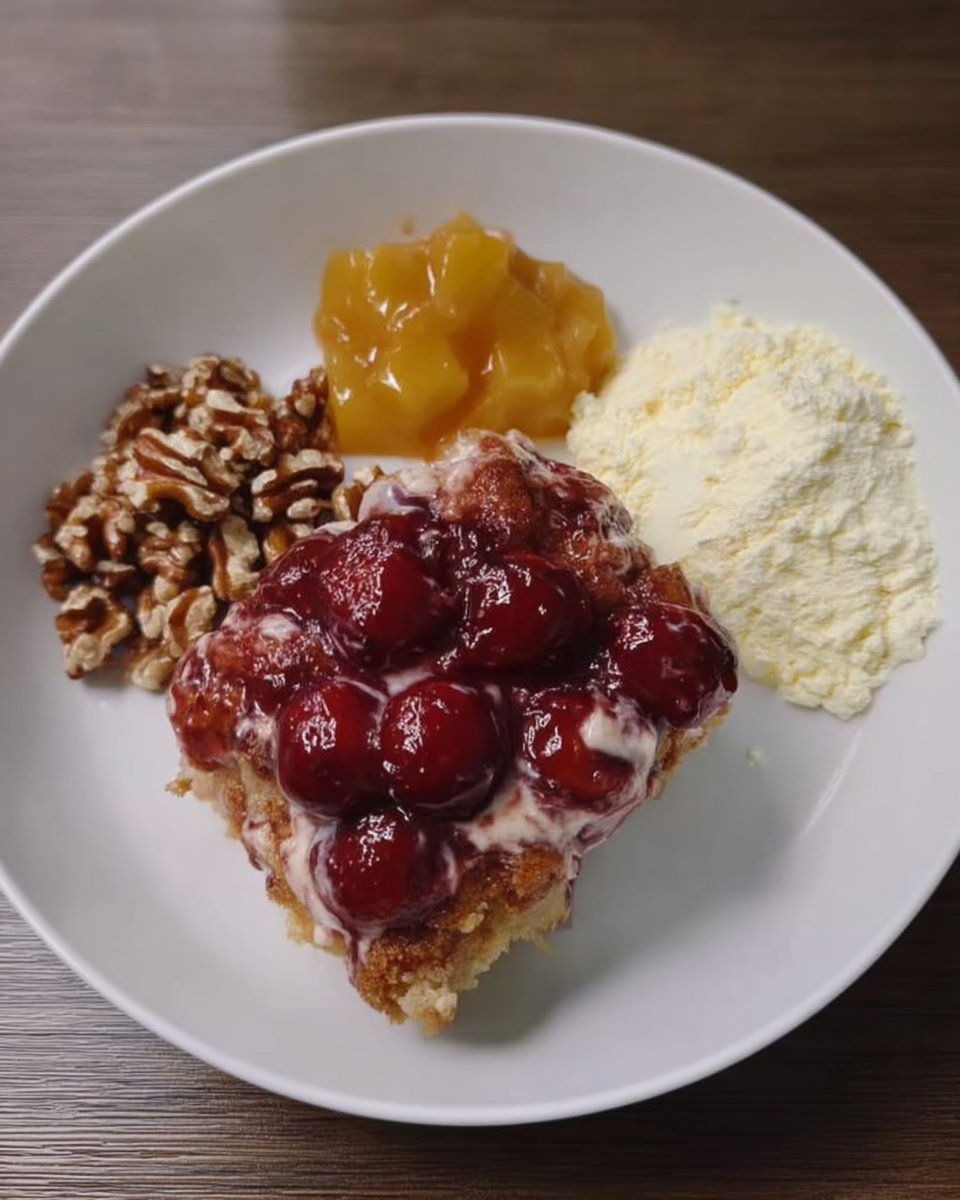
Precision begins with understanding your materials. For this recipe, we rely on three specific variables to control the outcome.
- Pie Filling (42 oz): This is your hydration source. I used cherry for its acidity to cut through the sugar, but the viscosity of the gel is crucial for steaming the topping from below.
- Yellow Cake Mix (15.25 oz): Think of this as your pre-blended dry ingredients. It contains the flour, sugar, and leavening agents necessary for the crust’s structure. White cake mix provides a tighter crumb, while yellow offers a richer, custard-like flavor profile.
- Unsalted Butter (1 Cup): The fat is the vehicle for crispness. It must be applied evenly to hydrate the flour proteins on the surface, preventing a powdery mouthfeel. We prefer unsalted to control the final flavor profile.
The Methodical Layering
Step 1: Preparation and Temperature
Preheat your oven to exactly 350°F (180°C). Accuracy here ensures the fruit heats quickly enough to generate steam before the butter melts completely. Grease a 9×13-inch baking pan to ensure clean removal and caramelized edges.
Step 2: The Base Layer
Pour the 42 ounces of pie filling into the prepared dish. Use an offset spatula to spread it into a perfectly even layer. Uniform thickness ensures consistent heat distribution and prevents hot spots where the fruit might burn before the topping sets.
Step 3: The Dry Application
Sprinkle the 15.25 ounces of yellow cake mix over the fruit. This is the critical moment: you must achieve complete coverage without agitating the fruit layer. Do not stir. Stirring destroys the structural integrity of the layers, resulting in a dense, gummy cake rather than a crisp-topped cobbler.
Step 4: Fat Distribution
You have two options for texture control. For a flaky, pastry-like top, cut the cold butter into paper-thin slices and tile them over the surface. For a more uniform, cookie-like crust, melt the butter and drizzle it slowly. Ensure you cover as much surface area as possible to avoid dry flour pockets.
Step 5: The Bake
Bake for 45-50 minutes. We are looking for visual cues: the fruit filling should be bubbling aggressively around the edges (indicating the center has reached temperature), and the topping should be a deep golden brown. If you spot dry white patches halfway through, a small drizzle of extra melted butter will correct the hydration issue.
Jordan’s Structural Secrets
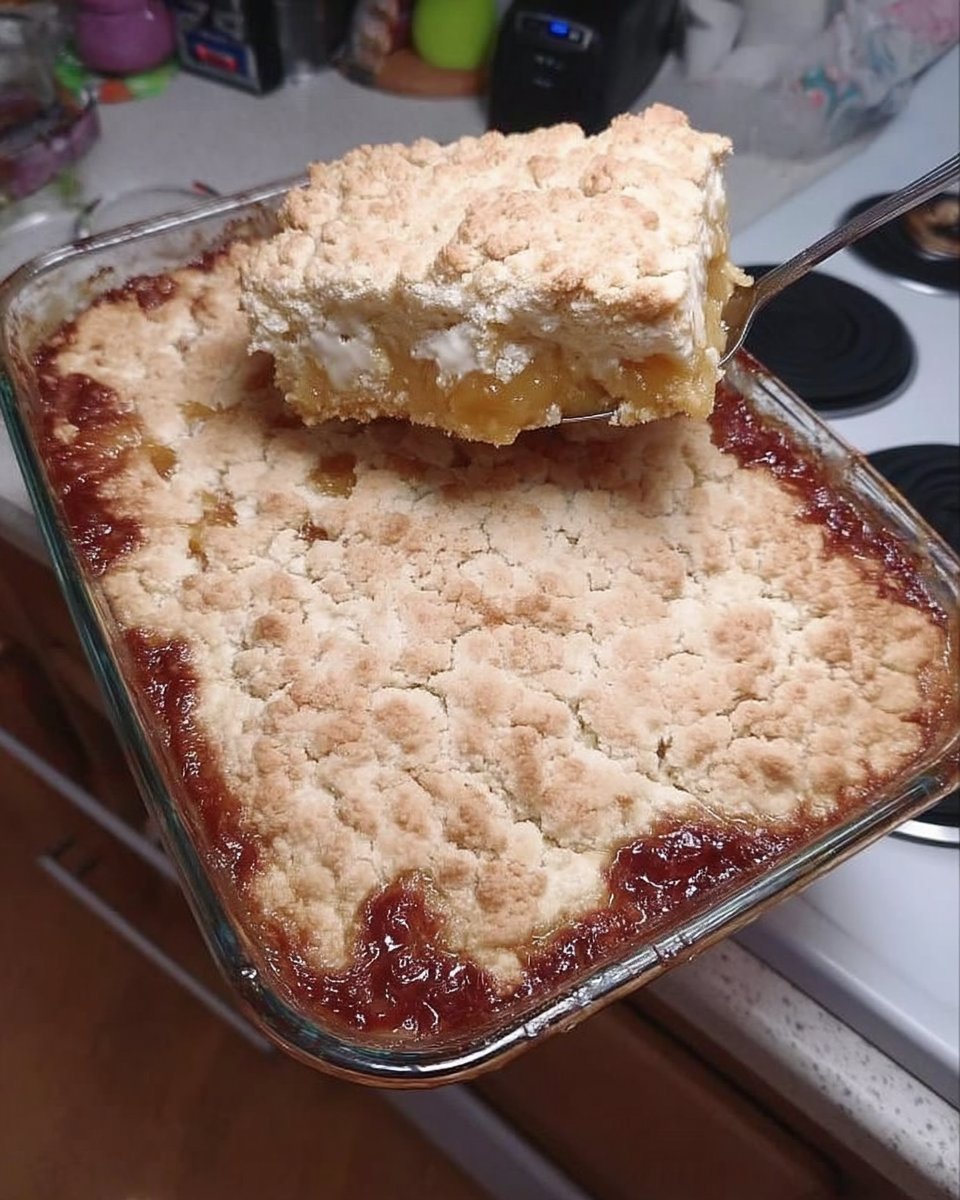
- Hydration Checks: The enemy of this dessert is dry flour. If your butter distribution leaves gaps, the flour will not hydrate properly. Check the oven at the 25-minute mark. If you see white powder, spot-treat it with a teaspoon of melted butter to ensure the crust forms correctly.
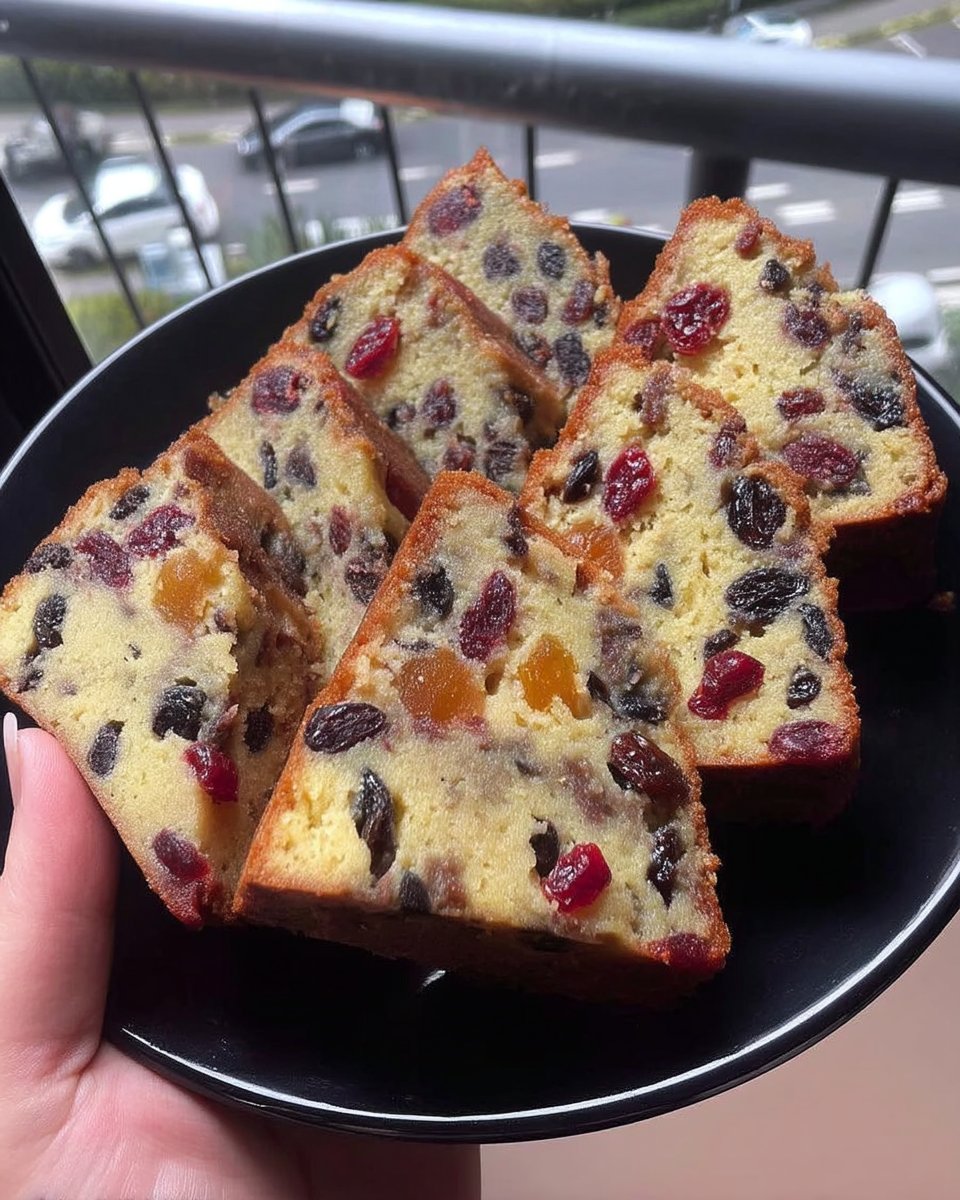
- Texture Management: If you prefer a denser, richer crumb similar to our fruit cake, choose a cake mix with higher fat content or “pudding in the mix.” This changes the absorption rate slightly, yielding a softer bite.
- Resting Period: Allow the cake to rest for 15 minutes after baking. This allows the fruit pectins to set slightly, ensuring a cleaner serve and preventing the filling from running like soup.
Textural Adjustments
- Crunch Factor: To introduce a shattering crunch similar to a streusel, add chopped pecans or walnuts on top of the butter layer before baking. The nut oils will aid in browning.
- Spice Infusion: Whisk cinnamon or nutmeg into the dry cake mix before sprinkling. This distributes the spice evenly without clumping in the fruit.
- Fruit Pairings: You are not limited to cherry. Apple filling pairs beautifully with spice cake mix. For a unique twist on hydration and flavor, look at how we balance moisture in our succulent fruit fusion for inspiration on combining varying fruit viscosities.
Presentation and Temperature
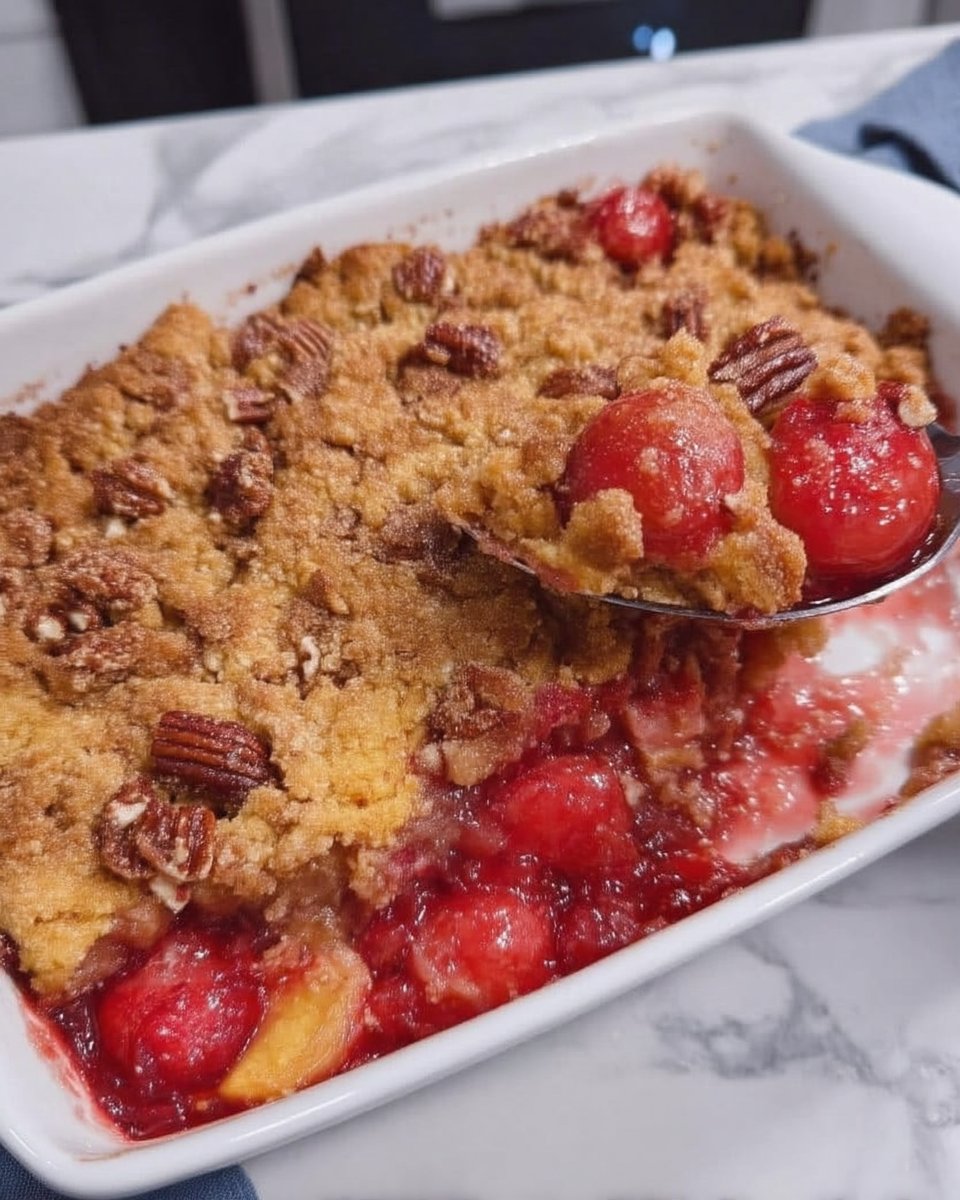
Serve this dessert warm. The structural contrast is best when the fruit is viscous and warm, playing against the crisp crust. A scoop of vanilla bean ice cream provides a necessary temperature shock and creamy mouthfeel. For a more refined presentation, a dollop of unsweetened whipped cream balances the sugar content, much like we do with the creamy elements in our raspberry white chocolate cake.
Mastering the Simple Bake
This 3 Ingredient Dump Cake proves that technical success is about understanding how ingredients interact, even when the method is simple. By respecting the layers and controlling the fat distribution, you achieve a dessert with genuine structural integrity. It reminds me of the reliable methods found in classic collections like Vintage Kitchen Notes, where efficiency meets excellence. For another vibrant, technically interesting dessert, try our lemon rainbow cake next.
Share your results with us on Facebook, Instagram, or Pinterest.