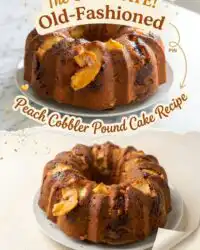
Emulsion determines the structural integrity of this Old-Fashioned Peach Cobbler Pound Cake Recipe, ensuring the heavy fruit remains suspended within a velvety, dense crumb.

Mastering the Old-Fashioned Peach Cobbler Pound Cake Recipe requires a methodical approach to temperature and aeration. Unlike lighter sponges, this Southern staple relies on a precise balance of fats and sugars to achieve its characteristic tight grain and moist interior. By integrating the spiced fruit of a traditional cobbler directly into the structural framework of a classic pound cake, we create a dessert that provides both a crisp exterior and a lush, fruit-studded centre.
The inclusion of cream cheese and sour cream is a calculated decision to lower the pH of the batter, which softens the gluten and produces a remarkably tender mouthfeel. This specific Old-Fashioned Peach Cobbler Pound Cake Recipe is designed to hold its shape under the weight of the peaches without becoming gummy or dense. Success lies in the patience of the creaming stage, where air is trapped in the fat to provide the primary lift before the heat of the oven takes over.
Working with canned fruit allows for a consistent hydration level, which is critical for maintaining the specific gravity of the batter. While fresh peaches vary in moisture and acidity, the processed version offers a reliable benchmark for home bakers following this Old-Fashioned Peach Cobbler Pound Cake Recipe. This ensures that every slice carries the nostalgic warmth of a cinnamon-spiced cobbler while maintaining the architectural elegance of a formal Bundt cake.
What Makes the Texture Right with this Old-Fashioned Peach Cobbler Pound Cake Recipe
Prep: 25 min · Serves: 4 · Difficulty: Medium
- Dense crumb provides superior structural integrity.
- Cinnamon sugar creates a crisp exterior.
- Cream cheese ensures a velvety mouthfeel.
- Suspended peaches offer consistent fruit distribution.
- Sour cream adds necessary moisture balance.
Structure is what makes the melt possible, and this old fashioned peach cobbler hybrid proves it with every slice.
Get The Full Cake Recipe
Print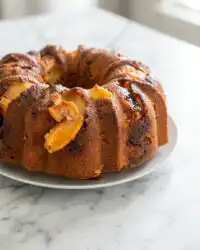
Old-Fashioned Peach Cobbler Pound Cake Recipe
- Total Time: 2 hours 55 mins
- Yield: 12 servings
- Diet: Vegetarian
Description
Experience the perfect marriage of a dense, buttery pound cake and spiced peach cobbler. This recipe uses precise aeration and temperature control to ensure a tender crumb that supports juicy fruit throughout.
Ingredients
- 1 cup unsalted butter, softened
- 8 oz cream cheese, softened
- 2 cups granulated sugar
- 1/2 cup sour cream
- 1 tsp vanilla extract
- 4 large eggs, room temperature
- 3 cups cake flour
- 1 tsp baking powder
- 1/2 tsp salt
- 1 can (15 oz) peach slices, drained
- 2 tbsp melted butter
- 1/4 cup brown sugar
- 1 tsp ground cinnamon
Instructions
- Preheat and prepare. Preheat oven to 325°F and thoroughly coat a 12-cup Bundt pan with nonstick spray.
- Prepare the fruit. Drain peaches, reserve some for bottom arrangement, and dice the rest into bite-sized cubes.
- Create spiced crust. Combine melted butter, brown sugar, and cinnamon in a bowl and spread over the peach wedges in the pan.
- Cream butter base. Beat butter and cream cheese on high speed for three minutes until pale and light.
- Incorporate remaining base. Add granulated sugar, sour cream, and vanilla, beating until the batter forms a thick, smooth ribbon.
- Emulsify eggs. Add eggs one at a time, mixing thoroughly after each addition to prevent curdling.
- Fold in fruit. Gently fold the diced peaches into the creamed mixture by hand to distribute evenly.
- Add dry ingredients. Sift in cake flour, baking powder, and salt, mixing on the lowest speed until just combined.
- Bake the cake. Tap the pan on the counter to remove bubbles and bake for 80 to 90 minutes until the internal temperature reaches 210°F.
- Cool and invert. Let the cake rest in the pan for 60 minutes before inverting onto a wire rack to cool completely.
Notes
- Ensure all dairy and egg ingredients are at true room temperature to guarantee a stable emulsion.
- Use a digital kitchen scale for measuring flour to avoid packing and ensure the cake remains moist rather than dense.
- If the top begins browning too quickly, loosely tent the Bundt pan with aluminum foil for the remainder of the bake.
- Allow the cake to rest fully in the pan for one hour to prevent it from breaking during the inversion process.
- Use a serrated knife for slicing to maintain the structural integrity of the delicate peach-studded crumb.
- Prep Time: 25 mins
- Cook Time: 90 mins
- Category: Dessert
- Method: Baking
- Cuisine: Southern
The Working Components
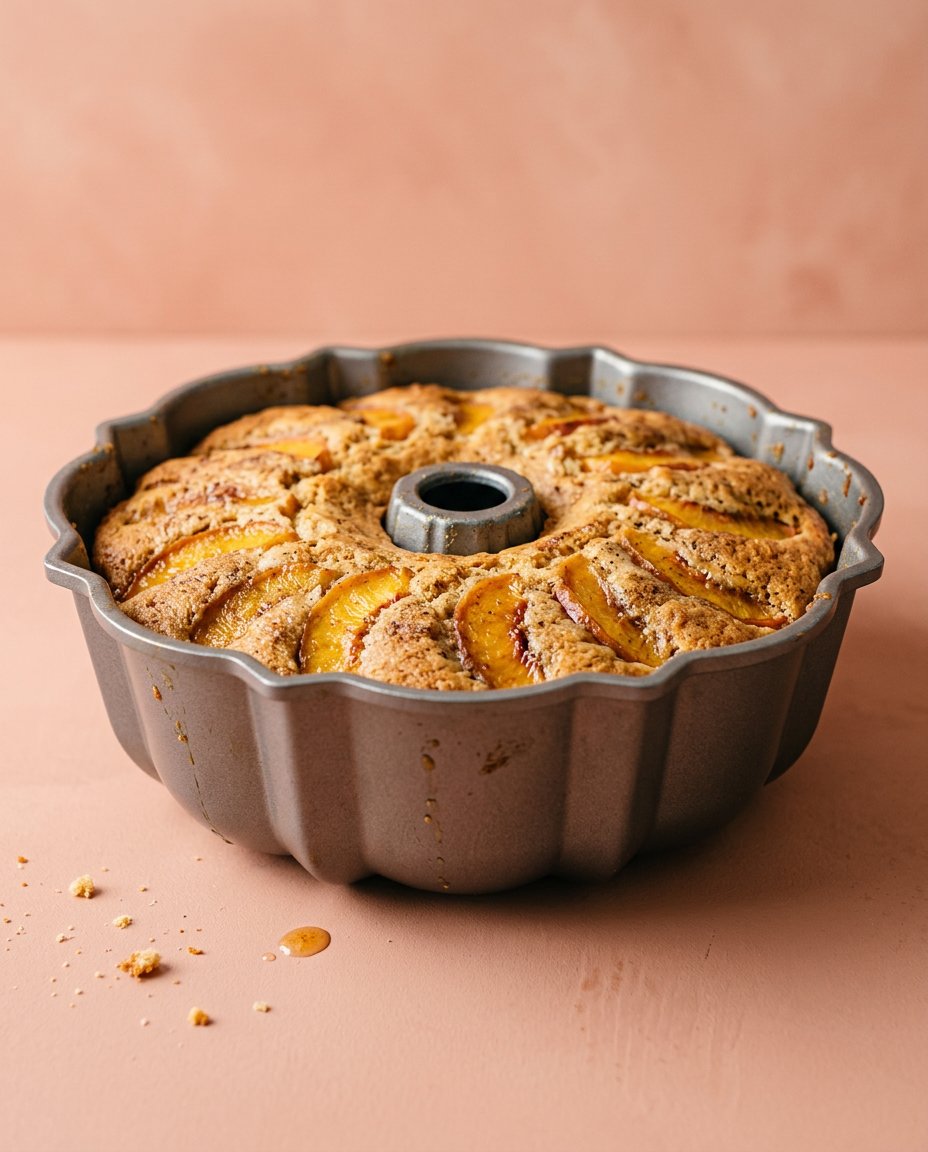
Achieving the correct density requires ingredients at specific temperatures. Each component in this Old-Fashioned Peach Cobbler Pound Cake Recipe serves a technical purpose, from the protein content of the cake flour to the emulsifying power of the room-temperature eggs.
- Cake Flour: This low-protein flour is essential for a tender, fine-grained crumb that does not become tough during the mixing process.
- Cream Cheese: High fat and acidity levels contribute to a stable emulsion and a remarkably soft interior texture.
- Granulated Sugar: Beyond sweetness, sugar crystals are responsible for cutting air pockets into the butter during the creaming stage.
- Canned Peaches: Chosen for their consistent moisture levels, these provide the spiced fruit profile without compromising the batter’s hydration balance.
- Eggs: At room temperature, eggs emulsify more efficiently with the fats, creating a stronger structural framework for the cake.
| Ingredient | Why It Matters |
|---|---|
| Cake Flour | Reduces gluten development for a soft texture |
| Sour Cream | Adds acidity to tenderize the cake crumb |
| Brown Sugar | Facilitates the Maillard reaction for a rich crust |
| Cinnamon | Provides the nostalgic aromatic profile of cobbler |
From Bench to Bake
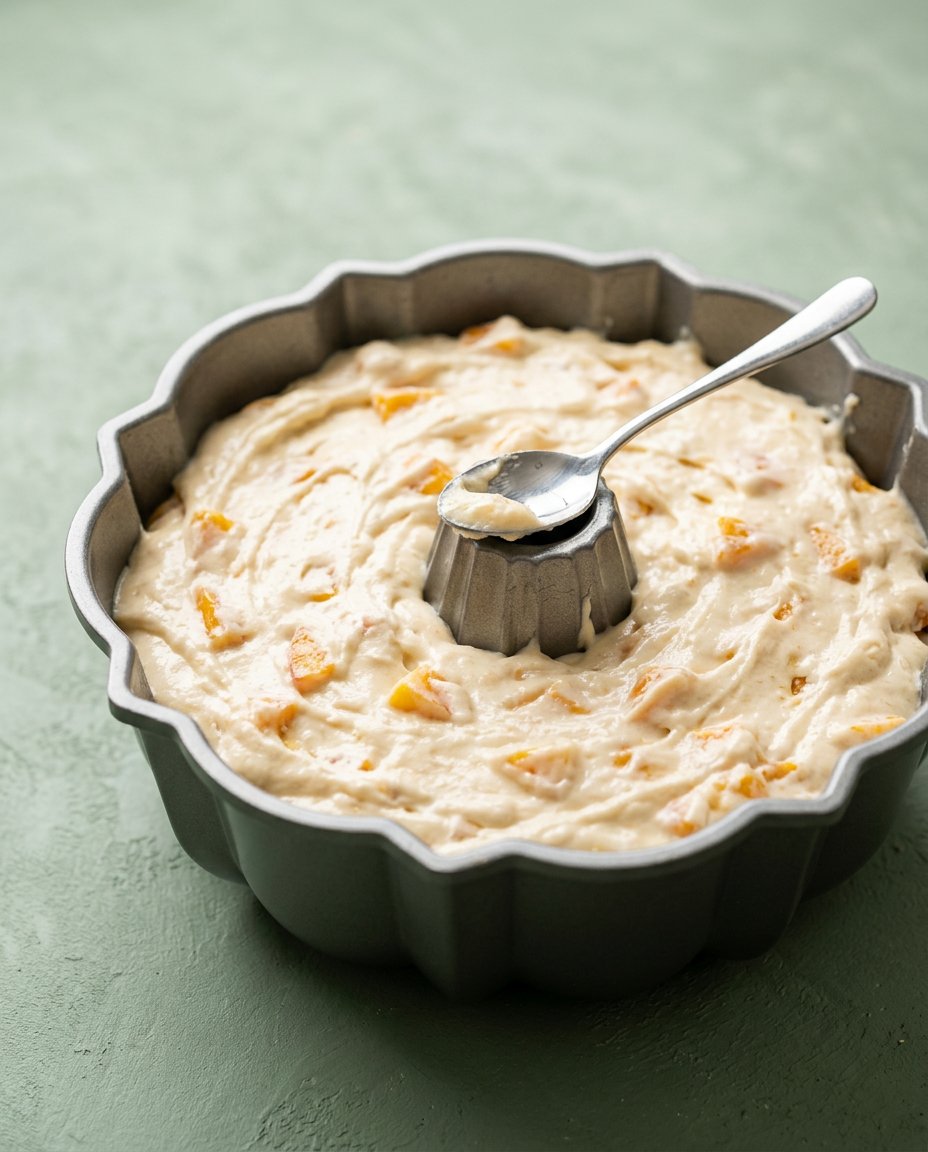
Step 1: Pan Preparation and Oven Calibration
Begin by preheating your oven to 325°F (163°C). A calibrated oven is vital for this Old-Fashioned Peach Cobbler Pound Cake Recipe, as the high sugar and fruit content can lead to premature browning if the temperature fluctuates. Thoroughly coat a 12-cup Bundt pan with nonstick spray, ensuring every crevice is covered to facilitate a clean release after the bake.
Step 2: Fruit Preparation and Base Layering
Drain the peaches and separate them according to the instructions. Slice one peach into uniform wedges and arrange them symmetrically at the bottom of the prepared pan for a visual finish. Dice the remaining fruit into small, bite-sized cubes to ensure they remain suspended in the batter rather than sinking to the bottom during the baking process.
Step 3: Creating the Spiced Cobbler Crust
In a small bowl, combine the melted butter, brown sugar, and ground cinnamon until a thick paste forms. Spoon this mixture evenly over the peach wedges in the Bundt pan. This layer will undergo a caramelisation process, creating a crisp, spiced shell that protects the softer interior of the cake.
Step 4: Establishing the Primary Aeration
Using a digital scale to verify your measurements, place the softened butter in a large mixing bowl and beat on high speed for exactly two minutes. Add the cream cheese and continue beating for another minute until the mixture is pale and light. This mechanical leavening is the most critical stage of the Old-Fashioned Peach Cobbler Pound Cake Recipe for achieving a proper rise.
Step 5: Achieving the Ribbon Stage
Slowly incorporate the granulated sugar and beat on high speed for one final minute. Add the sour cream and vanilla extract, mixing until the batter appears smooth and glossy. You are looking for a state where the batter falls off the beaters in a thick, continuous ribbon that holds its shape for several seconds.
Step 6: Developing the Emulsion
Add the eggs one at a time, ensuring each is fully incorporated before adding the next. This patience prevents the batter from curdling, which would result in a greasy, dense cake. Scrape the sides of the bowl frequently with a silicone spatula to ensure the fat and protein are perfectly combined.
Step 7: Incorporating the Peach Texture
Fold the chopped peaches into the creamed mixture by hand. Distributing the fruit at this stage ensures that the moisture from the peaches is evenly dispersed before the dry ingredients are introduced. Use a gentle folding motion to avoid deflating the air pockets you worked so hard to create.
Step 8: Final Mixing of the Old-Fashioned Peach Cobbler Pound Cake Recipe
Sift the cake flour, baking powder, and salt together before adding them to the wet ingredients. Mix on the lowest speed only until the white streaks of flour disappear. Overmixing at this stage will develop excess gluten, turning a tender pound cake into a tough, bread-like loaf.
Step 9: Removing Air Pockets and Baking
Transfer the batter into the pan and tap it firmly on the counter three to four times. This action forces large air bubbles to the surface, preventing internal gaps in the finished crumb. Bake for 80 to 90 minutes, or until a probe thermometer registers an internal temperature of 210°F (99°C).
Step 10: The Cooling and Inversion Process
Allow the cake to rest in the pan for exactly 60 minutes. This resting period allows the internal structure to set and the steam to retract slightly from the sides of the pan. Invert the cake onto a wire rack and let it cool completely to room temperature before attempting to slice.
Technique Refinements
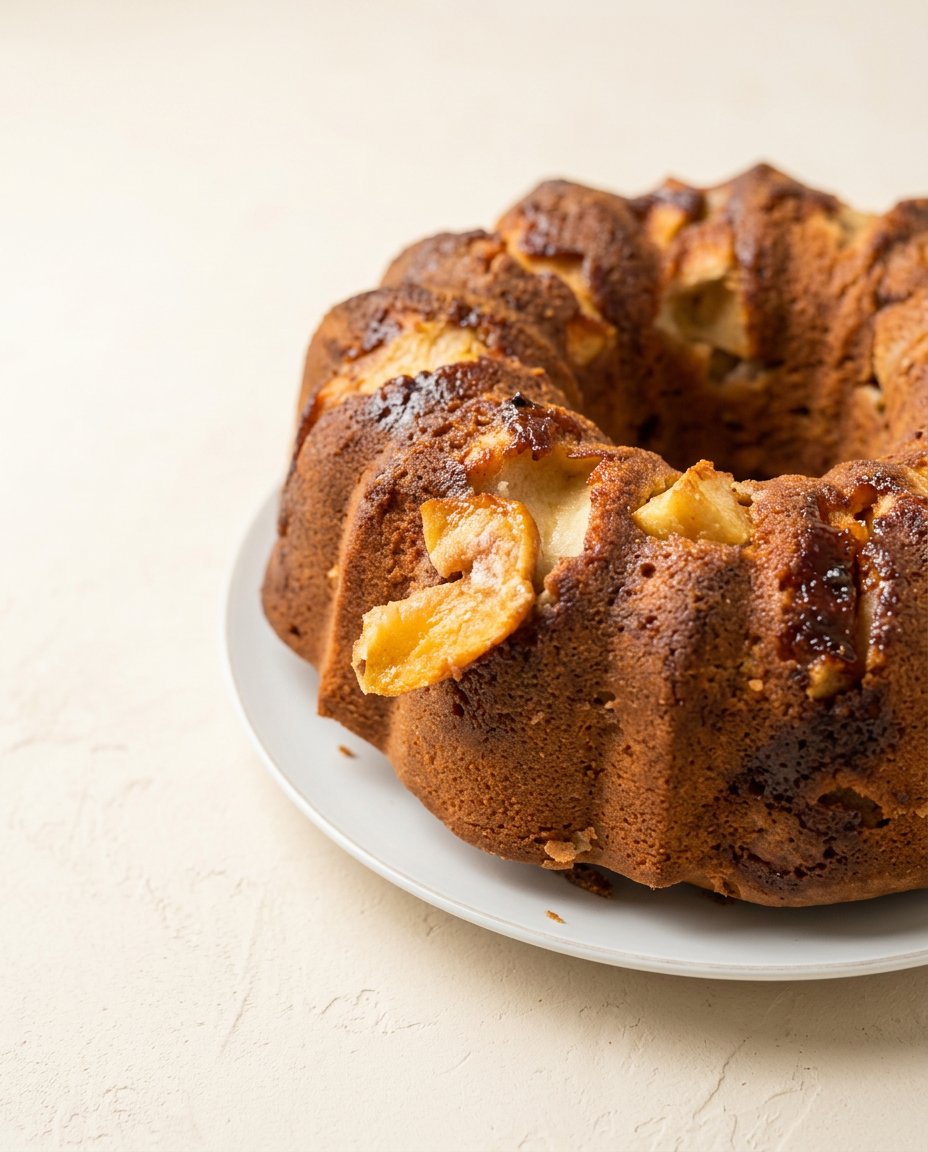
Precision with temperature is the deciding factor in the success of this Old-Fashioned Peach Cobbler Pound Cake Recipe. Butter should be at 65°F (18°C) to properly hold air; if it is too soft, the air bubbles will collapse, and if it is too cold, they will never form. Use a digital probe thermometer to check your ingredient temperatures before you begin the creaming process.
If your batter appears curdled after adding the eggs, it is likely because the eggs were too cold. To fix this, you can place the mixing bowl over a pot of warm water for 30 seconds to gently raise the temperature of the fats, then continue beating. Understanding the science of southern baking will help you troubleshoot these minor emulsion breaks.
Weighing your flour in grams is the only way to ensure consistency in this peach cobbler pound cake 2 variation. A single cup of flour can vary by as much as 30 grams depending on how it is packed into the measuring cup. Too much flour results in a dry, crumbly cake that lacks the signature melt-in-the-mouth quality.
Avoid opening the oven door during the first 60 minutes of the bake. Every time the door opens, the internal temperature drops, which can cause the cake to sink in the middle. The structural skin of the cake needs consistent heat to set properly and support the weight of the fruit.
For the cleanest slices, use a long serrated knife and a gentle sawing motion. Do not press down on the cake, as the dense crumb will compress and lose its velvety texture. Wiping the blade between each cut ensures that the peach segments do not smear across the face of the crumb.
If the top of your cake is browning too quickly before the centre is set, tent the pan loosely with aluminum foil. This reflects the radiant heat while allowing the internal temperature to continue rising. This is common in Bundt pans where the thermal mass of the metal can vary by brand.
Frequently Asked Questions
Can I use frozen peaches for this recipe?
Yes, frozen peaches are an acceptable substitute if canned ones are unavailable. You must thaw them completely and pat them dry with a paper towel to remove excess moisture. Failure to remove this surface water will cause the batter to become too thin, leading to a sunken cake centre.
How should I store this pound cake to keep it moist?
Store the cake in an airtight container at room temperature for up to three days. For longer storage, you may refrigerate it for up to a week, but ensure it is wrapped tightly in plastic wrap. The high fat content from the cream cheese helps the cake remain tender even when chilled.
Why did my peaches sink to the bottom of the cake?
Peaches sink when the batter is either too thin or the fruit pieces are too large. Ensure you are using cake flour and weighing it accurately to maintain the correct specific gravity. Additionally, dicing the fruit into smaller, uniform cubes helps the structure of the batter support their weight during the initial rise.
Can I bake this in a standard loaf pan instead of a Bundt pan?
While it is possible, the volume of this batter is designed for a 12-cup Bundt pan. If using loaf pans, you will likely need two standard 9×5-inch pans. The baking time will also decrease significantly, likely to 50-60 minutes, so monitoring the internal temperature with a probe becomes even more essential.
Is it possible to make this recipe dairy-free?
Replacing the butter, cream cheese, and sour cream with dairy-free alternatives will significantly alter the texture. Pound cakes rely on the specific melting points and protein structures of animal fats. If you must attempt it, use high-quality plant-based butter sticks and almond-based cream cheese for the best possible structural results.
Why did my cake stick to the Bundt pan?
Sticking usually occurs if the pan was not greased thoroughly or if the cake was left in the pan too long. If it is stuck, try placing the pan in a warm water bath for a few minutes to loosen the caramelised sugar layer. Next time, consider using a flour-based baking spray specifically designed for intricate pans.
Considered Adjustments
While the original recipe is balanced for canned fruit, you may consider a fresh peach variation during the peak of summer. To do this, you must peel and macerate the peaches in sugar for 20 minutes, then drain the excess liquid to avoid adding too much hydration to the batter. This adjustment keeps the crumb stable while providing a more vibrant fruit profile.
For those who prefer a more pronounced dairy tang, you can substitute the sour cream with full-fat Greek yogurt. The higher protein content in the yogurt will result in a slightly firmer crumb, which is excellent for those who plan to toast their cake slices. You might find this texture similar to a refined peach coffee cake recipe that holds its shape even when served warm.
Adding a bourbon glaze after the cake has cooled can further enhance the Southern profile of this dessert. Mix two tablespoons of bourbon with powdered sugar and a splash of peach juice to create a thin, translucent coating. This adds a sophisticated depth of flavour that complements the cinnamon and brown sugar elements without overwhelming the delicate butter base.
Serving the Structure
This Old-Fashioned Peach Cobbler Pound Cake Recipe is best served at room temperature to allow the butter and cream cheese fats to soften properly. For a more indulgent experience, serve individual slices with a dollop of unsweetened whipped cream to balance the sweetness of the cinnamon crust. The contrast between the cold cream and the dense, room-temperature cake highlights the complexity of the crumb.
Plating this dessert requires minimal effort due to the decorative nature of the Bundt shape and the caramelised peach wedges on top. If you are hosting a formal gathering, a light dusting of powdered sugar can accentuate the details of the cake’s design. You might also consider a side of vanilla bean ice cream, much like you would serve with a peach cobbler yellow cake mix dessert, to add a temperature contrast.
For a morning service, this cake pairs exceptionally well with a strong black tea or a dark roast coffee. The acidity in the coffee cuts through the richness of the pound cake, making it a sophisticated choice for a brunch setting. Ensure the cake is sliced cleanly with a sharp knife to maintain the visual appeal of the fruit-studded interior.
What the Technique Gives You
Precision in the kitchen results in a dessert that is far more than the sum of its parts. This Old-Fashioned Peach Cobbler Pound Cake Recipe rewards the methodical baker with a texture that is both resilient and tender. By respecting the creaming process and maintaining strict temperature controls, you produce a cake that preserves the heritage of Southern baking while meeting the standards of modern pastry technique.
The structural integrity of this bake makes it an ideal candidate for transport and sharing. Whether served at a family gathering or enjoyed quietly with tea, the spiced fruit and buttery crumb provide a consistent, high-quality experience. If you found success with this texture, you may also enjoy the richness of our cream cheese peach cobbler pound cake which offers a similar structural profile.
We invite you to share your results and technical observations with our community. Seeing how your specific equipment and environment influence the final bake is invaluable for all of us on the pastry bench. Connect with us on Pinterest and Facebook to stay updated on our latest technical guides. Happy baking.