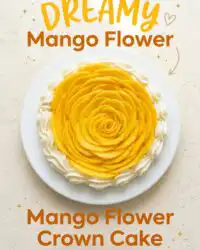
Too many sponge cakes collapse under wet fruit, but this structural sponge method guarantees your layers remain light while holding a dense crown of fresh sliced mangoes.

To execute a stable Mango Flower Crown Cake, we must address the delicate balance between structural integrity and moisture absorption. A standard whipped sponge often absorbs excessive moisture from fresh purée, leading to a structural failure where the layers slide and weep. By using a stabilized sponge and a high-fat whipped cream cheese base, we create a secure barrier that holds the weight of the decorative fruit. Structure is what makes the melt possible, allowing us to achieve a light, airy bite while maintaining clean, sharp layers on the plate.
The Case for This Method: Mango Flower Crown Cake
Prep: 70 min · Serves: 12 · Difficulty: Advanced
- Aerated sponge base prevents soggy crumb.
- Stabilized cream frosting holds heavy decoration.
- Symmetrical fruit slicing creates clean lines.
- Balanced sweetness level highlights natural mango flavor.
- Precise pan lining avoids deflating delicate foam.
When constructing this elegant bake, studying our classic mango sponge cake helps clarify the foundational mechanics of aerated cake batters.
This methodical approach makes sure your fruit-topped cake cuts beautifully every single time.
Get The Full Cake Recipe
Print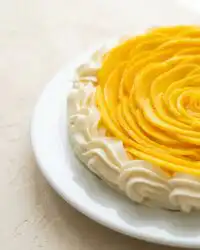
Mango Flower Crown Cake
- Total Time: 1 hour 40 mins
- Yield: 12 servings
- Diet: Vegetarian
Description
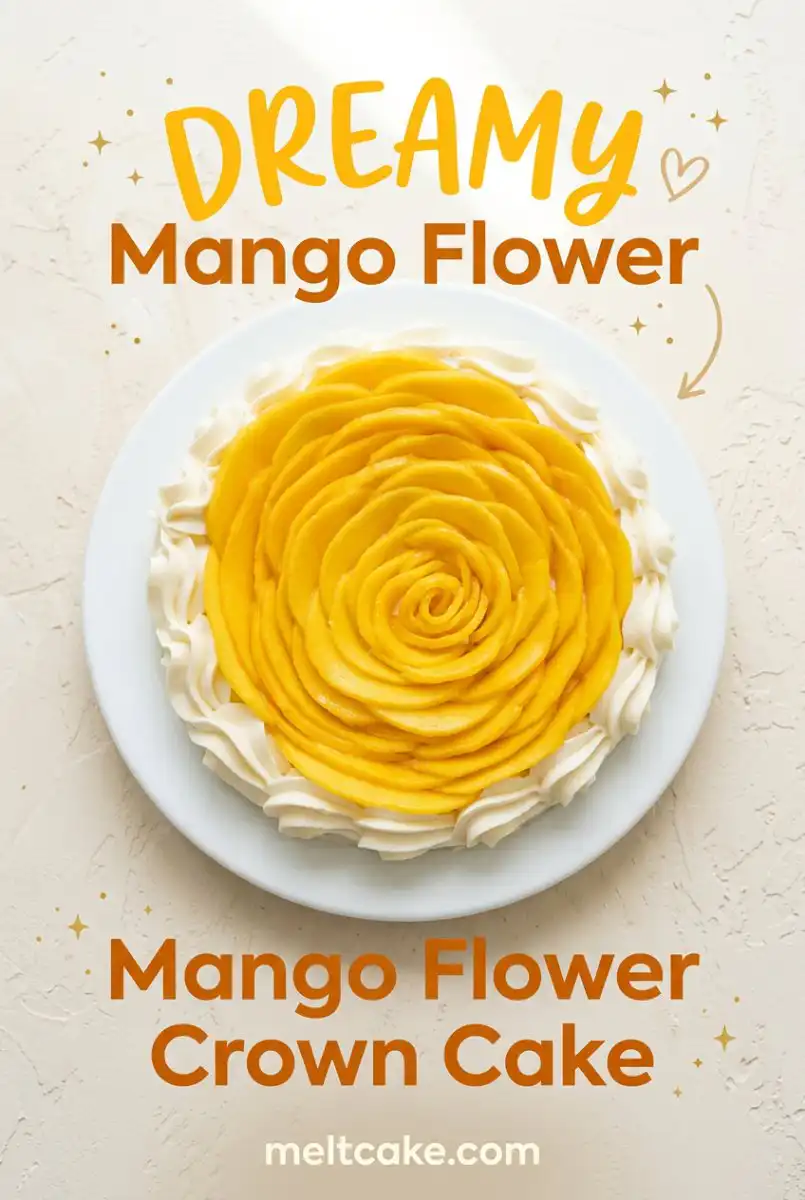
This Mango Flower Crown Cake features a structural, aerated sponge layered with smooth mango purée and a stabilized cream cheese frosting. The design is finished with a beautiful, petal-like crown of fresh mango slices that remain stable and secure for a professional-grade presentation.
Ingredients
- 6 large eggs, room temperature
- Granulated sugar
- All-purpose flour
- Baking powder
- Fresh mangoes
- Cream cheese, softened
- Unsalted butter, softened
- Powdered sugar
- Vanilla extract
Instructions
- Preheat and prep. Preheat your convection oven to 175°C (350°F) and line the bases of two 23cm cake tins with parchment paper, keeping the sides ungreased.
- Aerate the eggs. Beat six room-temperature eggs in a stand mixer for 60 seconds, stream in sugar, and whip for eight minutes until reaching the ribbon stage.
- Fold dry components. Sift flour and baking powder in three batches over the foam, folding gently with a spatula until just combined.
- Bake the layers. Divide batter equally into tins and bake for 23 to 28 minutes; invert onto racks immediately and cool completely.
- Process the purée. Dice reserved mango fruit and blend until completely smooth, ensuring a thick, spreadable consistency.
- Whip the frosting. Beat cream cheese, butter, powdered sugar, and vanilla until smooth and satin-like; chill a portion for piping.
- Slice fruit petals. Cut the remaining mango halves into paper-thin, uniform ribbons and group them by length for assembly.
- Assemble the layers. Slice sponges horizontally, then layer with mango purée and frosting; coat the exterior with the remaining cream.
- Create fruit border. Pipe a decorative border around the top rim and arrange mango slices in overlapping rings from the outside toward the center.
Notes
- Ensure all dairy components are at the same room temperature to prevent the frosting emulsion from breaking.
- Gently pat dry all mango slices with a lint-free towel to prevent excess moisture from compromising the frosting structure.
- Always use a digital scale for measuring flour and sugar to maintain the precise crumb density required for structural stability.
- Chill the assembled cake for at least two hours to allow the butter fat to set properly for clean, sharp slices.
- Prep Time: 70 mins
- Cook Time: 28 mins
- Category: Dessert
- Method: Baking
- Cuisine: Modern Fusion
Ingredients & Their Role
Achieving the ideal balance of texture and taste requires understanding how each raw component behaves in the oven and on the plate. We must select ingredients that offer both structural support and clean flavor profiles to prevent the rich dairy from overwhelming the fresh fruit. Every gram must be weighed carefully on a digital scale to secure the correct crumb density.
- Large Eggs: Provide the entire structural volume through mechanical aeration of the whites and yolks, acting as the primary leavening agent.
- Granulated Sugar: Bonds with the water in the eggs to stabilize the protein foam during baking and retains essential moisture in the baked crumb.
- All-Purpose Flour: Provides the essential gluten network to support the cake when cooled, preventing structural collapse under the heavy toppings.
- Fresh Mangoes: Selected for low fiber content to make sure you get a smooth purée and clean-cut decorative petals that hold their form.
- Cream Cheese: Introduces lactic acid to cut sweetness and provides the solid fat matrix needed to stabilize the piped whipped border.
- Unsalted Butter: Thickens the cream cheese frosting through lipid crystallization when chilled, securing a firm sliceable exterior.
| Ingredient | Why It Matters |
|---|---|
| Eggs | Essential for mechanical aeration and structural volume. |
| Sugar | Stabilizes egg protein foam and retains crumb moisture. |
| Flour | Delivers the starch and gluten matrix to prevent collapse. |
| Mangoes | Offers natural acidity and bright decorative structure. |
| Butter | Creates emulsion stability and firm sliceable layers. |
From Bench to Bake
Step 1: Prep and Pan Lining
Preheat your convection oven to 175°C (350°F). Line the bases of two 23cm (9-inch) round cake tins with parchment paper, leaving the sides entirely ungreased. The cake batter relies on clinging to the dry metal sides of the pan to climb and rise evenly without slipping. Greasing the walls of the pan would cause the foam to slide down during the bake, resulting in a dense, domed center.
Step 2: Mechanical Egg Aeration
Place six room-temperature eggs in the bowl of your stand mixer fitted with the whisk attachment. Beat on high speed for exactly 60 seconds until a pale foam appears on the surface of the eggs. Slowly stream in the granulated sugar over two minutes, then continue whipping on high for a full eight minutes until the mixture reaches the ribbon stage. The batter should fall back into the bowl in thick, defined ribbons that hold their shape for several seconds.
Step 3: Folding the Dry Components
Sift one-third of your whisked flour and baking powder directly over the whipped egg foam. Using a wide silicone spatula, gently fold the mixture by cutting down the center and sweeping up the sides of the bowl. Repeat this process in three distinct batches, verifying that you scrape the very bottom of the bowl to prevent heavy flour pockets from settling. Stop mixing the very moment the last white streak of flour vanishes from the batter.
Step 4: Baking the Sponge Layers
Divide the aerated batter equally between your prepared tins, handling them gently to preserve the trapped air within the foam. Bake at 175°C (350°F) for 23 to 28 minutes, checking for a pale golden hue and a sponge that springs back when touched lightly. Invert the hot tins onto wire racks immediately, peeling off the parchment paper while warm to prevent condensation from turning the crust damp. Allow the cakes to cool right-side-up to room temperature.
Step 5: Preparing the Smooth Mango Purée
Slicing around the flat central pit of each mango, reserve four halves for the final decorative crown. Dice the remaining fruit, then process it in a high-speed blender until completely smooth with no fibrous lumps remaining. Taste the purée to check the sweetness, adjusting with a spoonful of sugar only if the fruit lacks acidity or natural sugar. The purée must have a thick, spoonable consistency before you spread it onto the cake.
Step 6: Whipping the Cream Cheese Emulsion
In a clean mixer bowl, combine the softened cream cheese, unsalted butter, powdered sugar, and vanilla extract. Beat on low speed for 60 seconds to incorporate the sugar, then turn the speed to high for five minutes. The mixture must transform into a smooth, thick, and highly spreadable frosting with a satin sheen. Transfer one cup of this frosting to a piping bag fitted with a large open star tip and chill it briefly.
Step 7: Slicing the Fruit for Your Mango Flower Crown Cake
Take the reserved mango halves and slice them lengthwise into paper-thin, uniform ribbons. Consistency in your cuts is vital; uniform slices make sure the final flower design remains stable and symmetrical. Group the slices by length so you can easily access the longest pieces for the outer rings and the shortest for the center coil. If the slices are too thick, they will not bend easily and may slide off the cake.
Step 8: Assembling and Layering the Cake
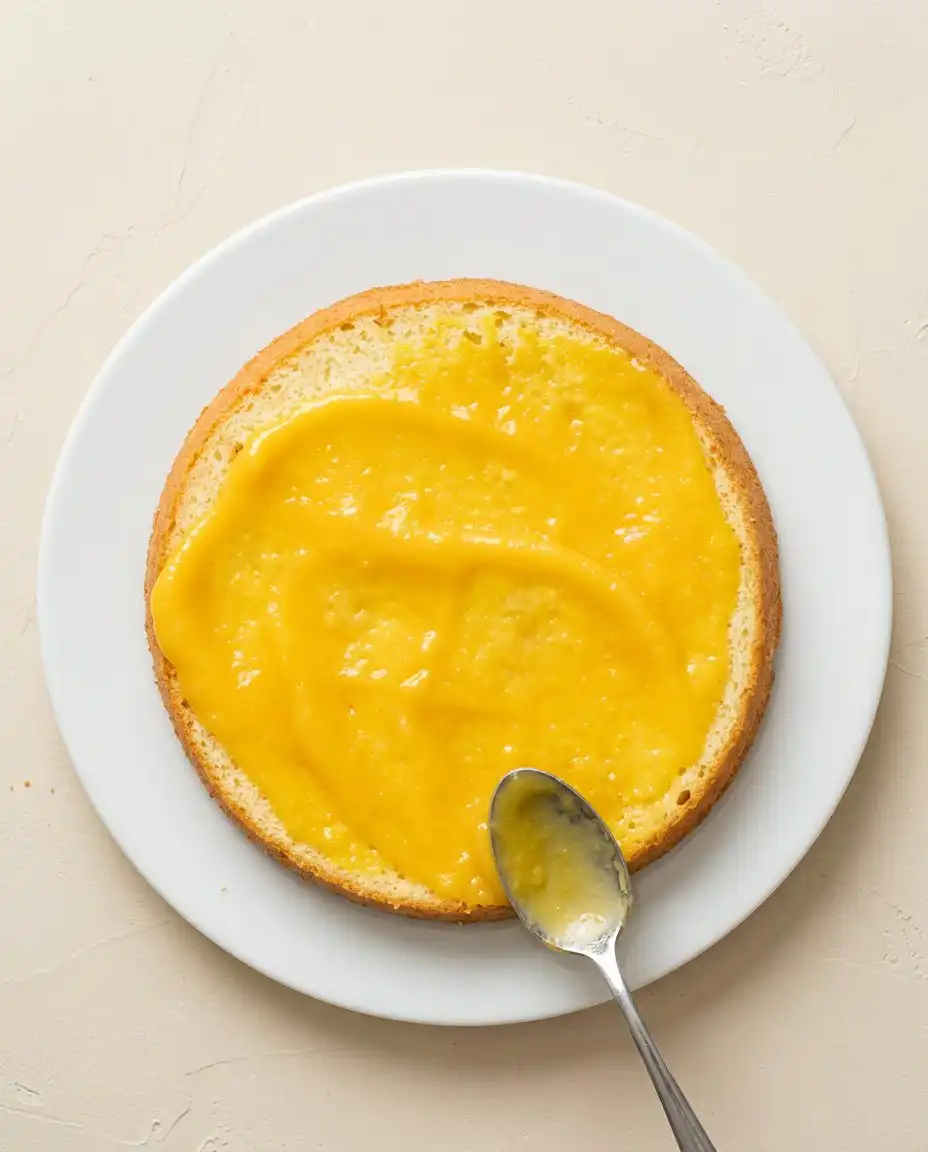
Split each cooled sponge layer horizontally using a long serrated knife to create four thin, even rounds. Lay the first base down on a serving platter, spreading half a cup of mango purée over the surface. Spread half a cup of frosting on the underside of the second layer and place it face-down over the purée to trap the moisture. Repeat this sequence for all layers, then coat the entire exterior of the cake with the remaining frosting.
Step 9: Creating the Fruit Petal Border
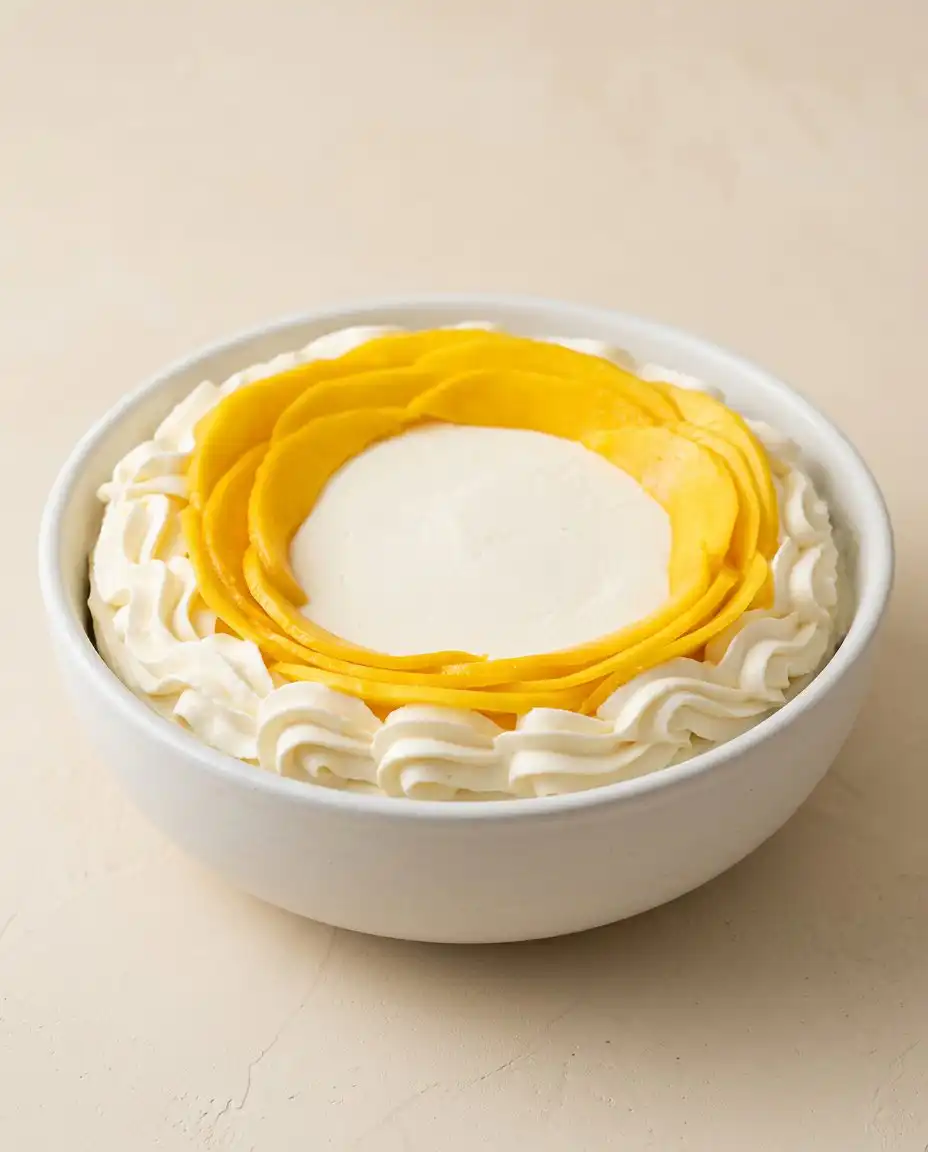
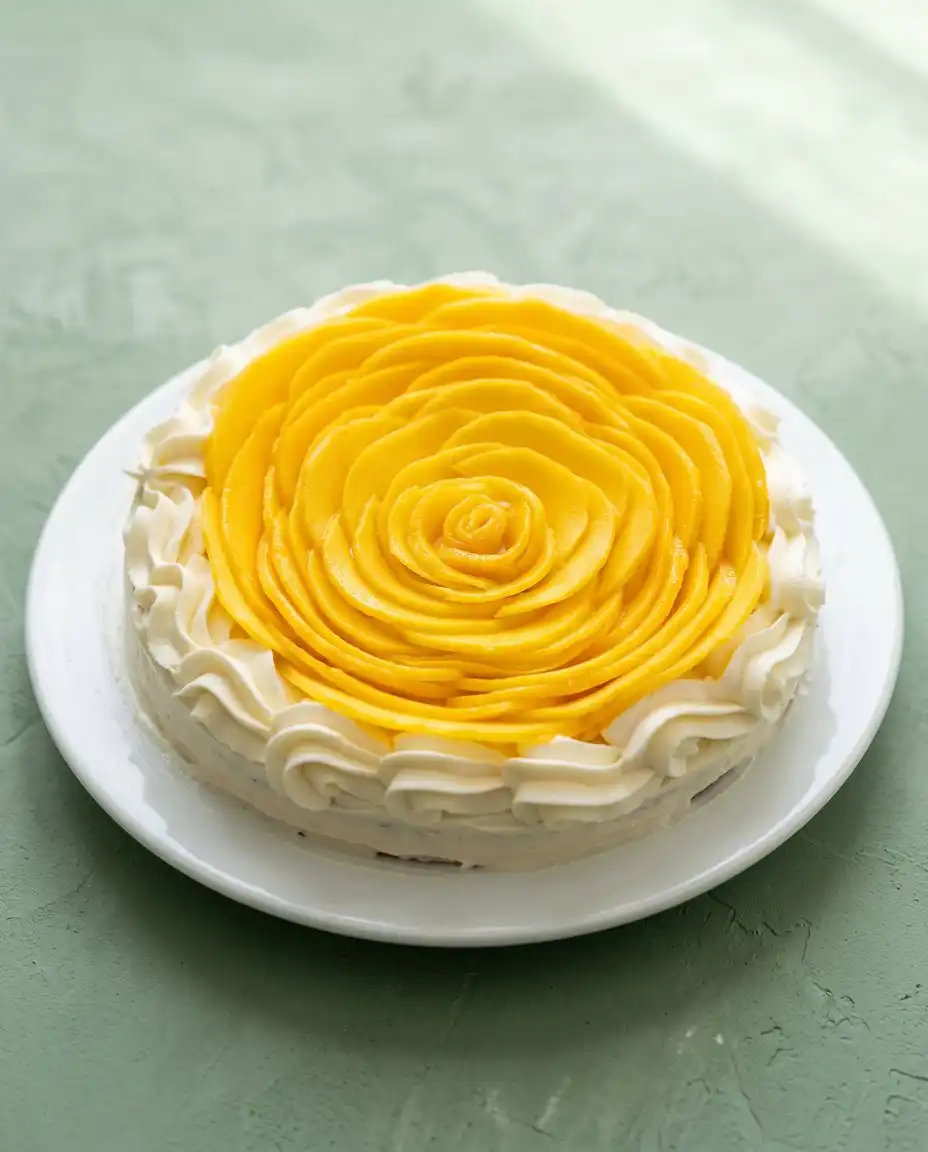
Pipe the reserved frosting around the top rim of the cake to form a retaining wall for the fruit. Place your longest mango slices along this whipped border, overlapping each piece by half its width. Gradually work your way inward with progressively shorter slices, ending with a rolled mango ribbon coiled tightly in the center. Chill the finished cake for at least two hours to set the structure before slicing.
Where Most Bakes Go Wrong
Butter and cream cheese temperatures must match. If your frosting breaks or curdles, here is why and how to fix it: the butter was likely too cold, preventing a proper emulsion with the cheese. Soften both components to exactly 20°C (68°F) before whipping to make sure a smooth, stable cream forms.
Avoid over-folding the dry ingredients. Every fold past the point of flour integration deflates the delicate egg foam, resulting in a rubbery, dense cake that fails to rise. Stop folding the moment the last white streak of flour vanishes from the batter.
Control fruit moisture. Fresh mango slices contain high water content which can bleed onto your frosting. Gently pat each slice with a dry lint-free kitchen towel before assembly to remove surface moisture, preventing the slices from sliding down the sides.
Sifting is non-negotiable. Flour clumps will weigh down the aerated eggs, forcing you to over-mix the batter. Always pass your dry ingredients through a fine-mesh sieve at least twice to aerate the flour before folding.
For advanced assembly methods, studying our mango drip cake guide will provide additional strategies on managing structural barriers between wet fruit elements and fat-based frostings.
Ensure your cake layers are completely cold before frosting. Warm sponge cake will melt the fat structure of the cream cheese frosting, causing the layers to slide apart during assembly. Chill your wrapped layers in the refrigerator for at least 60 minutes before slicing and stacking.
Weigh it, time it, trust it. This discipline prevents the structural failures that ruin beautiful bakes.
Frequently Asked Questions
How do you make mango slices look like a flower?
Cut the reserved mango halves into uniform, paper-thin strips using a sharp chef’s knife. Arrange these slices in concentric rings on the frosted surface of the cake, starting from the outer edge and working inward. Overlap each slice slightly to create depth, and finish by coiling a long, thin slice tightly in the center.
How do you keep mango slices from turning brown on a cake?
Mangoes naturally do not oxidize as quickly as apples, but they can dry out and lose their luster. To prevent this, lightly brush the assembled fruit crown with a warm, strained apricot glaze or a simple gelatin wash. This creates a thin, protective barrier that locks in moisture and preserves the brilliant color.
What is a “Mango Blossom Radiance” cake?
This term typically refers to a stylized mango cake that features concentric rings of fruit arranged to mimic a blooming flower. The design relies on the natural curvature of sliced mangoes to create a radiating pattern from the center. It uses the same structural layering techniques as our flower crown design to maintain its shape.
What type of sponge pairs best with mango?
A classic European-style sponge cake, such as a Genoise, is the ideal choice for fresh mango cakes. Because it contains minimal fat, its airy structure absorbs the fruit purée efficiently without becoming heavy or soggy. This absorption creates an incredibly moist crumb that holds its structure when sliced.
Can you make a Mango Flower Cake with chocolate?
While unusual, dark chocolate sponge cake can pair with mango if you manage the sweetness. Use a high-quality cocoa powder with at least 70% cacao solids to balance the tropical sweetness of the fruit. Be careful to stabilize the frosting with extra cocoa fat to support the weight of the mango crown.
How do you store a fruit and cream cake?
Store the assembled cake in a deep, airtight cake dome in the refrigerator for up to three days. The cold temperature keeps the cream cheese frosting stable and prevents the fresh mango slices from weeping. Always slice the cake while cold, using a hot, dry knife for clean portions.
Can you make a Mango Flower Cake ahead of time?
You can bake the sponge layers and prepare the purée up to 24 hours in advance. Keep the sponge wrapped tightly in plastic wrap at room temperature and store the purée in an airtight container in the fridge. For the best structural results, assemble the frosting and decorate with fresh mangoes on the day of serving.
Considered Adjustments
Infusing the dry ingredients with 1.5 grams of ground cardamom adds a subtle, warm depth that cuts through the tropical sweetness of the mango. This spice works in harmony with the natural acidity of the fruit, enhancing the sensory profile without altering the structural integrity of the egg foam. It is a traditional approach that pairs beautifully with black tea.
If you prefer a lighter mouthfeel than classic cream cheese frosting, you can incorporate gelatin-stabilized layers. This technique mimics the interior of our classic mango mousse cake, creating a firmer hold that makes precise, sharp portioning simple. The gelatin prevents the fruit purée from weeping into the surrounding cream.
Grating the zest of one fresh lime into the cream cheese frosting introduces natural citrus oils. These oils disrupt the rich fats, offering a clean, sharp finish that elevates the tropical fruit profile. For more decoration ideas, look at the Natasha’s Kitchen mango cake recipe to see how different fruit patterns alter the final visual impact.
Finishing & Plating
Presenting this structural masterpiece requires a clean, minimalist approach to plating. Serve each slice chilled on a neutral-colored ceramic plate to highlight the yellow and white contrast of the layers. Use a long, sharp chef’s knife dipped in hot water and wiped clean between each cut to make sure the delicate mango crown does not drag through the soft frosting.
Pairing this dessert with a dry, sparkling white wine or a cup of warm Earl Grey tea balances the rich dairy fat of the frosting. For those who enjoy varied baking profiles, compare this airy sponge cake with the dense, rich crumb of our mango butter cake during your next afternoon gathering. The contrast in textures highlights how different fat ratios alter the overall mouthfeel.
Allow the cake to sit at room temperature for ten minutes before serving to soften the butter fat in the frosting slightly. This brief window improves the mouthfeel, allowing the cream to melt instantly on the tongue while the sponge remains firmly structured.
What the Technique Gives You
Mastering the mechanics of a stabilized sponge cake and a balanced cream cheese emulsion yields an elegant, reliable dessert. By controlling the moisture of the fresh fruit and using precise, measured steps, you transform basic ingredients into a stunning edible design. Precision is key to making sure that every slice holds its shape perfectly from the kitchen bench to the serving plate.
If you are interested in exploring other methods for decorating cakes with fresh botanical elements, review our guide on arranging cake flowers to expand your decorative skills. We hope you will share your baking results with us on our social platforms.
Join our baking community and share your creations on Pinterest, Facebook, TikTok, and Telegram.