Baking at precisely 175 degrees Celsius decides whether your cake crumb remains tender or collapses under the weight of heavy, moisture-rich fresh summer fruit.

A successful Peach Streusel Coffee Cake depends entirely on structural balance. When fresh, wet fruit meets a rich, buttery batter, the risk of a dense, soggy layer beneath the fruit is exceptionally high. By employing a precise flour-to-liquid ratio and a controlled mixing method, we establish a stable starch network. This structural skin supports the heavy, caramelized peaches and the thick layer of cinnamon crumble without sinking or tearing.
Why Precision Pays Off Here with Peach Streusel Coffee Cake
Prep: 20 min · Serves: 8 · Difficulty: Medium
- Balanced starch structure prevents fruit from sinking.
- Cold butter technique produces exceptionally crisp crumbs.
- Controlled moisture levels yield a tender crumb.
- Almond extract enhances natural stone fruit flavors.
- Uniform heat distribution yields a golden crust.
This method guarantees a reliable crumb structure every time. If you appreciate precise baking, you might also enjoy our classic blueberry coffee cake.
Achieving the ideal balance between a moist crumb and a stable structure is the primary goal of this formula. Many home bakers struggle with fruit-based cakes because the moisture released by the peaches during baking can dissolve the surrounding starch network, leading to a gummy layer. Our method addresses this by creating a thick, high-viscosity batter that suspends the fruit slices perfectly.
The streusel itself relies on a precise physical reaction where cold pockets of butter vaporize during baking, leaving behind tiny air gaps that translate to a light, crispy texture. This contrast between the crunchy topping and the velvety cake base is what makes each slice so satisfying. By understanding these mechanical principles, you can approach the bake with complete confidence.
Get The Full Cake Recipe
Print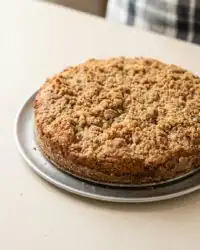
Peach Streusel Coffee Cake
- Total Time: 65 mins
- Yield: 8 servings
- Diet: Vegetarian
Description
A structured summer coffee cake featuring fresh peach slices nestled in an almond-infused crumb, crowned with a generous blanket of crisp cinnamon streusel. Engineered to balance heavy fresh fruit without collapsing.
Ingredients
- For the streusel:
- 3/4 cup all-purpose flour
- 1/3 cup light brown sugar, firmly packed
- 1/4 cup granulated sugar
- 1 tsp ground cinnamon
- 6 Tbsp cold unsalted butter, cut into small pieces
- For the cake:
- 1 1/2 cups all-purpose flour
- 3/4 cup granulated sugar
- 2 tsp baking powder
- 1/2 tsp salt
- 1 egg
- 4 Tbsp unsalted butter, melted
- 1/2 cup milk
- 1 1/2 tsp vanilla extract
- 1 tsp almond extract
- 2 firm, ripe peaches, peeled, pitted, and sliced
Instructions
- Prep Oven and Pan: Preheat your oven to 350°F (175°C) and grease and flour a 9-inch round springform pan. If using glass, reduce temperature to 325°F (162°C).
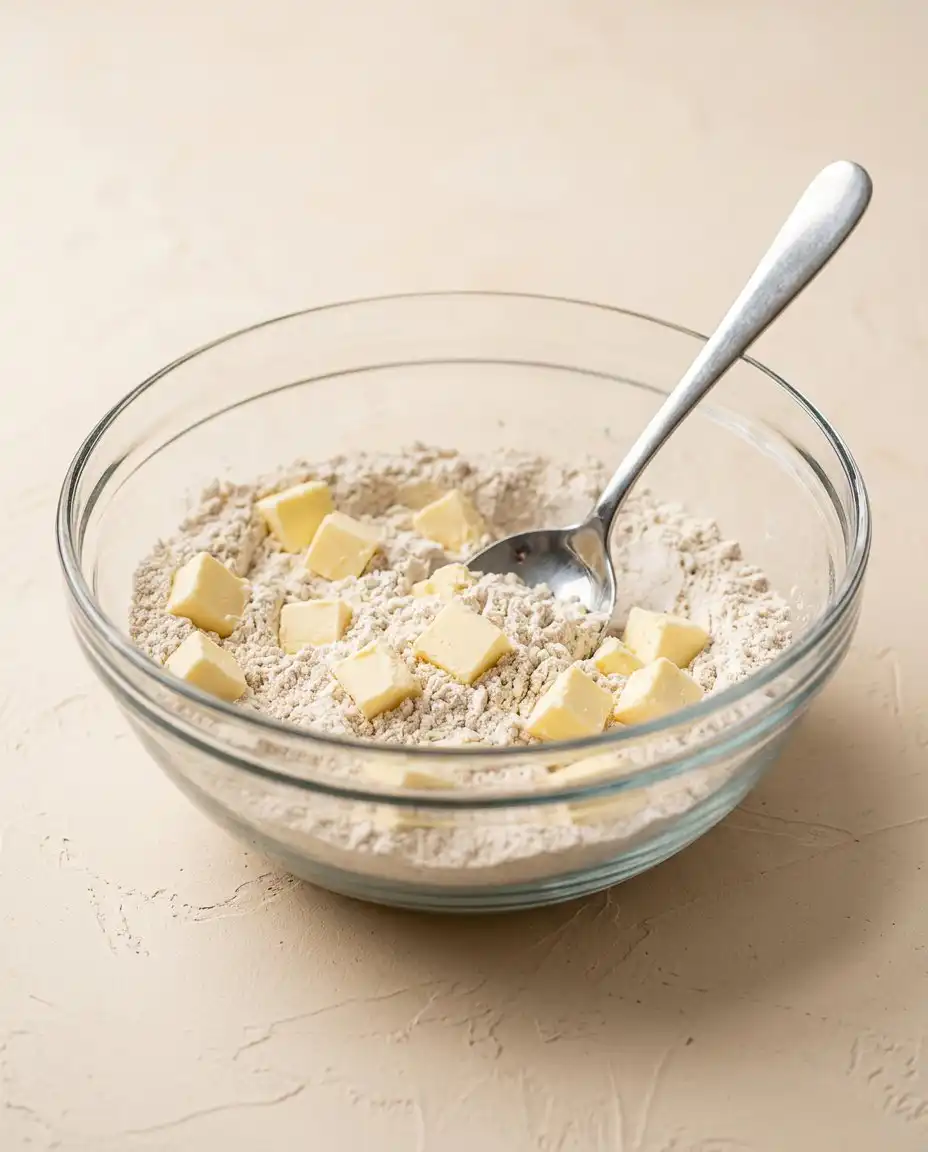
- Prepare Streusel: Whisk dry ingredients, then cut in cold butter with a pastry blender until coarse crumbs form. Chill.
- Mix Dry: Whisk flour, sugar, baking powder, and salt in a large bowl.
- Emulsify Wet: Whisk egg, melted butter, milk, vanilla, and almond extract for one minute until creamy.
- Combine: Fold dry ingredients into wet in two additions, mixing until just moistened. Do not overmix.
- Assemble: Spread batter in pan, arrange peach slices in concentric circles, and press lightly. Sprinkle streusel evenly over the top.
- Bake: Bake for 40 to 45 minutes until golden brown and a toothpick inserted in the center comes out clean.
- Cool: Cool on a wire rack for 20 minutes before releasing the springform ring.
Notes
- Weigh flour on a digital scale to prevent dry, dense crumb layers.
- Keep the prepared streusel in the refrigerator until the moment it goes into the oven to ensure a crisp texture.
- Use firm peaches rather than soft ones to control moisture release during baking.
- Prep Time: 20 mins
- Cook Time: 45 mins
- Category: Cake
- Method: Baking
- Cuisine: American
Ingredients & Their Role
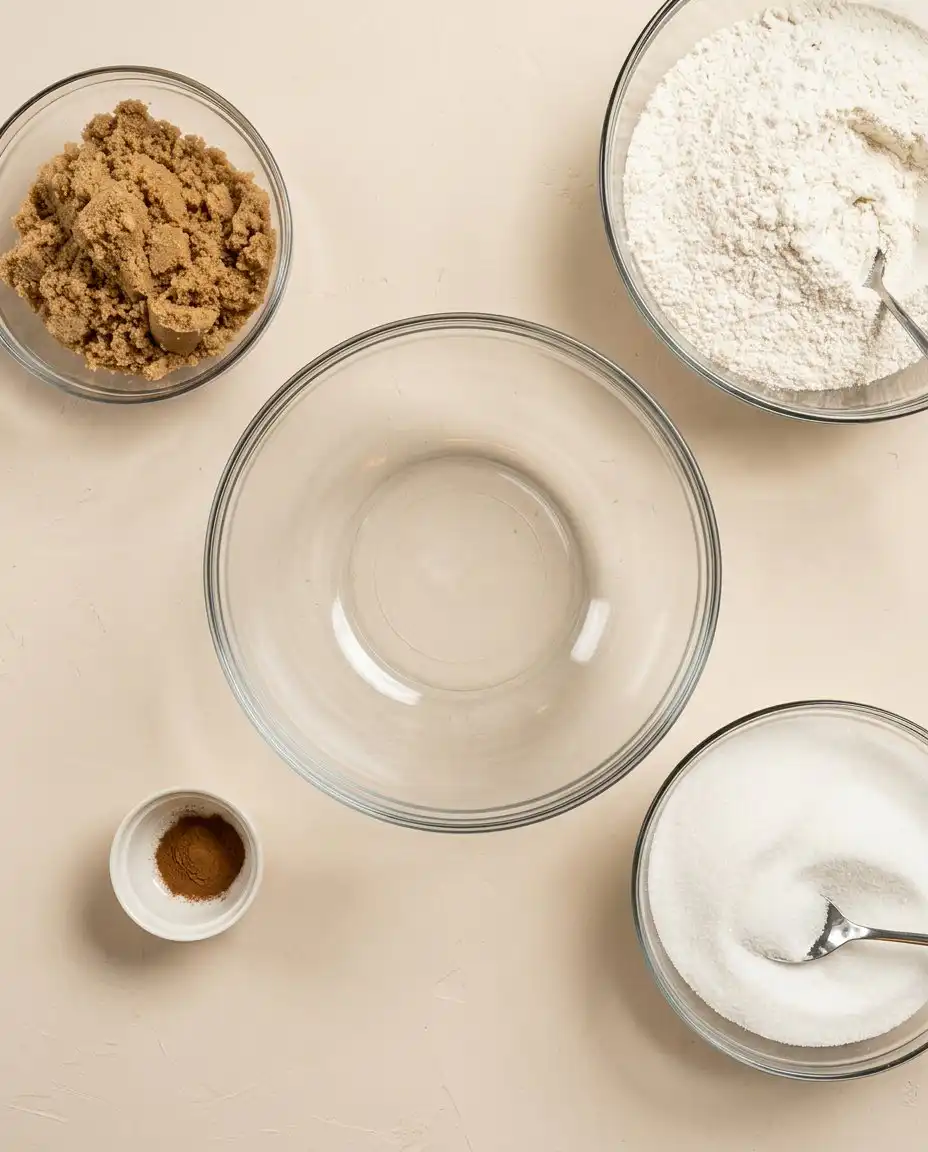
Every component in this recipe is selected for its chemical contribution to the cake’s final crumb and structural integrity. Standardizing your ingredients by weight prevents the structural failures common in volume-based baking, where a packed cup of flour can easily ruin the hydration ratio. By analyzing how each ingredient behaves under heat, we can predict and control the final texture of our bake.
- All-purpose flour: Provides the necessary gluten framework to support the heavy fruit layer. Without this protein structure, the cake would collapse under the weight of the peaches and streusel.
- Cold unsalted butter: Keeps the streusel distinct and sandy rather than melting into a paste. The solid fat creates distinct pockets that crisp up beautifully during the baking process.
- Fresh peaches: Add natural acidity and moisture that softens the gluten network during baking. This tenderizing effect must be balanced carefully with the dry ingredients to prevent sogginess.
- Almond extract: Complements the benzaldehyde compounds naturally present in peach pits, enhancing the stone fruit profile. This aromatic pairing heightens the overall flavor depth of the cake.
- Baking powder: Creates the necessary carbon dioxide gas to lift the heavy batter. It must be fresh to guarantee maximum leavening power during the first fifteen minutes of baking.
- Granulated sugar: Retains moisture in the crumb while assisting in the browning process. It also weakens gluten development slightly, guaranteeing the cake remains tender rather than tough.
| Ingredient | Why It Matters |
|---|---|
| Cold Butter | Creates pocketed steam for a crisp, flaky streusel. |
| All-Purpose Flour | Establishes the gluten structure that holds the peaches. |
| Almond Extract | Heightens the stone fruit profile through aromatic pairing. |
| Baking Powder | Provides the chemical leavening needed for a light crumb. |
The Tested Procedure
Step 1: Preparing the Pan and Oven
Preheat your oven to 175°C (350°F) to establish the thermal environment required for immediate leavening. Grease a 9-inch round springform pan with unsalted butter and coat it lightly with flour, tapping out any excess. This dual-barrier coating prevents the delicate caramelized peach edges from adhering to the metal sides. If you are using a glass baking dish, lower the temperature to 162°C (325°F) to prevent the bottom crust from burning before the center bakes.
Verifying the oven is fully preheated is critical because a slow rise will cause the leavening gases to escape before the flour starches can gelatinize. This results in a flat, dense cake with a tough texture. By using a standalone oven thermometer, you can verify that your oven’s internal temperature matches the dial setting exactly.
Step 2: Cutting the Streusel Butter
Combine the flour, brown sugar, granulated sugar, and cinnamon in a medium mixing bowl. Add the cold, cubed unsalted butter and use a pastry blender to rub the fat into the dry ingredients. You are looking for coarse, pebble-sized crumbs that hold their shape when squeezed gently. Place this mixture in the refrigerator immediately to keep the fat cold, which is crucial for a crisp texture.
The physical size of the butter chunks determines the final texture of the streusel. Larger pieces will create flaky, pocketed crumbs, while over-mixing will result in a pasty topping that bakes into a solid, hard sheet. Maintaining a temperature below 15°C (60°F) for your butter guarantees the fat remains solid during preparation.
Step 3: Sifting the Dry Ingredients
Sift the all-purpose flour, granulated sugar, baking powder, and salt together in a large mixing bowl. Sifting aerates the mixture and distributes the chemical leavening agents evenly throughout the flour. This uniform distribution prevents uneven rising pockets and structural weak spots in the finished cake. Set the bowl aside on your clean work bench.
Sifting also removes any hard lumps of flour or sugar that could create dry pockets in the baked cake. When flour is stored, it naturally packs down, so measuring by volume without sifting often leads to adding too much flour. Weighing your dry ingredients on a digital scale bypasses this risk completely.
Step 4: Emulsifying the Wet Ingredients
Whisk the egg, melted butter, milk, vanilla extract, and almond extract in a medium bowl for exactly one minute. The mixture should appear pale, smooth, and completely cohesive, indicating a successful emulsion. This step coats the fat molecules with liquid, preventing them from separating during the baking process. Verify your milk and egg are at room temperature to avoid seizing the melted butter.
An incomplete emulsion will cause the batter to split, resulting in an uneven bake with greasy patches and dry spots. Room temperature liquids are essential because cold milk will immediately solidify the melted butter, ruining the smooth texture. Take the extra thirty seconds to guarantee the wet mixture is completely uniform.
Step 5: Mixing the Batter
Pour the emulsified wet ingredients into the dry ingredients in two separate additions. Fold gently with a silicone spatula, stopping the moment the last streaks of flour disappear. Overmixing at this stage develops excess gluten, which turns a tender cake tough and rubbery. The batter should look thick, slightly lumpy, and hold its shape when spooned.
The folding motion should be a gentle sweep down to the bottom of the bowl, up the side, and over the top. This technique minimizes physical agitation while guaranteeing the wet and dry components are fully integrated. If you see small lumps, leave them alone; they will dissolve during the baking process without affecting the final crumb.
Step 6: Assembling the Peach Streusel Coffee Cake
Spoon the thick batter into the prepared springform pan, spreading it evenly with an offset palette knife. Arrange the fresh peach slices in neat, concentric circles starting from the outer edge and working inward. Gently press each slice slightly into the batter to secure its position without submerging it completely. Sprinkle the chilled streusel evenly over the top of the fruit layer, guaranteeing total coverage.
Arranging the peaches in a geometric pattern guarantees even heat distribution and uniform baking across the entire pan. If the fruit is piled haphazardly, some areas will remain wet and underbaked while others dry out. A neat arrangement also creates a beautiful visual presentation once the cake is sliced.
Step 7: Baking and Testing for Doneness
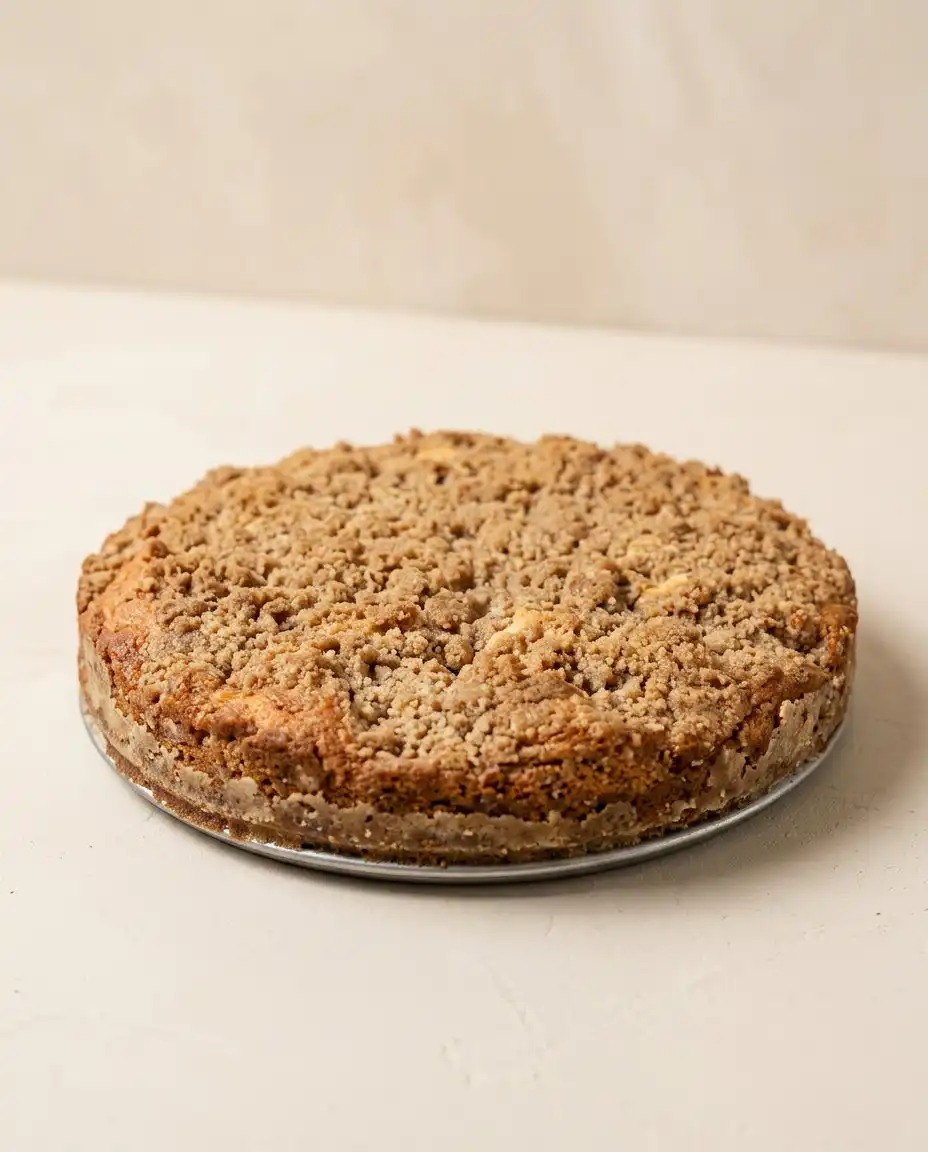
Bake the cake on the middle rack of your preheated oven for 40 to 45 minutes. The streusel should turn a deep golden brown, and the fruit juices should bubble slightly at the edges. Insert a wooden toothpick into the center of the cake; it must emerge clean or with a few dry crumbs. Avoid opening the oven door during the first 30 minutes to prevent a sudden drop in temperature from collapsing the rising structure.
The Maillard reaction is responsible for the deep golden color and rich aroma of the baked streusel. This chemical reaction between amino acids and reducing sugars occurs rapidly in the dry heat of the oven. Keep a close eye on the cake during the final five minutes of baking to prevent the sugar from scorching.
Step 8: Cooling and Demolding
Transfer the hot pan to a wire cooling rack and let it sit undisturbed for exactly 20 minutes. This cooling period allows the delicate starch structure to set and firm up before handling. Run a thin palette knife around the inside edge of the pan to release any stuck fruit or sugar. Carefully release the springform latch and lift the ring away to reveal the clean, structured sides of the cake.
Attempting to unmold the cake while it is still piping hot will cause the tender crumb to tear and fall apart. As the cake cools, the starch molecules realign and bind together, creating the structural strength needed to hold its shape. Once cooled, the cake can be easily transferred to a serving platter.
Pastry Bench Tips
Weighing your ingredients on a digital scale is the single most important action you can take to prevent a dense cake. Volume measurements of flour can vary by up to thirty percent depending on how packed the cup is, which alters the delicate hydration balance. For those who enjoy alternative nut profiles, our pecan streusel coffee cake offers a similar structural study with a deeper, earthier crunch.
If your cake collapses in the center after baking, here is why and how to fix it. This failure occurs when the oven door is opened too early, causing a temperature drop before the egg proteins and starches have fully set. To correct this, keep the oven door closed until at least thirty-five minutes have elapsed, and rely on the oven light to monitor the rise.
Keep your streusel butter exceptionally cold until the moment the cake enters the oven. If the butter warms to room temperature, it will melt into the flour during the bake, creating a greasy sheet rather than distinct, crunchy crumbs. You can reference this classic peach streusel coffee cake recipe for further structural comparisons regarding butter temperatures.
Use firm, slightly underripe peaches rather than soft, overripe ones for this application. Overripe fruit releases too much water during baking, which localizes moisture and creates soggy pockets of unbaked batter directly beneath the slices. Firm peaches hold their physical shape and release their juices at a controlled rate that the batter can absorb.
Avoid substituting liquid sweeteners like honey or maple syrup for the granulated sugar in the batter. Liquid sugars alter the hydration ratio of the recipe, making the batter too wet to support the weight of the fruit. Granulated sugar is essential not only for sweetness but for structural aeration during the initial mixing phase.
Always test the internal temperature of your cake with a digital probe thermometer if you want complete certainty. The center of the cake should register between 96°C and 98°C (205°F to 208°F) when fully baked. This thermal milestone confirms that the starches have completely gelatinized and will not collapse upon cooling.
Frequently Asked Questions
Can I use canned or frozen peaches instead of fresh?
Yes, you can use canned or frozen peaches, but they require careful preparation to avoid adding excess moisture. Canned peaches must be drained thoroughly and patted dry with paper towels to prevent soggy pockets in the batter. Frozen peaches should be thawed completely and drained of all excess liquid before being arranged on the cake.
Do I need to peel the peaches?
Peeling is highly recommended for the best mouthfeel, as peach skins can become tough and leathery during the baking process. To peel them easily, score a small “X” on the bottom of each peach and submerge them in boiling water for thirty seconds, then transfer them to an ice bath. The skins will slip off effortlessly without damaging the flesh of the fruit.
How do you keep peaches from sinking to the bottom?
The secret lies in creating a thick batter and pressing the fruit only lightly into the surface. A thin batter lacks the structural density required to suspend heavy fruit slices during the initial stage of the bake. Slicing the peaches to a uniform thickness of about half an inch also ensures they are light enough to remain near the top.
What is the secret to a moist coffee cake?
Maintaining a precise baking time and utilizing sour cream or whole milk ensures a tender, hydrated crumb. Overbaking is the primary cause of dryness, as it drives out the essential moisture bound within the starch network. Using a digital probe thermometer to verify doneness prevents this common error.
Should the butter be cold or melted for the streusel?
The butter must be cold and firm to create a distinct, crumbly streusel topping. Melted butter would hydrate the flour and sugar too completely, resulting in a dense, greasy paste rather than light crumbs. Keeping the prepared streusel in the refrigerator until baking preserves this vital texture.
Can you make peach coffee cake the night before?
You can prepare the dry ingredients and the streusel the night before, but the batter should be mixed and baked fresh. Once the wet and dry ingredients are combined, the baking powder activates immediately, and waiting overnight would result in a flat, dense cake. Store the baked and cooled cake at room temperature overnight, covered tightly.
Does coffee cake contain actual coffee?
Traditional coffee cakes do not contain actual coffee in the batter or topping. The name originates from the custom of serving these sweet, crumbly cakes alongside a fresh cup of coffee. The rich, buttery flavors and spiced streusel are specifically designed to complement the bitterness of coffee.
Considered Adjustments
One elegant variation involves substituting the fresh peaches with nectarines or plums. Nectarines share a nearly identical moisture profile and acidity level, meaning they can be swapped in equal weights without adjusting the flour ratio. Plums offer a slightly more tart flavor profile that contrasts beautifully with the sweet cinnamon streusel.
For a different format that serves a larger crowd, you can adapt these flavors into a sheet pan bake. Our peach cobbler sheet cake demonstrates how to manage moisture across a wider surface area. This adjustment requires reducing the baking time by approximately ten minutes due to the shallower depth of the batter.
Adding ground cardamom or nutmeg to the streusel provides a sophisticated spice alternative to plain cinnamon. Cardamom introduces a bright, herbal note that intensifies the floral qualities of the peach. Limit the addition to a quarter-teaspoon to guarantee the spice does not overwhelm the delicate almond notes in the cake crumb.
Serving the Structure
Presenting this cake at the correct temperature is essential for experiencing its full textural contrast. Serve the slices warm, approximately thirty minutes after baking, when the crumb is at its softest and the streusel remains exceptionally crisp. At this temperature, the caramelized peach juices are slightly fluid, offering a pleasing contrast to the structured cake.
A simple dusting of powdered sugar adds a clean, professional finish without overwhelming the flavor profile. If you are hosting a formal gathering, pair each slice with a dollop of unsweetened whipped cream or a scoop of high-quality vanilla bean ice cream. The cold cream slowly melts into the warm cake layers, creating a luxurious mouthfeel that highlights the spiced cinnamon notes.
For more inspiration on pairing seasonal bakes with your morning beverages, browse our recipe index. You will find a refined selection of structured pastries designed to complement everything from espresso to delicate herbal teas. Always slice the cake with a sharp serrated knife to avoid crushing the delicate streusel topping.
What the Technique Gives You
Mastering the structural balance of a fruit-laden cake is a milestone for any serious home baker. By respecting the temperature of your ingredients and the mechanics of gluten development, you create a dessert that is both structurally sound and delightfully tender. This careful approach turns a simple afternoon bake into a precise study of pastry texture.
If you enjoyed working with this method, consider testing your skills on our pumpkin streusel coffee cake. It offers a different seasonal variation on the classic crumble structure, using dense pumpkin purée to create an exceptionally moist crumb. Both recipes demonstrate that patience and precision on the baking bench always yield superior results.
We invite you to share your baking results and join our community of passionate pastry enthusiasts. Connect with us on Pinterest, Facebook, and TikTok to share photos of your bakes and discuss technique refinements. Happy baking, and remember that structure is what makes the melt possible.