In the rigorous pastry kitchens where I trained, we learned that the line between a cake and a bread is often drawn by the percentage of fat and sugar introduced to the gluten network. The King Cake creates a unique structural challenge: it requires the tensile strength of a bread to hold the heavy pecan-cinnamon filling, yet demands the tender, open crumb of a brioche. Achieving this balance is not about luck; it is about respecting the temperature of your ingredients and the elasticity of your dough.

This recipe focuses on creating a reliable, high-hydration enriched dough that proofs beautifully without collapsing under the weight of the glaze and sanding sugar. By meticulously controlling the yeast activation and the butter integration, we ensure a texture that is pillowy rather than dense, with a crumb that melts on the palate. Precision in the kneading stage is vital here to develop the windowpane structure necessary for rolling the dough into its signature ring.
Where Structure Meets Festivity
This recipe is a triumph of technical baking because it balances a rich, heavy filling with a light, aerated dough. The success lies in the contrast between the crisp, sugary exterior and the tender, buttery interior.
- Controlled Enrichment: The ratio of butter and eggs provides richness without weighing down the gluten strands, ensuring a proper rise.
- Textural Contrast: The crunch of the pecans and the crystallization of the brown sugar filling offer a necessary counterpoint to the soft crumb.
- Precise Hydration: The dough formulation is designed to remain workable during the rolling process, preventing tears that could lead to filling leakage.
- Visual Guide: The braiding and glazing techniques are simplified to ensure a professional finish, even for home bakers.
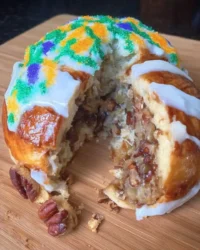
King Cake
- Total Time: 3 hours 10 mins
- Yield: 2 Cakes (24 servings)
- Diet: Vegetarian
Description
A festive and structurally sound Mardi Gras King Cake featuring a tender brioche-style dough and a rich cinnamon-pecan filling. This guide focuses on technical precision, from yeast activation to the perfect windowpane knead, ensuring a professional-quality holiday treat.
Ingredients
- 1 cup whole milk
- 1/2 cup butter, unsalted
- 1/2 cup warm water (110°F)
- 1 package (2 1/4 tsp) active dry yeast
- 8 tablespoons granulated sugar, divided
- 2 large eggs, room temperature
- 1 teaspoon salt
- 1/2 teaspoon ground nutmeg
- 5 cups all-purpose flour, approximately
- 1 cup brown sugar, packed
- 1 cup pecans, chopped
- 2 tablespoons ground cinnamon
- 1/2 cup raisins
- 4 tablespoons butter, melted (for filling)
- 2 cups confectioners’ sugar
- 2–3 tablespoons water (for glaze)
- Purple, green, and gold sanding sugars
- 1 small plastic baby doll
Instructions
- Scald the milk in a saucepan over medium heat, stir in the butter until melted, and let the mixture cool to room temperature.
- Combine warm water, yeast, and 1 tablespoon of sugar in a large bowl; let stand for 10 minutes until foamy.
- Add the cooled milk-butter mixture, eggs, salt, nutmeg, and the remaining 7 tablespoons of sugar to the yeast; whisk until combined.
- Gradually beat in the flour 1 cup at a time until a dough forms, then knead on a floured surface for 8-10 minutes until smooth and elastic.
- Place dough in a lightly oiled bowl, cover, and let rise in a warm spot until doubled in size, about 1.5 hours.
- Punch down the dough, divide in half, and roll each piece into a 10×16-inch rectangle.
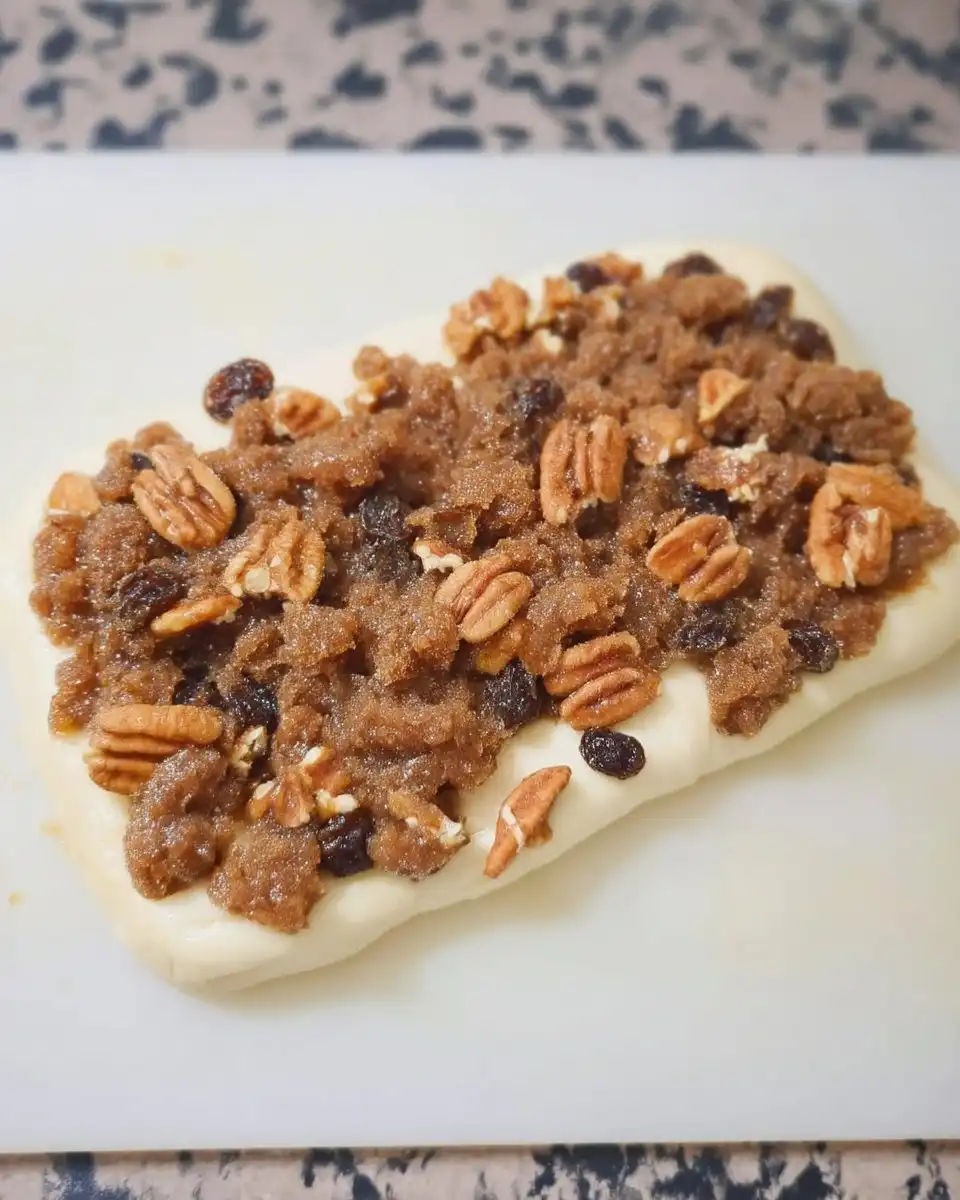
- Mix brown sugar, pecans, cinnamon, raisins, and melted butter; sprinkle evenly over the dough rectangles.
- Roll the dough tightly into logs, shape into rings, and pinch the seams firmly to seal.
- Place on parchment-lined baking sheets, cut small slits around the rings, cover, and let rise for 30-45 minutes.
- Bake at 375°F (190°C) for 25 minutes or until the internal temperature reaches 190°F (88°C).
- Insert the plastic baby into the bottom of the warm cake, then whisk confectioners’ sugar with water and pour over the cakes.
- Immediately decorate with purple, green, and gold sanding sugars before the glaze sets.
Notes
For the best results, use an instant-read thermometer to ensure the milk mixture has cooled to room temperature before adding it to the yeast. If your kitchen is cold, you can proof the dough in an oven that is turned off with the light left on for gentle warmth. Make sure to pinch the seams of the dough rings very tightly to prevent the sugar filling from leaking out during the baking process.
- Prep Time: 2 hours 45 mins
- Cook Time: 25 mins
- Category: Dessert
- Method: Baking
- Cuisine: American
Precision in the Pantry
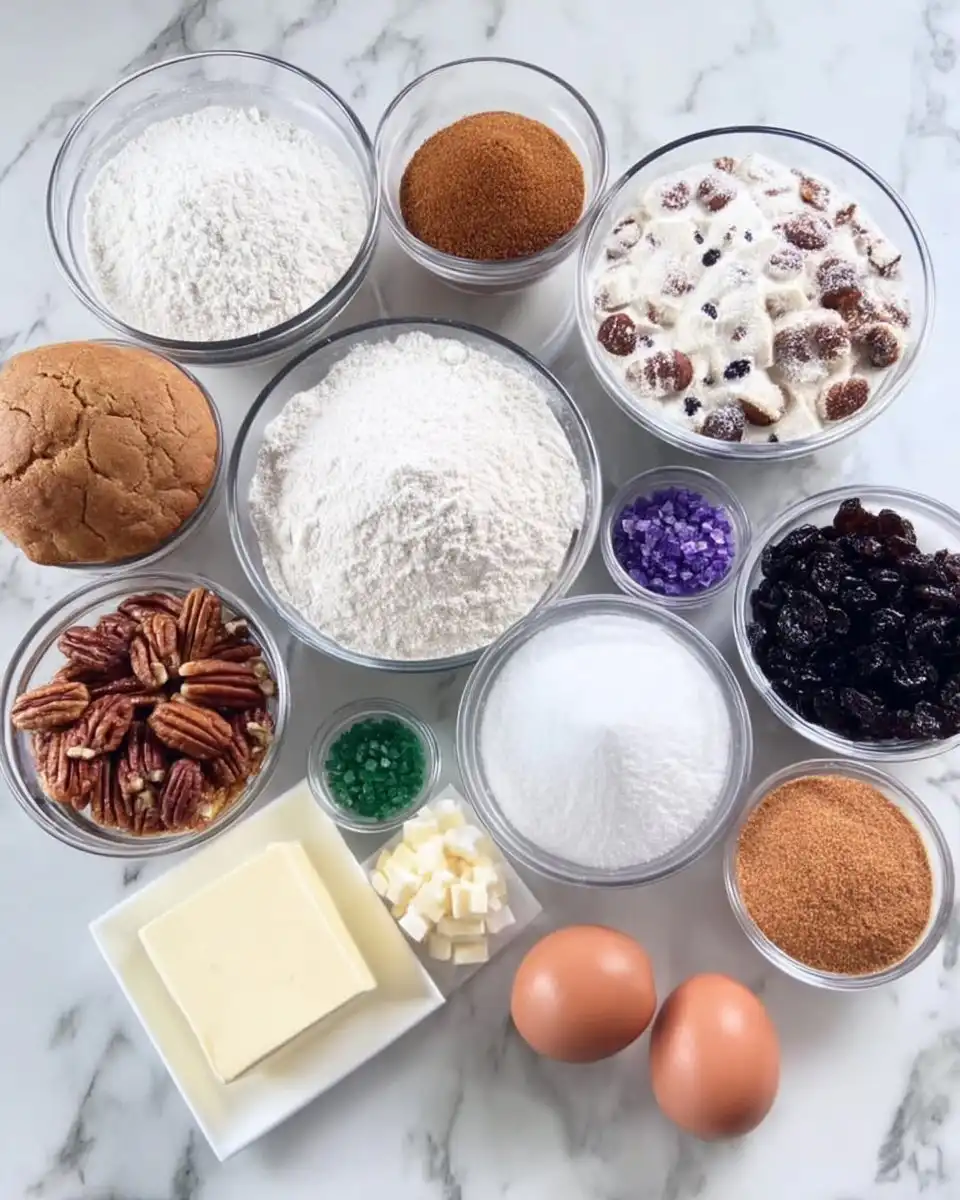
To achieve the correct specific volume and mouthfeel, every ingredient plays a structural role. We are not just mixing; we are building an emulsion.
- Active Dry Yeast: This provides the leavening power. It must be activated at exactly 110°F (45°C). Too cool, and the yeast remains dormant; too hot, and you kill the organism, resulting in a dense, brick-like texture.
- Whole Milk & Butter: These enrich the dough. The fat coats the flour proteins, shortening the gluten strands to create a tender crumb. This is why we add butter *after* the initial hydration in some brioche methods, though here we blend for ease.
- All-Purpose Flour: We use AP flour rather than bread flour to keep the protein content moderate (around 10-11%). This ensures the cake is soft, not chewy.
- Brown Sugar: Its hygroscopic nature (ability to attract moisture) keeps the filling soft and gooey, preventing it from drying out during the bake.
- Pecans & Raisins: These provide textural interruption. Ensure the pecans are chopped uniformly so they do not puncture the dough during rolling.
The Method: Architecture of a King Cake
Step 1: The Awakening
Begin by heating the milk in a small saucepan over medium heat. You want to see steam and small bubbles at the edge—scald it to denature the whey proteins which can inhibit gluten, but do not boil. Remove from heat and stir in the butter until melted. Let this mixture cool to room temperature (approx. 15 minutes). Temperature control is critical here; if it is too hot, it will kill the yeast in the next step.
Step 2: Yeast Activation
In a large bowl (or stand mixer bowl), combine the warm water (110°F/45°C), yeast, and 1 tablespoon of sugar. The sugar feeds the yeast. Let it stand for 10 minutes until a foamy “raft” forms on top. This visual cue confirms your yeast is alive and ready to provide lift.
Step 3: Forming the Enriched Dough
Add the cooled milk-butter mixture, eggs, salt, nutmeg, and the remaining 7 tablespoons of sugar to the yeast mixture. Whisk vigorously for 30 seconds to break up the eggs and create a uniform liquid base. Gradually beat in the flour, 1 cup at a time, using the dough hook on medium speed. Continue until the dough comes together, about 3 minutes.
Step 4: Mechanical Development
Transfer the dough to a lightly floured surface. Knead rhythmically for 8 to 10 minutes. We are looking for the dough to transform from a shaggy mass to a smooth, elastic ball. It should pass the windowpane test—where you can stretch a piece thin enough to see light through it without tearing.
Step 5: The First Proof
Place the dough in a lightly oiled bowl, turning it once to coat the surface. This prevents a skin from forming, which restricts expansion. Cover with a damp cloth or plastic wrap and place in a warm, draft-free spot. Let it rise until doubled in volume, roughly 1 ½ hours. This slow rise develops flavor and relaxes the gluten.
Step 6: Rolling and Filling
Punch down the dough to release excess gas. Divide it in half. Roll each half into a 10×16-inch rectangle. For the filling, combine brown sugar, pecans, flour, raisins, and cinnamon, then mix in the melted butter until crumbly. Sprinkle this evenly over the dough rectangles, pressing it gently into the surface so it adheres.
Step 7: Shaping the Ring
Roll each rectangle tightly from the long end into a log. This spiral creates the layers of dough and filling. Bring the ends together to form a ring, pinching the seam aggressively to seal it. Place seam-side down on a parchment-lined baking sheet. Using scissors, make cuts 1/3 of the way through the ring at 1-inch intervals to allow steam to escape and create a decorative pattern.
Step 8: Second Proof and Bake
Cover and let rise again until doubled, about 30-45 minutes. Preheat your oven to 375°F (190°C). Bake the rings for 25 minutes, rotating the trays halfway through for even heat distribution. The cake is done when it is golden brown and the internal temperature registers 190°F (88°C). Remove and carefully insert the plastic baby doll into the bottom of the warm cake.
Step 9: The Glaze and Finish
Whisk the confectioners’ sugar with water until smooth. The consistency should be pourable but thick enough to cling to the cake. Pour over the warm cakes and immediately sprinkle with purple, green, and gold sugar before the glaze sets.
Jordan’s Structural Secrets
- Temperature is King: The difference between a heavy, greasy cake and a light one is often the temperature of the butter. When incorporating butter, ensure it is melted but not hot. If it is too hot, it can separate out of the emulsion during the mix.
- The Seam Seal: When forming the ring, pinch the dough seams together with authority. If the seal is weak, the brown sugar filling will liquify and leak out, sticking the cake to the pan. Structure relies on integrity.
- Don’t Rush the Rise: If your kitchen is cool, the proofing time might extend beyond 1.5 hours. Trust the volume (doubling in size) rather than the clock. Under-proofed dough will burst uncontrollably in the oven.
- Texture Check: For those obsessed with the perfect crumb, understanding moisture retention is key. You can read more about achieving the perfect texture in our velvet crumb collection, where we discuss how fat ratios impact mouthfeel.
Technical Tweaks and Variations
- Cream Cheese Stabilization: For a richer, tangier filling that holds its shape better than the standard sugar mix, beat 8 oz of cream cheese with an egg yolk and layer it under the pecan mixture. This adds density and moisture.
- Fruit Infusions: While raisins are traditional, dried cherries or candied orange peel can add a sophisticated bitterness that cuts through the sugar. If you enjoy working with dense fruit additions, our fruit cake guide offers excellent tips on preventing fruit from sinking in batter.
- The Praline Approach: Substitute the water in the glaze for milk and add a drop of almond extract for a flavor profile that mimics the nuttiness of the pecans inside.
- Braided Construction: Instead of a simple roll, cut the log lengthwise (leaving one end attached) and twist the two strands together before forming the circle. This exposes the filling for a more rustic look.
Presentation and Plating
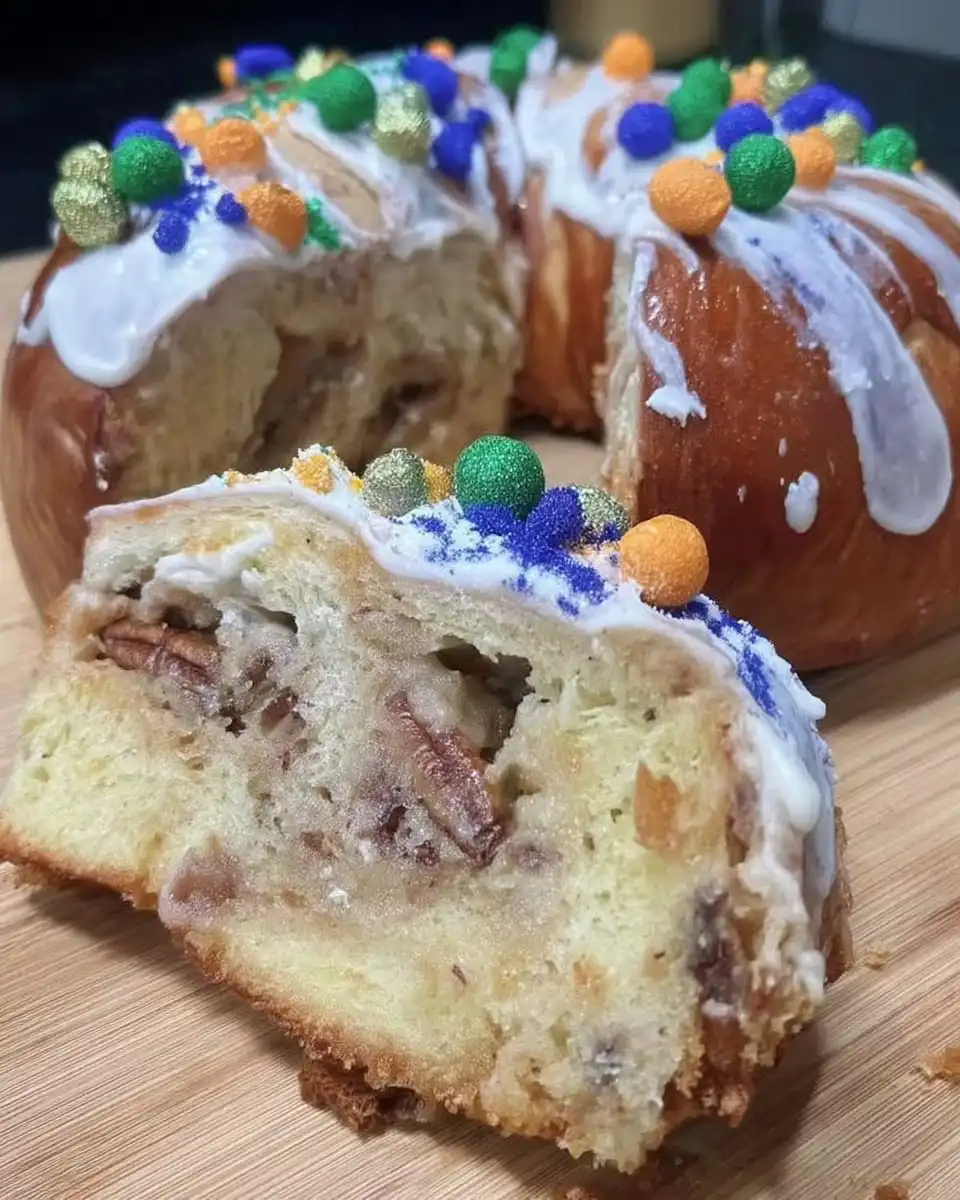
- The Cut: Use a serrated bread knife to slice the cake. A straight blade will compress the soft dough and ruin the visual layering of the spiral. Use a gentle sawing motion.
- Temperature: This cake is best served slightly warm or at room temperature. The butter in the dough constricts when cold, making the texture seem stale even when it is not.
- Pairing: The sweetness of the glaze requires a bitter contrast. Serve with strong black coffee or a chicory blend to cut through the sugar.
- Alternative Texture: If you find you prefer a cake with a tighter, denser crumb structure rather than this bread-like texture, you might appreciate the technique used in our old fashioned chocolate cake.
The Technical Truth
Mastering the King Cake is a rite of passage for the home baker. It requires you to manage yeast fermentation, gluten development, and shaping techniques all in one recipe. When done correctly, the result is a texturally complex dessert that is crisp, soft, and meltingly sweet all at once. For further inspiration on classic baking techniques, explore our full recipe index.
While this method follows the traditional brioche style, other bakers explore fascinating variations. For example, House of Nash Eats offers a lovely take on this classic that is worth reviewing for comparison.
We love seeing your structural triumphs. Share your results with us on Facebook, Pinterest, or Instagram.