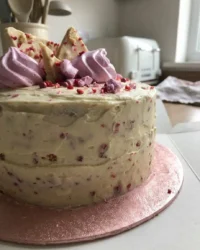
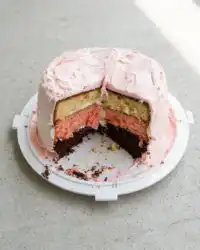
In my early years at the bench, I found that the secret to a professional layer cake isn’t just the sugar—it’s the protein management. This Coconut Cake uses cake flour specifically to minimize gluten development, which results in a crumb that feels like silk on the tongue. By managing the temperature of our fats, we achieve a specific structural integrity that allows the cake to remain light yet sturdy. This balance is the hallmark of a disciplined pastry kitchen, where precision creates a superior mouthfeel.

This specific recipe focuses on a tight, tender crumb that avoids the dryness often associated with coconut-based bakes. By using a combination of egg whites and sour cream, we achieve a melt-in-the-mouth quality that remains firm enough for professional stacking. It is a technical triumph that rewards the baker who respects the science of aeration and emulsion.
Structural Integrity and Delicate Crumb
You will find that this cake offers a specific architectural beauty that is often missing from home-baked goods. The use of egg whites instead of whole eggs provides a clean, white aesthetic and a lighter lift, while the sour cream adds the necessary acidity to tenderize the proteins. This creates a cake that is both structurally sound and incredibly soft.
The inclusion of coconut milk in the batter provides a subtle, natural fat that coats the flour particles, inhibiting excessive gluten formation. This technical choice ensures that every bite melts away without resistance. It is a sophisticated dessert that prioritizes texture as much as flavor, proving that precision in the mixing bowl leads to victory at the table.
Print
Coconut Cake
- Total Time: 2 hours 5 mins
- Yield: 12 servings
- Diet: Vegetarian
Description
This elegant three-layer coconut cake features a tight, velvety crumb achieved through the precise use of cake flour and a professional creaming method. Topped with a luscious coconut cream cheese frosting and shredded coconut, it offers a sophisticated balance of tropical flavor and structural integrity.
Ingredients
- 285g cake flour
- 2 1/2 teaspoons baking powder
- 1/2 teaspoon baking soda
- 1 teaspoon salt
- 170g unsalted butter, softened
- 350g granulated sugar
- 5 large egg whites, room temperature
- 120g full-fat sour cream
- 1 teaspoon vanilla extract
- 1 teaspoon coconut extract
- 240ml canned unsweetened coconut milk
- 1 cup sweetened shredded coconut (for batter)
- 225g cream cheese, softened
- 115g unsalted butter, softened (for frosting)
- 480g confectioners’ sugar
- 2 tablespoons coconut milk (for frosting)
- 1 1/2 cups sweetened shredded coconut (for coating)
Instructions
- Preheat oven to 350°F (177°C) and grease three 8-inch cake pans, lining the bottoms with parchment paper.
- Whisk together the cake flour, baking powder, baking soda, and salt in a medium bowl until well combined.
- Using a stand mixer with a paddle attachment, beat the butter and granulated sugar on medium-high speed for 2 minutes until pale and voluminous.
- Add the egg whites, sour cream, vanilla, and coconut extracts, beating until fully incorporated.
- On low speed, alternate adding the dry ingredients and the coconut milk in three additions, starting and ending with the dry ingredients.
- Gently fold in the shredded coconut by hand using a rubber spatula to preserve the aerated texture.
- Divide the batter evenly between the three pans and bake for 21–24 minutes until a toothpick comes out clean.
- Cool cakes in the pans for 60 minutes, then transfer to a wire rack to cool completely before frosting.
- Prepare the frosting by beating butter and cream cheese for 2 minutes, then slowly adding confectioners’ sugar, coconut milk, and extracts until whipped and stable.
- Level the cooled cake layers, frost between each layer, apply a crumb coat followed by a final frosting layer, and press shredded coconut into the exterior.
Notes
To ensure the most delicate crumb, always weigh your dry ingredients with a digital scale and ensure all cold components reach exactly 70°F before mixing. If you prefer a nuttier profile, lightly toast the exterior coconut in the oven at 325°F for 5 minutes before applying it to the frosted cake.
- Prep Time: 40 mins
- Cook Time: 25 mins
- Category: Dessert
- Method: Baking
- Cuisine: American
The Technical Foundation of Coconut Cake
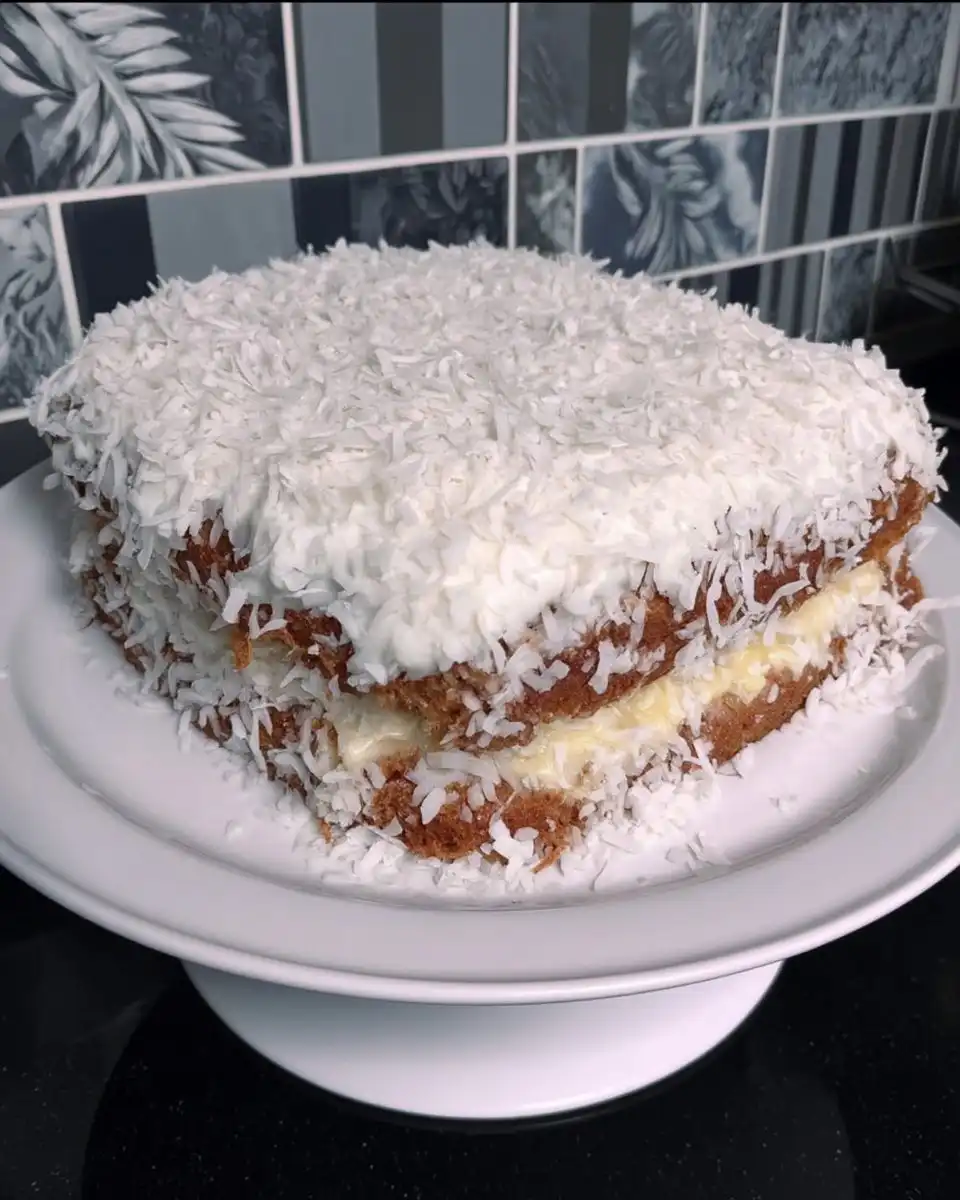
To achieve the perfect texture, every ingredient must be at room temperature, approximately 70°F (21°C). This allows the fats and liquids to emulsify properly, creating a uniform batter that rises evenly in the oven.
- Cake Flour (285g): Lower protein content (around 7-8%) is vital for a tender crumb. Unlike all-purpose flour, cake flour is finely milled and bleached, which helps the starches absorb more liquid and sugar.
- Unsalted Butter (170g): Softened butter is the medium for aeration. We cream it with sugar to create millions of tiny air pockets.
- Egg Whites (5 Large): These provide structure through protein coagulation without the heaviness of yolks.
- Full-Fat Sour Cream (120g): The acidity weakens gluten bonds, while the fat adds a creamy mouthfeel.
- Canned Coconut Milk (240ml): Use the unsweetened, canned variety for a higher fat content than the refrigerated carton versions.
- Sweetened Shredded Coconut: This provides a tactile contrast to the soft sponge.
The Method of Precision
Step 1: Prep Your Environment
Preheat your oven to 350°F (177°C). Prepare three 8-inch cake pans by greasing them, lining with parchment paper rounds, and greasing the parchment. This triple-layer protection makes certain the cakes release without structural damage.
Step 2: Aerate the Dry Components
Whisk the cake flour, baking powder, baking soda, and salt together in a medium bowl. This step is not just for mixing; it breaks up any flour clumps and initiates the distribution of leavening agents for an even rise.
Step 3: The Creaming Phase
Using a stand mixer with a paddle attachment, beat the butter and granulated sugar on medium-high speed for exactly 2 minutes. We are looking for a pale, voluminous texture. Scrape the bowl to keep the fat distribution uniform.
Step 4: Building the Emulsion
Beat in the egg whites until fully incorporated. Add the sour cream, vanilla, and coconut extracts. If the mixture appears curdled, do not worry; this is a result of different fat and water ratios meeting. It will smooth out once the dry ingredients are added.
Step 5: Incorporating the Crumb
With the mixer on low, alternate adding the dry ingredients and the coconut milk. Start and end with the dry ingredients. This method prevents the batter from becoming over-worked or saturated. Fold in the shredded coconut by hand to prevent crushing the air pockets.
Step 6: Thermal Precision
Pour the batter into the prepared pans. For perfect results, weigh the pans on a digital scale to ensure they are identical. Bake for 21–24 minutes. The cakes are done when a toothpick inserted in the center reveals a clean surface with no wet batter.
Step 7: Controlled Cooling
Allow the cakes to cool in their pans for 60 minutes. This period allows the internal structure to set. Move them to a wire rack to finish cooling. They must be completely cold—ideally chilled—before you attempt to frost them.
Step 8: The Frosting Foundation
Beat the butter and cream cheese for 2 minutes until perfectly smooth. Add the confectioners’ sugar, coconut milk, and extracts on low speed. Once combined, increase to high speed for 3 minutes to achieve a whipped, stable consistency.
Step 9: Structural Assembly
Level each cake layer with a serrated knife. Place the first layer down and cover with a heaping cup of frosting. Repeat with the second and third layers. Apply a thin crumb coat first, chill for 10 minutes, and then apply the final layer of frosting for a professional finish.
Step 10: Final Texture Application
Press the shredded coconut into the sides and top of the cake while the frosting is still tacky. This creates a protective barrier and adds the final textural element.
Precision Secrets for the Perfect Crumb
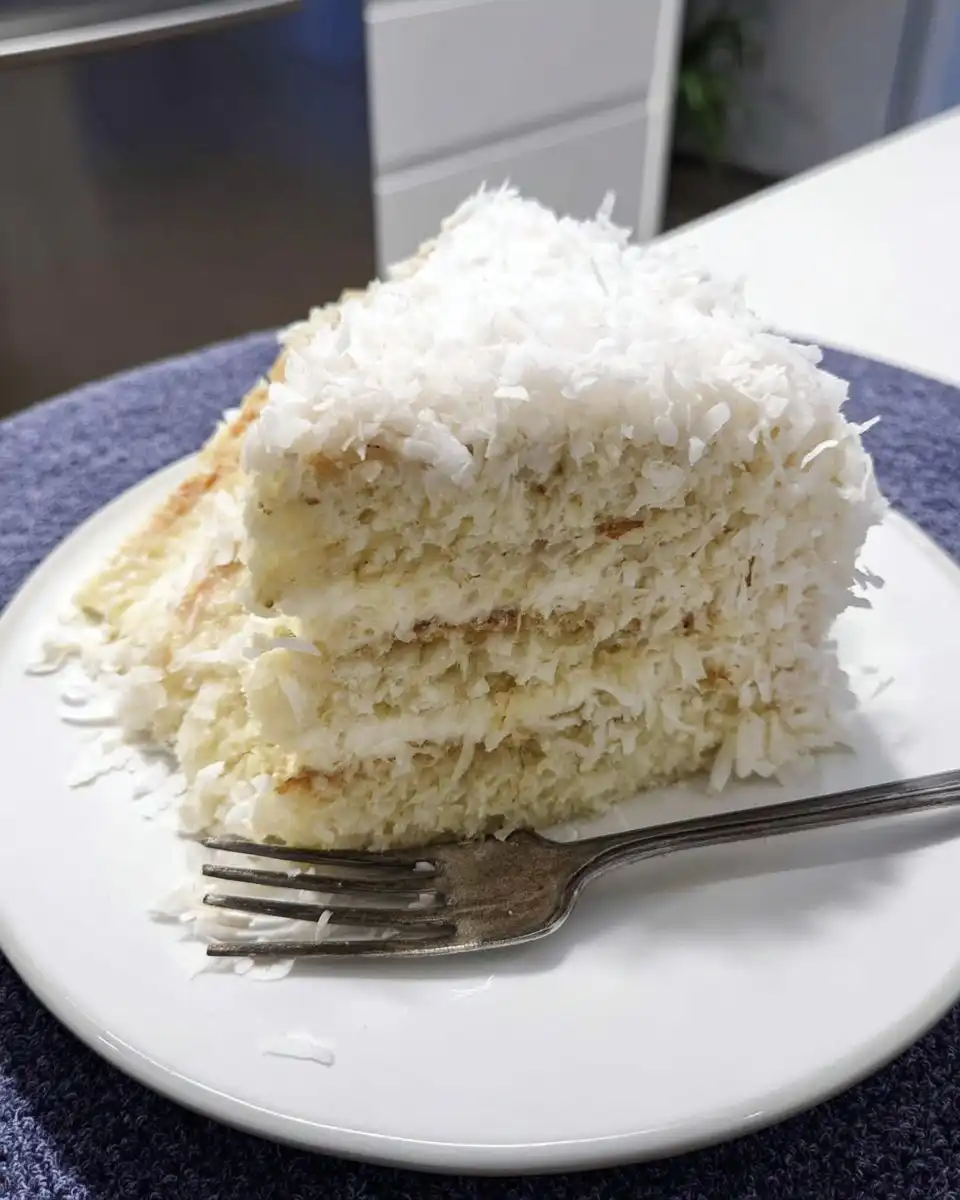
Temperature is your most important tool in the kitchen. If your butter is too cold, it will not trap air; if it is too warm, the air pockets will collapse. Aim for a tactile consistency where your finger leaves an indentation but does not sink through. To maintain a consistent texture throughout your baking journey, you might want to look at our velvet-crumb-collection for more insights on crumb structure.
When mixing the final batter, use a large rubber spatula for a final hand-whisk. This allows you to feel for any hidden butter pockets at the base of the bowl that the machine might have missed. A uniform batter is the only way to guarantee a uniform bake. Always use a bench scraper for the sides of the cake to create a perfectly vertical structure before applying the coconut.
Technical Tweaks for Advanced Results
For a different textural profile, try toasting half of the shredded coconut before applying it to the exterior. This introduces a crisp, nutty element that contrasts beautifully with the soft frosting. You can also add a tablespoon of fresh lime zest to the batter to introduce a bright acidity that cuts through the richness of the coconut milk. This technique is similar to how we balance flavors in our raspberry-white-chocolate-cake.
If you prefer a more intense coconut flavor, you can replace the vanilla extract in the frosting with a high-quality coconut bean paste. This provides a more concentrated flavor without altering the hydration levels of the buttercream. For those seeking a more tropical finish, a thin layer of pineapple curd between the layers can add a stunning moisture boost.
Presentation and Textural Balance
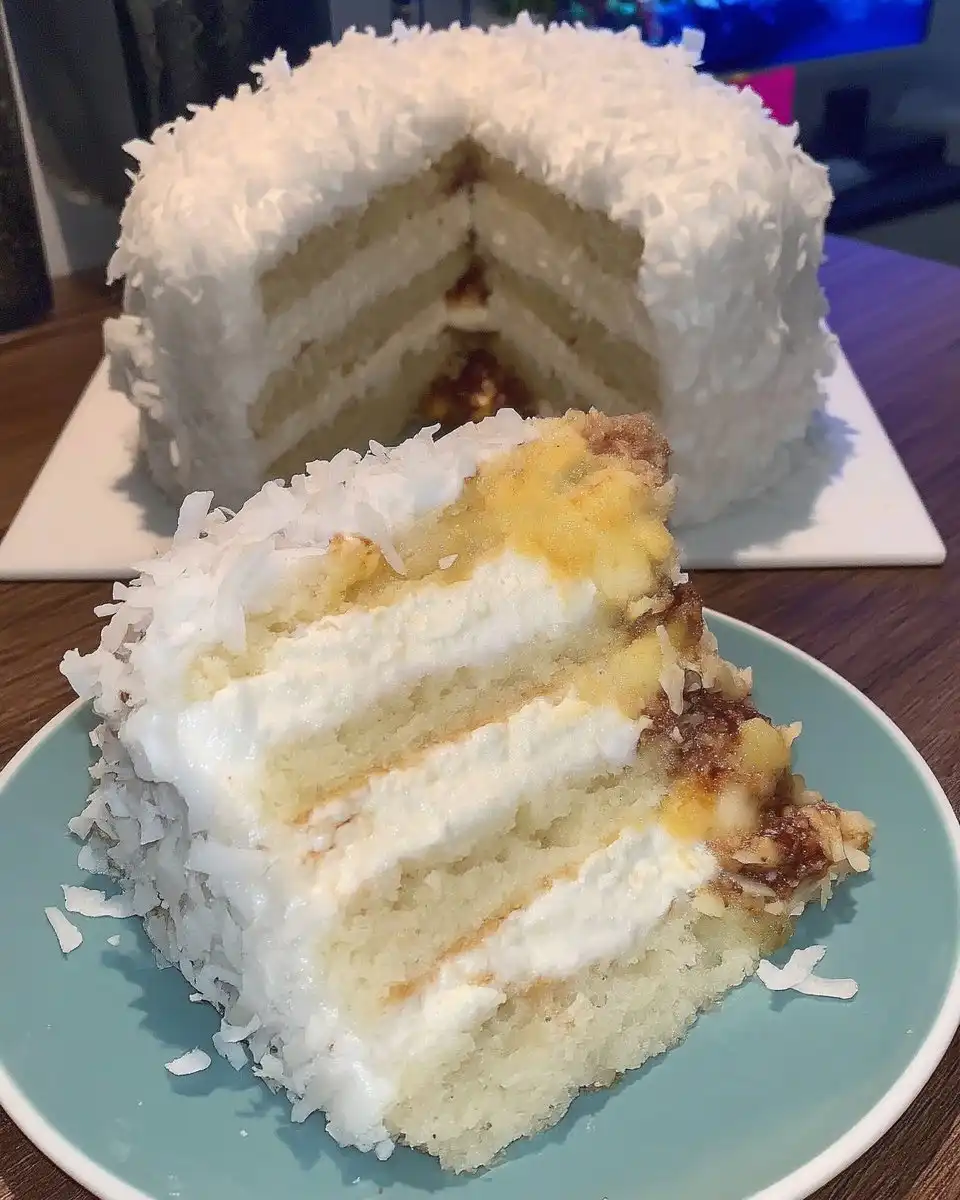
To achieve clean, professional slices, always use a long serrated knife and wipe it clean between every cut. The cake should be chilled for at least 20 minutes before slicing to allow the cream cheese frosting to firm up. This prevents the layers from sliding and maintains the structural beauty of the slice. For a truly succulent-fruit-fusion, serve each slice with a side of fresh mango or passion fruit.
Presentation is about the balance of the crisp exterior and the soft interior. Serve the cake at a slight chill, but let it sit at room temperature for 10 minutes before eating to let the butter in the crumb soften slightly for the best mouthfeel. Pair it with a light sparkling wine or a delicate white tea to complement the tropical notes.
Master the Craft of Baking
Success in the kitchen comes from understanding the relationship between ingredients and heat. This Coconut Cake is more than just a sweet treat; it is an exercise in precision and patience. By following these technical steps, you have created a dessert that is as beautiful in its structure as it is in its flavor. For more inspiration on layered masterpieces, explore our fruit-cake guide. I look forward to seeing your technical triumphs in your own kitchen.