During my early years training in a high-pressure London pastry kitchen, I learned that the most seemingly simple sponges require the most rigid technical discipline. This yellow cake recipe is the result of years spent perfecting the intersection of structural integrity and a crumb so tender it practically dissolves upon contact. We achieve this specific balance through precise aeration and a calculated ratio of fats that prioritize mouthfeel above all else.

This is not a generic imitation of a boxed mix; it is a technically superior butter cake designed for the ambitious baker. By separating the eggs and whipping the whites to a precise peak, we introduce a structural lightness that counters the richness of the additional yolks. The resulting golden sponge offers a sophisticated texture that remains moist while providing enough strength for multi-tiered assembly.
Structure Meets Texture in the Golden Sponge
You will appreciate this recipe because it solves the age-old conflict between a cake that is sturdy enough to frost and one that is light enough to enjoy. The inclusion of four egg yolks provides a deep, custard-like flavor and a vibrant hue that no whole-egg recipe can replicate. This specific method focuses on the physics of the crumb, utilizing both chemical leaveners and mechanical aeration to create a superior internal matrix.
The use of buttermilk provides the necessary acidity to tenderize the gluten, while the reverse-folding of whipped egg whites at the final stage adds a cloud-like quality to the finish. It is a masterclass in texture, offering a velvety bite that stands up beautifully to the heavy cocoa profile of a traditional chocolate buttercream. If you have been searching for a sponge that maintains its moisture for days without becoming heavy or oily, this technical approach is your definitive solution.
Print
Yellow Cake Recipe
- Total Time: 56 mins
- Yield: 12 servings
- Diet: Vegetarian
Description
This technically-driven yellow cake achieves a perfect balance between a sturdy structure and a melt-in-the-mouth texture. By utilizing a specialized folding technique and a rich egg-yolk base, it produces a sophisticated golden sponge that pairs perfectly with a velvety chocolate buttercream.
Ingredients
- 285g cake flour
- 226g unsalted butter, softened to 65°F
- 4 large egg yolks
- 4 large egg whites
- Cream of tartar
- Granulated sugar
- Buttermilk
- Baking powder
- Baking soda
- Salt
- Vanilla extract
- Unsalted butter (for frosting)
- Confectioners’ sugar
- Unsweetened cocoa powder
- Heavy cream
Instructions
- Preheat oven to 350°F (177°C) and grease two 9-inch round cake pans, lining the bottoms with parchment paper.
- Sift the cake flour, baking powder, baking soda, and salt twice into a large bowl to ensure even aeration.
- Using a stand mixer with a paddle attachment, cream the softened butter and granulated sugar on high for 3 minutes until pale and voluminous.
- Add the egg yolks one at a time, beating thoroughly after each addition to maintain a stable emulsion.
- On the lowest speed, alternate adding the dry ingredients in three parts and the buttermilk in two parts, beginning and ending with the dry mixture.
- In a separate clean bowl, whip the egg whites and cream of tartar until they reach fluffy soft peaks with a slight curl.
- Gently fold the whipped whites into the batter using a silicone spatula and a “cut and turn” motion until no streaks remain.
- Divide the batter evenly between pans and bake for 27-31 minutes, tenting with foil at the 18-minute mark to prevent over-browning.
- Cool in the pans for 10 minutes before transferring to a wire rack to cool completely.
- To make the frosting, beat butter until creamy, then incorporate sugar, cocoa, cream, salt, and vanilla on high speed until smooth.
Notes
For the most professional crumb, ensure your buttermilk and eggs are at true room temperature before mixing to prevent the batter from seizing. When folding the egg whites, work quickly but gently; over-mixing at this stage will sacrifice the cake’s signature lift and lightness.
- Prep Time: 25 mins
- Cook Time: 31 mins
- Category: Dessert
- Method: Baking
- Cuisine: American
The Technical Foundation of the Crumb
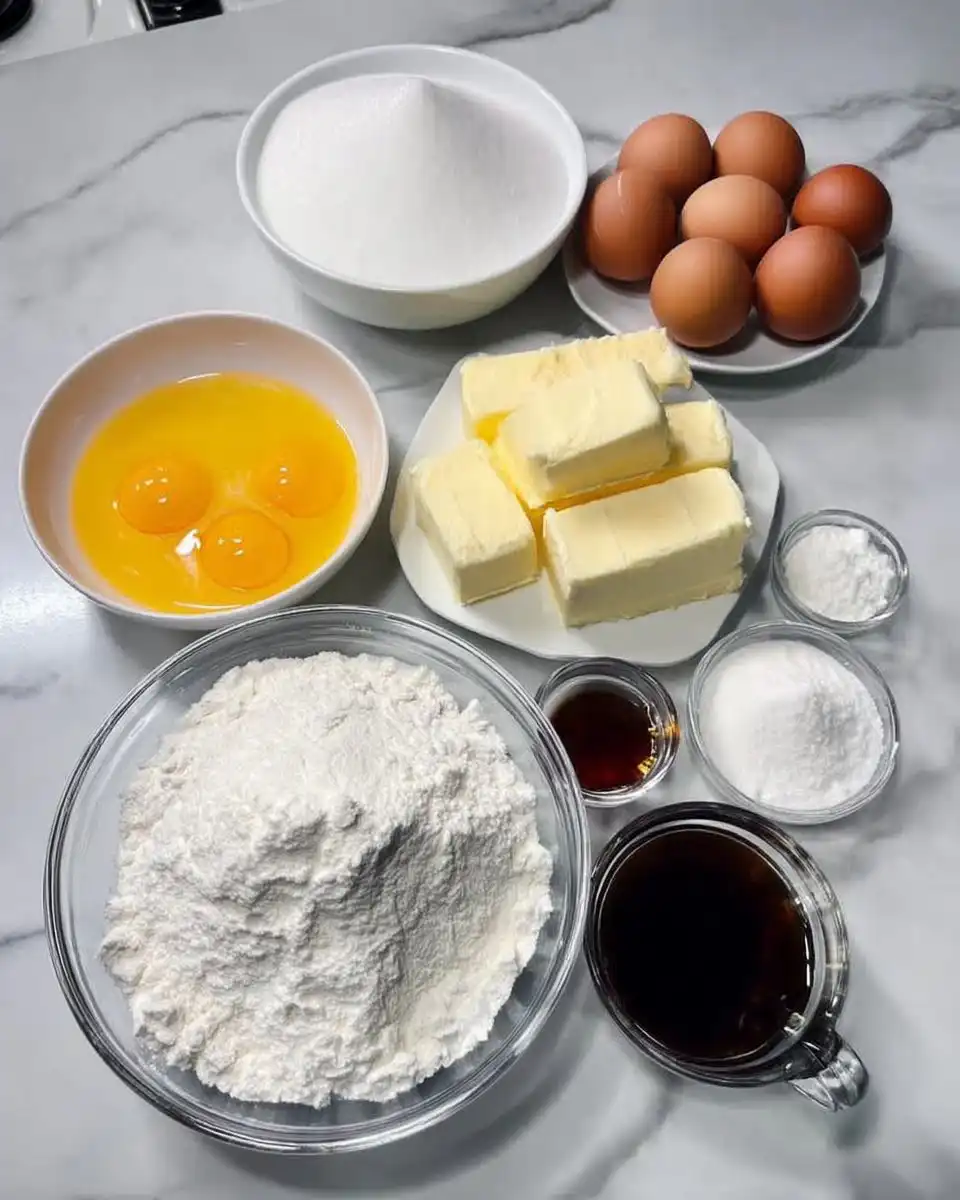
Success in pastry arts begins with an understanding of your raw materials and their chemical roles within the batter. Each component in this yellow cake recipe has been selected for its specific protein content, fat percentage, or pH level to guarantee a predictable and perfect outcome.
- Cake Flour (285g): This is non-negotiable for a fine crumb. Its lower protein content (typically 7-8%) prevents excessive gluten development, resulting in a tender texture. I recommend the spoon-and-level method or, preferably, using a digital scale for exact measurement.
- Unsalted Butter (226g): Softened to 65°F (18°C). This temperature is vital for the creaming process, allowing the sugar crystals to carve air pockets into the fat without the butter melting.
- Egg Yolks and Whites: The yolks provide emulsification and a rich yellow color. The whites, whipped separately with cream of tartar, provide the structural lift and a “melt” factor that prevents the cake from feeling dense.
- Buttermilk: The lactic acid reacts with the baking soda to create immediate carbon dioxide bubbles, while simultaneously breaking down protein strands for a softer bite.
- Cream of Tartar: This acidic salt stabilizes the protein bonds in the egg whites, allowing them to hold more air and resist collapsing during the folding process.
The Technical Process for the Perfect Sponge
Step 1: Thermal Calibration and Prep
Preheat your oven to 350°F (177°C). Prepare two 9-inch round cake pans by greasing them thoroughly and lining the bottoms with parchment paper. This creates a barrier that prevents the delicate base of the cake from over-baking and guarantees a clean release. Do not skip the parchment; it is the secret to maintaining the structural edges of your layers.
Step 2: Sifting and Aerating Dry Ingredients
Whisk the cake flour, baking powder, baking soda, and salt in a large bowl. I suggest sifting these ingredients twice to break up any clumps of leavener. This ensures an even distribution of the rising agents, which prevents large, irregular holes in the final crumb.
Step 3: The Creaming Phase
Using a stand mixer with the paddle attachment, beat the softened butter and granulated sugar on high speed for exactly three minutes. We are looking for a pale, almost white color and a voluminous, fluffy texture. Scrape the bowl frequently. Add the egg yolks one at a time, allowing each to be fully emulsified before adding the next. This step is critical for a stable emulsion that won’t split when the liquid is added.
Step 4: Alternating Liquid and Dry Additions
With the mixer on the lowest setting, add one-third of the dry ingredients, followed by half of the buttermilk. Repeat this sequence, finishing with the final third of the dry ingredients. Mixing on low speed prevents the over-development of gluten, which would turn our tender sponge into something bread-like. The batter will be thick and glossy at this stage.
Step 5: Whipping the Whites to Soft Peaks
In a separate, perfectly clean bowl, whisk the egg whites and cream of tartar on high speed. You are looking for fluffy peaks that hold their shape but still have a slight curl at the tip. Over-whipping until they are dry will make them impossible to fold in without deflating the batter.
Step 6: The Delicate Fold
Gently fold the whipped whites into the thick batter using a silicone spatula. Use a “cut and turn” motion, bringing the batter from the bottom over the top. Stop as soon as no white streaks remain. This preserved air is what gives this yellow cake recipe its spectacular lift.
Step 7: Precision Baking and Tenting
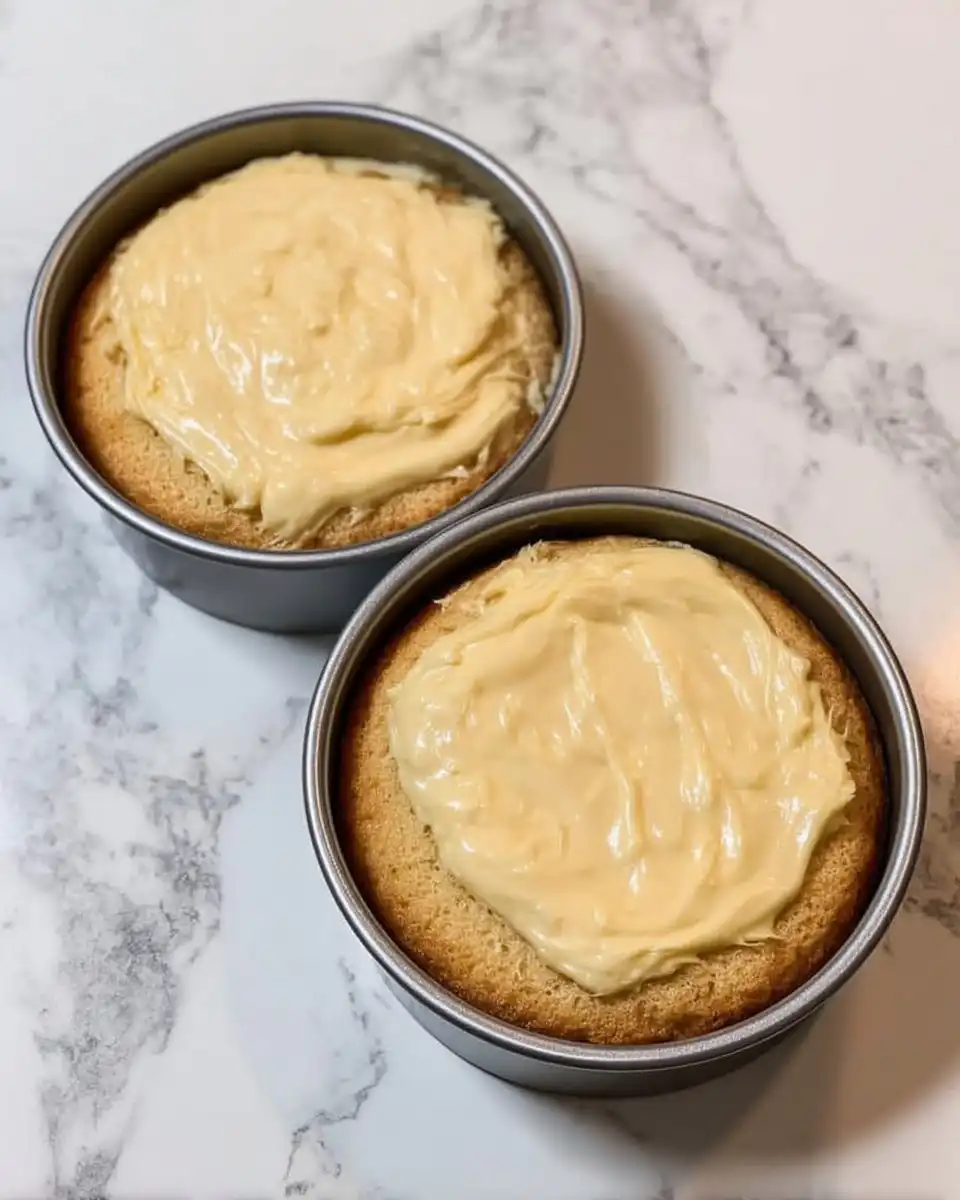
Divide the batter evenly between the pans. Bake for 27-31 minutes. At the 18-minute mark, quickly tent the pans with foil to prevent the tops from browning too deeply before the center is set. Test with a toothpick; it should come out clean or with a few moist crumbs. Allow the cakes to cool in the pans for 10 minutes before transferring to a wire rack.
Step 8: Constructing the Chocolate Buttercream
Beat the butter for 2 minutes until creamy. Incorporate the confectioners’ sugar, cocoa, cream, salt, and vanilla. Start on low speed to avoid a sugar cloud, then move to high for 60 seconds. The goal is a spreadable consistency that holds its shape. If the frosting is too soft, the layers will slide; if too stiff, they will tear the delicate cake surface.
Precision Secrets for Structural Success
Temperature control is the difference between a mediocre cake and a professional one. Every liquid ingredient—buttermilk, eggs, and butter—must be at room temperature to ensure they emulsify correctly. If the buttermilk is cold, it will cause the butter to seize, resulting in a curdled batter and a greasy crumb. For another masterclass in texture, examine our old-fashioned chocolate cake which utilizes similar thermal principles to achieve a deep, moist bite. Additionally, always use a serrated knife for leveling your cakes to avoid compressing the internal air pockets.
Technical Tweaks for Advanced Bakers
While this yellow cake recipe is a classic, you can modify the flavor profile without compromising the structure. For a bright, citrus-forward variation, replace the vanilla extract with two tablespoons of fresh lemon zest and a teaspoon of lemon extract. If you prefer a more complex sweetness, try swapping the granulated sugar for light brown sugar to add a hint of molasses and moisture. For those looking for a more vibrant color palette, you might consider the techniques found in our lemon rainbow cake, where layering and color play a vital role in presentation.
Presentation Precision and Textural Balance

To achieve the neatest slices, I recommend refrigerating the assembled cake for at least 45 minutes before cutting. Use a sharp, thin knife dipped in hot water and wiped dry between every single cut. This prevents the chocolate buttercream from smearing across the golden crumb of the yellow cake. For a truly spectacular dessert spread, serve this cake alongside the fruit-forward profiles found in our raspberry white chocolate cake to provide a sharp contrast to the rich cocoa frosting.
Mastery of the Golden Crumb
Achieving the perfect yellow cake is a triumph of technique over simplicity. By respecting the creaming times, maintaining ingredient temperatures, and handling the egg whites with care, you have created a sponge that represents the pinnacle of home baking. This recipe is a foundational skill that will serve you across countless celebrations and tiers. For more insights into achieving the perfect bake, view our full velvet crumb collection and continue your journey toward pastry mastery. For more technical tips and community support, join our baking collective on Instagram, Pinterest, and Facebook. Happy baking.