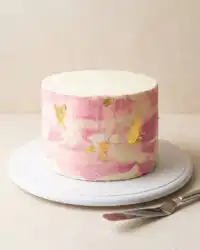
During my early training in the heart of London, I was taught that the integrity of a sponge is paramount, regardless of who is sitting at the table. This Dog Cake is a masterclass in applying those rigorous British pastry standards to canine-safe ingredients, focusing on a crumb that is both sturdy and remarkably tender. We focus on the precision of moisture control to avoid the heavy, leaden textures often found in amateur pet bakes.

This particular formulation relies on the structural synergy between shredded carrots and the high protein content of whole wheat flour. By carefully balancing the natural oils in peanut butter with a humectant like honey, we create a cake that maintains its shape for beautiful presentation while providing a soft, satisfying mouthfeel for your companion.
Structure Meets Texture for Your Companion
This recipe is not merely a treat; it is a technically sound sponge designed for the unique requirements of canine digestion and palatability. Most pet bakes fail because they lack the structural frame to support their inclusions, resulting in a crumbly mess. In this version, we use whole wheat flour to provide a robust gluten network that stands up to the significant weight of the carrots.
The result is a cake with a defined exterior and a moist, melt-away interior that mimics the texture of a high-end carrot cake. By controlling the aeration during the mixing phase, we guarantee a dense enough cake to hold its shape under the knife, yet light enough to be easily digestible. It is the ultimate victory in pet-focused pastry arts, proving that technical mastery applies to every creature in the home.
Print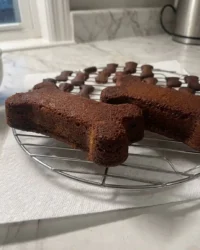
Dog Cake
- Total Time: 55 mins
- Yield: 8 servings
- Diet: Dog-Friendly
Description
A sophisticated canine-safe sponge that balances the structural integrity of whole wheat flour with the natural moisture of shredded carrots. This recipe ensures a tender crumb and a robust shape, making it the perfect technical bake for a special pet celebration.
Ingredients
- 1 large egg
- 1/4 cup peanut butter (must be xylitol-free)
- 1/4 cup vegetable oil
- 1 teaspoon vanilla extract
- 1/3 cup honey
- 1 cup shredded carrots
- 1 cup whole wheat flour
- 1 teaspoon baking soda
Instructions
- Preheat oven to 350°F (175°C) and grease a 6-cup ring mold or fluted tube pan with dog-safe oil.
- In a large mixing bowl, whisk together the egg, honey, peanut butter, oil, and vanilla extract until a smooth emulsion forms.
- Gently fold the shredded carrots into the wet mixture to ensure even distribution of moisture.
- Sift the whole wheat flour and baking soda together, then fold into the batter using a spatula just until no flour streaks remain.
- Spoon the batter into the prepared pan and bake for approximately 40 minutes, or until a skewer inserted into the center comes out clean.
- Cool the cake in the pan on a wire rack for exactly 10 minutes before inverting to release and cooling completely.
Notes
To ensure the best results, use natural peanut butter with no added salt or sugar. If your dog has a sensitive stomach, you can substitute the oil with unsweetened applesauce for a lower-fat version that remains moist and structurally sound.
- Prep Time: 15 mins
- Cook Time: 40 mins
- Category: Pet Treat
- Method: Baking
- Cuisine: American
The Technical Foundation
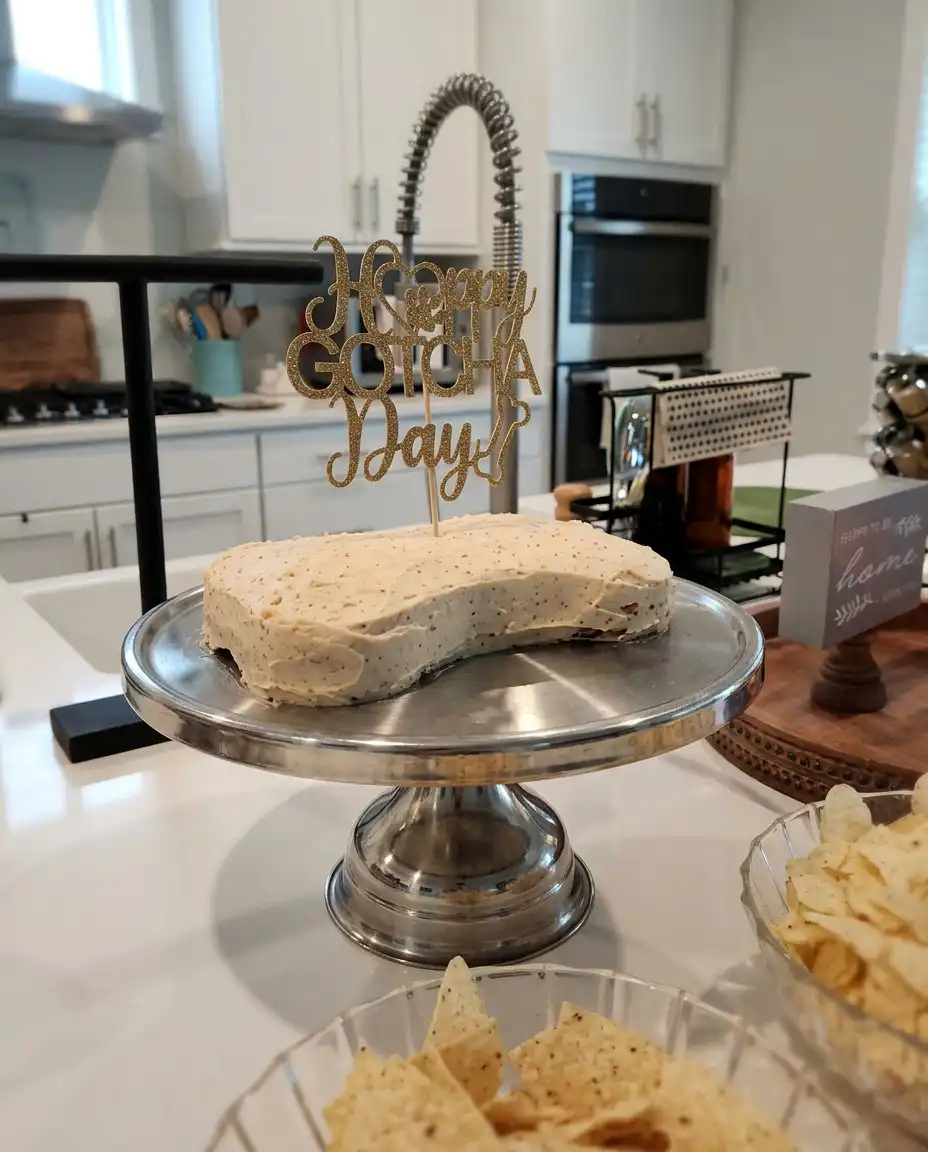
Selecting ingredients for a Dog Cake requires a deep understanding of how each component affects the final structural outcome. We avoid traditional sugars and fats in favor of ingredients that provide functional benefits to the bake’s integrity and the animal’s health.
- Peanut Butter: This serves as our primary lipid source. It provides the necessary fat to coat the flour proteins, preventing an overly tough crumb. It must be xylitol-free to maintain safety standards.
- Shredded Carrots: These act as hydro-reservoirs. During the baking process, they release moisture at a controlled rate, which prevents the whole wheat flour from becoming parched and brittle.
- Egg: The essential protein binder. It creates the internal scaffolding required for the cake to rise and hold its shape once cooled.
- Honey: A natural humectant that attracts and retains moisture. This is the secret to a cake that stays soft for several days rather than drying out immediately.
- Whole Wheat Flour: We choose this for its higher protein content and fiber, which provides a more substantial structure than all-purpose flour. It creates a rustic, hearty crumb that feels intentional.
- Baking Soda: Our leavening agent. It reacts with the slight acidity in the honey and carrots to create carbon dioxide, giving the cake a necessary lift.
The Method
Step 1: Thermal Calibration and Vessel Prep
Preheat your oven to 350°F (175°C). Precise temperature is vital here; if the oven is too cool, the baking soda will not activate quickly enough to support the heavy carrot inclusions, leading to a sunken center. Grease a 6-cup ring mold or fluted tube pan with a light coating of dog-safe oil. The central chimney of a tube pan is a structural advantage, allowing heat to reach the core of the dense batter for a uniform bake.
Step 2: Emulsifying the Lipid Base
In a large mixing bowl, combine the egg, honey, peanut butter, oil, and vanilla extract. Use a steady whisking motion to create a smooth emulsion. You are looking for a homogenous state where the oil is fully integrated into the protein of the egg and the sugars of the honey. If the mixture appears split, continue whisking until the texture is silky and unified.
Step 3: Incorporating Functional Moisture
Add the shredded carrots to the wet emulsion. It is important to fold them in rather than beat them. You want to distribute the carrots evenly throughout the base to guarantee that every slice has a consistent moisture profile and structural integrity. This prevents pockets of sogginess that could compromise the cake’s shelf life.
Step 4: The Dry Integration
Sift the whole wheat flour and baking soda together before adding them to the bowl. Sifting is a non-negotiable step to remove lumps and aerate the flour, which helps in creating a more delicate crumb. Fold the dry ingredients into the wet mixture using a spatula. Stop the moment the last trace of flour disappears; over-working the batter at this stage will develop too much gluten, making the cake tough and unpleasant for your dog to chew.
Step 5: The Baking Phase
Spoon the batter into your prepared pan, smoothing the top with your spatula to create an even surface. Place it in the center of the oven. Bake for approximately 40 minutes. Use a wooden skewer to test the internal structure; it should come out clean with no wet batter clinging to it. This indicates the starches have fully gelatinized and the protein network is set.
Step 6: Controlled Cooling
Remove the pan from the oven and let it sit on a wire rack for exactly 10 minutes. This resting period allows the internal steam to settle, which strengthens the crumb. If you attempt to turn the cake out immediately, the structure may collapse. After 10 minutes, carefully invert the pan to release the cake, then allow it to cool completely before serving or decorating.
Structural Wisdom
For a truly superior texture, make certain your peanut butter is at room temperature before you begin the mixing process. Cold peanut butter is far too viscous and will require excessive force to integrate, which often leads to over-mixing the flour and creating a rubbery cake. If you are interested in how similar moisture-balancing techniques are applied to human treats, you might look at our guide on fruit-cake which details the science of inclusions. Additionally, always use a fresh box of baking soda; its potency diminishes over time, and a weak leavener will result in a dense, heavy brick that lacks the characteristic ‘melt’ we strive for in our pastry lab.
Technical Tweaks
While this carrot-based structure is highly reliable, you can modify the moisture sources for different flavor profiles. You could replace half of the shredded carrots with finely mashed bananas, which provides a denser, more pudding-like mouthfeel. For those who prefer a more vibrant aesthetic, adding a tablespoon of beet juice can provide a natural red tint without compromising the structural integrity of the crumb. If you find these texture modifications interesting, you should read our piece on succulent-fruit-fusion for more advanced ideas on fruit-based moisture control. For a lighter, airier version, you may substitute the whole wheat flour for white flour, though this will result in a slightly less sturdy frame.
Presentation Precision
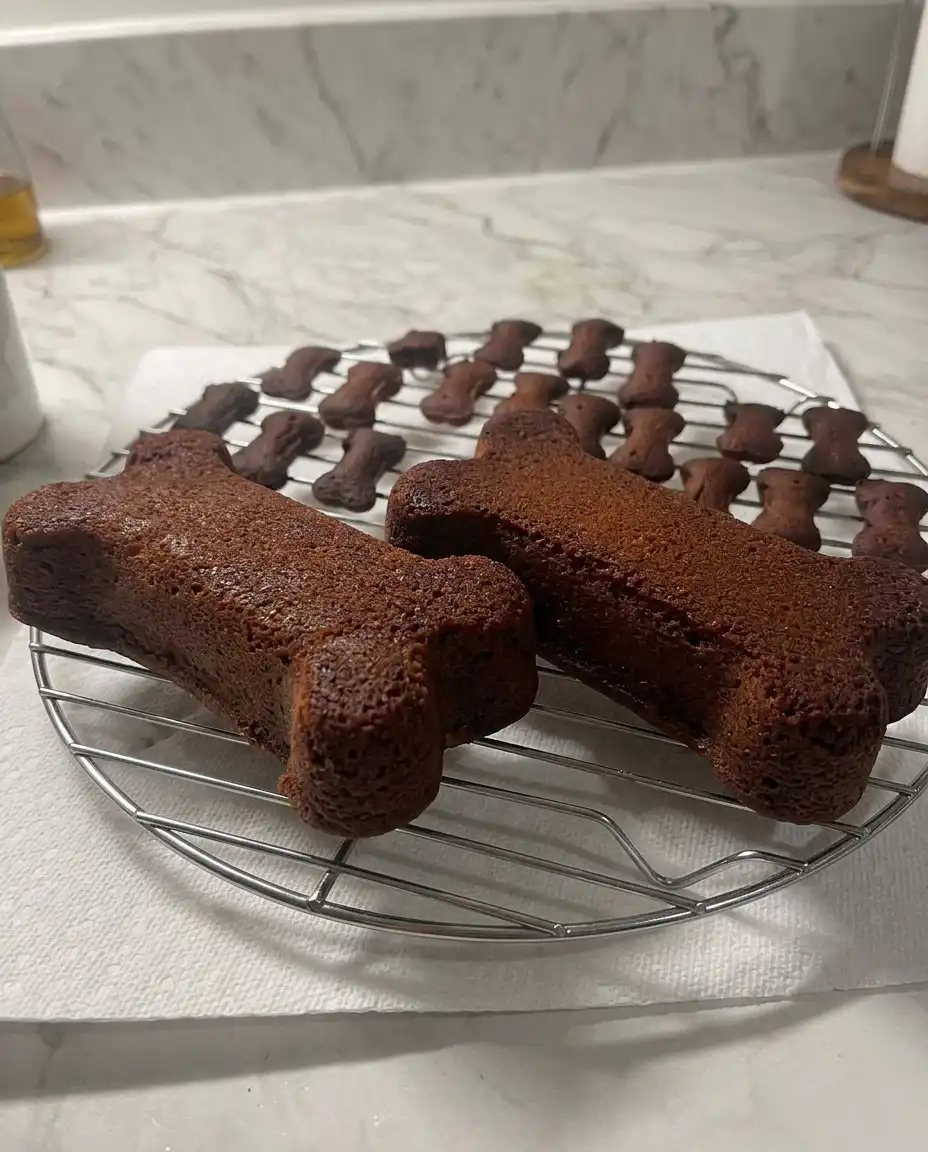
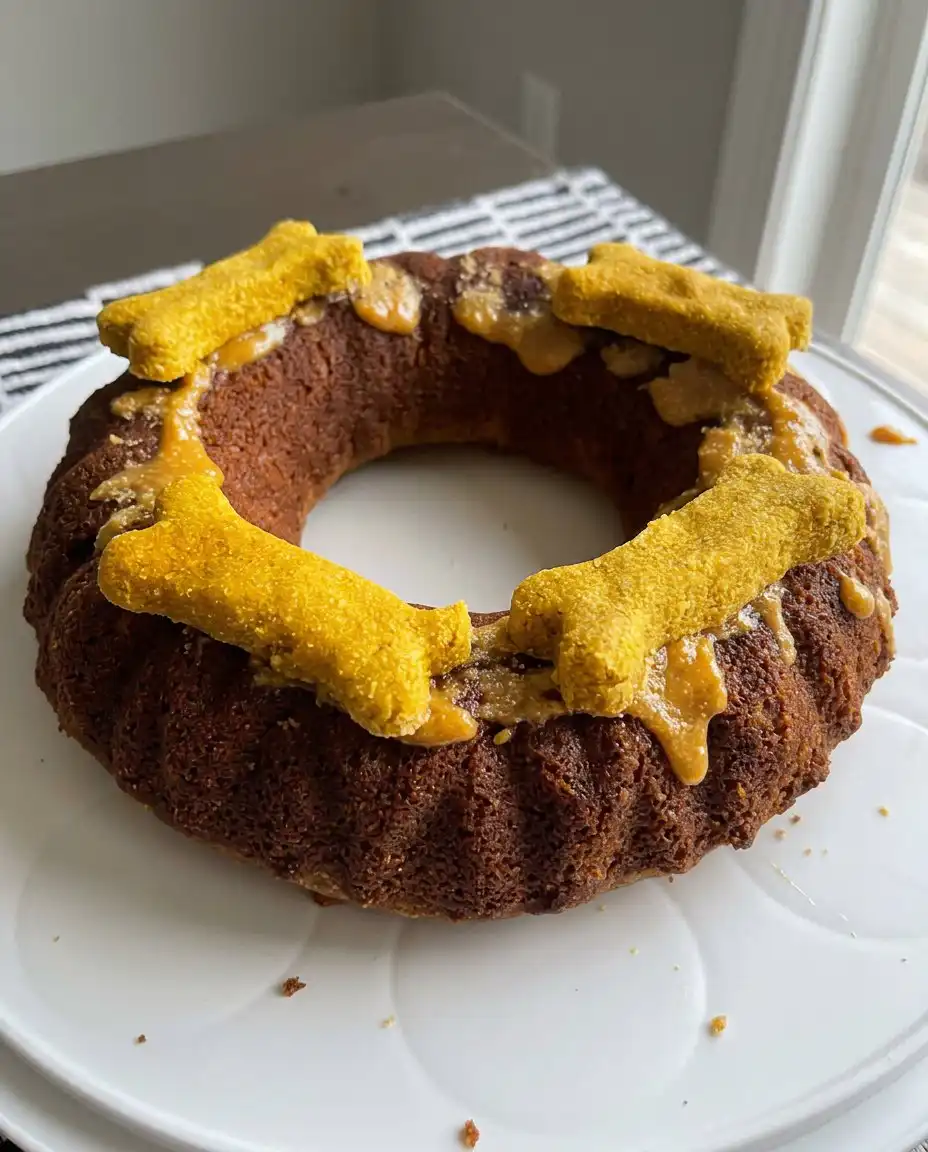
Presentation is the final step in the pastry process. Slice the cake into uniform wedges using a serrated knife to maintain the integrity of the crumb. The ring shape of the pan makes portion control simple and consistent. For a festive touch, you can decorate the top with small dog-safe biscuits or a thin layer of the yogurt-peanut butter frosting mentioned in our FAQs. If you enjoy the challenge of shaping and decorating cakes, our tutorial on the car-cake offers excellent insights into carving and structural support that can be adapted for any celebration. Always serve the cake at room temperature to allow the aromatic oils in the peanut butter to be most prominent.
Master the Craft
Baking for a canine companion is a rewarding way to practice the precision and methodical approach that defines a true pastry chef. By understanding the relationship between moisture-rich carrots and the protein structure of the flour, you have created a treat that is both beautiful and texturally perfect. For those looking to dive deeper into the world of color and layered structure, I highly recommend our guide to the lemon-rainbow-cake. Please share your technical triumphs with us on Instagram or Pinterest and show off the results of your hard work and precision.