During my years in a London pastry kitchen, I learned that the secret to a truly spectacular bake lies in the tension between structural integrity and a delicate melt. This Biscoff Cake represents a technical victory in translating the crisp, spiced profile of a Belgian speculoos biscuit into a sponge that remains sturdy enough for layering yet tender on the palate. Precision in temperature and timing is what separates a standard traybake from a professional-grade layer cake.

By carefully balancing the hydration from buttermilk with the specific fats found in cookie butter, we create a crumb that is both tight and velvety. This recipe utilizes a specific emulsion technique to ensure the Biscoff spread integrates without weighing down the air cells created during the creaming stage. The result is a dessert that honors the tradition of the biscuit while offering a sophisticated textural experience.
The Architecture of a Perfect Biscoff Cake
When we discuss the technical merits of a Biscoff Cake, we are looking for a specific mouthfeel that mimics the warmth of cinnamon and caramel. The beauty of this bake is how it manages to incorporate actual cookie fragments into the batter without compromising the lift of the sponge. Most home bakers struggle with inclusions sinking to the bottom, but our method for folding ensures a perfect suspension of texture throughout every slice.
This recipe is a masterclass in flavor layering. We don’t just stop at the sponge; the buttercream is engineered with fine biscuit crumbs to provide a secondary level of structural support and a concentrated flavor profile. You will appreciate how the slight saltiness of the speculoos balances the rich sweetness of the brown sugar, creating a dessert that is complex rather than cloying. It is a reliable, tested formula that yields a consistent result every time you preheat your oven.
Print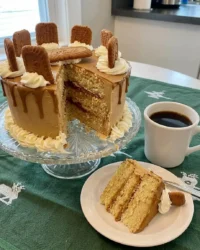
Biscoff Cake
- Total Time: 1 hour 10 mins
- Yield: 12 servings
- Diet: Vegetarian
Description
This professional-grade Biscoff cake combines a velvety, cookie-butter-infused sponge with a stable, aerated buttercream. Featuring a delicate crumb and a hidden speculoos center, it is the ultimate dessert for technical bakers and caramel lovers alike.
Ingredients
- 2 1/3 cups (300 g) all-purpose flour
- 1/4 cup (30 g) cornstarch
- 1/2 tsp baking soda
- 2 tsp baking powder
- 1/2 tsp ground cinnamon
- 1/2 cup (113 g) unsalted butter, room temperature
- 1/2 cup (105 g) vegetable oil
- 1 1/4 cups (250 g) light brown sugar
- 1/2 cup (130 g) Biscoff spread, plus extra for filling
- 3 large eggs, room temperature
- 1 1/4 cups (280 g) buttermilk, room temperature
- 2 tsp vanilla extract, divided
- 30 Biscoff cookies, divided (15 for batter, 15 for frosting)
- 1.5 cups unsalted butter, for frosting
- 3.5 cups powdered sugar
- 3 tbsp milk
Instructions
- Preheat oven to 180°C (350°F) and grease two 8-inch cake tins with cake release or parchment paper.
- Sift together the flour, cornstarch, baking soda, baking powder, and cinnamon into a medium bowl to ensure aeration and precision.
- In a large bowl, cream the butter, vegetable oil, and light brown sugar for exactly 2 minutes until light and fluffy.
- Integrate the eggs one at a time, mixing well after each addition, then blend in the Biscoff spread and half of the vanilla extract.
- Using a spatula, gently fold in the dry ingredients and buttermilk using a dry-wet-dry method to protect the crumb structure.
- Hand-crush 15 Biscoff cookies into irregular chunks and fold them into the batter for textural variation.
- Distribute the batter evenly between the tins and bake for 37-40 minutes; allow cakes to rest for 20 minutes before moving to a wire rack.
- To make the frosting, pulse 15 cookies into fine dust and whip with frosting butter, sugar, remaining vanilla, and milk for 10 minutes.
- Fold extra Biscoff spread into the whipped frosting until combined and smooth.
- Level the cake layers, pipe a buttercream dam on the first layer, fill with warmed Biscoff spread, and finish with a crumb coat and final layer of frosting.
Notes
To ensure a perfect emulsion, always check that your eggs and buttermilk are at a true room temperature of approximately 20°C (68°F) before mixing. If the Biscoff filling is too fluid after warming, allow it to cool slightly before assembly to prevent it from compromising the structural integrity of your frosting dam.
- Prep Time: 30 mins
- Cook Time: 40 mins
- Category: Dessert
- Method: Baking
- Cuisine: Belgian-American
The Technical Foundation of Cookie Butter
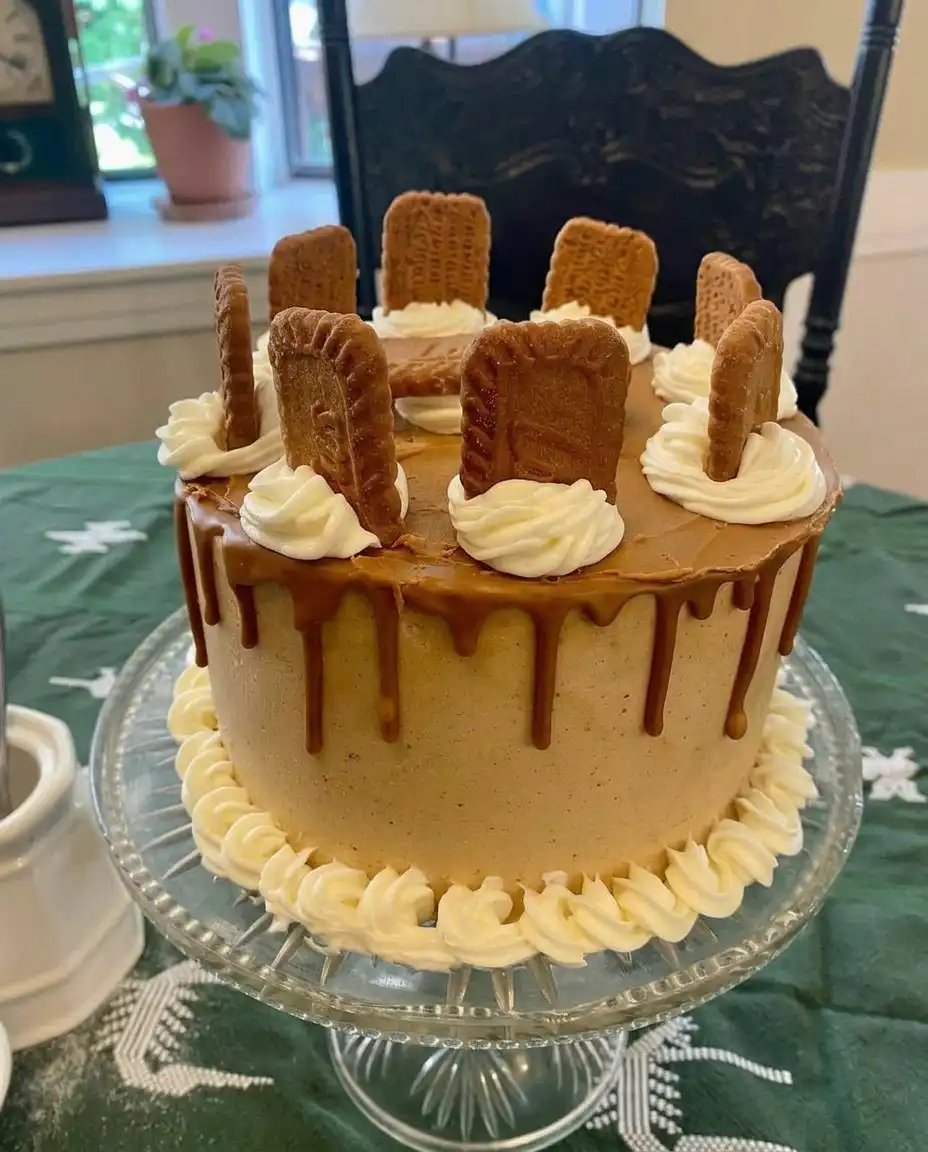
Success in the pastry arts begins with understanding your raw materials. Each component in this Biscoff Cake serves a specific structural purpose to ensure the final product meets my standards for precision.
- All-Purpose Flour and Cornstarch: We use 2⅓ cups (300 g) of flour tempered with ¼ cup (30 g) of cornstarch. This reduction in protein percentage creates a softer gluten structure, mimicking the properties of professional cake flour while maintaining the strength to hold the layers.
- Leavening Agents: A combination of ½ tsp baking soda and 2 tsp baking powder provides both immediate lift and sustained expansion during the thermal transition in the oven.
- The Fat Profile: Using a mixture of ½ cup (113 g) unsalted butter for flavor and ½ cup (105 g) vegetable oil for moisture ensures the cake stays soft even when refrigerated. This is a critical technical distinction for cakes that use cookie butter, which can otherwise become brittle.
- Biscoff Spread: This is our primary flavor driver. We use ½ cup (130 g) in the batter and additional amounts for the filling and topping. Its high oil and sugar content must be accounted for during the mixing process.
- Buttermilk: At 1¼ cups (280 g), the acidity in the buttermilk reacts with the baking soda to provide a fine, even crumb and a subtle tang that cuts through the richness.
- Light Brown Sugar: Unlike white sugar, the molasses content in 1¼ cups (250 g) of brown sugar adds hygroscopic properties, pulling moisture into the cake and deepening the caramel notes.
The Method: Engineering the Perfect Layer Cake
Step 1: Thermal Preparation and Dry Sifting
Begin by preheating your oven to 180°C (350°F). For those using a convection setting, remember to drop the temperature by 20 degrees to avoid premature crust formation. Prepare two 8-inch cake tins with a high-quality cake release or parchment paper. Sift together the flour, cornstarch, baking soda, baking powder, and cinnamon into a medium bowl. Sifting is non-negotiable here; it aerates the dry ingredients and ensures the spices are distributed with mathematical precision.
Step 2: Creating the Fat Emulsion
In a large bowl, combine the room-temperature butter, oil, and brown sugar. Use an electric mixer to cream these for exactly 2 minutes. We are looking for a light, aerated texture where the sugar has begun to dissolve into the fats. This step creates the air pockets that the leaveners will later expand. If your butter is too cold, the emulsion will break; if it is too warm, it will lose its ability to hold air.
Step 3: Protein Integration
Add the three large eggs one at a time. Mix for 10-15 seconds after each addition. This gradual integration prevents the batter from curdling and ensures the lecithin in the eggs can properly emulsify the water and fat components. Once the eggs are fully incorporated, mix in the Biscoff spread and vanilla extract until the mixture is a uniform caramel color.
Step 4: The Hand-Folding Technique
Switch to a silicone spatula for the remainder of the process. Add half of the dry ingredients and fold gently. Follow this with the buttermilk, then the remaining dry ingredients. This ‘dry-wet-dry’ method protects the delicate air bubbles we’ve created. Over-mixing at this stage will activate the gluten, leading to a tough, bready texture rather than a melting crumb.
Step 5: Inclusion Management
Break 15 Biscoff cookies into small, irregular chunks by hand. Fold these into the batter. Do not use a food processor for this step; we want distinct textural variations within the sponge. The varying sizes of the crumbs will provide a delightful contrast once baked.
Step 6: Baking and Thermal Decay
Distribute the batter evenly between the two tins. Lightly drop the tins on the counter once or twice to release any trapped air pockets. Bake for 37-40 minutes. Use a wooden skewer to check for doneness; it should come out clean or with a few moist crumbs. Allow the cakes to rest in the tins for 20 minutes before transferring to a wire rack. This period of ‘carry-over cooking’ allows the crumb to set properly.
Step 7: The Aerated Buttercream
Pulse 15 cookies into a fine dust using a food processor. In a clean bowl, combine the butter, powdered sugar, vanilla, and milk. Start on a low speed to avoid a sugar cloud, then increase to medium-high and whip for a full 10 minutes. This length of time is essential to create a professional, stable foam. Finally, fold in the Biscoff spread and the fine cookie crumbs to complete the frosting.
Step 8: Final Assembly and Structural Stability
Level your cooled cake layers with a serrated knife. Pipe a sturdy border of buttercream around the edge of the first layer to act as a dam. Fill the center with slightly warmed Biscoff spread. This dam prevents the filling from leaking out, which is a common structural failure in tiered cakes. Top with the second layer, crumb coat the exterior, and finish with a smooth layer of buttercream and decorative swirls.
Precision Secrets for a Stable Crumb
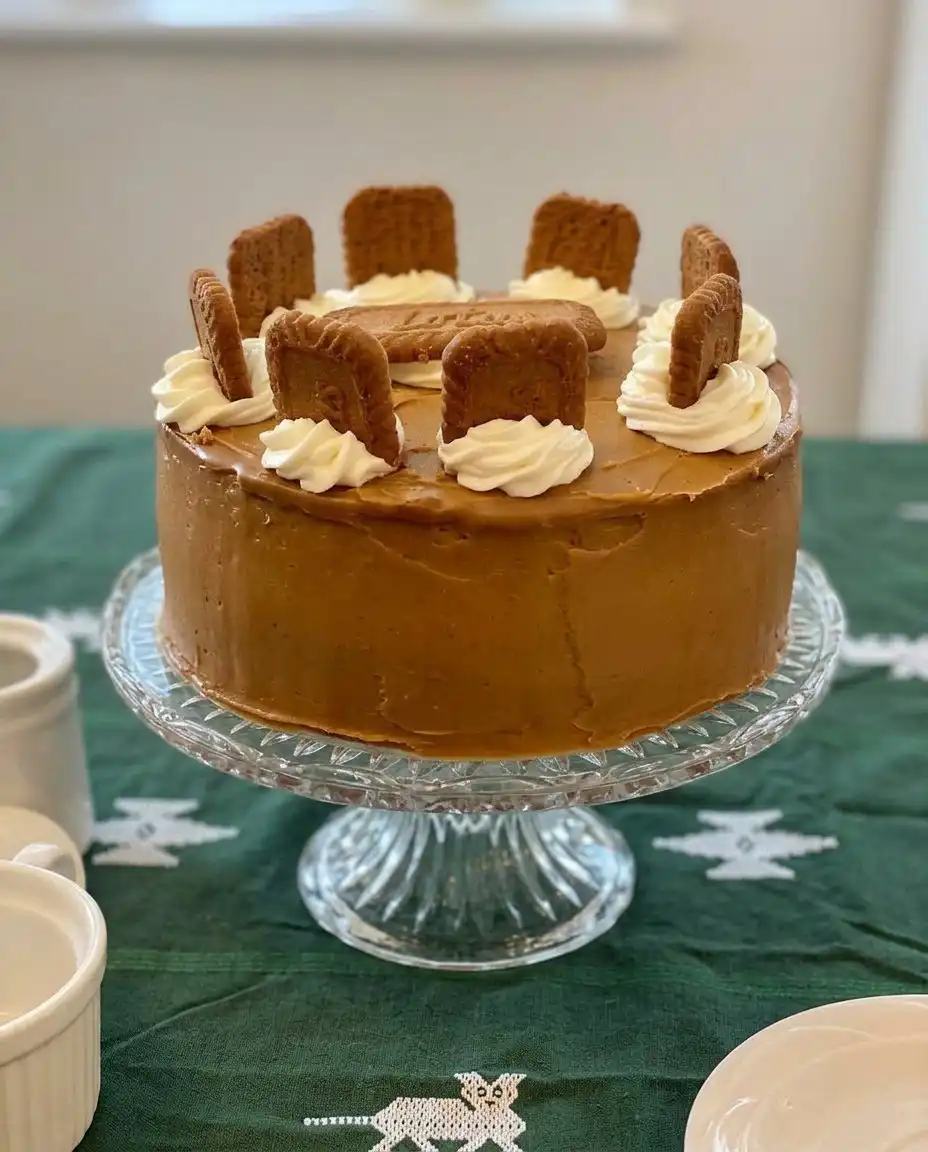
To achieve a truly professional finish, always ensure your dairy and eggs are at a precise room temperature (around 20°C/68°F). Cold buttermilk will cause the fats in the butter to seize, resulting in a grainy batter. If you find your buttercream is too soft to hold its shape while piping the dam, chill it for 10 minutes to allow the fats to recrystallize. For more foundational techniques on maintaining batter stability, I recommend reviewing our recipe-index for deep dives into cake science. Additionally, mastering the temperature of your cookie butter filling is key; it should be fluid enough to spread but cool enough not to melt the surrounding frosting. For further inspiration on moist crumb techniques, you might enjoy this professional guide on moist biscoff cake.
Technical Tweaks for Advanced Bakers
For those who wish to experiment with the flavor profile, a Chocolate Biscoff variation is highly effective. Replace ¼ cup of the all-purpose flour with high-quality Dutch-processed cocoa powder. The bitterness of the cocoa provides a sophisticated counterpoint to the sweet Biscoff spread. If you are interested in more traditional cocoa-based structures, our old-fashioned-chocolate-cake offers an excellent blueprint for a moisture-rich sponge. Another advanced option is to incorporate a salted caramel soak between the layers, which enhances the speculoos spice notes while providing additional hydration to the crumb.
Presentation Precision and Textural Balance
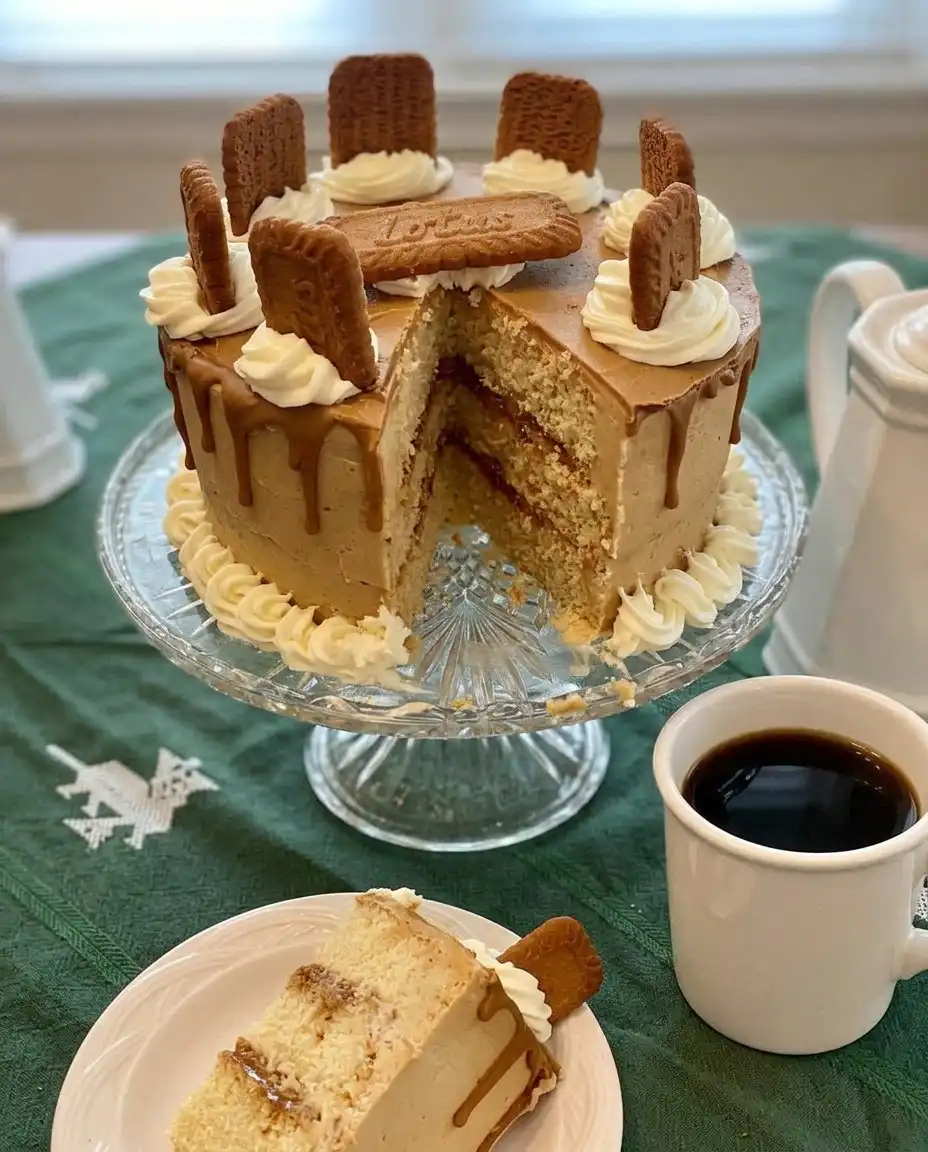
When serving a rich, layered dessert like this, temperature is your best friend. I recommend serving the cake at a cool room temperature to ensure the buttercream is soft but the filling remains stable. Use a long, thin serrated knife dipped in hot water and wiped dry between each cut to achieve clean, professional slices. This prevents the Biscoff spread from smearing across the beautiful internal layers. If you are looking for another textured masterpiece to add to your repertoire, consider the structural elegance of our snickers-cake. Pairing a slice with a sharp, unsweetened espresso will help cut through the richness of the cookie butter and highlight the cinnamon notes.
The Technical Truth of the Bake
Mastering the Biscoff Cake is a testament to your growth as a precision baker. By respecting the science of emulsification and the importance of temperature control, you have created a dessert that is as structurally sound as it is delicious. This cake proves that with the right technique, even the simplest biscuit can be transformed into a professional-grade masterpiece. For another example of a perfectly balanced fruit and fat profile, try our raspberry-white-chocolate-cake. I invite you to share your results with our community of ambitious bakers. Follow us on Instagram and Pinterest to see more technical deep dives into the art of the melt.