During my early days in a professional British pastry kitchen, I learned that sculpting with sponge requires more than just a sharp knife; it requires an architect’s eye for load-bearing layers. This Bear Cake project demonstrates how strategic internal supports allow us to stack moist, tender cake without the weight causing a structural collapse.

By combining a sturdy round base with a precisely baked dome, we create a silhouette that is both structurally sound and aesthetically pleasing. The fur texture is achieved through a repetitive piping technique that maximizes the surface area of the buttercream, resulting in a superior melt-in-your-mouth experience.
Why You’ll Love This Bear Cake
Building a sculpted character cake is one of the most rewarding technical challenges a pastry artist can undertake. This project represents a perfect marriage of whimsical design and technical stability, proving that a cake can be both a visual triumph and a textural delight. You will appreciate how the systematic stacking of the sponge creates a sturdy foundation, while the star-piping method results in a surface that mimics the softness of fur. The methodical approach we take—using internal supports and specific temperature controls—guarantees that your creation remains upright and impressive from the first introduction to the final serving. This is where architecture meets artistry in the most delicious way possible.
Print
Bear Cake
- Total Time: 2 hours 15 mins
- Yield: 12 servings
- Diet: Vegetarian
Description
Transform basic chocolate sponges into an adorable, three-dimensional bear using structural engineering and clever piping techniques. This guide focuses on internal supports and star-tipped buttercream fur to create a professional-grade character cake that is as stable as it is cute.
Ingredients
- Two 8-inch round chocolate sponges
- One 8-inch dome chocolate sponge
- 4 cups stabilized chocolate buttercream frosting
- 5 wooden dowels or thick plastic straws
- One 8-inch cardboard cake round
- 3 chocolate chip cookies
- Black decorating icing
- Large candy eyeball sprinkles
Instructions
- Bake one 8-inch round cake and one 8-inch dome cake at 350°F (175°C), allowing them to cool completely before handling.
- Level the round cake with a serrated knife and trim the dome’s diameter to match the base for a seamless vertical alignment.
- Secure the round cake to a board with buttercream, insert five dowels in a pentagon shape, and top with a cardboard round.
- Apply a layer of buttercream and place the dome cake on top to complete the bear’s silhouette.
- Coat the entire structure in a thin crumb coat of buttercream and chill for 20 minutes until firm.
- Pipe star-textured fur across the entire cake using a Wilton #18 or #21 tip, working in horizontal rows from bottom to top.
- Attach chocolate chip cookies for ears and the snout, then add features using black icing and eyeball sprinkles.
Notes
When trimming your cakes, ensure they are chilled or even slightly frozen to minimize crumbs and ensure clean, sharp edges for the bear’s body. If the chocolate chip cookies for the ears feel too heavy, you can reinforce them with a small dab of melted chocolate on the back to help them bond to the dome.
- Prep Time: 45 mins
- Cook Time: 50 mins
- Category: Dessert
- Method: Baking and Sculpting
- Cuisine: British
The Technical Foundation
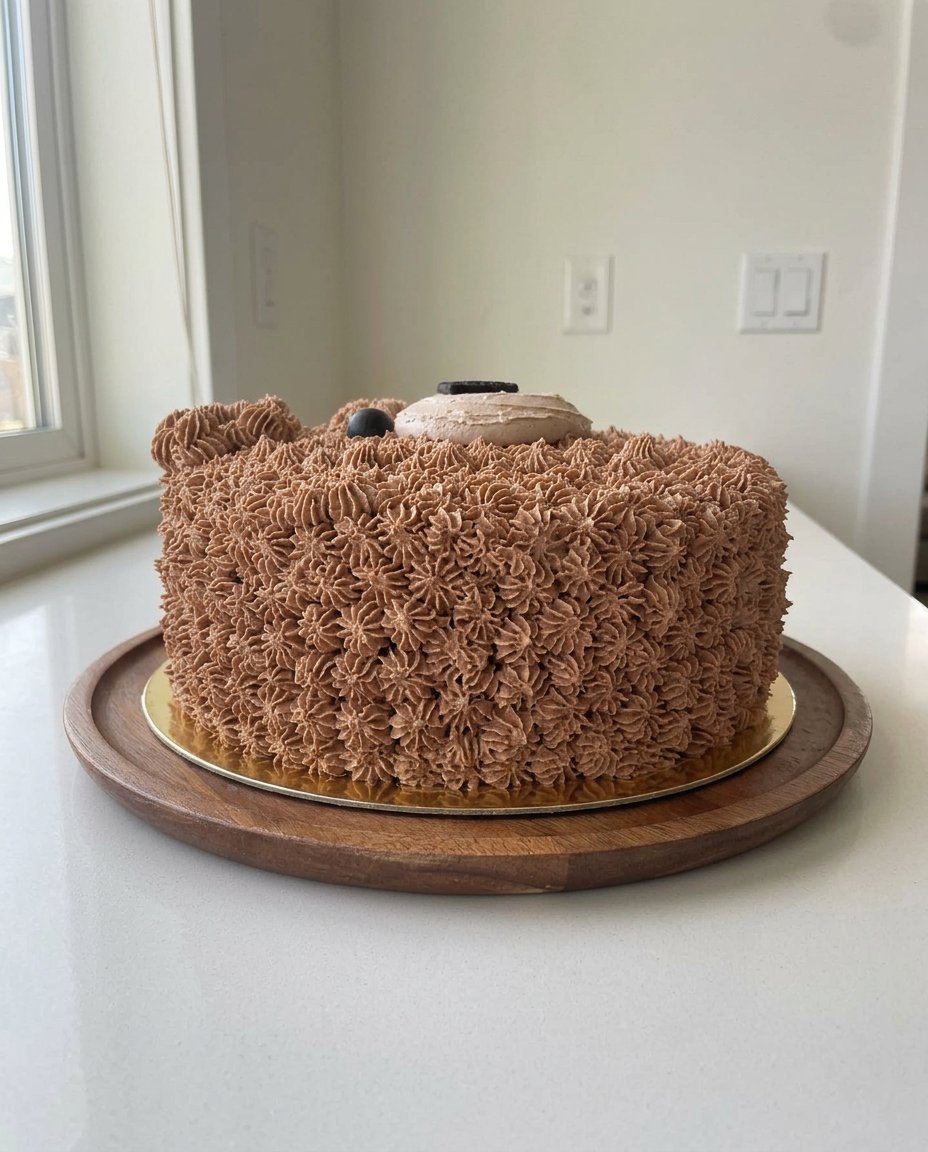
The success of this sculpted piece depends on the physical properties of your ingredients and their specific temperatures during assembly.
- Chocolate Sponge Base: We use two 8-inch rounds and one 8-inch dome to achieve the correct anatomical proportions. A high-fat cocoa powder is essential for a moist crumb that retains its structural integrity during the trimming process.
- Stabilized Chocolate Buttercream: You will need approximately 4 cups (960ml) of frosting. The butter must be at precisely 65°F (18°C) before beating to achieve the plastic consistency required for sharp star definition.
- Structural Components: Wooden dowels or thick plastic straws act as load-bearing pillars. Without these, the weight of the dome would compress the lower round, destroying the tender aeration of the sponge.
- Feature Materials: Chocolate chip cookies provide the necessary rigid structure for the ears and snout. These are more reliable than soft sponge for holding their position against gravity without drooping or falling.
The Method
Step 1: Component Fabrication
Prepare your chocolate cake batter and divide it between one 8×3-inch round pan and one 8-inch dome pan. Bake at 350°F (175°C) until a skewer inserted into the center of the dome comes out clean, which may take longer than the flat round due to the depth of the vessel. Allow these to cool completely in the pans for 10 minutes before transferring to a wire rack; thermal stability is vital before you begin the sculpting process.
Step 2: Leveling and Alignment
Once the cakes are cold to the touch, use a long serrated knife to remove any doming from the round cake to create a perfectly flat surface. If the diameter of the dome cake is slightly larger than the round base, carefully shave the edges of the dome until they align. This vertical alignment is the secret to a professional finish that maintains balance and prevents a lopsided appearance.
Step 3: Structural Assembly
Place the round cake on your serving board and apply a thin layer of buttercream. Insert five wooden dowels into the center area in a pentagon shape, then trim them so they are exactly flush with the top of the cake. Place a cardboard cake round of the same diameter on top of the dowels before adding more buttercream and the dome. This second floor prevents the dome from sinking into the base cake over time.
Step 4: The Crumb Coat
Apply a thin, smooth layer of chocolate buttercream over the entire bear silhouette using an offset spatula. This crumb coat locks in any loose particles and provides a tacky surface for the decorative piping to adhere to. Chill the assembly for 20 minutes to set this layer, which provides a firm foundation that won’t shift during the final decoration.
Step 5: Piping the Fur Texture
Fit a piping bag with a Wilton star tip #18 or #21 and fill with the remaining chocolate frosting. Starting at the very base of the bear, pipe individual stars by squeezing the bag at a 45-degree angle, then releasing pressure as you pull away to create a sharp point. Work in horizontal rings moving upward to make certain the stars overlap slightly, hiding the cake beneath and creating a dense, realistic fur texture.
Step 6: Final Character Detail
Press two chocolate chip cookies into the top of the dome to serve as ears, then pipe stars around their edges to integrate them into the head. Use a third cookie for the snout, applying a black icing nose and mouth before securing it to the face with a dab of buttercream. Finish by placing the large eyeball sprinkles just above the snout, confirming they are level to give the bear a symmetrical, inviting expression.
Precision Secrets
Temperature control is your most valuable tool when piping the fur texture. If the heat from your hands begins to soften the buttercream in the bag, the stars will lose their definition and look slumped rather than crisp. I recommend having two piping bags ready; keep one in the refrigerator and swap them every 5-10 minutes to maintain a consistent 68°F (20°C) for the frosting. For those who want to master more traditional textures before attempting sculpture, our old-fashioned-chocolate-cake offers a masterclass in crumb structure. Additionally, always check the vertical level of your dowels with a small spirit level to prevent your bear from leaning as the buttercream sets.
Technical Tweaks
While chocolate is the standard for a classic bear, you can modify the fur color by using a white chocolate ganache whipped with different natural pigments. For a more sophisticated palate, try replacing the cookie snout with a disc of dark chocolate ganache or even a thick slice of a snickers-cake for a surprise textural element hidden within the features. You may also swap the star tip for a multi-opening grass tip (Wilton #233) to create a longer, shaggier coat, though this requires a slightly softer buttercream consistency to flow through the smaller holes without clogging the tip.
Presentation Precision

When it comes time to serve, remember that the internal dowels and cardboard platform must be removed as you slice through the layers. Use a long, thin blade dipped in hot water to cut through the buttercream stars cleanly without crushing the delicate texture of the sponge. This Bear Cake pairs exceptionally well with a cold glass of milk or a rich beverage from our cocoa-dream-lab to complement the deep chocolate notes. For a professional presentation, serve each slice with a small dollop of unsweetened whipped cream to balance the sweetness of the star-piped frosting.
Master the Craft
Successfully executing a Bear Cake is a significant milestone in any baker’s journey, proving that you can manage both structural engineering and delicate finish work. The key to success is patience during the piping stage and absolute precision during the initial assembly. If you enjoyed this sculptural challenge, I highly recommend attempting our car-cake to further test your carving skills and spatial reasoning. Please share your technical triumphs with us on Instagram, Facebook, and Pinterest.