During my early training in London, I learned that a true caramel isn’t just a flavor; it is a chemical transformation of sucrose into complex aromatic compounds. Mastering the balance between a sturdy crumb and a melt-in-the-mouth frosting requires a deep understanding of temperature control. This recipe honors that discipline, ensuring each slice retains its structural beauty while offering a rich, buttery finish.

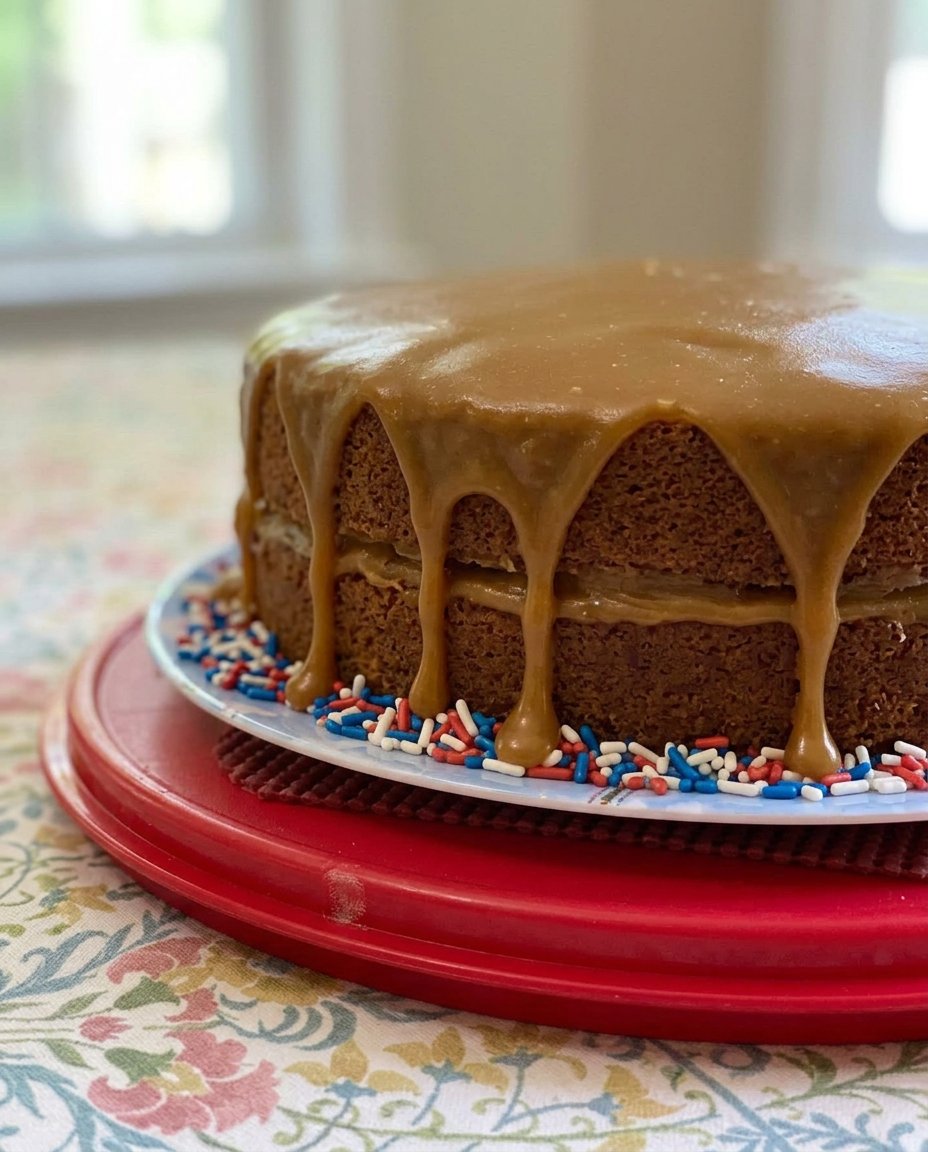
This Caramel Cake is a masterclass in texture, pairing a dense yet tender sponge with a traditional cooked caramel frosting. We achieve the perfect mouthfeel by monitoring the frosting’s boiling point, creating a fudge-like consistency that sets into a smooth, elegant shell. It is a technical triumph that rewards the patient baker with unmatched flavor.
Structure Meets Texture
This recipe is a study in structural integrity and sensory satisfaction. The sponge is engineered to be robust enough to support the weight of a heavy, fudge-like frosting without collapsing, yet it retains a moisture level that allows it to dissolve effortlessly on the palate. By utilizing a high-fat butter content and a specific creaming method, we create a fine, tight crumb that acts as the perfect canvas for the assertive sweetness of the caramel.
Technically, the cooked frosting is the star of the show. Unlike a standard buttercream, this frosting is a variation of a soft fudge. It requires precision in boiling time to ensure that enough moisture is evaporated to allow for a firm set, while keeping enough hydration to remain spreadable and smooth. The resulting contrast between the airy, velvet cake and the dense, slightly crystalline frosting is a textural victory that few other desserts can claim.
Print
Caramel Cake
- Total Time: 1 hour 5 mins
- Yield: 12 servings
- Diet: Vegetarian
Description
This technically refined Caramel Cake features a dense, velvet-crumb sponge paired with a traditional cooked fudge frosting for a masterclass in texture and flavor. By mastering the precision of the creaming method and a timed caramel reduction, you can create a structurally perfect three-layer dessert that melts in the mouth.
Ingredients
- 1 cup unsalted butter (82% fat), softened
- 2 cups granulated white sugar
- 4 large eggs, room temperature
- 3 cups all-purpose flour
- 1 tablespoon baking powder
- 1/2 teaspoon salt
- 1 cup whole milk
- 1/2 cup unsalted butter (for frosting)
- 2 cups light brown sugar, packed
- 1/2 teaspoon salt (for frosting)
- 2/3 cup evaporated milk
- 2.5 cups confectioners sugar, sifted
- 1 teaspoon vanilla extract
Instructions
- Preheat oven to 350 degrees F (175 degrees C) and grease and flour three 9-inch cake pans to ensure a clean release.
- Cream 1 cup of butter and granulated sugar with an electric mixer on medium speed for at least 5 minutes until the mixture is light, fluffy, and increased in volume.
- Incorporate the eggs one at a time into the creamed mixture, ensuring each egg is fully emulsified before adding the next.
- Sift the flour, baking powder, and salt together; then add to the batter in three batches, alternating with the whole milk, mixing only until the ribbon stage is reached.
- Divide the batter equally among the three pans by weight and bake for 30 minutes, or until a toothpick inserted into the center comes out clean.
- Allow the cakes to rest in their pans for exactly 5 minutes before inverting them onto a wire rack to cool completely.
- Prepare the frosting by combining brown sugar, 1/2 cup butter, and salt in a heavy-bottomed saucepan over medium heat until the sugar dissolves.
- Add the evaporated milk to the saucepan, bring the mixture to a gentle boil, and maintain the boil for exactly 4 minutes to achieve the proper fudge consistency.
- Remove the caramel from the heat, cool for 5 minutes, then beat in the sifted confectioners sugar and vanilla with an electric mixer until thickened and spreadable.
Notes
For a flawless finish, ensure your cake layers are completely cold before applying the frosting to prevent the caramel from melting and sliding. If you find the frosting becoming too firm in the bowl while working, a brief few seconds over a double boiler will help loosen the texture for easier spreading without compromising the crystalline structure.
- Prep Time: 20 mins
- Cook Time: 45 mins
- Category: Dessert
- Method: Baking
- Cuisine: American
The Technical Foundation
Every ingredient in this recipe serves a specific structural purpose. Using high-quality ingredients with precise fat and protein contents will determine the final success of your bake.
- Unsalted Butter (82% Fat): We specify unsalted butter to maintain total control over the sodium levels. The fat provides the lubrication necessary for a tender crumb, while the milk solids contribute to the Maillard reaction during baking.
- Granulated Sugar: This provides more than just sweetness. It is essential for the aeration process during the creaming stage, where sugar crystals cut through the butter to create thousands of tiny air pockets.
- All-Purpose Flour: A mid-range protein content (around 10-11%) is vital. It provides enough gluten for the cake to hold its shape under the frosting but remains low enough to prevent a tough, bready texture.
- Whole Milk: The lactose and fats in whole milk contribute to a softer crumb and a richer flavor profile than lower-fat alternatives.
- Evaporated Milk: Used in the frosting, this concentrated milk provides a creamy density without the excess water found in regular milk, allowing the caramel to thicken into a stable fudge.
- Brown Sugar: This adds the necessary acidity and molasses notes that define the deep, complex profile of the frosting.
The Method
Step 1: Preparation and Environment
Preheat your oven to 350 degrees F (175 degrees C). Precision begins with the environment, so ensure your oven is fully calibrated. Grease and flour three 9-inch cake pans thoroughly. This creates a non-stick barrier that ensures the structural integrity of the layers remains intact when inverting them.
Step 2: The Creaming Stage
Place the white sugar and butter into a mixing bowl. Beat with an electric mixer on medium speed for at least 5 minutes. You are looking for a light, fluffy texture that has significantly increased in volume. This step is critical for air incorporation. Add the eggs one at a time, ensuring each is fully emulsified before adding the next to prevent the batter from curdling.
Step 3: Aeration and Dry Incorporation
Sift together the flour, baking powder, and salt. Sifting is non-negotiable as it aerates the flour and removes clumps. Add the flour mixture in three batches, alternating with the milk. Start and end with the flour to stabilize the emulsion. Mix only until the batter reaches the ribbon stage, where it falls from the beaters in a thick, distinct trail that holds its shape for a few seconds.
Step 4: The Bake
Divide the batter equally among the three pans by weight for perfect uniformity. Bake for approximately 30 minutes. Use a toothpick to check the center; it must come out clean. Avoid over-baking, which leads to moisture loss and a brittle structure. Cool in the pans for exactly 5 minutes before inverting onto a wire rack. This brief rest allows the cake structure to set while still warm enough to release without sticking.
Step 5: The Caramel Reduction
In a heavy-bottomed saucepan, combine the brown sugar, butter, and salt over medium heat. Stir constantly until the sugar is fully dissolved. Once dissolved, add the evaporated milk. Bring the mixture to a gentle boil and maintain it for 4 minutes precisely. This timing allows for the correct level of evaporation, ensuring the frosting will set with a fudgy bite rather than a runny consistency.
Step 6: Cooling and Emulsifying
Remove the caramel from the heat and allow it to cool for 5 minutes. This temperature drop is vital before adding the confectioners’ sugar. Using an electric mixer, beat in the sifted confectioners’ sugar and vanilla. Continue beating until the frosting thickens and loses some of its gloss, indicating it has reached the proper consistency for spreading. Work quickly once it begins to set.
Precision Secrets
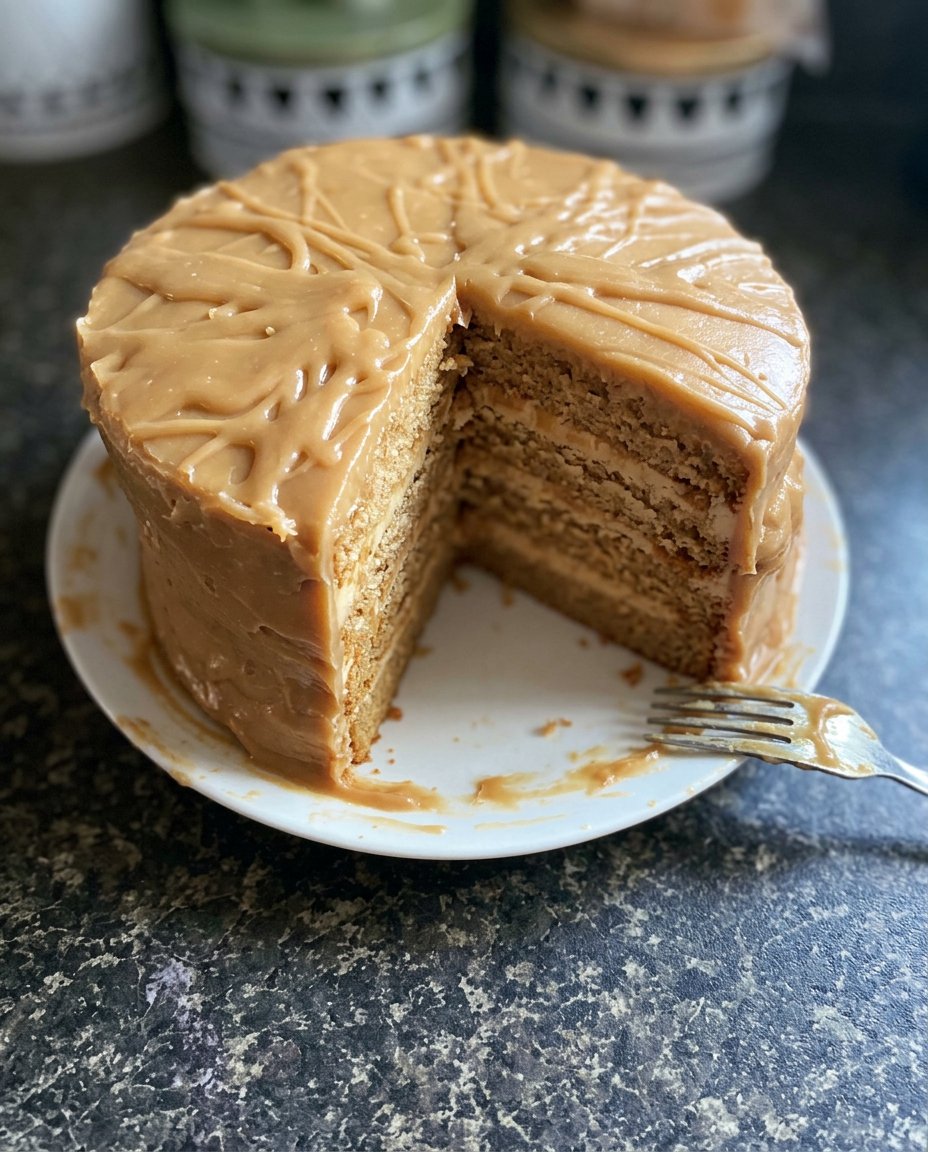
To achieve the perfect caramel frosting, the temperature of your ingredients is paramount. If your frosting begins to set too quickly in the bowl, place the bowl over a pan of simmering water for a few seconds to gently loosen the structure. Conversely, if it is too runny, continue beating it to incorporate air and encourage cooling.
For those looking to expand their technical repertoire across all dessert styles, I highly recommend browsing our recipe-index for more foundational pastry techniques. Always use a digital scale for your flour; volume measurements with cups are notoriously inaccurate and can lead to a dry, dense cake. Finally, ensure your cake layers are completely cold before frosting, as the residual heat will melt the caramel’s delicate crystalline structure, causing it to slide off the sides.
Technical Tweaks
If you prefer a more modern flavor profile, you can transform this into a Salted Caramel Cake by increasing the salt in the frosting to 1 teaspoon and finishing the top with a sprinkle of Maldon sea salt. This contrast cuts through the richness and highlights the toasted sugar notes.
For a multi-textural experience, consider adding a layer of chopped, toasted pecans between each cake tier. This provides a structural crunch that complements the velvet crumb. If you enjoy the combination of caramel and nuts, you might also find our snickers-cake to be an interesting study in layering different confectionery textures within a single bake.
Presentation Precision
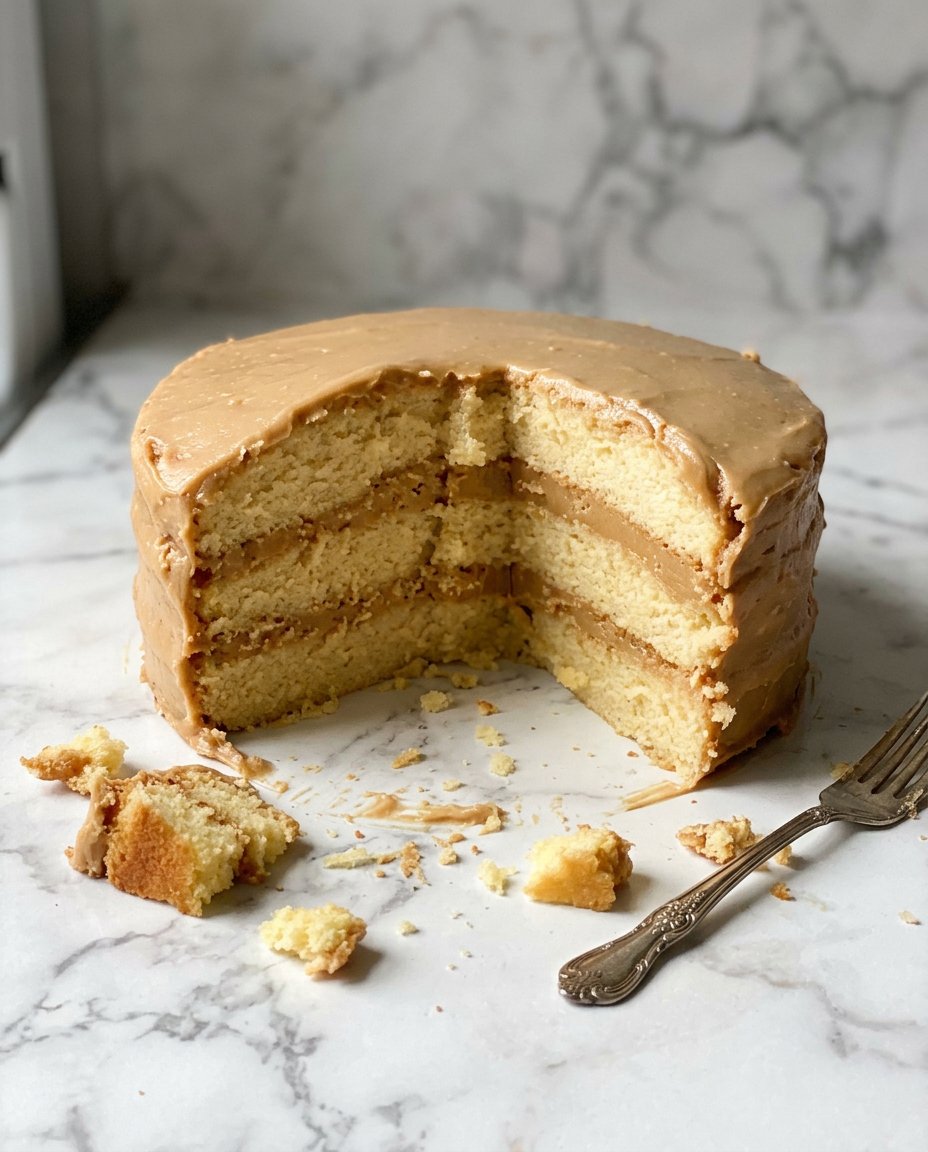
When serving a cake with such a rich frosting, precision in cutting is necessary for a clean presentation. Use a long, thin serrated knife dipped in hot water and wiped dry between every single cut. This melts through the caramel shell without tearing the delicate sponge underneath.
I suggest serving a thin slice alongside a cup of strong, black tea or unsweetened coffee to balance the sugar levels. If you are hosting a larger event and want a variety of textures on the table, this cake pairs beautifully with the deep, cocoa notes found in our old-fashioned-chocolate-cake. For the best experience, never serve this cake cold; the fats in the butter must be at room temperature to ensure the ‘melt’ we strive for in every bite.
Master the Craft
Creating a perfect Caramel Cake is a testament to a baker’s patience and technical accuracy. By following the precise boiling times and creaming methods outlined here, you can produce a dessert that is as structurally sound as it is delicious. This recipe is a cornerstone of any serious baker’s collection, representing the ideal balance of Southern tradition and professional pastry discipline.
For more explorations into the science of the perfect crumb, visit our velvet-crumb-collection. If you have successfully mastered this bake, please share your results with our community on Instagram or Pinterest. We look forward to seeing your technical triumphs and celebrating the art of precision baking together.