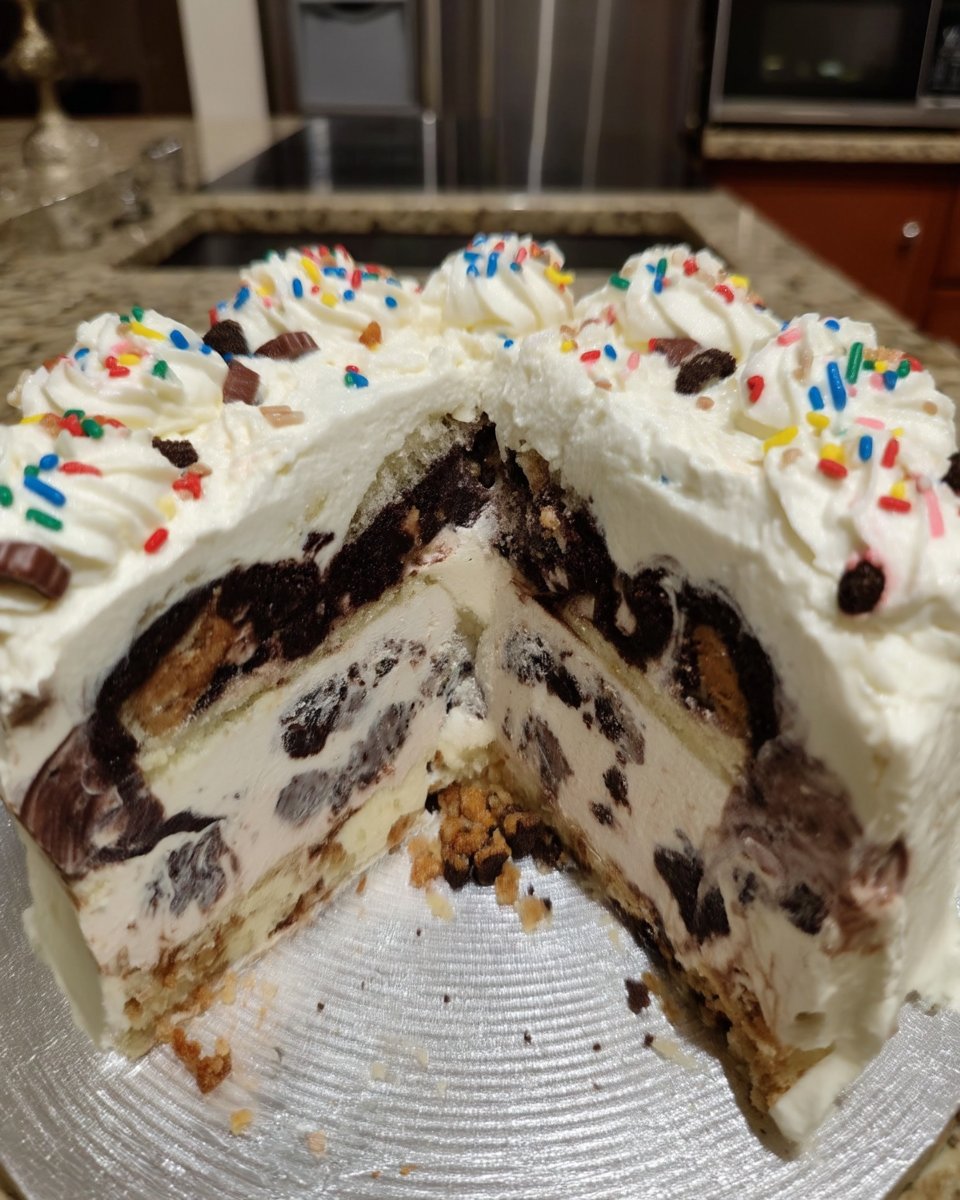
In the pastry kitchens of London, we often debate the relationship between structural integrity and mouthfeel—this cake settles the argument beautifully. By suspending crushed cookies within a velvet-textured sponge, we create a dessert where the crunch protects the crumb and the cream provides the melt. It is a study in textural contrast, requiring precise emulsification to ensure the buttercream is stable enough to hold the weight of the layers without becoming heavy on the palate.

This formulation relies on the reaction between buttermilk and baking soda to aerate the heavy cocoa batter, resulting in a dark, open crumb that stays moist for days. The addition of hot coffee blooms the cocoa butter, deepening the flavour profile while the oil ensures a tenderness that butter alone cannot achieve. It is not just a cake; it is a calibrated balance of bitter chocolate and sweet cream.
A Masterclass in Textural Balance
Unlike standard sponge cakes that can feel uniform, this recipe offers a sophisticated interplay of textures. The oil-based chocolate sponge provides a moist, dense foundation that yields instantly to the bite, while the Oreo buttercream introduces a necessary granular resistance. This is precision baking: the bitterness of the cocoa is tempered exactly by the sweetness of the cream, ensuring that no single element dominates the palate. It is robust enough to slice cleanly yet tender enough to melt, proving that technical precision creates the ultimate comfort.
Print
Cookies and Cream Cake
- Total Time: 1 hour
- Yield: 12 servings
- Diet: Vegetarian
Description
This sophisticated Cookies and Cream Cake features a moist, oil-based chocolate sponge balanced by a velvety Oreo-infused buttercream. By combining technical baking principles with classic flavors, this dessert delivers a perfect interplay of crunchy textures and a melt-in-the-mouth crumb.
Ingredients
- 2 cups all-purpose flour
- 2 cups granulated sugar
- 3/4 cup unsweetened cocoa powder
- 2 teaspoons baking soda
- 1 teaspoon baking powder
- 1 teaspoon salt
- 1 cup buttermilk, room temperature
- 1/2 cup vegetable oil
- 2 large eggs, room temperature
- 2 teaspoons vanilla extract
- 1 cup hot brewed coffee
- 1.5 cups unsalted butter, softened
- 4–5 cups confectioners’ sugar
- 1/2 cup finely crushed Oreo cookies
- 1 cup coarsely chopped Oreo cookies
- 3 tablespoons milk
Instructions
- Preheat your oven to 350°F (175°C) and grease two 8-inch round cake pans or line them with parchment paper.
- Sift the flour, sugar, cocoa, baking soda, baking powder, and salt into a large mixing bowl to ensure an even distribution of leavening agents.
- In a separate bowl, whisk together the room-temperature buttermilk, oil, eggs, and vanilla until the mixture is homogeneous.
- Set the mixer to low speed and slowly combine the wet ingredients with the dry mixture until partially combined.
- Pour in the hot coffee and mix only until the flour streaks disappear, being careful not to overwork the gluten.
- Divide the batter equally between the prepared pans and bake for 30 to 40 minutes, or until a tester comes out with a few moist crumbs.
- Cool the cakes in their pans for 30 minutes to set the structure before turning them out onto a wire rack to cool completely.
- Beat the softened butter until aerated, then gradually add confectioners’ sugar, fine Oreo crumbs, and milk until reaching a spreadable consistency.
- Level the cooled cakes with a serrated knife, then stack with a layer of buttercream and a scattering of coarse Oreo chunks.
- Coat the exterior with the remaining buttercream and garnish with additional cookie pieces before serving.
Notes
For the most professional finish, ensure your butter is exactly room temperature to prevent a greasy frosting consistency. Using a kitchen scale to divide the batter will guarantee even layers, while chilling the cake for 20 minutes after assembly can help set the structure for perfectly clean slices.
- Prep Time: 25 mins
- Cook Time: 35 mins
- Category: Dessert
- Method: Baking
- Cuisine: American
The Architecture of Flavour
To achieve the correct crumb structure and mouthfeel, your ingredient temperatures and quality are non-negotiable.
- Hot Coffee: This is the catalyst. It blooms the cocoa powder, releasing flavor compounds that cold liquid would trap. I prefer a strong brew (decaf works perfectly) to ensure depth without overpowering the chocolate notes.
- Buttermilk (Room Temperature): The acidity here is crucial for tenderizing the gluten strands and reacting with the baking soda for lift. Cold buttermilk will seize the oil, breaking your batter’s emulsion.
- Unsweetened Cocoa Powder: Use a high-fat Dutch-process or standard cocoa, but ensure it is fresh. Old cocoa loses its potency and fat content, affecting the cake’s moisture retention.
- Vegetable Oil: While butter offers flavour, oil is superior for texture in chocolate cakes, coating the flour proteins to prevent toughness.
- Oreo Cookies: We use these in two stages—finely crushed for the buttercream stability and coarsely chopped for assembly to provide structural crunch between layers.
- Unsalted Butter: Must be truly pliable (around 65°F/18°C) to aerate properly with the sugar. If it is too cold, you will have a greasy frosting; too warm, and it loses structure.
The Method
Step 1: Preheating and Pan Preparation
Precision starts with the environment. Preheat your oven to 350°F (175°C). Prepare two 8-inch round cake pans with nonstick spray or parchment. Proper pan prep ensures the delicate crust of the cake releases without tearing.
Step 2: Aerating the Dry Ingredients
Sift the flour, sugar, cocoa, baking soda, baking powder, and salt into a large bowl. Sifting is not optional here; it removes lumps of cocoa that can create bitter pockets and ensures an even distribution of leavening agents for a uniform rise.
Step 3: The Liquid Emulsion
In a separate vessel, whisk together the room-temperature buttermilk, oil, eggs, and vanilla. We want a homogeneous mixture before it meets the flour to prevent overworking the batter later.
Step 4: The Wet-to-Dry Integration
Set your mixer to low speed. Slowly pour the wet ingredients into the dry mixture. Once partially combined, pour in the hot coffee. The heat will help dissolve the sugar and bloom the cocoa. Mix only until the flour streaks disappear—overmixing at this stage develops gluten, which is the enemy of a tender crumb.
Step 5: Baking for Structure
Divide the batter equally between the pans (use a scale for exact layers). Bake for 30 to 40 minutes. You are looking for a tester to come out mostly clean—a few moist crumbs indicate perfection. Wet batter means it needs time; a dry tester means the texture is compromised. Cool in pans for 30 minutes to let the structure set before turning out.
Step 6: Constructing the Oreo Buttercream
Beat the room-temperature butter until pale and aerated. Gradually add the confectioners’ sugar, 2 cups at a time, allowing each addition to fully dissolve into the fat. Fold in the fine Oreo crumbs and add milk, one tablespoon at a time, until you achieve a spreadable consistency that holds a peak.
Step 7: Assembly and Structural Stacking
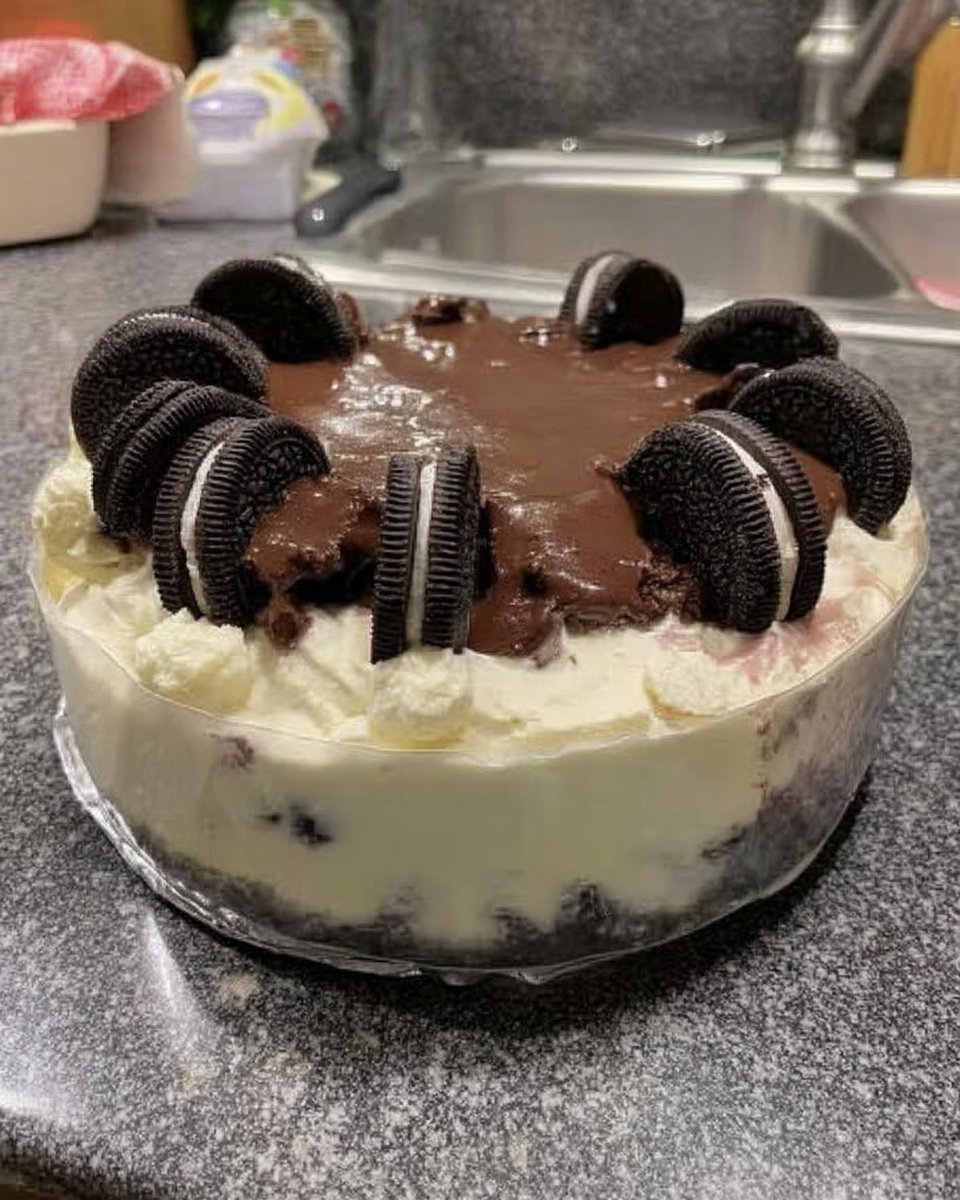
Level your cooled cakes with a serrated knife. Place the first layer on your plate. Spread one cup of buttercream to the edges, creating a seal. Scatter coarsely chopped Oreos over the cream for internal texture. Place the second cake layer on top, pressing gently to bond them. Coat the exterior with the remaining buttercream and garnish with chopped cookies.
Jordan’s Secrets for Precision
- Temperature Control is Paramount: If your buttermilk or eggs are cold, they will shock the warm coffee and oil, causing the batter to curdle. A curdled batter results in a greasy, dense cake. Bring everything to temp before you start.
- The Cocoa Bloom: Never skip the hot coffee. If you don’t drink coffee, use hot water, but the coffee provides an acidity that complements the chocolate structure beautifully, much like in our Old Fashioned Chocolate Cake.
- Crumb Consistency: For the buttercream, blitz the Oreos into a fine dust. Large chunks will clog your piping tip and tear the cake surface when spreading. Save the larger chunks strictly for the filling between layers.
- Cooling Time: Do not rush the cooling process. This oil-based cake is incredibly fragile when warm. If you try to turn it out too soon, the steam inside will cause it to collapse.
Technical Adjustments
- The Mocha Shift: For a more adult profile, increase the coffee strength or add a teaspoon of espresso powder to the dry ingredients. This pushes the flavor profile closer to a mocha entremet.
- Berry Contrast: The richness of the cream pairs well with acidity. Adding a layer of raspberry coulis between the buttercream and the cake layers adds a tart brightness, similar to the balance found in our Raspberry White Chocolate Cake.
- Dark Chocolate Ganache: If you find American buttercream too sweet, replace the exterior frosting with a dark chocolate ganache (1:1 ratio of cream to chocolate). The bitterness will cut through the sweet Oreo filling.
Presentation and Plating
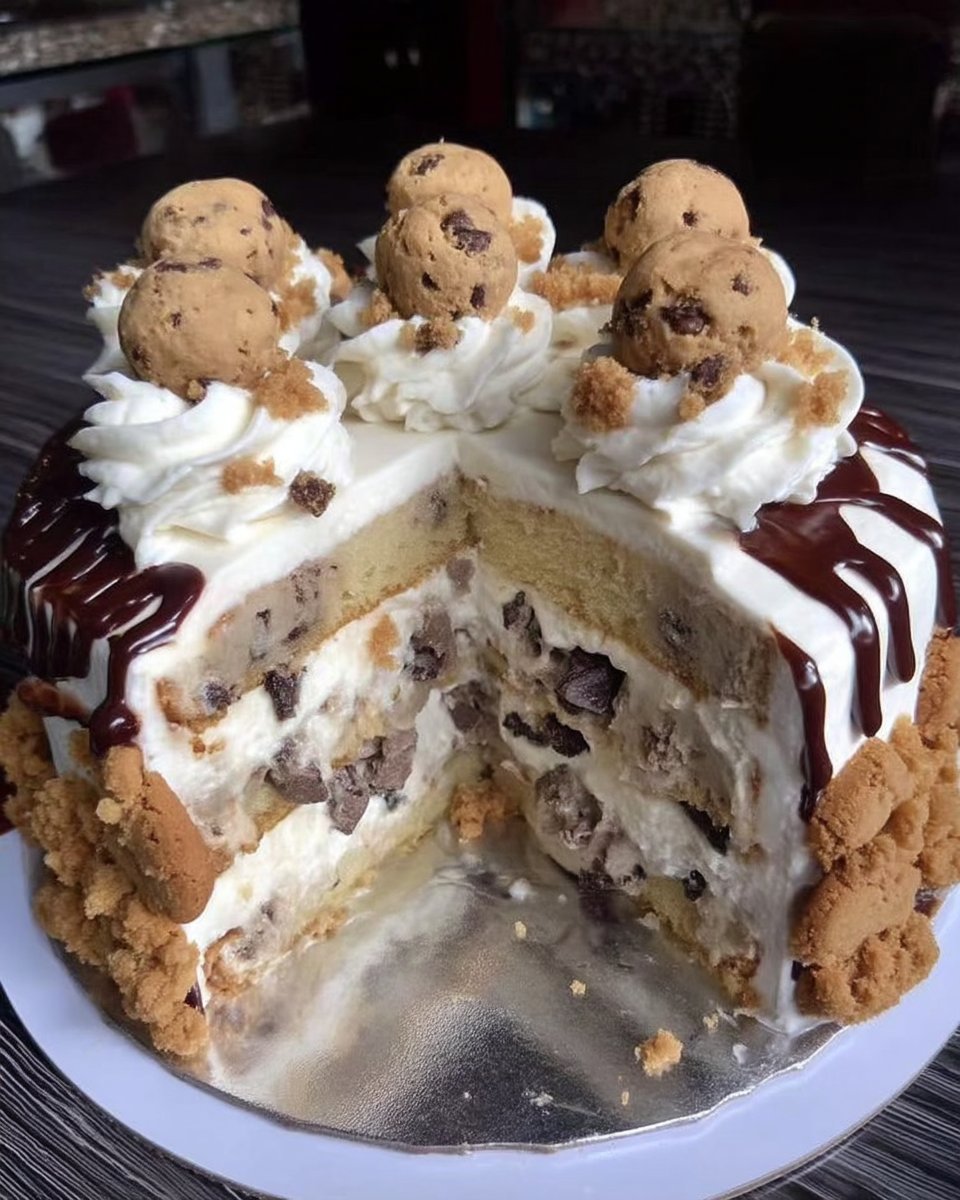
To serve this cake with the dignity it deserves, use a hot, dry knife. Run your blade under hot water, wipe it clean, and make a decisive cut. This melts the butter in the frosting, creating sharp, architectural lines rather than a smeared mess. Serve comfortably at room temperature; cold buttercream has a waxy mouthfeel that masks the flavour. For a study in indulgence, pair this with a strong espresso or, for a textural contrast, a side of crisp caramel shards like those we use in our Snickers Cake.
Mastering the Crumb
This Cookies and Cream Cake is more than a confection; it is a testament to the science of baking. By understanding how temperature affects emulsion and how moisture impacts crumb, you achieve a result that is technically superior to any bakery standard. It balances the nostalgia of milk and cookies with the sophistication of a layered entremet. For those looking to explore other interpretations of this classic, this version by I Am Baker offers a lovely alternative perspective. If you are ready to dive deeper into chocolate science, visit our Cocoa Dream Lab for more experiments.
Share your structural triumphs with us on social media: