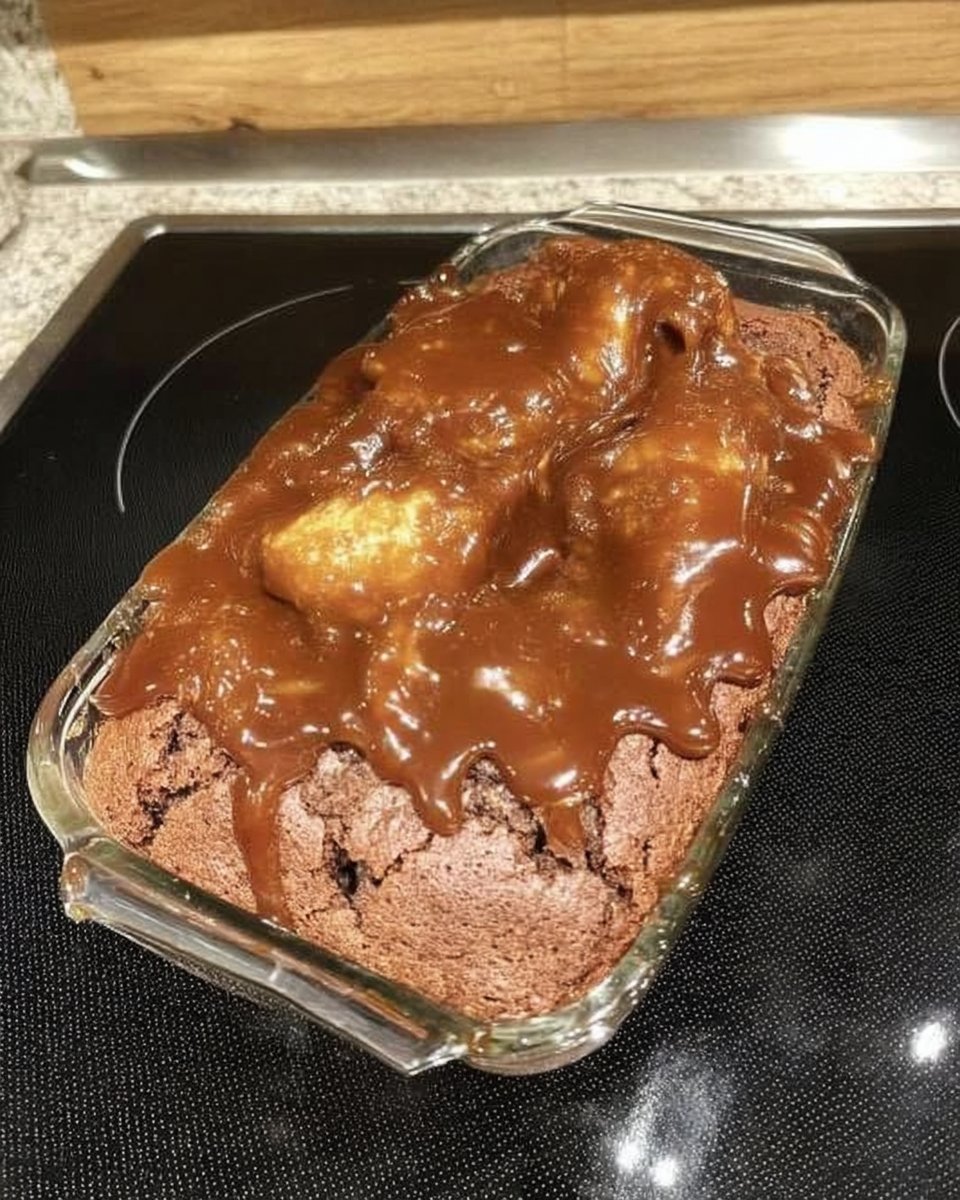
In the disciplined world of classical pastry, a cracked surface is typically a sign of thermal shock or poor structural integrity—a fault line in our technique. However, the Earthquake Cake defies this convention, proving that sometimes, calculated structural failure yields the most exquisite textural success. By engineering a cake with deliberate density differentials, we create a landscape of fissures and valleys that hold molten pockets of richness.

This recipe is a study in texture. It begins with a German chocolate suspension layered over a crisp foundation of toasted coconut and pecans, then topped with a heavy cream cheese emulsion that sinks during the bake. The result is a chaotic, beautiful surface that hides a scientifically perfect balance of chew, crumb, and cream.
Structural Chaos Meets Textural Perfection
The appeal of this dessert lies not just in its dramatic appearance, but in the precise interplay of its components. Unlike a standard sponge that relies on uniform aeration, the Earthquake Cake utilizes varying specific gravities to create a self-saucing effect.
First, the basal layer of coconut and pecans provides a necessary crunch, acting as a textural anchor against the softness above. As the cake batter rises due to chemical leavening, the heavier cream cheese mixture—laden with sugar and fat—succumbs to gravity, sinking to create deep, molten pockets. This is not accidental; it is physics on a plate. The result is a dessert that requires no frosting, as the “earthquake” effect distributes the creamy topping throughout the structure, guaranteeing a moist, complex mouthfeel in every bite.
Print
Earthquake Cake
- Total Time: 50 mins
- Yield: 12 servings
- Diet: Vegetarian
Description
This decadent Earthquake Cake features a rich German chocolate base baked over a crunchy bed of coconut and pecans, with a luscious cream cheese filling that sinks to create molten valleys. It is a visually striking dessert that balances a moist crumb with gooey, cream-filled pockets.
Ingredients
- 1 cup sweetened flaked coconut
- 1/2 cup chopped pecans
- 1 package (15.25 oz) German chocolate cake mix
- 1 1/3 cups water
- 1/2 cup vegetable oil
- 3 large eggs
- 8 oz cream cheese, softened to room temperature
- 1/2 cup unsalted butter, softened
- 1 teaspoon vanilla extract
- 4 cups confectioners’ sugar
Instructions
- Preheat your oven to 350°F (175°C) and lightly grease a 9×13-inch baking pan.
- Spread the flaked coconut and chopped pecans evenly across the bottom of the pan to form a base layer.
- In a large mixing bowl, combine the chocolate cake mix, water, vegetable oil, and eggs; beat with an electric mixer on medium speed for two minutes.
- Pour the cake batter over the coconut and pecans, smoothing it gently toward the edges of the pan.
- In a clean bowl, beat the softened cream cheese, butter, and vanilla extract together until completely smooth and free of lumps.
- Gradually add the confectioners’ sugar to the cream cheese mixture, mixing until a thick, uniform suspension forms.
- Dollop or pour the cream cheese mixture over the top of the cake batter, swirling slightly with a knife if desired to create a marbled effect.
- Bake for 30 to 40 minutes, or until the edges are set and the center still has a slight jiggle; allow the cake to cool and set before serving.
Notes
To ensure the most successful ‘earthquake’ effect, avoid over-swirling the cream cheese mixture into the chocolate batter, as distinct zones of density are required for the characteristic fissures to form. For a cleaner presentation, use a hot knife to slice the cake once it has cooled to room temperature, though it is equally delicious served warm for a molten experience.
- Prep Time: 15 mins
- Cook Time: 35 mins
- Category: Dessert
- Method: Baking
- Cuisine: American
Precision in the Pantry
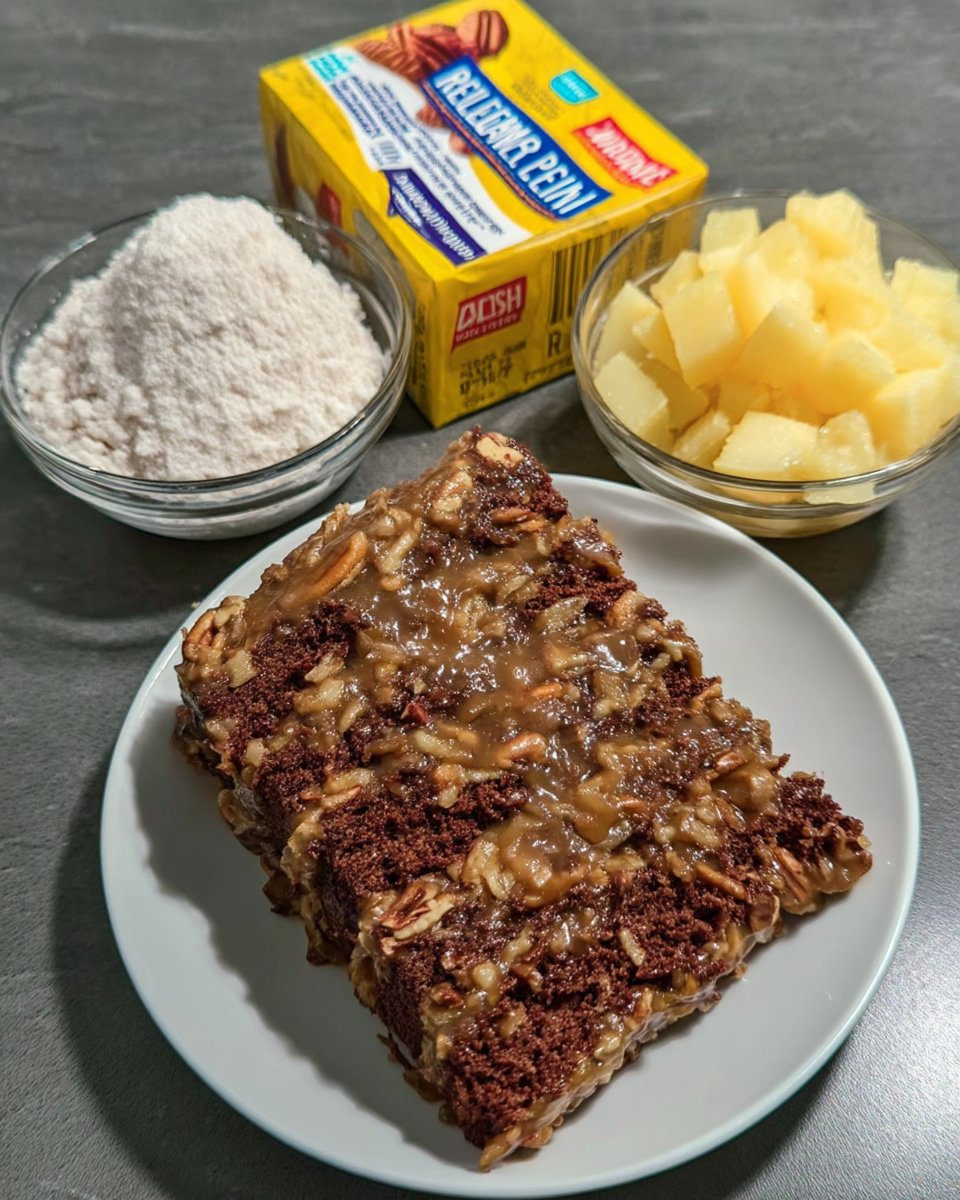
To achieve the correct density for the earthquake effect, we must respect the role of each ingredient. Substitutions here can alter the viscosity and prevent the signature cracking.
- Flaked Coconut: This provides the bottommost layer of structure. It toasts gently against the pan, creating a chewy, caramelized crust that contrasts with the soft interior. Unsweetened works, but sweetened helps with the caramelization.
- Chopped Pecans: These add essential fat and crunch. The oils in the pecans release during baking, frying the bottom crust slightly for a superior snap.
- German Chocolate Cake Mix: While I typically advocate for scratch baking, the emulsifiers present in a high-quality mix are uniquely suited for this specific structural challenge. They provide a predictable elasticity that holds up against the heavy cream cheese pockets without collapsing entirely.
- Vegetable Oil & Water: These hydrate the mix. The oil ensures the crumb remains tender even as the sugar content climbs.
- Eggs: The binding agents. They provide the protein structure necessary to trap air and allow the cake to rise around the sinking cheese filling.
- Cream Cheese: The tectonic force of the recipe. It must be full-fat and strictly at room temperature to emulsify properly with the butter. Cold cream cheese will result in lumps that refuse to melt correctly.
- Unsalted Butter: Adds richness to the filling. We use unsalted to control the sodium balance, as the cake mix already contains salt.
- Confectioners’ Sugar: This thickens the cream cheese mixture, increasing its density so it sinks reliably into the lighter batter.
The Methodical Quake
Step 1: Establish the Foundation
Preheat your oven to 350°F (175°C). Precision in temperature is vital here; too hot, and the cake sets before the filling sinks; too cool, and the structure fails to rise. Lightly grease a 9×13-inch baking pan. Distribute the flaked coconut and chopped pecans evenly across the bottom. This is your bedrock—ensure it covers the surface entirely to protect the batter from direct contact with the hot metal.
Step 2: Construct the Batter
In a large bowl, combine the German chocolate cake mix, water, vegetable oil, and eggs. Using an electric mixer on medium speed, beat for exactly two minutes. We are looking for full hydration and slight aeration, but do not overmix, as excess gluten development will make the cake tough rather than tender. Pour this batter carefully over the coconut-pecan layer, smoothing it gently to the edges.
Step 3: Create the Magma
In a clean bowl, beat the softened cream cheese, butter, and vanilla extract until the mixture is perfectly smooth. There should be zero lumps; lumps create inconsistent texture. Gradually introduce the confectioners’ sugar, mixing until the suspension is uniform. This mixture will be significantly denser than your cake batter.
Step 4: The Pour
Pour the cream cheese mixture over the cake batter. You can swirl it slightly for a marble effect, but do not integrate it fully. We want distinct zones of density. The goal is for this heavy layer to disrupt the rising cake batter, creating the fault lines.
Step 5: Thermal Expansion
Bake in the preheated oven for 30 to 40 minutes. The visual cues are critical: the edges should be set and firm, but the center will still jiggle slightly due to the molten filling. Do not rely on a toothpick test for the center, as the cream cheese will always appear wet. Remove from the oven and allow the structure to set as it cools.
Mastering the Fault Lines
To guarantee the perfect texture, one must understand the thermodynamics of the bake. Here are the technical secrets to success.
- Temperature Equilibrium: Your cream cheese and butter must be at the same ambient temperature (ideally 70°F/21°C) before mixing. If they are at different temperatures, the fat will seize, creating a grainy mouthfeel rather than a silky melt.
- The Viscosity Check: If your cream cheese mixture feels too stiff, it will sit on top like a crust. If it is too runny, it will mix into the batter. It should have the consistency of thick lava—pourable but heavy.
- Don’t Fear the Wobble: When you pull the cake, the center *should* move. This is often mistaken for under-baking. Remember, the residual heat will continue to cook the proteins and starches as it rests. For more on understanding chocolate structures and doneness, verify your techniques in our Cocoa Dream Lab.
- The Pan Matters: Use a light-colored metal pan for the most even heat conduction. Dark pans absorb radiation too quickly, which can scorch the coconut layer before the interior structure is set.
Tectonic Shifts and Adjustments
Once you understand the physics of this cake, you can adjust the variables to create different flavor profiles without compromising the structure.
- The Nut Profile: While pecans are traditional for their high oil content and flavor, walnuts offer a slightly more bitter, tannic counterpoint to the sweet filling. Macadamia nuts can also be used for a buttery texture.
- Chocolate Intensity: For a deeper cocoa profile, fold a half-cup of semi-sweet chocolate chips into the cake batter (not the cream cheese). These chips will add points of resistance and distinct melt pockets.
- Salted Caramel Faults: Drizzle a salted caramel sauce over the cream cheese layer before baking. The salt cuts the richness, while the sugar creates a chewy crust. If you appreciate the interplay of caramel and nuts, you might also find our Snickers Cake mechanically interesting.
- The Velvet Option: Substitute the German Chocolate mix for a Red Velvet mix. The acidity in Red Velvet pairs exceptionally well with the cream cheese, though you may need to reduce the baking time by 2-3 minutes as the cocoa content is lower.
Presentation and Plating
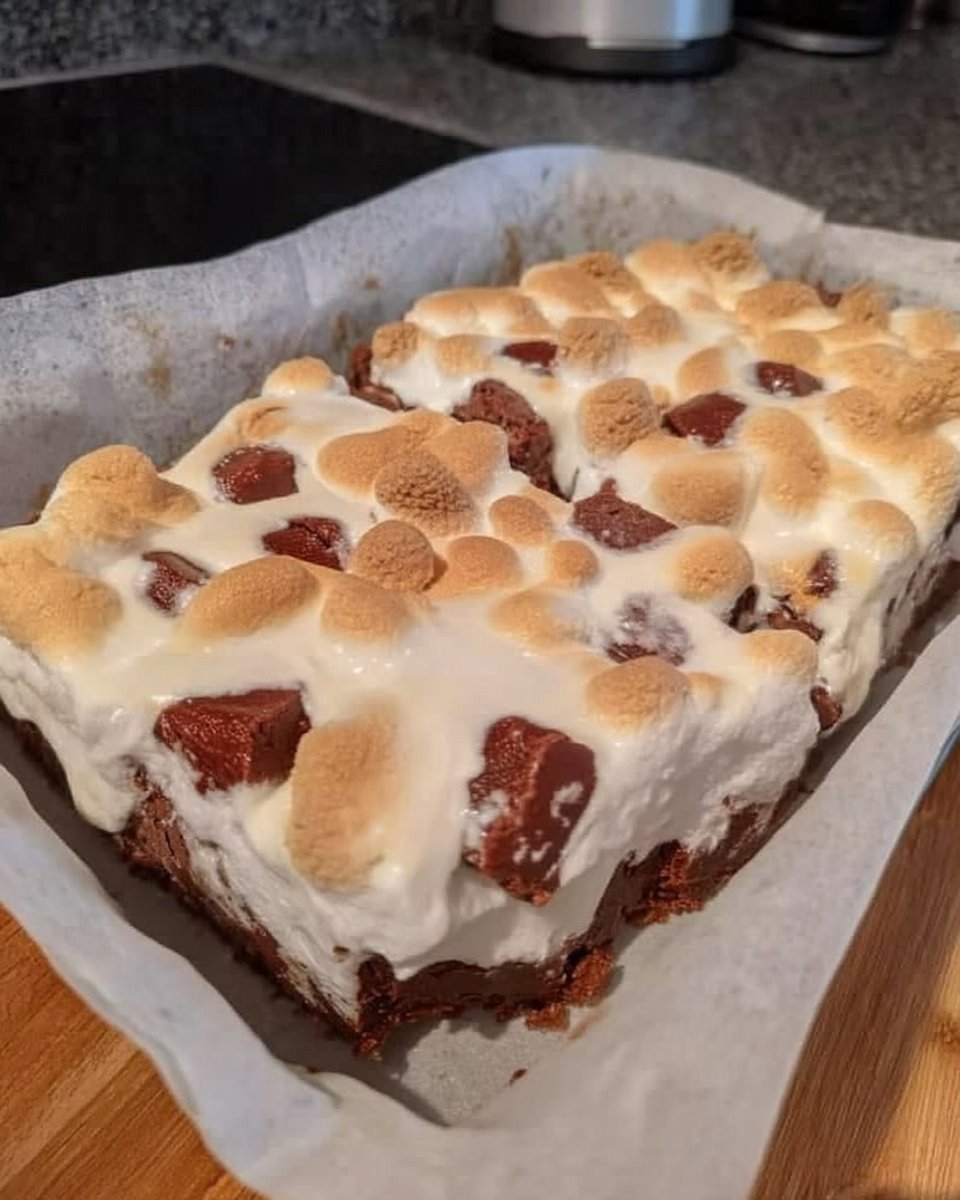
Serving this cake is an exercise in balancing temperatures. Because the cake is dense and rich, it benefits from a contrast in thermal energy.
Serve slices slightly warm or at room temperature. If the cake has been refrigerated, allow it to temper on the counter for 30 minutes. The cold inhibits the flavor release of the chocolate and solidifies the butter, making the texture waxy rather than melting.
A scoop of vanilla bean ice cream or a dollop of unsweetened whipped cream provides a necessary dilution of the sugar density. The cool cream against the warm, gooey fault lines creates a sensory experience that highlights the cake’s complexity. For those who study crumb structures, compare this dense melt to the lighter variations found in our Velvet Crumb Collection.
The Final Crumb
The Earthquake Cake is a testament to the idea that precision does not always equal visual uniformity. By understanding how ingredients of different densities interact under heat, we can create a dessert that is chaotic in look but masterful in texture. It is a forgiving bake for the novice, yet a fascinating study in thermodynamics for the expert.
While we appreciate the community’s enthusiasm for this classic concept, such as the version found at 12 Tomatoes, our method prioritizes the specific temperature of the cream cheese emulsion to guarantee a superior melt. We encourage you to master this balance of structure and flow. For a more traditional structural challenge, you might next attempt our Old-Fashioned Chocolate Cake.
Share your structural triumphs with us on Facebook, Pinterest, or Instagram.