During my time mastering British pastry arts, I discovered that the molten center is a delicate equilibrium between heat and time. The structural integrity of the outer cake must be robust enough to support the weight of the fluid core until the moment of service. Precision in timing transforms a simple batter into a professional-grade masterpiece that melts on contact.

This Lava Cake Recipe is a study in texture, focusing on the emulsification of high-quality fats and the aeration of whole eggs. We will use specific visual cues to determine exactly when the cake has reached its peak state of molten perfection. Following this methodical approach guarantees a consistent result that satisfies the most demanding chocolate enthusiasts.
Technical Mastery of the Chocolate Melt
The victory of a successful lava cake lies in the contrast between the firm, sponge-like exterior and the viscous, liquid heart. This recipe is beloved because it prioritizes the physics of heat transfer, allowing you to achieve a reliable result every time. By mastering this technical challenge, you create a dessert that provides a spectacular sensory experience as the first spoonful releases the warm chocolate flow.
We focus on the structural balance provided by a high ratio of egg yolks, which adds richness and stabilizes the emulsion. Unlike standard sponges, this method relies on a precise bake time that creates a thin wall of cooked batter while leaving the center in a tempered, liquid state. It is the ultimate expression of chocolate texture, offering a mouthfeel that is both substantial and incredibly smooth.
Print
Lava Cake
- Total Time: 31 mins
- Yield: 6 servings
- Diet: Vegetarian
Description
This sophisticated chocolate lava cake balances a firm, sponge-like exterior with a decadent molten center. This recipe emphasizes precise aeration and timing to create a professional-quality dessert that is as structurally sound as it is indulgent.
Ingredients
- Unsalted butter, softened (for greasing)
- Unsweetened cocoa powder (for dusting)
- 6 ounces high-quality semisweet or bittersweet chocolate (at least 60% cocoa), chopped
- 1/2 cup (1 stick) salted butter
- 3 large eggs, room temperature
- 3 large egg yolks, room temperature
- 1/2 cup powdered sugar
- 1/4 cup all-purpose flour
- 1/2 teaspoon vanilla extract
- 1 pinch salt
Instructions
- Preheat the oven to 375°F (190°C) and prepare six 6-ounce ramekins by coating them with softened unsalted butter and dusting them with cocoa powder.
- In a medium heat-proof bowl, combine the chopped chocolate and salted butter; melt in 1-minute increments at 50% power in the microwave until smooth and glossy.
- Stir the vanilla extract and salt into the chocolate mixture and allow it to cool slightly to near room temperature.
- In a separate large bowl, beat the 3 whole eggs and 3 egg yolks on high speed for 2 to 3 minutes until the mixture is thick, pale, and significantly increased in volume.
- Mix the powdered sugar into the egg base until just combined, then gently fold in the cooled chocolate mixture and the flour using a spatula until no streaks remain.
- Divide the batter among the ramekins, place on a baking sheet, and bake for 12-13 minutes until the sides are set and the center remains soft.
- Let the cakes rest for exactly 3 minutes before inverting them onto plates to serve.
Notes
For the most consistent results, use a digital thermometer to ensure the center of the cake reaches 160°F (71°C) before removing it from the oven. This ensures the center is safe to eat while remaining perfectly fluid. Using room temperature eggs is essential to maintain the emulsion of the butter and chocolate, preventing a grainy or clumping texture in the finished batter.
- Prep Time: 15 mins
- Cook Time: 13 mins
- Category: Dessert
- Method: Baking
- Cuisine: French-inspired
Ingredient Precision for a Flawless Melt

Quality is paramount when the ingredient list is this concise; every component serves a structural or textural purpose. You must select your chocolate with care, as the cocoa butter percentage will dictate how the center flows. Use a high-quality bittersweet or semisweet chocolate with at least 60% cocoa solids for the best structural results.
- Unsalted Butter and Cocoa Powder: Used specifically for the ramekins to create a non-stick barrier. Using cocoa powder instead of flour prevents a white, dusty residue on the finished cake.
- Semisweet or Bittersweet Chocolate: The primary flavor and structural base. Chopped chocolate melts more evenly than chips, which often contain stabilizers that resist melting.
- Salted Butter: Adds the necessary fat for a smooth emulsion and balances the sugar. The salt content sharpens the chocolate profile.
- Eggs and Egg Yolks: This is the technical heart of the recipe. The extra yolks provide the lecithin needed for a stable emulsion and a rich, custardy center.
- Powdered Sugar: We use powdered sugar for its fine texture, which dissolves instantly into the fats to create a smooth batter.
- All-Purpose Flour: Only a small amount is required to provide the protein structure needed to hold the cake together. Over-measuring will result in a dry, muffin-like texture.
The Method of Structural Precision
Step 1: Prepare the Ramekins
Preheat your oven to 375°F (190°C) or up to 400°F (200°C) depending on your oven’s known calibration. Apply a thin, even layer of softened butter to the bottom and sides of six 6-ounce ramekins. Pay close attention to the bottom crevices to prevent sticking. Dust the interior with unsweetened cocoa powder, tapping out the excess to leave a fine, dark coating.
Step 2: Melt the Chocolate Foundation
In a medium heat-proof bowl, combine the chopped chocolate and salted butter. Use 1-minute increments in the microwave at 50% power, stirring between each interval, until the mixture is smooth and glossy. You may also use a double boiler over low heat. It is vital to avoid overheating the chocolate, as this can cause it to seize or the fats to separate.
Step 3: Temper and Flavor
Remove the chocolate from the heat and stir in the salt and vanilla extract. Allow the mixture to cool slightly until it is near room temperature. It should be fluid but not hot to the touch; if it is too hot, it will scramble the eggs in the next step.
Step 4: Aerate the Egg Base
In a separate large bowl, use a handheld electric mixer or a stand mixer with the paddle attachment to beat the three whole eggs and three egg yolks. This step requires 2 to 3 minutes of high-speed beating until the mixture is thick, pale yellow, and has significantly increased in volume. This aeration is the secret to a light, professional sponge texture.
Step 5: Combine and Fold
Add the powdered sugar to the egg mixture and mix until just combined. Gently fold in the cooled chocolate mixture and the all-purpose flour using a spatula. Mix only until no streaks of flour remain. Overmixing at this stage will develop too much gluten, making the cake tough rather than tender.
Step 6: The Precise Bake
Divide the batter evenly among the prepared ramekins and place them on a heavy baking sheet. Bake for 12-13 minutes. Look for the sides to be set and firm, while the center remains soft and slightly concave. The cakes should feel soft when touched lightly in the middle. Remove immediately and let rest for exactly 3 minutes to allow the structure to stabilize.
Precision Secrets for Perfect Texture
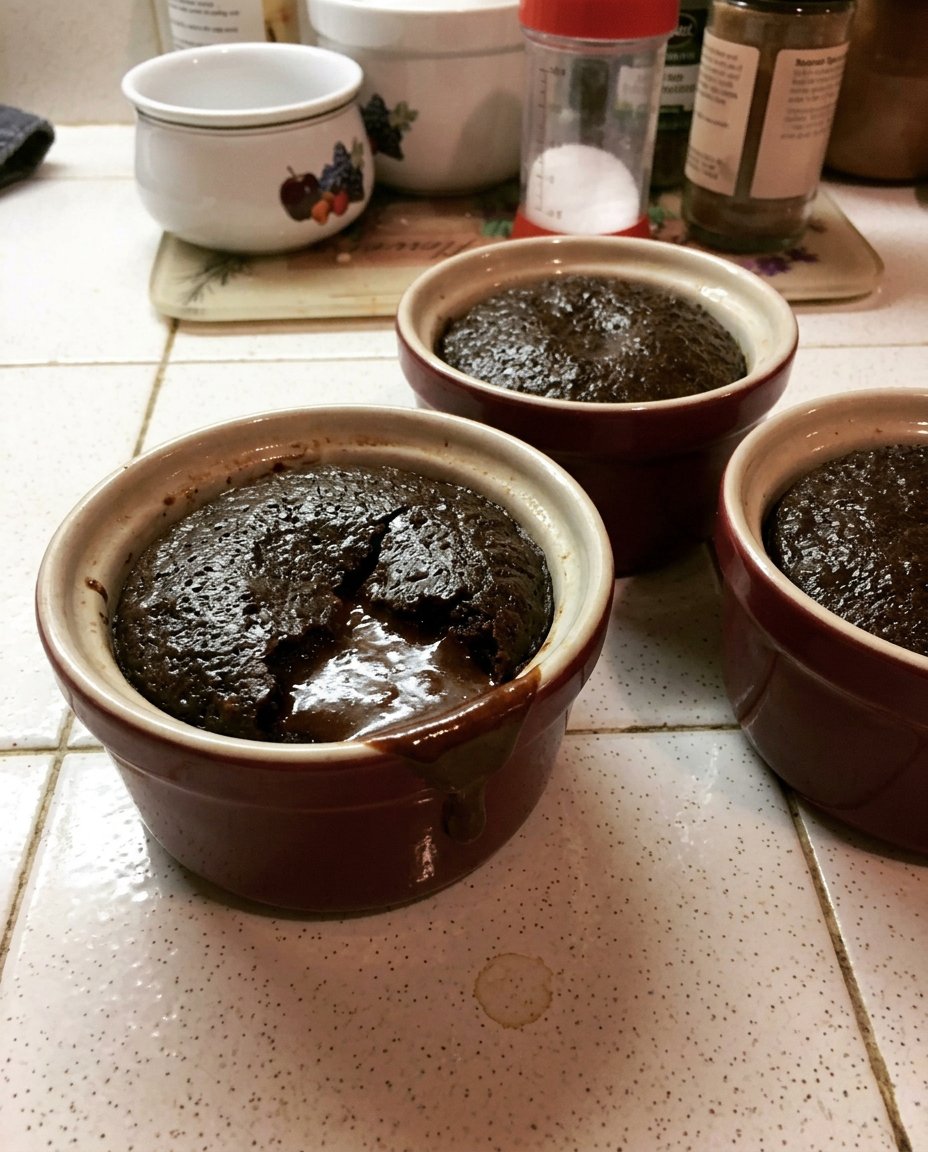
The most common error is misjudging the bake time, which is why I recommend a test cake if your oven is uncalibrated. A digital thermometer inserted into the center should read about 160°F (71°C) for a center that is safe to consume but still perfectly fluid. If you prefer a more substantial melt, err on the side of 12 minutes.
Always use room temperature eggs to guarantee they emulsify properly with the fats. Cold eggs can cause the melted butter in the chocolate mixture to clump, resulting in a grainy texture. For more technical insights on chocolate behavior, visit our cocoa-dream-lab for a deep dive into fat crystallization. You can also find excellent timing comparisons at Mel’s Kitchen Cafe for different ramekin sizes.
Technical Variations for Advanced Bakers
For a complex flavor profile, try adding a frozen sphere of ganache or a teaspoon of salted caramel into the center of the batter before baking. This creates a dual-texture molten core that is truly impressive. If you enjoy fruit-forward desserts, our raspberry-white-chocolate-cake offers a similar contrast between soft fruit and structural sponge.
Another precision tweak involves substituting the vanilla for espresso powder or a high-quality cognac. These additions do not alter the structural integrity but clarify the deep notes of the cocoa. For those who prefer a nut-based texture, adding a finely ground hazelnut meal in place of half the flour creates a Gianduja-style finish that is exquisite.
Presentation Precision and Textural Balance
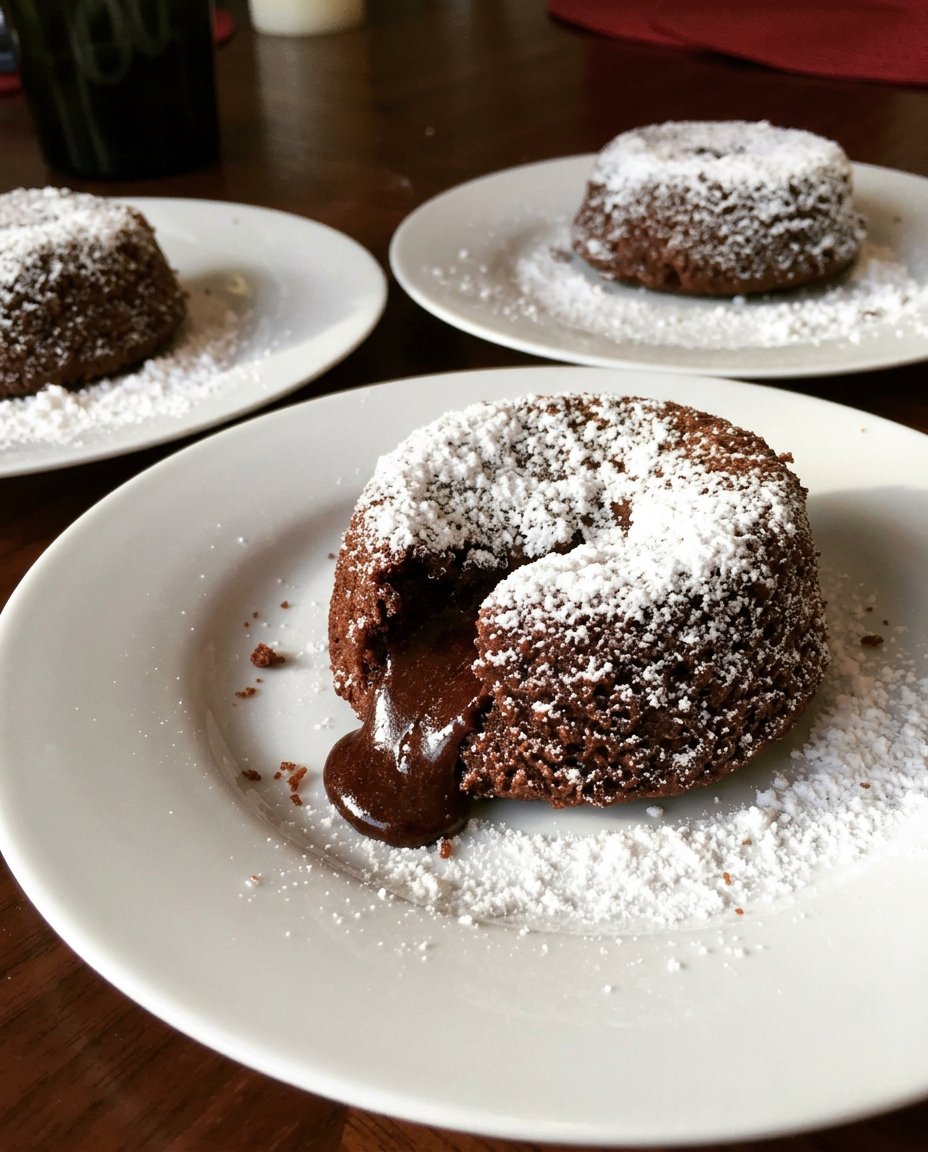
To serve, run a thin offset spatula around the edge of the ramekin and invert it onto a warmed dessert plate. The contrast of temperature is a vital part of the experience. Serve the hot cake with a single scoop of high-quality vanilla bean ice cream or a dollop of cold, unsweetened whipped cream to balance the richness.
For a more decorative presentation, a light dusting of powdered sugar through a fine-mesh sieve provides a beautiful contrast against the dark mahogany of the cake. For inspiration on pairing rich chocolate with textured toppings, see our snickers-cake which utilizes similar flavor profiles. Fresh raspberries or a tart coulis can also provide the necessary acidity to cut through the density of the chocolate.
Master the Craft of Molten Chocolate
Mastering the lava cake is a milestone for any serious home baker, representing a triumph of timing over simple assembly. By focusing on the aeration of your eggs and the precise window of the bake, you guarantee a dessert that is as structurally sound as it is indulgent. For another chocolate-focused technical challenge, I recommend our old-fashioned-chocolate-cake.
I would be proud to see your textural triumphs in the kitchen. Please share your results and join our community of precision-focused bakers. You can find more technical guides and beautiful results on our Pinterest, Instagram, and Facebook pages.