In the Mediterranean, we believe that the first bite is always taken with the eyes. I remember walking through the bazaars of Istanbul as a child, mesmerized by the towers of Turkish delight in rose, lemon, and mint hues—a promise of joy before you even tasted the sugar. This cake captures that same spirit of celebration. It is not just a dessert; it is a centerpiece that brings light to the table, inviting everyone to pause and admire the vibrant layers before the first forkful.

Beneath the playful colors lies a serious dedication to texture and flavor. We use six individual sponges, each infused with fresh lemon zest and sandwiched with tart lemon curd and smooth vanilla buttercream. The result is a balance of sweet and sharp, with a crumb that remains impossibly moist thanks to the curd soaking into the sponge. It requires patience to bake and stack, but the result is a slice of pure sunshine.
A Visual and Textural Masterpiece
This recipe is a true labor of love that pays off in both flavor and presentation. The vibrant layers are naturally flavored with zest, ensuring that the cake tastes as bright as it looks. Unlike dry novelty cakes, this one relies on the magic of lemon curd to keep every crumb tender and melting on the tongue.
- Moisture that lasts: The combination of butter, milk, and lemon curd ensures the cake stays soft for days.
- Perfect balance: The tartness of the curd cuts through the sweet buttercream, preventing it from becoming cloying.
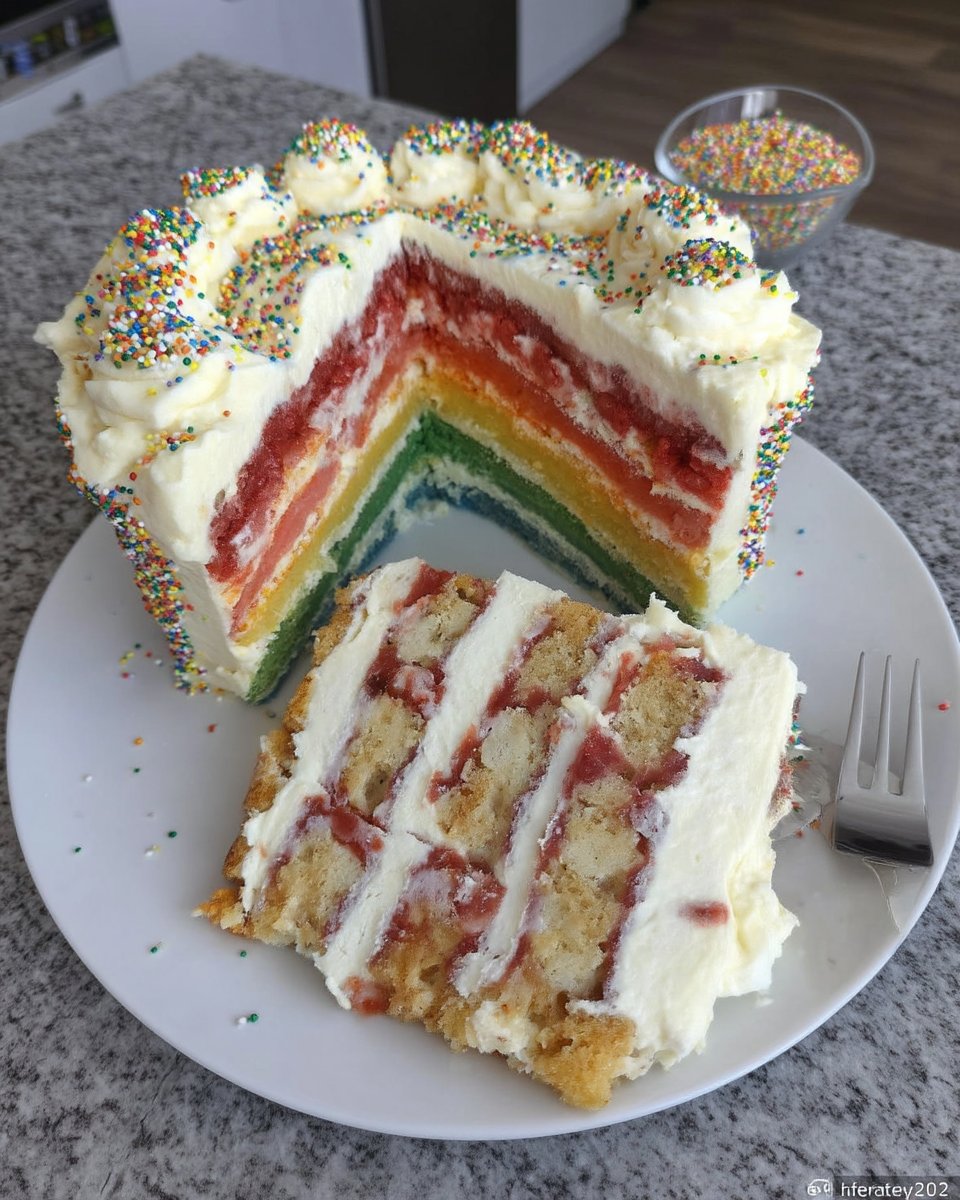
- Showstopper status: Slicing into the white frosting to reveal the hidden rainbow never fails to delight guests.
Lemon Rainbow Cake
- Total Time: 2 hours 40 mins
- Yield: 16 servings
- Diet: Vegetarian
Description
This spectacular six-layer citrus cake features vibrant sponges infused with fresh lemon zest and layered with tangy lemon curd. Finished with a velvety vanilla buttercream, it is a moist and colorful centerpiece perfect for any celebration.
Ingredients
- 550g softened unsalted butter or baking spread
- 550g caster sugar
- 10 large eggs, room temperature
- 2 tbsp whole milk
- Zest of 4 large lemons
- 550g self-raising flour
- Concentrated gel food coloring (red, orange, yellow, green, blue, and purple)
- 600g unsalted butter, softened (for frosting)
- 1.2kg icing sugar, sifted
- 2 tsp vanilla extract
- 4 tbsp milk (for frosting)
- 300g high-quality lemon curd
- Rainbow sprinkles
Instructions
- Preheat your oven to 160C Fan (350F/Gas Mark 4) and grease and line three 8-inch cake tins.
- In a large bowl, cream together 275g of butter and 275g of caster sugar until pale and airy, then whisk in 5 eggs, 1 tablespoon of milk, and half the lemon zest.
- Gently fold in 275g of self-raising flour until just combined, then divide the batter equally into three bowls and tint with red, orange, and yellow gel coloring.
- Bake the first three layers for 20 minutes until a skewer comes out clean, then cool on a wire rack while repeating the process with the remaining ingredients for the green, blue, and purple layers.
- Make the buttercream by beating 600g of softened butter with 1.2kg of icing sugar, vanilla, and milk until the texture is smooth and spreadable.
- Stack the cooled layers starting with purple, spreading a thin layer of buttercream and a drizzle of lemon curd between each colored sponge.
- Apply a thin crumb coat of buttercream to the exterior, chill for one hour, then apply the final thick layer of frosting and decorate with piped rosettes and sprinkles.
Notes
For the most professional results, weigh your empty mixing bowls before adding batter so you can divide the mixture into six perfectly equal portions for even baking. Always use room temperature eggs to prevent the batter from curdling when mixing the citrus-heavy sponge. If you are baking in a humid environment, chill the cake for an extra 30 minutes before the final frosting layer to ensure the lemon curd layers remain stable and secure.
- Prep Time: 1 hour
- Cook Time: 40 mins
- Category: Dessert
- Method: Baking
- Cuisine: Mediterranean-inspired
The Mediterranean Pantry Foundation
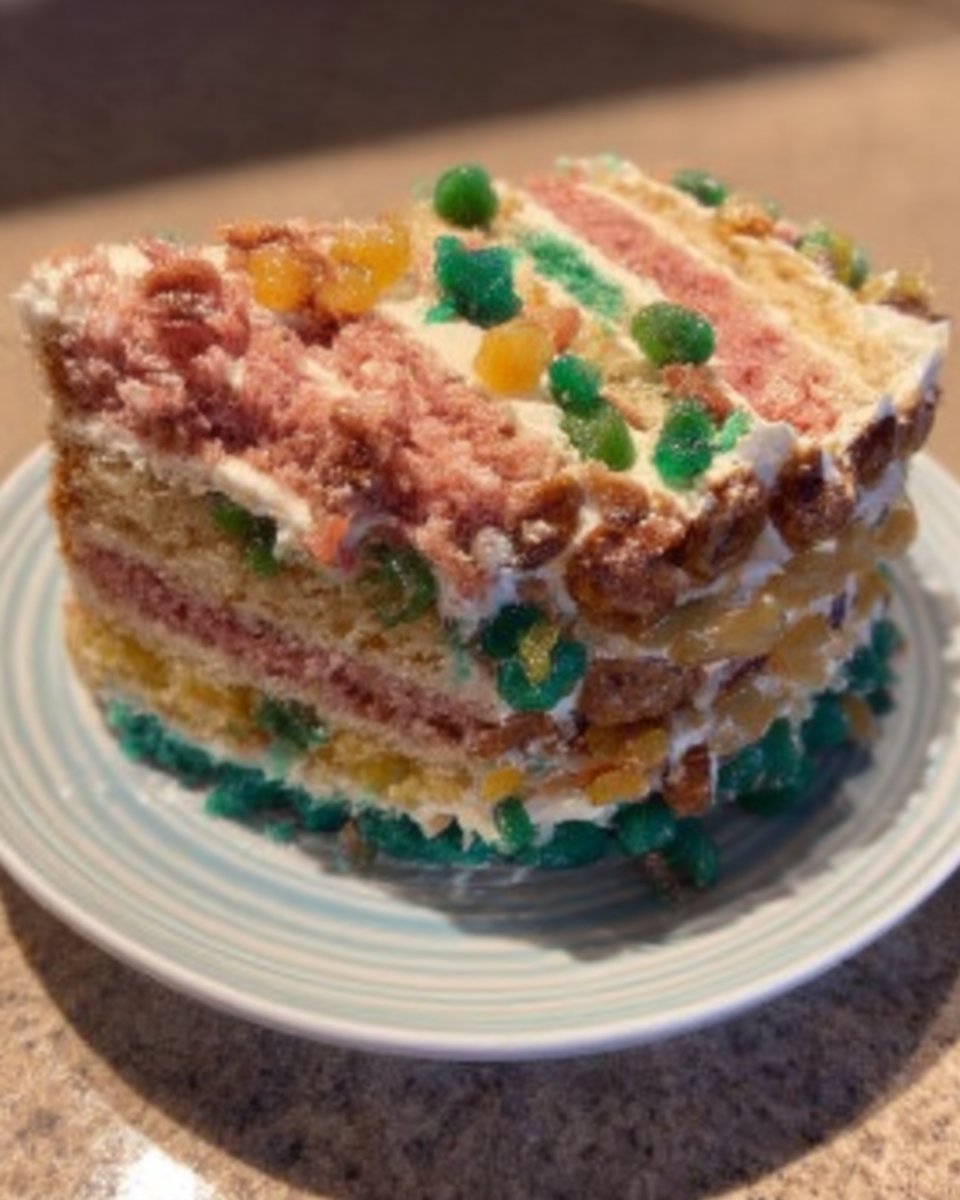
To achieve that melt-in-your-mouth texture, we rely on high-quality basics. Everything should be at room temperature to ensure a smooth emulsion.
- Butter or Baking Spread: I use softened unsalted butter for the buttercream to get that pale, creamy finish. For the sponge, a baking spread often yields a lighter crumb.
- Fresh Lemons: We need the zest of four lemons. This is where the essential oils live, providing a deep, aromatic citrus note that extract cannot mimic.
- Self-Raising Flour: Provides the necessary lift for fluffy layers without needing extra baking powder.
- Gel Food Coloring: Quality matters here. Brands like Pro Gel or Sugarflair give intense color without adding excess liquid that could ruin the batter’s consistency.
- Lemon Curd: The secret weapon. It acts like a syrup, soaking into the sponge to add moisture and a sharp, tangy kick.
- Icing Sugar & Vanilla: For a cloud-like buttercream that melts instantly.
How to Build the Rainbow
Step 1: Prep the Tins and Oven
Preheat your oven to 160C Fan (350F/Gas Mark 4). Grease and line three 8-inch cake tins. Since this is a six-layer cake, we will bake in two batches if you only have three tins. Precision is key here, so have your cooling racks ready.
Step 2: Create the Base Batter
In a large bowl, cream together half of your butter (275g) and half of the caster sugar (275g) until pale and airy. Add half the eggs (5), 1 tablespoon of milk, and half the lemon zest. Whisk until fully incorporated. Gently fold in half of the self-raising flour (275g) just until the white streaks disappear. Do not overmix, or the sponge will lose its tenderness.
Step 3: Color the First Layers
Divide this batter equally into three bowls. This is where the magic happens. Add red gel coloring to the first, orange to the second, and yellow to the third. Mix gently until the color is vibrant and uniform. Pour into your prepared tins.
Step 4: Bake and Cool
Bake the first three layers for 20 minutes, or until a skewer inserted into the center comes out clean. The sponge should spring back when touched. Let them cool in the tins for a few minutes before transferring to a wire rack to cool completely. While they cool, wash your tins and repeat Steps 2 and 3 with the remaining ingredients, coloring these batches green, blue, and purple.
Step 5: Whip the Buttercream
Beat the softened butter (600g) and icing sugar (1.2kg) together. Start slow to avoid a sugar cloud, then increase speed until pale and fluffy. Add the vanilla extract and milk, beating until the texture is spreadable and smooth like velvet.
Step 6: Stack and Fill
Place the purple layer on your board first. Spread a thin layer of buttercream over it, followed by a generous drizzle of lemon curd. Top with the blue layer and repeat, working your way up through green, yellow, orange, and finally red. The curd will soak into the sponge, creating that signature moist texture.
Step 7: The Final Coat
Apply a thin “crumb coat” of buttercream over the whole cake to trap any loose crumbs. Chill for one hour to set. Once firm, apply the final thick layer of buttercream, smoothing it with a palette knife. Pipe rosettes around the top and garnish with rainbow sprinkles for a festive finish.
Mehmet’s Secrets for Perfect Layers
- Temperature is Everything: Ensure your butter and eggs are truly at room temperature. Cold ingredients will curdle the batter, leading to a heavy, dense cake rather than a light sponge.
- The Power of Gel: Avoid liquid food coloring found in supermarkets. They are too watery and will alter your batter’s chemistry. Concentrated gels keep the texture intact while delivering vivid hues.
- Weigh for Precision: For the most even layers, weigh your empty bowls and the batter to ensure exactly the same amount goes into each tin. This guarantees they bake at the same rate.
- Let it Soak: The lemon curd is essential. I like to let the assembled cake sit for a few hours before slicing. This allows the curd to marry with the sponge, similar to how we let syrup soak into revani. For more texture-focused desserts, explore our Velvet Crumb Collection.
Mediterranean Twists and Flavor Swaps
- Citrus Grove: Swap the lemon zest for orange or lime zest for a different citrus profile. An orange curd filling pairs beautifully with chocolate buttercream.
- Berry Burst: Instead of lemon curd, use a high-quality raspberry or blackberry preserve between the layers for a Succulent Fruit Fusion experience.
- Mediterranean Nut: Fold a handful of finely chopped pistachios into the green layer’s batter for a hidden textural crunch that surprises the palate.
How to Serve for Celebration
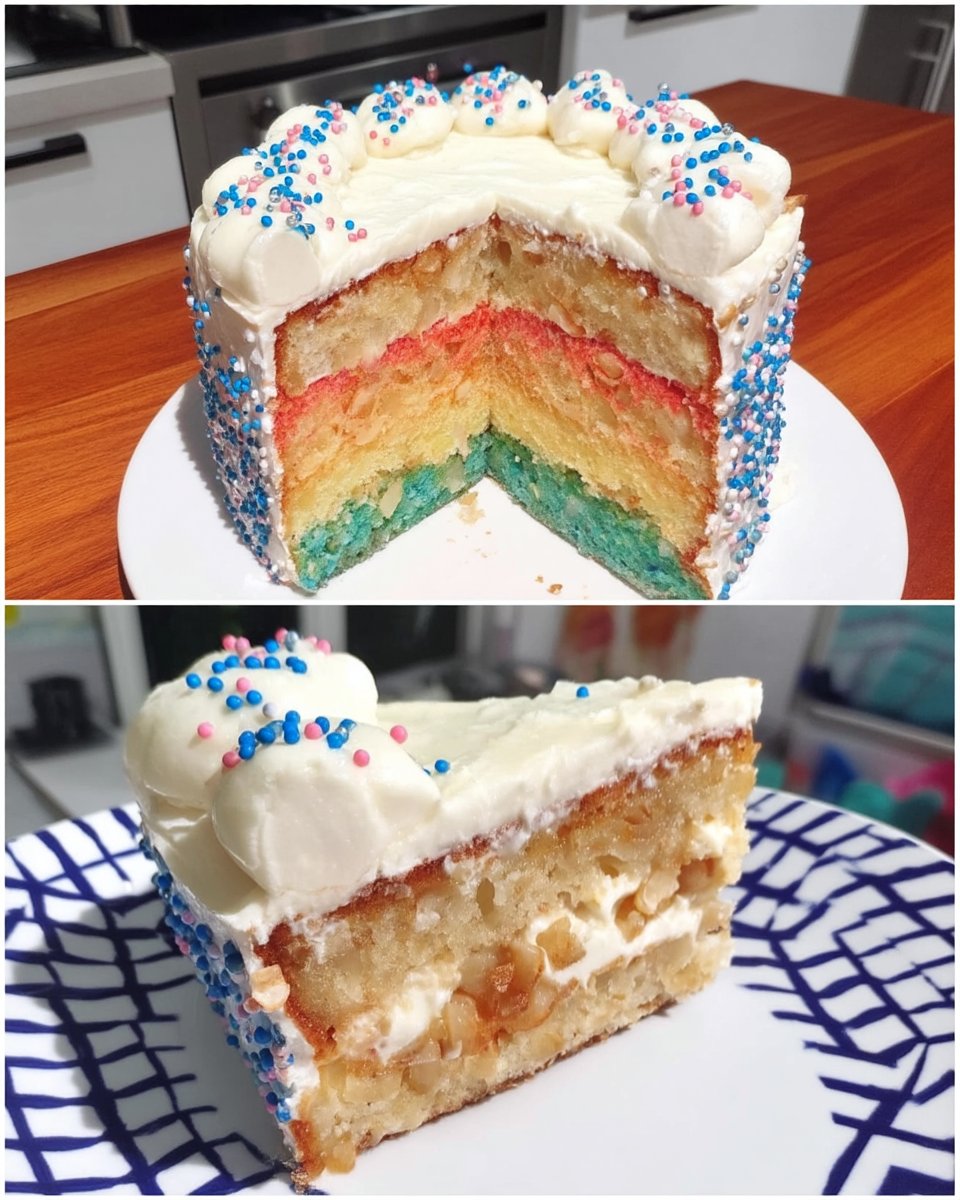
In the Mediterranean, we often serve sweet treats with strong, dark coffee to balance the sugar. This cake is substantial, so thin slices are perfect. Serve it chilled for a firmer texture, or let it come to room temperature for a softer, melt-in-your-mouth experience. It pairs wonderfully with a dollop of unsweetened whipped cream or fresh berries on the side.
For more celebration-worthy recipes, look through our Decadent Occasions archive.
The Sweetest Finish
This Lemon Rainbow Cake is a testament to the joy of baking. It requires time and patience, but the moment you slice into it and reveal the spectrum of colors, the effort melts away. It is a dessert that demands to be shared, celebrated, and savored slowly.
If you love petite, flavorful treats, you might also enjoy exploring our Petite Indulgences. For the original inspiration behind this colorful method, you can visit The Baking Explorer.
Connect with us on social media: