During my formative years in a traditional British bakery, I was taught that the most difficult aesthetic to achieve is not complexity, but absolute simplicity. A Minimalist Cake offers no place for technical errors to hide, as there are no piped rosettes or thick ganache to mask a dry sponge or an uneven crumb. Success in this discipline requires a deep understanding of structural integrity and the precise science of moisture retention.

This particular recipe utilizes a refined emulsion of Greek yogurt and whole eggs to create a crumb that is both sturdy enough for clean slicing and soft enough to melt on the palate. By pairing this structured sponge with a stable Russian buttercream, we achieve a clean, sharp finish that defines the modern minimalist aesthetic. It is a masterclass in balancing technical discipline with sensory satisfaction.
Structural Integrity Meets Sophisticated Texture
The beauty of a Minimalist Cake lies in the intersection of architectural strength and delicate mouthfeel. Unlike heavier traditional sponges, this recipe relies on a specific ratio of fats and proteins to ensure the cake remains moist without becoming dense or cloying. You will appreciate the way the fine-grained crumb holds a sharp edge when sliced, a direct result of the precise leavening balance we employ here.
Technically, this cake is a triumph because it solves the common issue of structural collapse in softer sponges. By incorporating full-fat Greek yogurt, we introduce acidity that tenderizes the gluten while providing a thick viscosity that supports the air bubbles created during the creaming stage. This results in a cake that feels substantial and premium, yet possesses a lightness that encourages a second serving. It is the definitive choice for those who value the quiet confidence of a perfectly executed technical bake.
Print
Minimalist Cake
- Total Time: 1 hour
- Yield: 8 servings
- Diet: Vegetarian
Description
This Minimalist Cake is a masterclass in technical precision, featuring a sturdy yet soft sponge enriched with Greek yogurt and topped with a silky Russian buttercream. It is specifically designed for bakers seeking a clean, architectural aesthetic without compromising on moistness or flavor.
Ingredients
- 250 g All-Purpose Flour
- 200 g Granulated Sugar
- 480 g Unsalted Butter
- 100 g Full-Fat Greek Yogurt
- 250 g Sweetened Condensed Milk
- 3 Large Eggs
- 1 tsp Baking Powder
- 1/2 tsp Baking Soda
- 1/2 tsp Salt
- 1 tsp Vanilla Extract
- 1 tsp Lemon Zest
- 100 ml Milk
Instructions
- Preheat your oven to 340 degrees Fahrenheit (170 degrees Celsius) and sift the flour, baking powder, baking soda, and salt into a large bowl to ensure even aeration.
- Using a stand mixer with a paddle attachment, cream 100 g of butter with the sugar on medium speed for 5 minutes until the mixture is pale and light.
- Add the eggs one at a time to maintain the emulsion, then whisk in the vanilla extract, lemon zest, and Greek yogurt until the batter is homogenous.
- Lower the mixer speed and add the dry ingredients in three parts, alternating with the milk in two parts, mixing only until the flour streaks disappear.
- Divide the batter between two greased 6-inch round tins and bake for 30-35 minutes, or until the internal temperature reaches 205 degrees Fahrenheit.
- To make the Russian buttercream, beat the remaining 380 g of butter for 8 minutes until white and voluminous, then slowly pour in the condensed milk while continuing to beat.
- Level the cooled cakes, apply a thin crumb coat of buttercream, refrigerate for 30 minutes, and then apply a final smooth layer using a bench scraper for sharp edges.
Notes
To achieve the signature sharp edges of a minimalist design, ensure your bench scraper is held at a perfect 90-degree angle to the turntable while smoothing the final layer of buttercream. If the Russian buttercream feels too soft to work with, chill it for 10 minutes and whip it briefly to restore its architectural stability before frosting.
- Prep Time: 25 mins
- Cook Time: 35 mins
- Category: Dessert
- Method: Baking
- Cuisine: British
The Technical Foundation of the Minimalist Cake
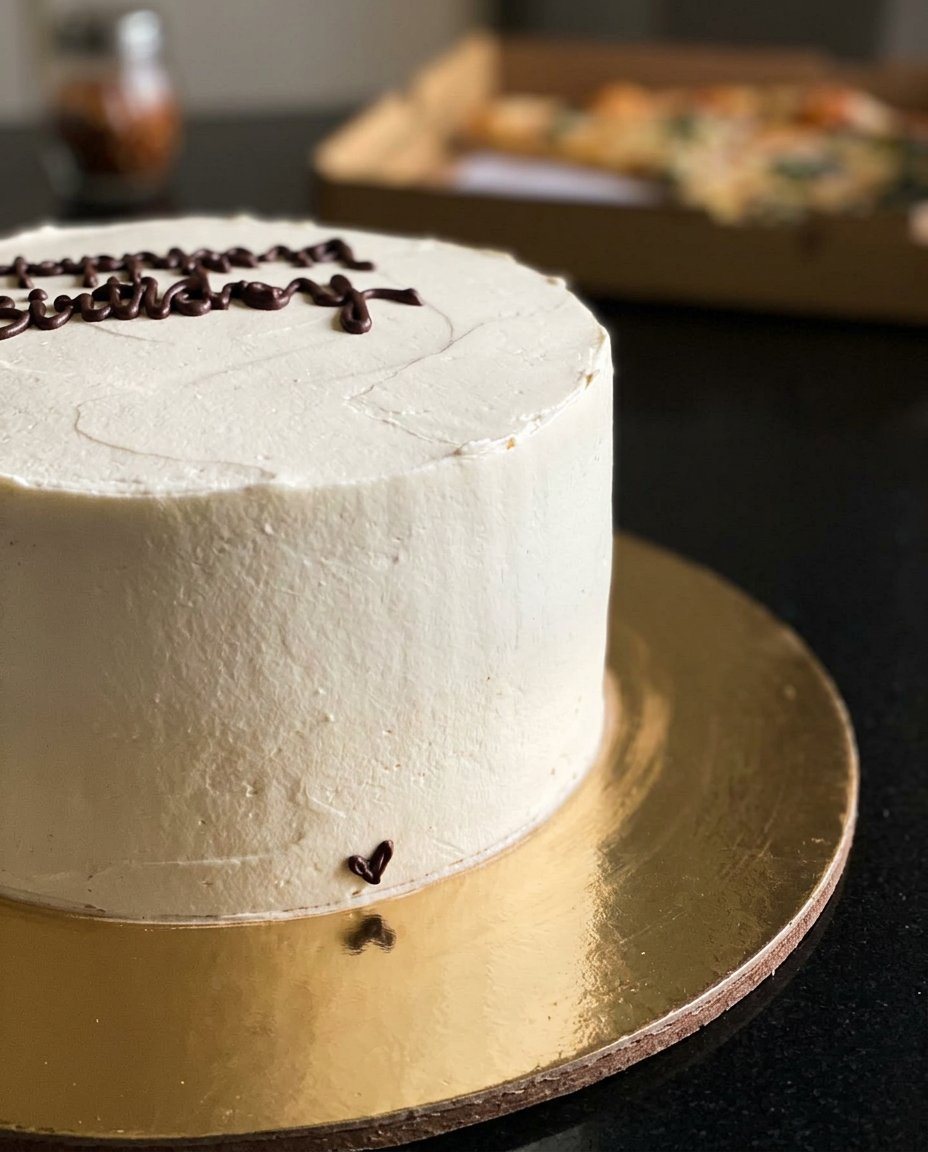
Every ingredient in this selection serves a specific structural purpose. We are not merely mixing flavors; we are constructing a biological network of proteins and fats that must behave predictably under heat. Accuracy in measurement is the difference between a professional result and a domestic disappointment.
- All-Purpose Flour (250 g): I recommend a flour with a protein content around 10-11%. This provides enough gluten for structure without making the cake tough.
- Granulated Sugar (200 g): Sugar is a liquifier and a tenderizer. It interferes with gluten development to ensure the crumb remains soft.
- Unsalted Butter (480 g total): Use high-quality butter with at least 82% fat content. This is divided between the cake batter and the buttercream for maximum richness.
- Full-Fat Greek Yogurt (100 g): The acidity reacts with the baking soda to provide immediate lift and a tight, uniform crumb structure.
- Sweetened Condensed Milk (250 g): This is the secret to the Russian buttercream. It provides a stable, silky base that is less sweet than traditional American buttercream.
- Large Eggs (3 units): These provide the primary emulsifiers (lecithin) that bind the water-based and fat-based ingredients together.
The Method of Precision Baking
Step 1: Dry Ingredient Sifting and Integration
Begin by preheating your oven to 340 degrees Fahrenheit (170 degrees Celsius). Sift the 250 g of flour, 1 tsp baking powder, 1/2 tsp baking soda, and 1/2 tsp salt into a large bowl. Sifting is non-negotiable; it aerates the flour and ensures the leavening agents are perfectly distributed, preventing localized tunneling in the finished sponge.
Step 2: The Creaming Phase
In a stand mixer fitted with the paddle attachment, cream 100 g of the room-temperature butter with the 200 g of sugar. You are looking for a pale, aerated texture often referred to as the ‘light and fluffy’ stage, which usually takes 4-5 minutes at medium speed. This process creates millions of tiny air pockets that will expand in the oven.
Step 3: Emulsifying the Wet Ingredients
Add the eggs one at a time, ensuring each is fully incorporated before adding the next. This prevents the emulsion from breaking. Following the eggs, whisk in the 1 tsp vanilla extract, 1 tsp lemon zest, and the 100 g of Greek yogurt. The mixture should look smooth and homogenous.
Step 4: Alternating Addition of Solids and Liquids
Reduce the mixer speed to low. Add the dry ingredients in three parts, alternating with the 100 ml of milk in two parts. Start and end with the dry ingredients. This technique prevents over-working the gluten, which is essential for maintaining a tender Minimalist Cake texture. Mix only until no streaks of flour remain.
Step 5: The Baking Cycle
Divide the batter into two greased 6-inch (15 cm) round tins. Bake for 30-35 minutes. Do not open the oven door before the 25-minute mark, as the sudden drop in temperature can cause the delicate structure to fail. The cakes are done when a skewer inserted into the center comes out clean and the internal temperature reaches 205 degrees Fahrenheit (96 degrees Celsius).
Step 6: Preparing the Russian Buttercream
While the cakes cool, beat the remaining 380 g of butter until it is white and voluminous. This can take up to 8 minutes. Slowly pour in the 250 g of sweetened condensed milk while continuing to beat. The result is a glossy, stable frosting that is perfect for the sharp lines of a minimalist design.
Step 7: Assembly and Final Finish
Once completely cool, level the cakes. Apply a thin crumb coat of buttercream and refrigerate for 30 minutes to set the structure. Apply the final layer of buttercream, using a bench scraper to achieve perfectly smooth sides and sharp right-angled top edges. Add a single drop of food coloring if a subtle pastel hue is desired.
Precision Secrets for Structural Success
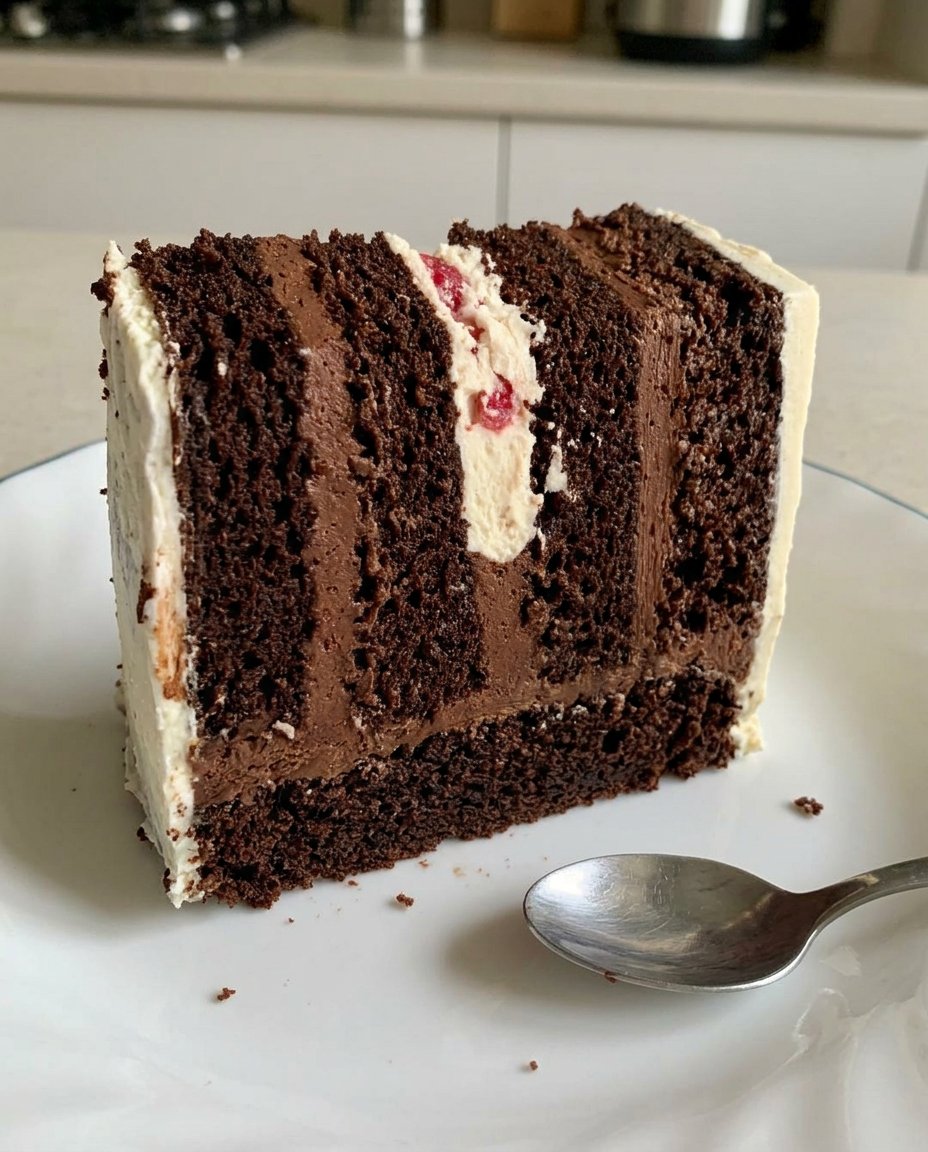
Temperature control is the most overlooked aspect of cake science. Ensure your eggs, yogurt, and milk are at precisely 70 degrees Fahrenheit (21 degrees Celsius) before beginning. Cold ingredients will cause the butter to seize, resulting in a broken emulsion and a coarse, oily crumb. If your batter looks curdled, the temperature balance is off.
For a truly professional finish, I always recommend weighing your batter into the tins to ensure even baking times. A kitchen scale is more accurate than any measuring cup. If you find your cakes are doming too much, you can use bake-even strips or lower the oven temperature by 10 degrees for a slower, flatter rise. For more insights on achieving a classic texture, see our guide on the old-fashioned-chocolate-cake.
Technical Variations for Advanced Bakers
While the base recipe is designed for a neutral, elegant profile, you can modify the flavor without compromising the structure. For a botanical twist, infuse the milk with dried lavender or Earl Grey tea leaves before straining and adding to the batter. This adds a sophisticated aromatic layer that pairs beautifully with the tangy yogurt base.
If you prefer a different textural experience, you might consider our velvet-crumb-collection which explores different protein ratios for even softer sponges. To transform this into a fruit-based minimalist design, fold in 50 g of finely freeze-dried raspberry powder into the dry ingredients. This provides intense flavor and a natural pink hue without adding the excess moisture of fresh fruit, which can jeopardize the internal crumb structure.
Presentation Precision and Slicing Techniques
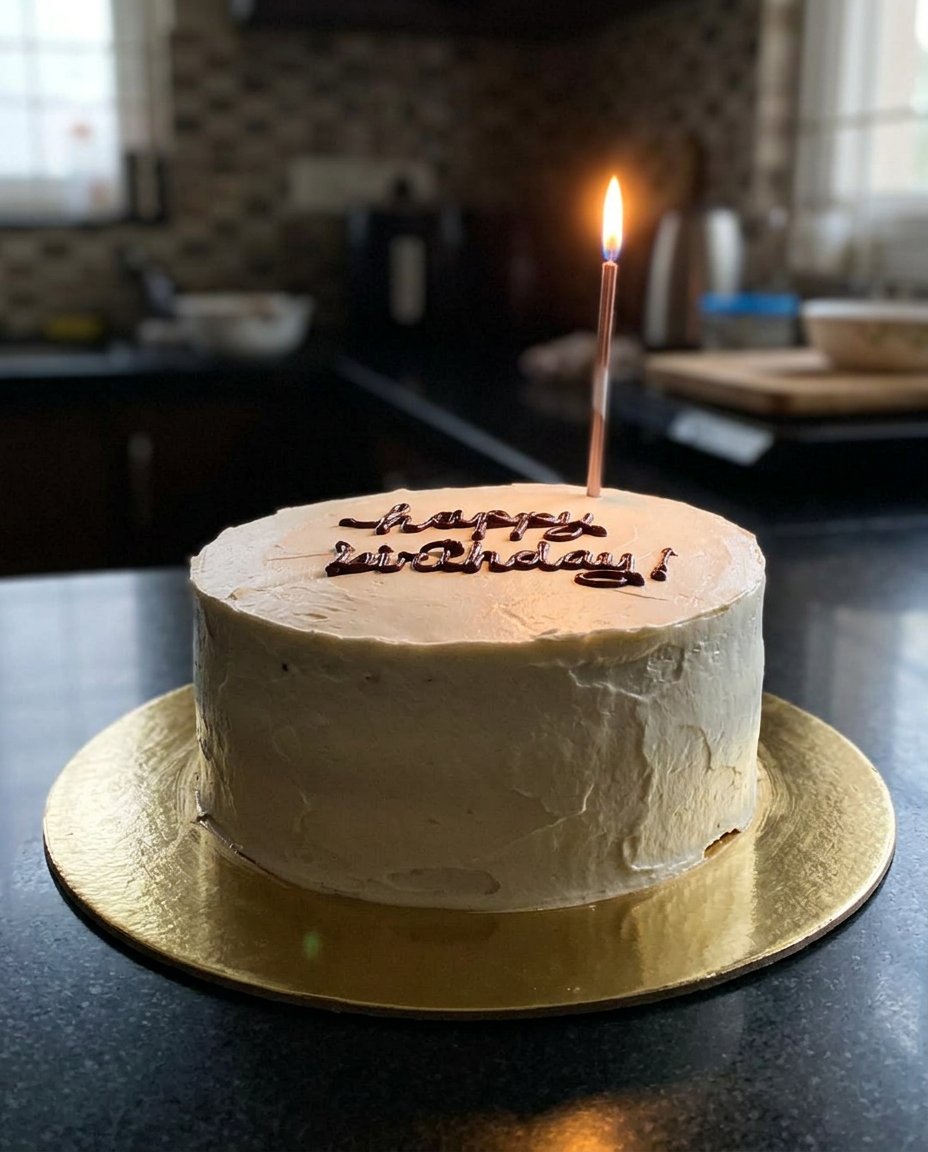
To serve a Minimalist Cake, the presentation must be as disciplined as the bake itself. Use a plain ceramic pedestal or a flat marble slab to complement the clean lines of the frosting. Avoid busy patterns that distract from the cake’s silhouette. For more inspiration on presenting your bakes, browse our recipe-index.
When it comes to slicing, temperature is your ally. For the cleanest cuts, chill the cake for at least 2 hours. Use a long, thin-bladed knife dipped in hot water and wiped dry between every single slice. This prevents the buttercream from dragging and ensures the internal layers remain distinct and beautiful. For more information on aesthetic designs, check out this guide on minimalist cake styles.
Master the Craft of Technical Minimalism
Mastering the Minimalist Cake is a significant milestone for any ambitious baker. It proves that you have the technical discipline to focus on the essentials: crumb structure, moisture balance, and clean finishing. While it may seem simple, the precision required to execute this recipe perfectly is what separates a novice from a true pastry artist. Continue your journey into structural baking by trying our fruit-cake, which requires similar attention to density and fruit distribution. I look forward to seeing your technical triumphs in the kitchen. Please share your progress with our community on Pinterest, Instagram, and Facebook.