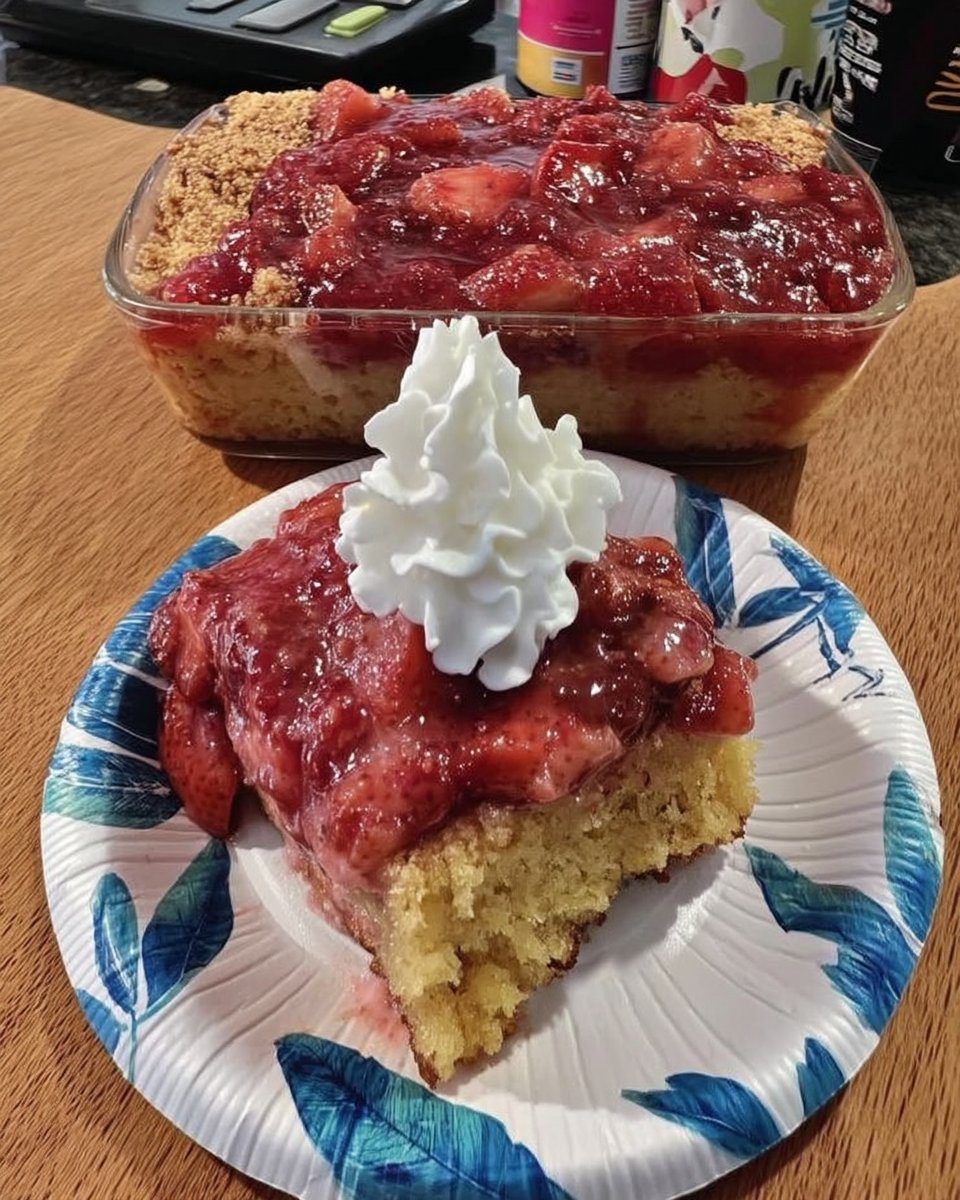
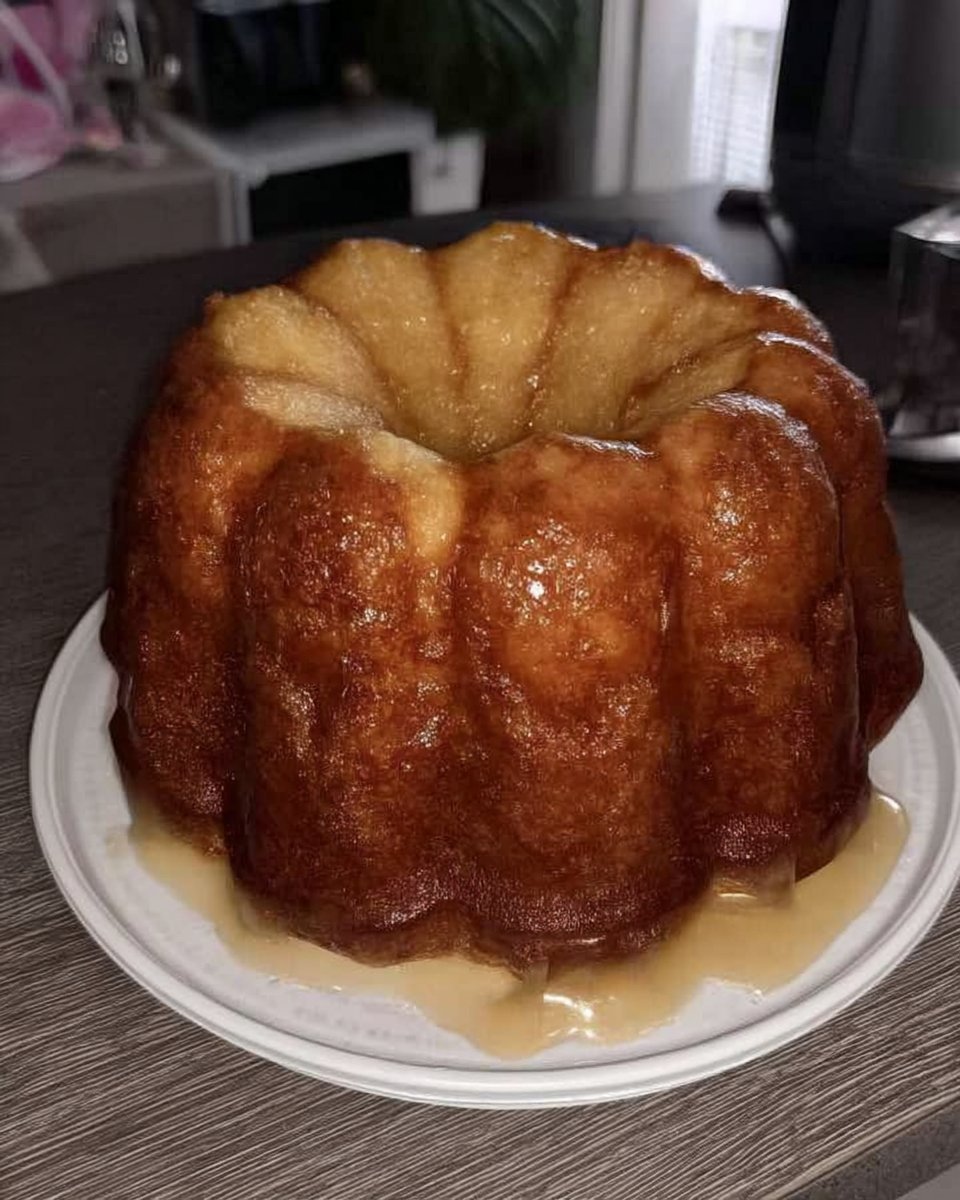
In the rigorous world of pastry arts, we often obsess over precise lamination and gluten development, yet there is a fascinating brilliance in the hydration mechanics of this recipe. It relies entirely on the principle of saturation, where the viscosity of the heavy syrup interacts with the dry protein of the cake mix to create a structure that is both crisp and yielding. It is a lesson in how thermal processing can transform disparate layers into a cohesive textural masterpiece without a single whisk stroke.

This peach dump cake challenges the notion that speed sacrifices quality. By meticulously controlling the distribution of butter lipids over the dry ingredients, we engineer a golden, shattered-glass crust that protects the molten fruit interior. It is the perfect balance of structural integrity and immediate melt-in-your-mouth satisfaction, proving that precision matters even in the simplest assembly methods.
Precision Meets Simplicity
While the name implies a lack of care, the result is a triumph of textural engineering. You will appreciate how the heavy syrup acts as the primary hydration agent, activating the leavening in the mix only where necessary to create a cobbler-like topping rather than a uniform sponge.
- Textural Contrast: The method creates a distinct separation between the soft, thermally broken-down peaches and the crisp, buttery crust.
- Efficiency: It requires zero agitation, meaning we avoid overworking the gluten, ensuring a tender crumb every time.
- Versatility: It serves as a base for exploring acidity and fat ratios without risking structural collapse.
Peach Dump Cake
- Total Time: 55 mins
- Yield: 12 servings
- Diet: Vegetarian
Description
This effortless Peach Dump Cake transforms simple pantry staples into a sophisticated dessert featuring a shattered-glass crust and a molten, sweet fruit interior. By utilizing the hydration mechanics of heavy syrup and precise lipid distribution, you achieve a perfect textural balance with zero agitation required.
Ingredients
- 2 (15-ounce) cans peaches in heavy syrup
- 1 (15.25-ounce) package yellow cake mix
- 1/2 cup unsalted butter, chilled
- 1 teaspoon ground cinnamon
Instructions
- Preheat your oven to 375°F (190°C) and set aside a 9×13-inch baking dish.
- Pour the canned peaches and their syrup into the dish, spreading them into an even layer to ensure consistent heat distribution.
- Distribute the dry yellow cake mix evenly over the fruit until the peaches are entirely obscured, taking care not to pack the powder down.
- Cut the cold butter into thin, uniform pads or grate frozen butter over the surface to cover 80-90% of the dry mix.
- Dust the top with ground cinnamon and bake for approximately 45 minutes until the fruit layer is bubbling and the crust has achieved a deep golden brown color.
Notes
For the best results, freeze your butter for 15 minutes before grating it directly over the dry mix; this creates a more even melt and prevents dry flour patches. To maintain the specific structural integrity of this cobbler-style dessert, resist the urge to stir the layers, as the steam must work through the dry ingredients undisturbed.
- Prep Time: 10 mins
- Cook Time: 45 mins
- Category: Dessert
- Method: Baking
- Cuisine: American
The Chemistry of Components
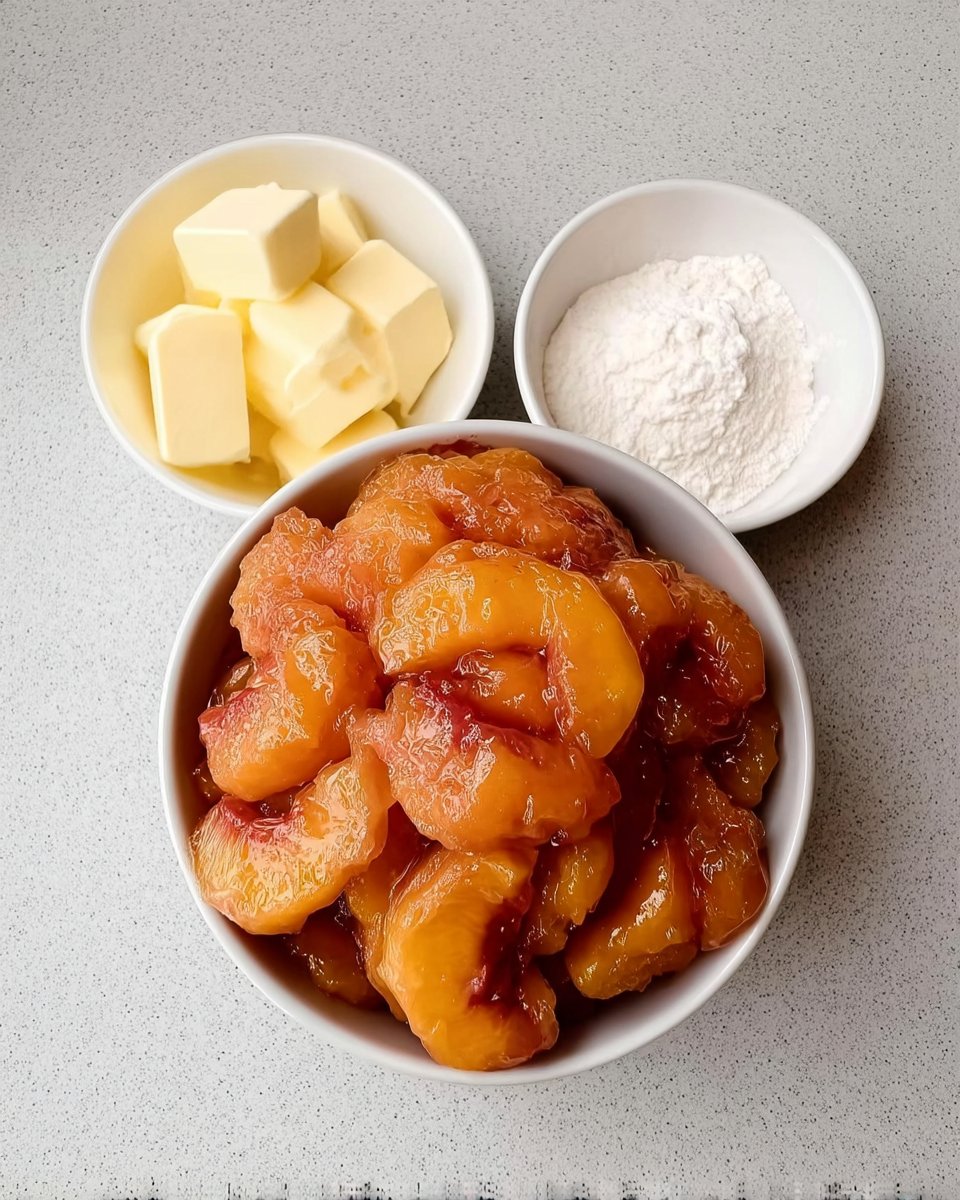
To achieve the correct mouthfeel, we must respect the function of each ingredient. Substitutions can alter the hydration levels, leading to a powdery finish rather than a crisp crust.
- Peaches in Heavy Syrup: Do not drain. The syrup provides the sugar and liquid density required to hydrate the bottom layer of the cake mix. Fresh peaches would require a precise sugar-syrup addition to replicate this viscosity.
- Yellow Cake Mix: This acts as our pre-balanced dry structural element. It contains the flour, sugar, and leavening agents in exact ratios.
- Butter (Unsalted): The hydrophobic lipid that fries the top layer of the cake mix. It facilitates the Maillard reaction, giving us that golden, nutty crust.
- Ground Cinnamon: Provides an aromatic counterpoint to the sweetness, bridging the gap between the fruit and the buttery topping.
Methodical Assembly
Precision in layering is critical here. Once the layers are placed, they must remain undisturbed to ensure the correct textural outcome.
Step 1: Base Layer Foundation
Preheat your oven to 375°F (190°C). Pour the peaches—syrup and all—into a 9×13-inch baking dish. Spread them evenly to ensure consistent heat distribution during the bake.
Step 2: Dry Structural Application
Evenly distribute the dry yellow cake mix over the fruit. This is a visual precision task; ensure the fruit is entirely obscured. Do not pack it down, as we need the air pockets for the butter to permeate.
Step 3: Lipid Distribution
This is the most critical step for texture. Cut the butter into thin, uniform pads or grate it (frozen butter works best for this). Scatter these lipid pockets over the dry mix. Aim for 80-90% surface coverage to prevent dry, powdery patches.
Step 4: Thermal Processing
Bake for approximately 45 minutes. You are looking for specific visual cues: the fruit layer should be bubbling vigorously (indicating thickened juices), and the crust should be a deep golden brown. If the top is browning too fast before the center sets, cover loosely with foil.
Jordan’s Technical Notes
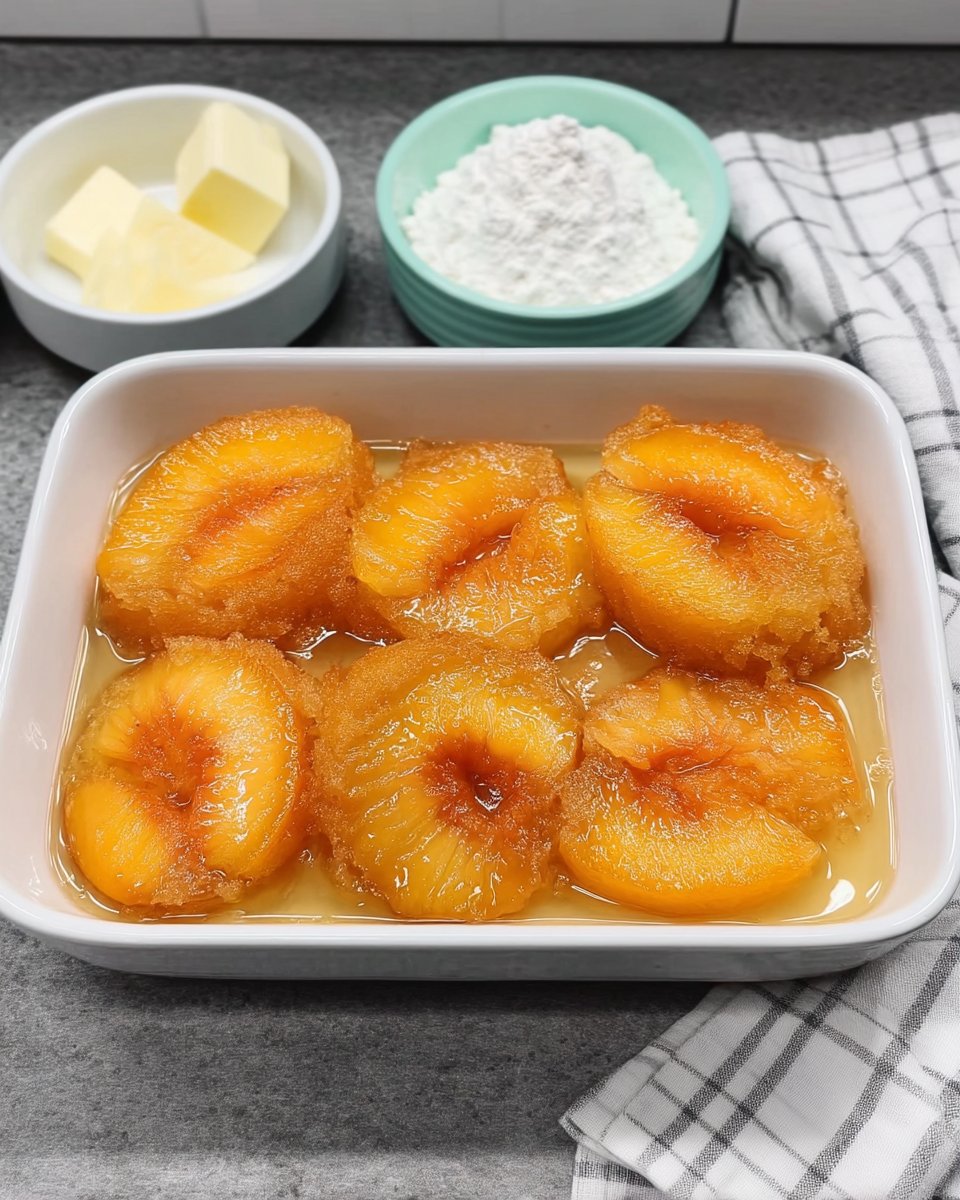
Success lies in understanding the moisture transfer between layers. If you find your crust is too powdery, your lipid distribution was likely uneven.
- The Grating Technique: For superior coverage, freeze your butter and grate it over the cake mix. This increases the surface area of the fat, ensuring it melts evenly into the flour proteins for a more cohesive crust.
- Texture Calibration: If you prefer a crunchier texture, add chopped pecans or walnuts with the butter. The oils from the nuts will roast and add a snap that contrasts beautifully with the soft fruit.
- Avoid Agitation: Never stir. Agitation mixes the layers, resulting in a homogenous, gummy sponge rather than the desired crisp-soft duality. It ruins the structural integrity.
- Density Control: For a denser, more pudding-like consistency, you can explore recipes like our fruit cake, but for this specific method, allow the steam to do the work.
Structural Modifications
Once you master the base ratio, you can adjust the flavor profile while maintaining the textural balance. Just ensure you do not disrupt the liquid-to-dry ratio.
- Acidic Balance: Introduce cranberries or tart cherries to cut through the heavy syrup’s sweetness. This mimics the complexity found in our succulent fruit fusion.
- Spice infusion: Whisk nutmeg or cardamom into the dry cake mix before spreading. This distributes the aromatics without requiring wet mixing.
- Caramelized Crust: Sprinkle coarse demerara sugar over the butter before baking. It creates a shattered-sugar texture similar to a brulée topping.
- Alternative Methods: While my method focuses on butter slicing for precision, other bakers have different approaches. For instance, Lil’ Luna suggests her own variations on this classic format, though I always advocate for the grating technique for maximum evenness.
Presentation and Palate Balance
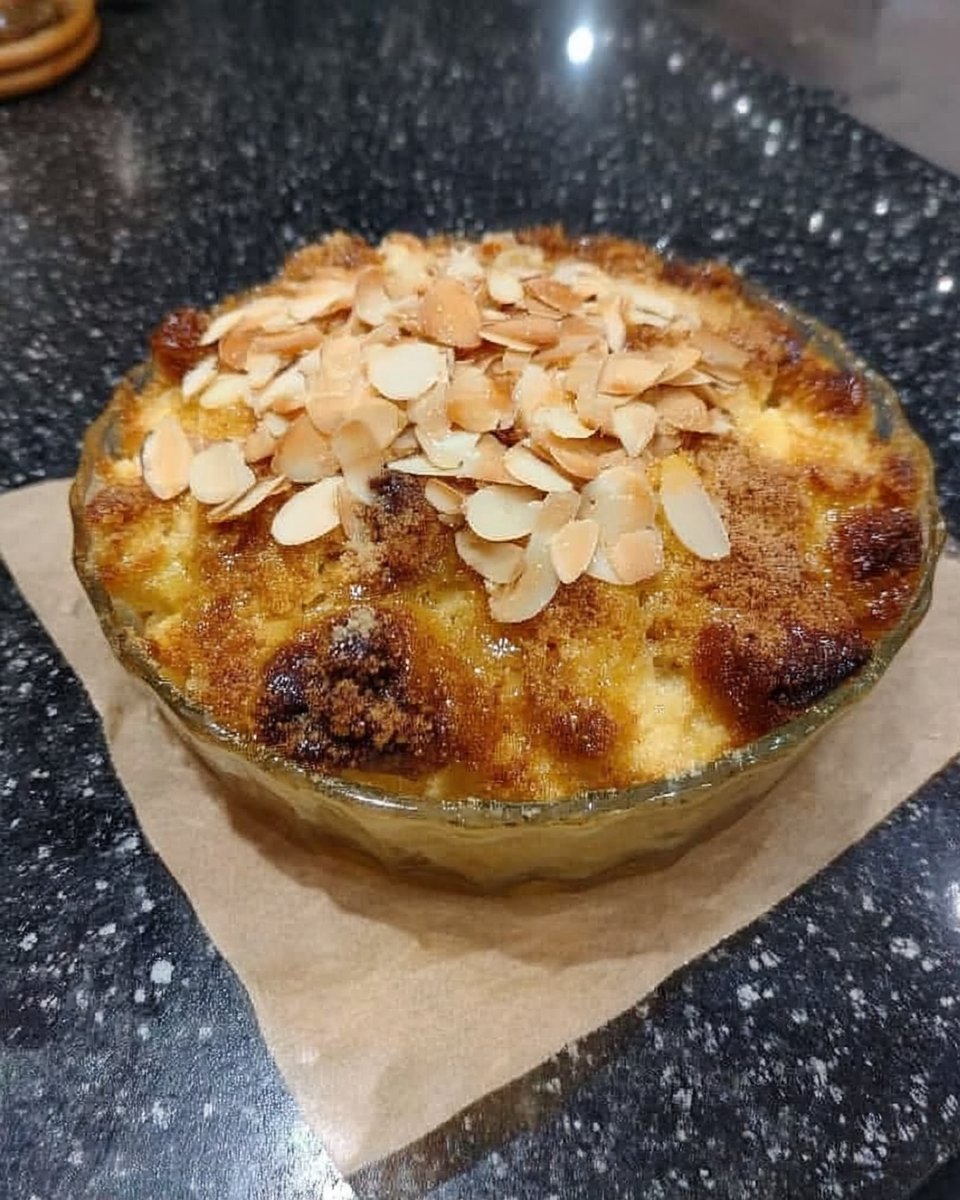
This dessert is a study in thermal contrast. It should be served warm, ideally between 120°F and 130°F, where the fruit filling is fluid but not runny.
- The Cream Factor: Serve with a quenelle of cold whipped cream or vanilla ice cream. The cold fat coats the tongue, mitigating the intense sweetness of the syrup.
- Textural Garnish: A sprinkle of toasted almond slivers adds a necessary snap. If you enjoy citrus notes, a zest of lemon can brighten the dish, similar to the profile in our lemon rainbow cake.
- Plating: Use a wide bowl rather than a flat plate to contain the juices and maintain the ratio of crust to fruit in every bite.
The Final Analysis
This Peach Dump Cake is more than a convenience recipe; it is a demonstration of how heat and hydration can organize chaos into a delicious structure. By respecting the layers and allowing the oven to do the work, you achieve a dessert that rivals much more complex pastries in satisfaction.
For another study in fruit and batter integration, consider attempting our raspberry white chocolate cake, which requires a different but equally precise approach to moisture control. Precision baking is a journey, and mastering simple textures is the first step.
Share your structural triumphs with us on Facebook, Pinterest, or Instagram.