Growing up in the heart of the Mediterranean, I learned that flowers are the language of the soul, and the tulip is its most vibrant poem. I remember the gardens of my youth, where each petal seemed to hold a secret of texture and light, waiting for the sun to coax it open. There is a specific kind of patience required to watch a flower bloom, and I bring that same quiet devotion to my kitchen whenever I prepare a dessert that honors the natural world.

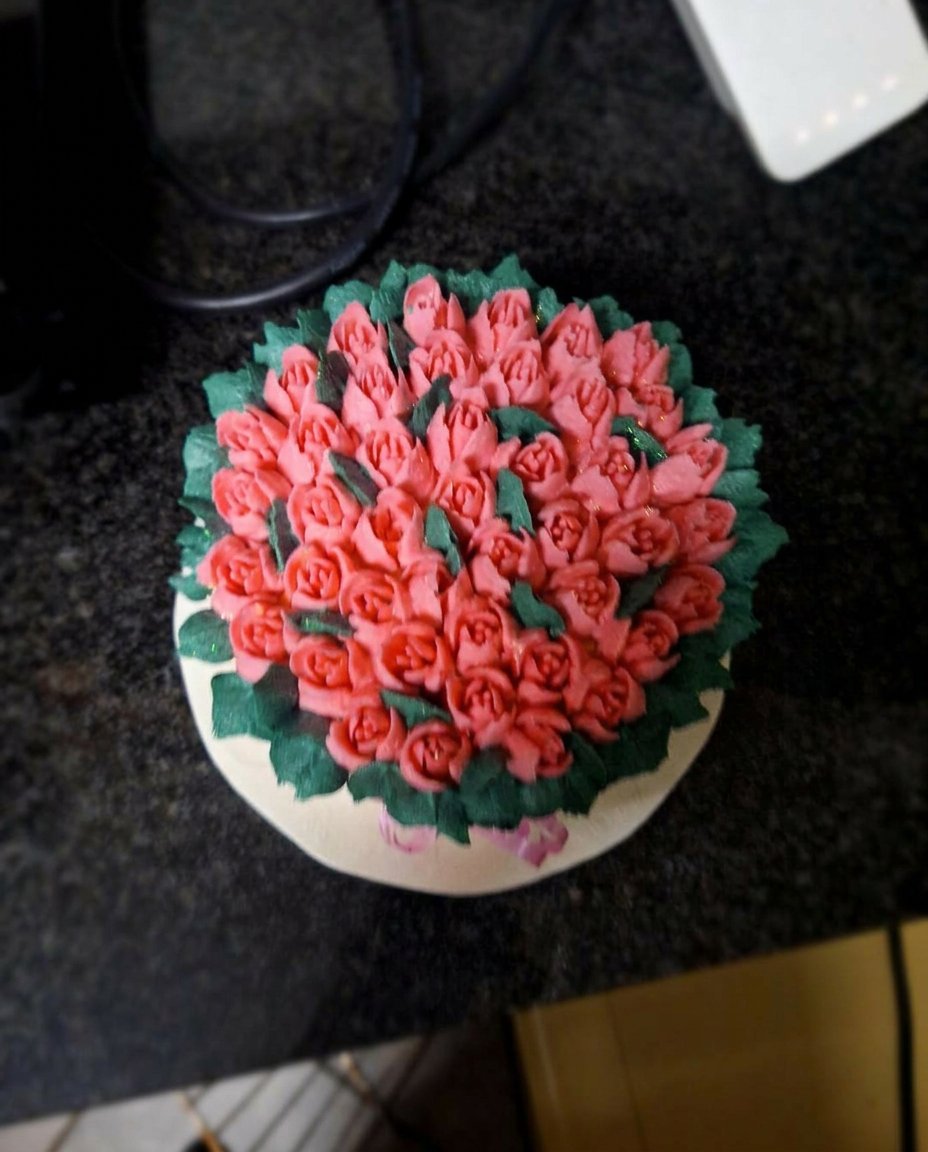
This cake is a tribute to that seasonal magic, where we transform simple decorator icing into a garden of edible art. By using precise tips and a palette of ivory, burgundy, and moss green, we create a texture that looks as soft as silk and tastes like pure devotion. It is not merely a dessert; it is a sensory journey that celebrates the delicate give of a perfectly piped petal and the rich, creamy finish of a classic sponge.
The Art of Botanical Texture
You will fall in love with this creation because it captures the ephemeral beauty of a spring morning in a form that you can share at your table. The texture of the icing is the true star here; we are not just coating a cake, we are sculpting movement. Each tulip petal is piped with a specific rhythm, creating a ruffled, organic look that feels alive. When your fork glides through the pale ivory base and meets a chilled, firm buttercream tulip, the contrast is a revelation of mouthfeel.
This recipe celebrates the philosophy of ‘slow baking.’ It is a chance to step away from the rush of the modern world and focus on the hiss of the piping bag and the way colors blend together. The burgundy and purple shades create a depth of color that mirrors the rich tapestries found in Mediterranean homes, while the pearl dust adds a shimmering finish that catches the light like dew on a real blossom. It is a masterpiece of both sight and taste, offering a refined sweetness that lingers beautifully on the palate.
Print
Tulip Cake
- Total Time: 2 hours
- Yield: 8 servings
- Diet: Vegetarian
Description
This elegant Tulip Cake combines a moist, fine-crumbed sponge with intricate, hand-piped buttercream flowers that mimic a vibrant spring garden. Using specialized piping techniques and a refined Mediterranean color palette, it creates a stunning visual centerpiece perfect for sophisticated afternoon gatherings.
Ingredients
- 1 6-inch round cake layer (sturdy, fine crumb)
- 4 cups White Decorator Icing
- Icing colors: Ivory, Black, Burgundy, and Moss Green
- Lilac Purple Pearl Dust
- Pink Sugar Pearls
- White Jimmies
- Cornstarch (for smoothing edges)
Instructions
- Divide decorator icing into small portions and tint them using Moss Green and Ivory for foliage, and Burgundy mixed with Black for deep floral tones.
- Fit decorating bags with petal tip 123 and round tips, marbling ivory and burgundy icing together in the bag for a realistic, streaked petal effect.
- Create ivory tulips on a flower nail by piping centers with tip 3, then using tip 123 at a 45-degree angle to build ruffled petals with fluid hand movements.
- Repeat the piping process for purple and pink blooms, using a finger dipped in cornstarch to soften any sharp edges before placing flowers in the freezer to set.
- Bake the 6-inch cake foundation until golden and let it cool completely on a wire rack to prevent the icing from melting.
- Tint the remaining icing ivory and apply it as a base coat to the cooled cake, leaving diagonal spatula marks for an artisanal, textured finish.
- Arrange the chilled flowers on top of the cake using mounds of icing for height, then pipe final leaves with tip 352 and add sugar pearls for detail.
Notes
To ensure your floral decorations maintain their delicate shape, always keep your metal piping tips clean and wipe them frequently with a damp cloth. If you find the icing becoming too soft to hold a ruffled edge, place the piping bag in the refrigerator for five minutes to restore its structural integrity before continuing.
- Prep Time: 45 mins
- Cook Time: 30 mins
- Category: Dessert
- Method: Baking & Decorating
- Cuisine: Mediterranean
The Mediterranean Palette
To create this garden on a plate, we must look at our ingredients as a painter looks at his oils. The foundation is a high-quality decorator icing, which provides the structural integrity needed to hold the shape of the delicate tulip petals. Quality matters here because the icing must be smooth enough to flow through a petal tip but firm enough to stand tall without wilting.
- White Decorator Icing: We use a generous amount to ensure we have plenty for both the base coat and the intricate floral work. Its creamy texture is the perfect canvas for our colors.
- Icing Colors (Ivory, Black, Burgundy, Moss Green): These are not just dyes; they are the soul of the cake. The combination of Burgundy and Black creates a sophisticated, deep purple that feels grounded and authentic.
- Lilac Purple Pearl Dust: This adds a touch of Mediterranean luxury, giving the sugar pearls a soft, iridescent glow.
- Pink Sugar Pearls and White Jimmies: These provide a necessary textural contrast—a little crunch amidst the velvet-soft icing.
- The Cake Base: Use a recipe that produces a fine, tight crumb. A cake that is too airy will struggle to support the weight of the buttercream flowers. The sponge should be moist and substantial, acting as the sturdy earth from which our sugar tulips grow.
The Method of the Bloom
Step 1: Tinting the Colors of the Garden
Begin by portioning your icing into small mixing bowls. This is where you set the mood for the entire cake. For the green of the leaves, blend Ivory and Moss Green until you reach a shade that looks like sun-dappled foliage. For the deep, romantic purples and pinks, mix Burgundy with a touch of Black. The goal is to create shades that have depth and history, rather than flat, artificial tones.
Step 2: Preparing the Piping Bags
Fit your decorating bags with the petal tip 123 and the round tips. This step is about preparation and flow. I like to fill the bags with combinations of ivory and burgundy icing so that when I pipe, the colors naturally marble together. This mimics the way real tulips often have streaks of different colors running through their petals, a beautiful imperfection of nature.
Step 3: Piping the Ivory Tulips
Using your flower nail and a template, start with a mound of icing in the center. Switch to tip 3 to create the center dots—these are the heart of the flower. Then, with tip 123 held at a 45-degree angle, squeeze and turn the nail. The movement should be fluid, like a dance. Move your hand up and down slightly to create that ruffled, natural edge that makes the petal look soft to the touch.
Step 4: Crafting the Purple and Pink Blooms
Repeat the piping process with your colored icing bags. The multi-colored centers are vital for creating a sense of realism. As you work, remember to breathe and find a steady rhythm. If an edge looks too sharp, a gentle tap with a finger dipped in cornstarch will soften it into a more natural shape. Once piped, these flowers need time in the freezer to set their structure.
Step 5: Baking the Foundation
Bake your 6-inch cake layer until it is golden and a tester comes out clean. Let it cool completely on a wire rack. In Mediterranean baking, we never rush the cooling process. A warm cake will melt your hard work, turning your beautiful tulips into a puddle of sugar. Patience here is the difference between a masterpiece and a mess.
Step 6: The Base Coat
Tint your remaining icing a pale, creamy ivory. Apply it to the cooled cake with a steady spatula. Don’t worry about making it perfectly smooth; diagonal marks on the sides add a hand-crafted, artisanal feel that complements the organic nature of the flowers. This textured base provides more ‘grip’ for the flowers we are about to place.
Step 7: The Final Assembly
Carefully arrange your chilled flowers on top of the cake. Use small mounds of icing to vary the height of the blooms, creating a lush, three-dimensional garden. Sprinkle your dusted pearls and jimmies around the edges. Finally, pipe the green leaves with tip 352 and add small dots with tip 8 to fill in any gaps. The cake should look as though a bouquet has just been laid upon it.
Secrets of the Silk Petal
To achieve the perfect ‘melt’ in your mouth, the temperature of your icing is everything. If the icing is too cold, the petals will break and look jagged; if it is too warm, they will lose their definition. I always recommend keeping a damp cloth nearby to wipe your tips frequently—this keeps the lines clean and the textures crisp. For a base cake that matches the elegance of this decoration, you might consider the techniques used in our strawberry vanilla cake, where the crumb is specifically designed to be both sturdy and tender. Another secret is the freezer: never attempt to move a buttercream tulip until it is frozen solid. This allows you to handle the delicate shapes without crushing the ruffled edges that we worked so hard to create.
Regional Floral Variations
You can adapt this technique to suit many different Mediterranean themes. Instead of traditional tulips, you could use a slightly different tip to create the appearance of wild anemones or ranunculus. For a more aromatic experience, try adding a drop of orange blossom water to your ivory icing; it provides a sensory connection to the citrus groves of the coast. If you are looking for a different silhouette altogether, our ribbon cake offers a beautiful look at how simple lines can create immense visual impact. You might also experiment with a monochrome palette—all white tulips on a white cake for a wedding, or deep shades of gold and amber for a sunset-themed celebration.
At the Mediterranean Table
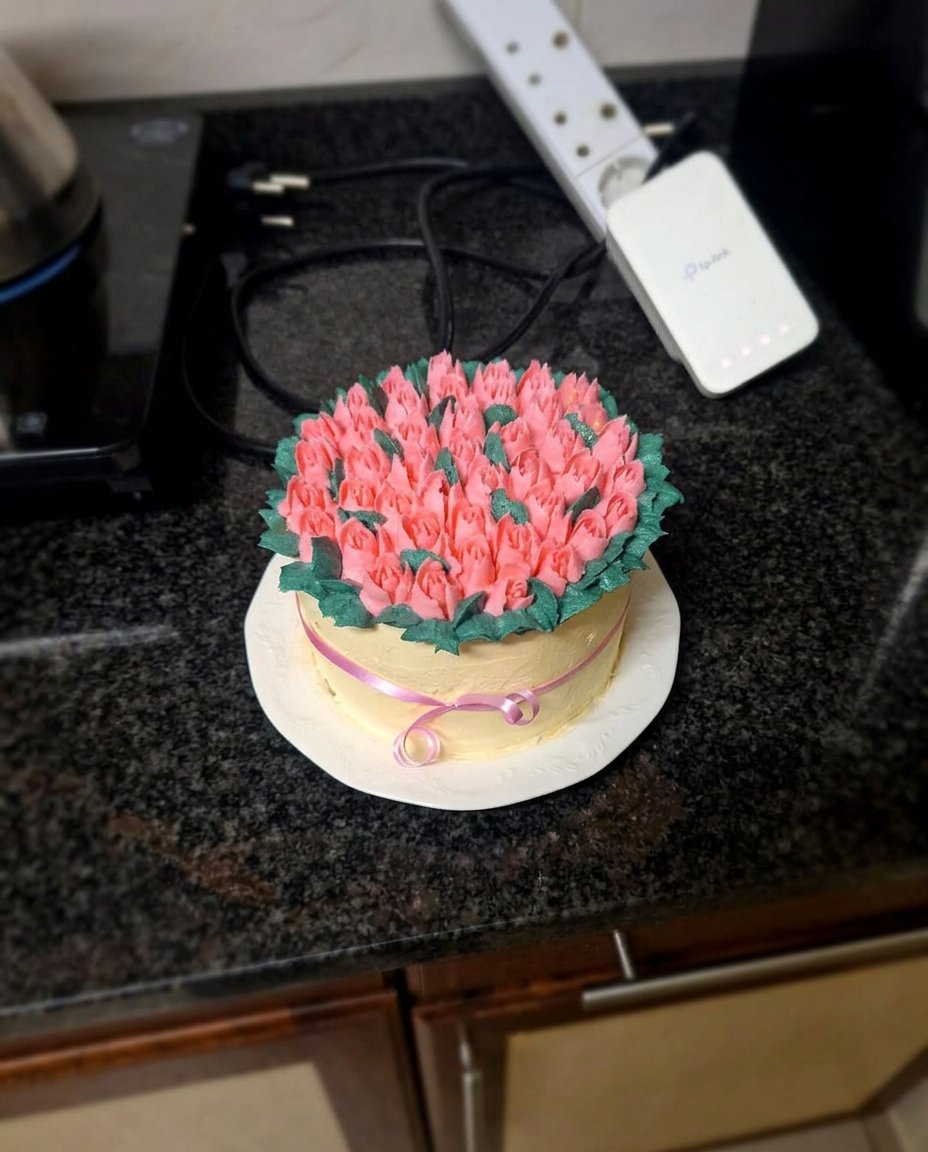
This cake is best served in the late afternoon, just as the sun begins to dip towards the horizon. In Mediterranean culture, this is the time for coffee and a small, beautiful sweet. Serve thin slices of the Tulip Cake alongside a cup of strong, dark Turkish coffee or a fragrant herbal tea. The bitterness of the coffee cuts through the richness of the buttercream perfectly. If you are hosting a larger gathering, consider serving this alongside our strawberry rhubarb cake for a contrast in both color and flavor. Always serve the cake at room temperature so that the icing has that signature ‘melt’ feel, but keep it in a cool spot until about thirty minutes before serving to maintain the integrity of the petals.
The Soul of the Bloom
Baking is an act of love, and decorating a cake with such intricate detail is a gift to those you share it with. As you finish your Tulip Cake, take a moment to appreciate the texture you have created—the way the light hits the pearl dust and the soft curve of every petal. It is my hope that this recipe brings a sense of Mediterranean peace and beauty into your home. For more inspiration on combining fruit and floral elements, take a look at our succulent fruit fusion. Please share your creations with our community of bakers! You can find more tips and join the conversation on Pinterest, Instagram, and Facebook. Happy baking, and may your kitchen always be filled with the scent of sugar and the spirit of the Mediterranean. For the original inspiration of this design, you can also view the official project guide.