My British training taught me that a Peanut Butter Fudge Cake requires a specific crumb structure to support the weight of dense, salty-sweet frosting while maintaining a tender melt.

This recipe uses a dark, Dutch-processed cocoa base that stays remarkably moist. By balancing the acidity of buttermilk with hot coffee, we create a deep flavor profile that acts as a structural foundation for the rich peanut butter layers.
Structure Meets Texture
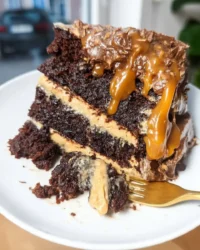
The victory of this cake lies in the calculated contrast between the velvet-like chocolate layers and the salt-forward peanut butter buttercream. Unlike many desserts that rely on sugar alone, this bake focuses on the technical interplay of fat and protein to achieve a stable yet yielding mouthfeel. You will find that the ganache provides a necessary bitterness that cuts through the sweetness, while the sheet-style construction makes for clean, professional slicing. This is a technical triumph that rewards precision with every bite.
Print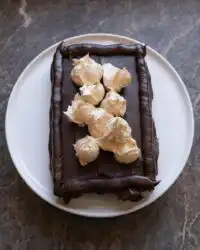
Peanut Butter Fudge Cake
- Total Time: 2 hours 30 mins
- Yield: 20 servings
Description
This technical recipe delivers a deeply moist chocolate sheet cake base, featuring Dutch-processed cocoa bloomed with hot coffee, perfectly balancing the acidity of buttermilk. It is layered with a structurally stable, salt-forward Swiss meringue peanut butter buttercream and topped with a rich, glossy chocolate ganache.
Ingredients
- All-Purpose Flour (210g)
- Dutch-Processed Cocoa Powder (75g)
- Sugar
- Baking Soda
- Baking Powder
- Salt
- Eggs
- Vanilla Extract
- Buttermilk (240ml)
- Neutral Oil
- Hot Coffee (240ml)
- Salted Butter
- Creamy Peanut Butter
- Heavy Cream
- Chopped Chocolate
Instructions
- Sift the flour, sugar, cocoa powder, baking soda, baking powder, and salt into a large mixing bowl. Use a wire whisk to distribute the leavening agents evenly through the flour.
- Introduce the eggs, vanilla extract, buttermilk, and oil into the dry mixture. Stir steadily until the flour is fully hydrated.
- Pour the hot coffee into the batter in a steady stream while stirring quickly to maximize the chocolate intensity and create a uniform crumb.
- Transfer the batter to a greased 16×10 inch sheet pan. Bake at 350°F (177°C) for 15 to 20 minutes. Test the center with a toothpick; it must come out clean.
- Prepare a bain-marie with simmering water. Combine egg whites, sugar, and salt in the bowl of a stand mixer and whisk over the steam until the sugar dissolves and the mixture reaches 120°F (49°C). Whisk on high speed until you achieve stiff, glossy peaks.
- Reduce the mixer speed and add the softened butter one tablespoon at a time. Continue whisking until silky. Finally, fold in the peanut butter on low speed until the frosting is uniform.
- Heat the heavy cream and sugar until just before the boiling point. Pour this over the chopped chocolate, butter, and vanilla. Let it sit for sixty seconds, then stir from the center outward to create a shiny, stable emulsion. Chill the ganache until firm but spreadable.
Notes
Ensure all ingredients for the cake batter are measured precisely by weight, especially the flour and cocoa, to guarantee the correct crumb structure needed to support the dense frosting. When preparing the Swiss meringue buttercream, make sure the butter is slightly softened but still cool—if it’s too warm, the meringue will deflate instantly upon incorporation. The sheet cake is easiest to frost and trim if slightly chilled after baking.
- Prep Time: 45 mins
- Cook Time: 20 mins
- Category: Dessert
- Method: Baking
- Cuisine: American
The Technical Foundation

To achieve the perfect Peanut Butter Fudge Cake, one must understand how each component influences the final architecture of the dessert. We prioritize ingredients that contribute both to the stability of the layers and the silkiness of the finish.
- All-Purpose Flour (210g): Provides the necessary protein structure without the toughness of bread flour. Use a scale for precision.
- Dutch-Processed Cocoa Powder (75g): This is vital for the dark color and the tempered acidity, providing a smoother chocolate profile.
- Buttermilk (240ml): The acidity reacts with the leavening agents to create micro-bubbles, resulting in a soft crumb.
- Hot Coffee (240ml): The heat blooms the cocoa, releasing volatile flavor compounds that cold liquids cannot access.
- Salted Butter: The salt content in the butter balances the high fat in the peanut butter, preventing the buttercream from feeling greasy.
- Creamy Peanut Butter: We use a stable, commercial-style peanut butter here because natural oils can separate and compromise the structural integrity of the Swiss-style meringue base.
The Method
Step 1: Aerate the Dry Components
Sift the flour, sugar, cocoa powder, baking soda, baking powder, and salt into a large mixing bowl. Use a wire whisk to distribute the leavening agents evenly through the flour. This mechanical aeration prevents clumps and prepares the structure for the liquid phase.
Step 2: Emulsify the Wet Ingredients
Introduce the eggs, vanilla extract, buttermilk, and oil into the dry mixture. Stir steadily until the flour is fully hydrated. The batter will be thick at this stage, but it is essential to hydrate the proteins before adding the final heat element.
Step 3: Bloom the Cocoa
Pour the hot coffee into the batter in a steady stream while stirring quickly. The heat will immediately lower the viscosity of the batter, creating a very thin liquid. This process, known as blooming, maximizes the chocolate intensity and creates a uniform crumb during the bake.
Step 4: The Precision Bake
Transfer the batter to a greased 16×10 inch sheet pan. Bake at 350°F (177°C) for 15 to 20 minutes. Test the center with a toothpick; it must come out clean. Avoid overbaking, as the thinness of the sheet cake makes it susceptible to drying out quickly.
Step 5: Master the Swiss-Style Meringue
Prepare a bain-marie with two inches of simmering water. Combine egg whites, sugar, and salt in the bowl of a stand mixer and place over the steam. Whisk constantly until the sugar granules have completely dissolved and the mixture reaches 120°F (49°C). Move the bowl to the mixer and whisk on high speed until you achieve stiff, glossy peaks.
Step 6: Incorporate the Fats
Reduce the mixer speed and add the softened butter one tablespoon at a time. The mixture may appear to curdled, but continued whisking will bring it back to a silky state. Finally, fold in the peanut butter on low speed until the frosting is uniform and stable.
Step 7: Temper the Ganache
Heat the heavy cream and sugar until just before the boiling point. Pour this over the chopped chocolate, butter, and vanilla. Let it sit for sixty seconds to allow the residual heat to melt the cocoa solids, then stir from the center outward to create a shiny, stable emulsion. Chill until firm but spreadable.
Precision Secrets

Temperature control is the most critical variable when working with ganache and meringue-based frostings. If your ganache is too warm, it will soak into the cake; if it is too cold, it will tear the delicate crumb. Aim for a texture similar to soft peanut butter before spreading. For those looking to master other technical peanut butter bakes, our reeses peanut butter cup poke cake offers a different study in moisture management. Always trim the edges of your sheet cake with a serrated knife while the cake is slightly chilled to reveal the beautiful, sharp internal layers. For further technical guidance on chocolate ratios, you can refer to this fudgy chocolate peanut butter cake resource.
Advanced Options
While the rectangular sheet style is classic for this Peanut Butter Fudge Cake, you can adapt the geometry for different presentations. If you prefer a more traditional height, you can bake this in two 8-inch round pans, though you must adjust the baking time to approximately 30-35 minutes. For those who enjoy a nostalgic profile, consider trying our old fashioned peanut butter cake which focuses on a different crumb density. You might also incorporate a layer of crushed salted pretzels between the ganache and buttercream to add a structural crunch that contrasts with the soft sponge.
Presentation Precision

Serve this cake in long, thin rectangles to emphasize the layered architecture. The dark ganache border should be visible, acting as a structural frame for the lighter peanut butter center. To balance the richness of the fudge, consider serving a small portion of unsweetened whipped cream or a sharp berry coulis on the side. If you are planning a dessert flight, this pairs exquisitely with our chocolate mousse cake for a study in varying chocolate textures. Always serve at room temperature to allow the fats in the buttercream to soften for the best mouthfeel.
Master the Craft
Mastering the Peanut Butter Fudge Cake is a definitive milestone for any serious baker. By respecting the temperatures of your emulsions and the timing of your bake, you create a dessert that is as structurally sound as it is delicious. For another challenge in texture, I recommend our chocolate caramel toffee crunch cake. Please share your technical triumphs with us on Instagram or Pinterest. Happy baking, and remember that precision is the secret to a perfect melt.