Picture a cold, crisp slice where the knife glides through wet, dense fruit, yielding a gloss of natural juices that taste like the heart of a perfect midsummer afternoon.

When the summer heat peaks, we look for a dessert that feels refreshing and light. This Watermelon and Pineapple Tropical Fruit Cake brings a sense of celebration without the heavy weight of flour, butter, or baked sugars. We shape crisp melons into stable tiers, crown them with golden rings, and finish them with a scatter of berries. The result is a cold masterpiece that honors the patient art of clean carving and beautiful presentation.
What Makes the Texture of This Watermelon and Pineapple Tropical Fruit Cake Sing
Prep: 25 min · Serves: 8 · Difficulty: Easy
- Crisp, hydrating layers of fresh cold fruit.
- Beautifully styled without any heavy refined sugars.
- Simple assembly steps anyone can master quickly.
- Perfect for gatherings under the warm sun.
- Naturally sweet taste that is never cloying.
This cold creation will redefine how you celebrate warm summer afternoons with your family. If you admire a classic watermelon fruit cake, this layered interpretation will capture your heart with its elegant heights and pristine slices.
Get The Full Cake Recipe
Print
Watermelon and Pineapple Tropical Fruit Cake
- Total Time: 2 hours 25 mins
- Yield: 8 servings
- Diet: Vegan, Gluten-Free
Description
This refreshing, no-bake fruit cake uses layers of carved watermelon and fresh pineapple to create a stunning, vibrant dessert. It is a perfect centerpiece for summer gatherings, offering a crisp and hydrating experience that avoids heavy ingredients.
Ingredients
- 1 large seedless watermelon
- 1 whole ripe pineapple
- 1 bunch seedless red or green grapes
- 2 malta oranges
- 3 fresh kiwis
- 1 cup fresh blueberries
- 1 cantaloupe
Instructions
- Prepare the melon base. Select a heavy watermelon, trim the ends to create flat surfaces, and shave off the rind to create uniform cylinders.
- Carve the tiers. Slice the watermelon into two thick, circular rounds and pat dry with paper towels to ensure structural stability.
- Prepare the crown. Slice the pineapple into thick rings, remove the fibrous core, and set aside on a clean cloth.
- Stack the tiers. Place the largest watermelon round on a platter, insert dowels, and stack the second melon round and pineapple rings securely.
- Add green accents. Peel and slice kiwis into rounds, pressing them against the melon sides, and secure with toothpicks if needed.
- Decorate with spheres. Use a melon baller to create cantaloupe spheres and arrange them around the base tiers, filling gaps with grapes.
- Chill and finish. Top with blueberries and orange slices, brush with citrus juice for shine, and refrigerate for at least two hours before serving.
Notes
- Ensure all fruit surfaces are patted dry to allow decorative garnishes to adhere properly.
- Use a small dab of yogurt or a paper towel under the base to prevent the cake from sliding.
- Always use a professionally sharpened knife to avoid bruising the delicate cell walls of the fruit.
- Stabilize any leaning tiers by placing a thin wedge of watermelon rind underneath and securing with a skewer.
- Prep Time: 25 mins
- Cook Time: 0 mins
- Category: Dessert
- Method: Assembly
- Cuisine: Mediterranean
From the Mediterranean Pantry
Selecting the finest ingredients is the foundation of any unbaked masterpiece. We choose fruit based on weight, aroma, and firmness to secure a gorgeous structure that holds its form beautifully when sliced. Here are the components that build this cool dessert.
- Watermelon: Choose a heavy seedless melon with a deep creamy yellow patch on its underbelly. This confirms the flesh inside is incredibly sweet, crisp, and fully saturated with hydrating juices. It provides the solid, dense base that anchors our tiered presentation.
- Pineapple: A whole sweet pineapple is needed to carve the golden crown for our cake tiers. Its sharp, tropical acidity cuts through the sweet, watery base of the melon, offering an excellent textural contrast. Look for golden skin and a sweet aroma at the stem.
- Grapes: Small seedless red or green grapes act as natural pearls to line the seams between the layers. They add a crisp snap when bitten, contrasting beautifully with the melting softness of the larger fruit tiers. They also hide any structural toothpicks perfectly.
- Maltas: This unique Mediterranean citrus brings an aromatic sparkle to the assembly process. Thin wheels of malta oranges offer a beautiful color contrast and a light floral scent that floats over the cake. Their juice can be brushed on the melon to preserve its shine.
- Kiwi: Sliced into beautiful green wheels, kiwi fruit resembles rich emeralds scattered across a pale landscape. The tiny black seeds offer a pleasant poppy bite, while the tart flesh wakes up the tongue. They are packed with natural moisture that sticks easily to the melon walls.
- Blueberry: Tiny, dusky blue berries fill the small gaps and crown the top tier like miniature jewels. They require no cutting and bring a soft, earthy sweetness to the bite. Their matte finish contrasts elegantly with the glossy sheen of the sliced melons.
- Cantaloupe: Using a melon baller, we scoop orange spheres from a sweet cantaloupe to decorate the perimeter. These spheres add vertical interest and a warm orange hue that complements the red base. Their soft, musky aroma bridges the gap between citrus and melon.
| Ingredient | Why It Matters |
|---|---|
| Watermelon | Forms the sturdy base and provides a crisp, melting mouthfeel |
| Pineapple | Lends a bright tropical acidity that balances the deep sweetness |
| Kiwi | Offers a brilliant green color and a pleasant tart contrast |
| Blueberry | Fills small gaps while adding a dark, rustic visual appeal |
Cake, Syrup, Rest
Step 1: Selecting and Preparing Your Melons
Begin by selecting a watermelon that feels remarkably heavy for its size. This weight indicates high moisture content, which translates to a crisp, dense texture that holds together under pressure. Slice off both rounded ends with a long, sharp chef knife to create flat, stable surfaces on your cutting board. Stand the melon upright and carefully shave away the green rind, following the natural curve of the fruit down to the white pith.
Step 2: Carving the Sturdy Base Tiers
Now you will shape the main tiers of your cake with slow, deliberate cuts. Lay the peeled melon cylinder flat and slice it into two thick, uniform rounds, each measuring about three to four inches deep. Trim the outer edges of the rounds to make certain they form clean, circular drums that will stack without tilting. Gently pat the carved melon surfaces with a clean paper towel to absorb excess surface moisture before assembly.
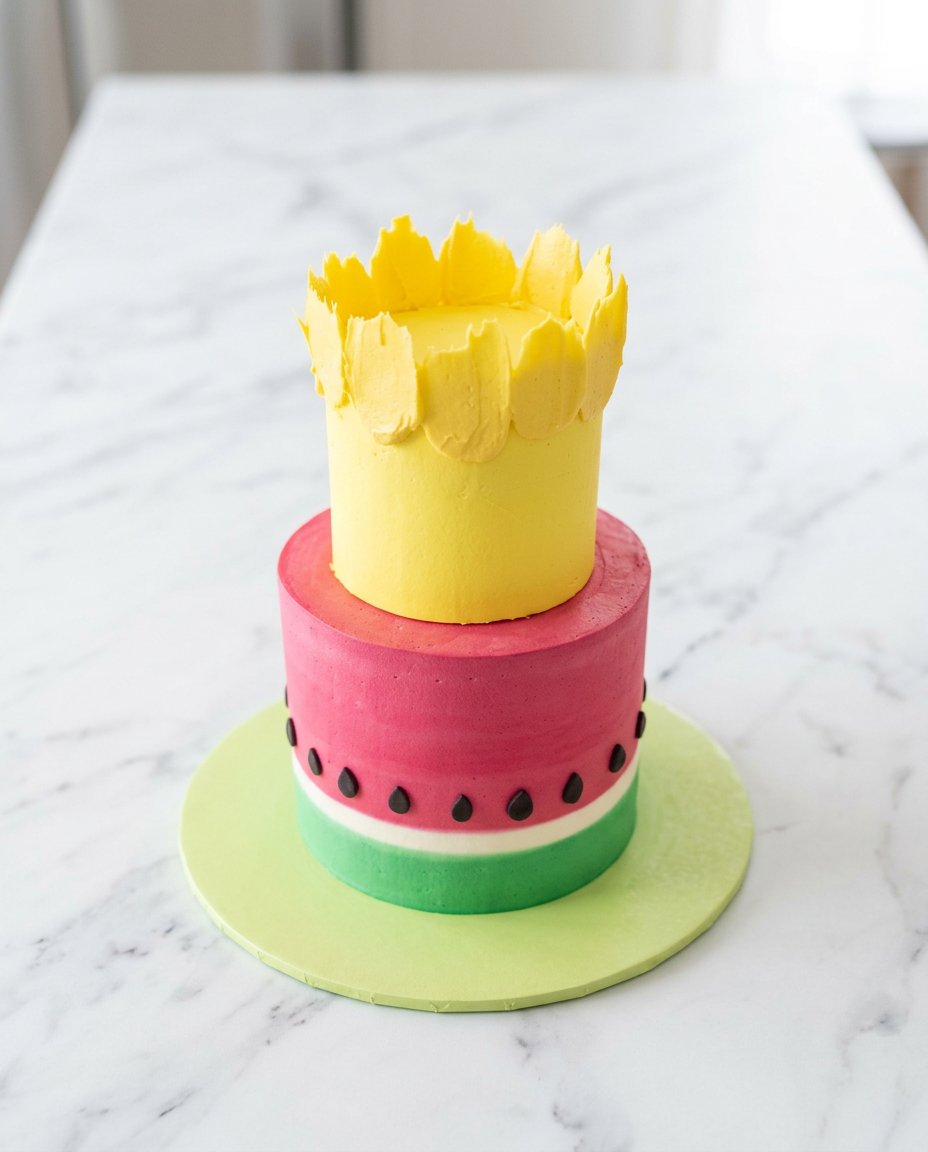
Step 3: Preparing the Watermelon and Pineapple Tropical Fruit Cake Crown
To prepare the upper layer, slice a ripe golden pineapple into thick, skinless rings. Trim away the tough fibrous core from the center of each ring using a small circular pastry cutter or paring knife. This golden crown will sit proudly atop our melon base, offering a sharp, tropical contrast to the mild sweetness below. Set these rings aside on a clean cloth to catch any dripping juices while you finish preparing the garnishes.
Step 4: Stacking and Securing the Fruit Tiers
Place the largest melon round onto your serving platter to establish a strong foundation. Insert three wooden dowels or thick toothpicks halfway into the center of this base to lock the next tier in place. Carefully align the second, smaller melon round and press it down onto the exposed pegs so it sits level. Top this second tier with your carved pineapple rings, securing them with a central wooden skewer if needed.
Step 5: Preparing and Attaching the Green Accents
Peel your fresh kiwis and slice them into thin, uniform rounds to reveal their intricate seed patterns. Press these green kiwi wheels gently against the sides of the watermelon tiers; their natural stickiness will hold them in place. For added security on vertical surfaces, slide a toothpick through the center of a kiwi wheel and push it into the melon wall. Cover the exposed toothpick ends with small, round grapes or sweet blueberries.
Step 6: Embellishing the Borders with Melon Spheres
Use a melon baller to scoop tight, clean spheres from a fresh cantaloupe. Arrange these orange spheres around the base of each tier to cover the seams and create a beautiful transition. Wedge a few small grapes between the spheres to fill empty spaces and add structural stability. The contrast between the warm orange melon and the deep red base creates a beautiful visual rhythm.
Step 7: Final Polish and Chilling Time
Scatter a handful of dusky blueberries and sliced malta oranges over the very top pineapple crown. Brush the exposed sliced fruits with a thin layer of fresh citrus juice to heighten their natural shine and keep them moist. Place the completed cake in the refrigerator for at least two hours to let the layers settle and chill thoroughly. Patience is the secret to a cold slice that cuts as cleanly as a baked cake.
Getting the Texture Right
Before you begin cutting your fruit, make certain your knives are professionally sharpened. A dull blade will bruise the delicate cell walls of the watermelon, causing excessive juice to leak out and leave your layers weeping. Sharp blades glide through the flesh smoothly, leaving a clean, glossy surface that retains its structure.
To prevent your fruit cake from sliding on the serving platter, smear a small tablespoon of thick Greek yogurt or coconut cream in the center of the dish before placing the first watermelon round. This small anchor keeps the base secure as you carry it to the table. If you want a dairy-free presentation, a clean paper towel hidden under the base also works well.
For more citrus and sweet cake wisdom, consider my thoughts on the best pineapple cake to refine your syrup balances. While this tropical fruit cake relies on natural juices, understanding how pineapple interacts with other structural elements helps prevent mushiness over time.
If your stacked tiers begin to lean, here is why and how to fix it. This tilt usually happens when the cut surfaces of your melon are not completely flat and parallel. To fix it, slide a thin wedge of leftover melon rind underneath the low side of the leaning tier to level it, then lock it with a long wooden skewer.
Keep a clean kitchen towel handy to blot the carved surfaces of the melon throughout the assembly process. Removing the excess surface juice allows the accent fruits, like kiwi and grapes, to cling much better to the vertical walls. Dry melon walls act like a clean canvas for your edible decorations.
Frequently Asked Questions
How do you make a watermelon fruit cake?
You make it by carving flat, skinless drums from a whole seedless watermelon and stacking them like cake layers. You then decorate the exterior with smaller fruits like pineapples, kiwis, and berries, securing them with toothpicks. The layers are chilled before serving to make sure they slice cleanly.
How do you attach the fruit to the watermelon?
You can attach smaller fruits using wooden toothpicks or skewers inserted directly into the watermelon flesh. For flat fruits like sliced kiwi or strawberries, their natural moisture allows them to cling directly to the dry melon walls. Always push toothpicks in at a slight upward angle to prevent slipping.
How do you make a multi-tiered fruit cake?
You stack multi-tiered cakes by cutting watermelon rounds of descending diameters. Each level is supported by wooden dowels inserted into the layer below to distribute the weight evenly. This structural reinforcement prevents the lower layers from compressing and leaking juice.
Can you make a watermelon cake the day before?
You can carve the main watermelon tiers a day in advance and store them wrapped in paper towels in the refrigerator. However, it is best to assemble and decorate the cake on the day of serving. This timing prevents the accent fruits from sliding off as the melon naturally sheds moisture.
Who is the fruit cake for (e.g., kids’ birthday party, summer barbecue)?
This refreshing treat is ideal for anyone seeking a light, gluten-free, or vegan option at a summer barbecue or kids’ birthday party. It provides a striking centerpiece that keeps guests hydrated under the hot sun. It is also an excellent option for those avoiding refined sugars.
What specific fruits do you already have on hand?
You can adapt this recipe to use whatever fresh fruits are resting in your kitchen. Grapes, berries, mango slices, and orange wheels all work beautifully as decorative accents. The only requirement is that the base fruits must be firm enough to hold their shape when carved.
How do you slice this cake cleanly?
Slicing this cake cleanly requires a long, thin serrated knife or a very sharp chef knife. Wipe the blade with a damp cloth between each slice to remove sticky fruit residue. Cut slowly in a single sawing motion rather than pressing straight down.
Can you freeze a watermelon fruit cake?
Freezing is not recommended because watermelon has an extremely high water content. When frozen and thawed, the cellular structure collapses, leaving the cake mushy and waterlogged. Keep the cake refrigerated and enjoy it within two days of assembly.
Flavor Swaps
For a traditional touch, you can dust the finished fruit cake with a fine layer of crushed unsalted pistachios and a pinch of ground cardamom. This addition brings a beautiful nutty fragrance and a dry texture that contrasts with the wet fruit. It honors the classic flavor profiles of Mediterranean syrup cakes without introducing heavy baked elements.
If you want to build a grand structure for a larger gathering, look at our guide on the watermelon fruit cake tower for structural advice. This variation uses three or four descending tiers of melon, reinforced with sturdy bamboo dowels to support the substantial weight of the fruit.
Another delightful alternative involves brushing the melon tiers with a light rose water or orange blossom syrup before adding the toppings. This step introduces a delicate floral note that lifts the fresh melon into something truly memorable. For inspiration on advanced structural design, you can look at these sculpted tropical fruit arrangements to spark your creativity.
Serving the Soaked Slice
Present this cool creation on a wide, shallow ceramic platter that can catch any running fruit juices. Offer each guest a small cup of Turkish coffee or a glass of iced herbal tea to balance the sweet, hydrating nature of the fruit. The warmth of the coffee contrasts beautifully with the icy coldness of the melon layers.
This style of presentation mimics the sliceable grace of a fresh watermelon layer cake, where each portion is served on chilled plates. Keep a small bowl of fresh mint leaves and a shaker of unsalted ground pistachios on the table so guests can customize their slices. The herbal mint and earthy nuts add an authentic touch that brings the entire experience together.
Let it soak and melt in its own juices on the plate for a minute before taking the first bite. The fork should glide through the layers effortlessly, yielding a mouthfeel that is both incredibly refreshing and satisfying. It is the ideal dessert for lazy, late-afternoon gatherings that stretch into the cool evening.
Let It Rest, Then Slice
There is a quiet joy in assembling a dessert that relies entirely on the natural beauty of fresh fruit. This raw creation proves that we do not always need hot ovens and flour to craft a memorable center for our tables. It asks only for a little patience, a sharp knife, and a selection of sweet summer melons.
For younger celebrations, you might also enjoy making a smash cake made from watermelon which offers the same playful texture. Whichever version you choose, the key is to serve it cold and share it surrounded by those you love.
Please share your beautiful fruit creations with us on our social channels below, and let us know how your family enjoyed this refreshing summer treat.