In my childhood home near the Mediterranean coast, the arrival of citrus season was a celebration that painted the entire kitchen in shades of gold and pale green. I remember the scent of fresh lemons lingering in the air long after the sun had dipped below the horizon, a fragrance that promised something bright and sweet was waiting in the oven. This Lemon Rainbow Cake 2 is my tribute to those vibrant evenings, a dessert that captures the spectrum of citrus in every tender, colorful layer.

This cake is far more than a simple visual delight; it is a masterpiece of texture and citrus harmony that melts away on the tongue with every bite. By separating the batter into distinct essences of lemon, orange, and lime, we create a sensory journey that transitions through the finest flavors of the Mediterranean pantry. It is a patient process, requiring a steady hand and a love for the craft, resulting in a cake that is as moist as a morning dew and as soft as a silk ribbon.
The Pure Magic of Mediterranean Citrus Texture
The soul of this recipe lies in its incredible mouthfeel, offering a delicate give that reminds me of the most luxurious sponges found in the bakeries of Istanbul. You will adore the way the crumb maintains a perfect balance between lightness and a rich, substantial moisture that carries the citrus oils beautifully. It is a rare treat that manages to be deeply satisfying without ever feeling heavy, making it the perfect companion for a long afternoon of storytelling.
Each layer provides a unique aromatic experience, from the sharp brightness of the lime to the mellow, sun-drenched warmth of the orange. When these layers meet the silky lemon custard filling, the result is a textural revelation that feels like a celebration in every forkful. This is not just a cake; it is an invitation to slow down and savor the simple, honest beauty of high-quality ingredients and patient baking techniques. The vibrant colors are a natural extension of the flavors themselves, creating a spectacular visual that never relies on gimmickry but instead honors the fruit.
Furthermore, the orange cream frosting provides a velvety finish that ties the entire spectrum together, acting as a soft, creamy anchor for the bright citrus notes. This cake is devoted to those who appreciate the finer details of baking, from the way the sugar crystals cream into the shortening to the final, glossy sweep of the spatula. It is a timeless recipe that brings a sense of genuine joy to the table, making every occasion feel like a special Mediterranean holiday.
Print
Lemon Rainbow Cake 2
- Total Time: 1 hour 55 mins
- Yield: 12 servings
- Diet: Vegetarian
Description
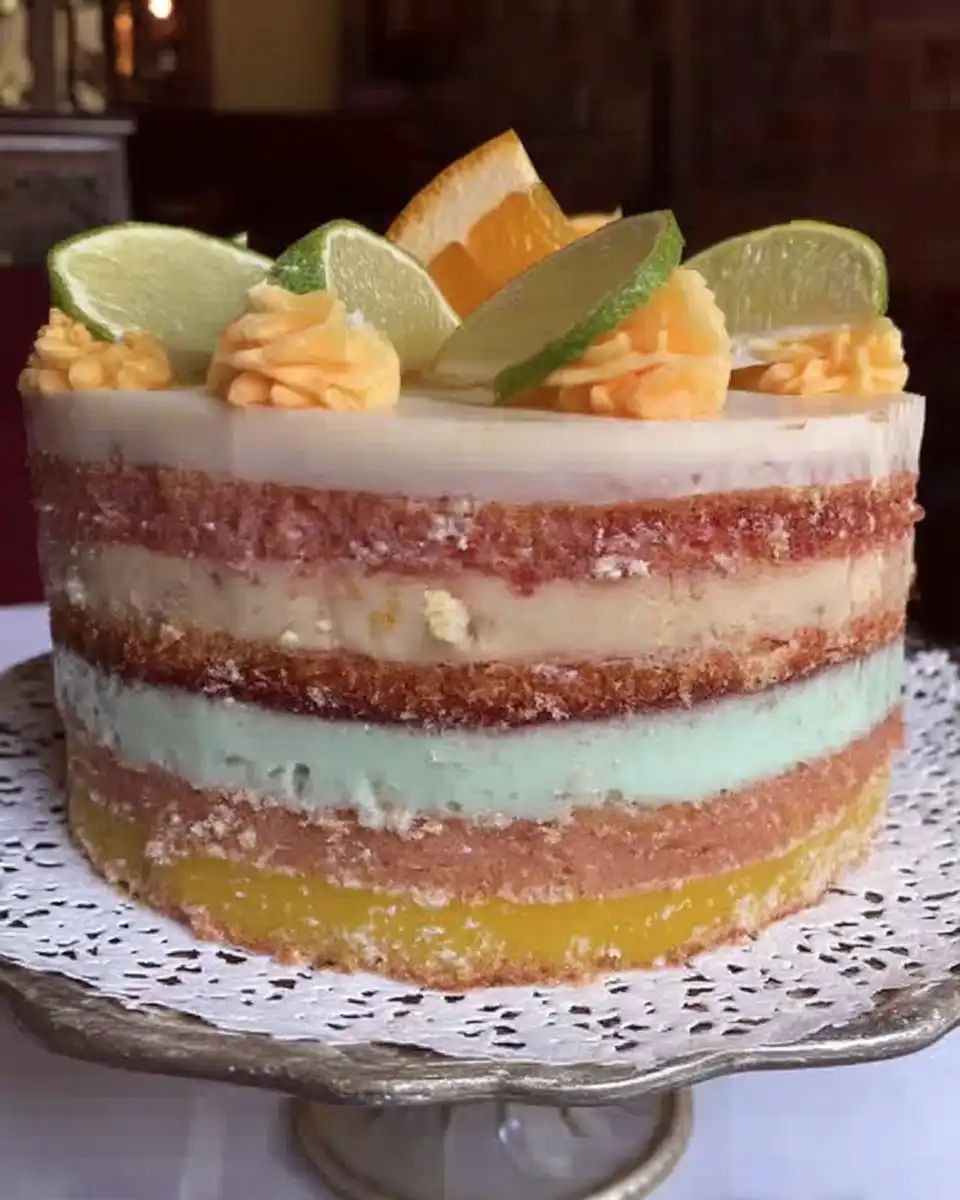
A vibrant three-layer citrus sponge cake featuring distinct lemon, lime, and orange sections. Filled with tangy lemon custard and topped with a velvety orange cream frosting, this dessert offers a perfect melt-in-your-mouth texture.
Ingredients
- 3 cups all-purpose flour
- 5 teaspoons baking powder
- 1/2 teaspoon salt
- 1 cup shortening
- 2 cups white sugar
- 5 large eggs, room temperature
- 1 teaspoon vanilla extract
- 1 1/4 cups milk
- 1 tablespoon lemon zest
- 1 tablespoon orange zest
- 1 tablespoon lime zest
- Yellow, orange, and green food coloring
- 1 1/2 cups lemon custard filling
- 2 cups orange cream frosting
Instructions
- Preheat oven to 350 degrees F (175 degrees C) and grease and flour three 9-inch cake pans.
- Sift together flour, baking powder, and salt in a medium bowl.
- In a large bowl, cream together shortening and white sugar until light and fluffy.
- Beat in eggs one at a time, then stir in the vanilla extract.
- Alternately add the flour mixture and milk to the creamed mixture, beginning and ending with flour, and mix until just combined.
- Divide the batter equally into three separate bowls.
- Stir lemon zest and yellow coloring into the first bowl, orange zest and orange coloring into the second, and lime zest and green coloring into the third.
- Pour each batter into a prepared pan and bake for 30 minutes or until a toothpick comes out clean.
- Cool in pans for 5 minutes before transferring to a wire rack to cool completely.
- To assemble, layer the lime cake, lemon custard, orange cake, lemon custard, and finally the lemon cake.
- Frost the top and sides with orange cream frosting and refrigerate for at least one hour before serving.
Notes
For the brightest flavor, ensure you only zest the colored part of the citrus skin to avoid bitterness. If you are baking in a humid environment, you may need to refrigerate the layers for 30 minutes before frosting to ensure the lemon custard remains stable during assembly.
- Prep Time: 25 mins
- Cook Time: 30 mins
- Category: Dessert
- Method: Baking
- Cuisine: Mediterranean Fusion
The Vibrant Foundation of Your Citrus Masterpiece
Creating the perfect Lemon Rainbow Cake 2 starts with a deep respect for the Mediterranean pantry, where each ingredient plays a vital role in the final texture and flavor profile. We begin with a high-quality all-purpose flour, which provides the necessary structure to support the three distinct layers without sacrificing tenderness. The addition of five teaspoons of baking powder is the secret to achieving that characteristic Melt Cake lift, ensuring the sponge is aerated and light.
- Citrus Zests (Lemon, Orange, Lime): These are the true heart of the recipe, containing the essential oils that provide a depth of flavor far beyond any extract. Use fresh, organic fruit whenever possible for the most vibrant results.
- Shortening: Unlike butter, shortening provides a unique stability and a specific crumb texture that remains incredibly soft even after refrigeration, allowing the citrus flavors to shine through cleanly.
- Room Temperature Eggs: Cold eggs can cause the batter to break; using them at room temperature ensures a smooth, luxurious emulsion that leads to a uniform bake.
- Lemon Custard Filling: This provides a creamy, tangy contrast between the layers, acting as a moistening agent that keeps the cake succulent for days.
- Orange Cream Frosting: A rich, citrus-infused finish that adds a layer of velvety sweetness, balancing the acidic brightness of the inner cake.
The milk provides the necessary hydration for the flour, while the vanilla extract acts as a subtle background note that rounds out the sharp edges of the citrus. Each drop of food coloring should be seen as a way to visually represent the intensity of the fruit oils within, creating a beautiful gradient that mirrors the natural beauty of a citrus grove at dawn. When these ingredients come together, they form a foundation that is both traditional and spectacular.
The Art of the Citrus Soak and Bake
Step 1: Preparing Your Workspace
Begin by preheating your oven to 350 degrees F (175 degrees C), allowing the heat to stabilize so the layers bake evenly. Take three 9-inch pans and carefully grease and flour them, ensuring every corner is coated so the delicate citrus sponges release without a tear. Sift together your all-purpose flour, baking powder, and salt into a medium bowl, a step that is essential for removing lumps and ensuring a perfectly aerated crumb.
Step 2: The Creaming Process
In a large bowl, combine your shortening and white sugar, beating them together until the mixture is light, fluffy, and looks like pale summer clouds. This step is where you build the air into your cake, so take your time and watch for that beautiful, whipped texture. One by one, beat in your room-temperature eggs, making sure each is fully incorporated before adding the next, then gently stir in the vanilla extract to infuse the base with warmth.
Step 3: Integrating the Flour and Milk
Begin adding your flour mixture alternately with the milk, starting and ending with the flour to maintain the structural integrity of the batter. Mix only until just combined; over-working the batter at this stage will toughen the gluten and ruin that melt-in-your-mouth magic we are looking for. Once the batter is smooth and glossy, divide it equally into three separate bowls, ready to be transformed into their individual citrus identities.
Step 4: Creating the Color and Zest
In the first bowl, stir in your lemon zest and yellow food coloring, watching as the batter takes on the glow of the midday sun. In the second bowl, add the orange zest and orange coloring, creating a rich, warm hue that smells of Mediterranean orchards. In the final bowl, incorporate the lime zest and green coloring for a sharp, refreshing finish. Pour each vibrant batter into its own prepared pan, smoothing the tops with a spatula.
Step 5: The Golden Bake
Place your pans in the preheated oven and bake for approximately 30 minutes, or until a toothpick inserted into the center of each layer comes out clean and dry. The kitchen will fill with a spectacular aroma of mixed citrus as the cakes rise and turn a soft, golden brown. Let the cakes rest in their pans for exactly five minutes—patience is the secret here—before turning them out onto a wire rack to cool completely and set their structure.
Step 6: The Final Assembly
Once the layers are entirely cool to the touch, place the lime layer on your serving plate and spread a generous layer of Lemon Custard Filling over the top. Stack the orange layer next, followed by more filling, and finally the lemon layer. Cover the entire cake—top and sides—with a thick, smooth coating of Orange Cream Frosting. Refrigerate the cake for at least an hour before serving to allow the flavors to meld and the custard to set into a perfect, sliceable texture.
Mehmet’s Secrets for Texture Mastery

To achieve the most authentic Mediterranean texture, I always recommend using a microplane to zest your fruit, as this avoids the bitter white pith and focuses entirely on the fragrant oils. If you find your cake is a bit too dry, it is often due to over-baking; check your layers five minutes early to ensure they remain succulent. For those who enjoy a deeper fruit profile, you might want to look at our guide on the fruit cake for tips on selecting the most aromatic citrus varieties available during the winter months. Always ensure your shortening is at room temperature before creaming, as this allows it to trap more air, resulting in a lighter, more delicate sponge that truly melts away.
Mediterranean Twists and Flavor Options
While this rainbow of citrus is a classic, you can explore regional variations such as adding a teaspoon of orange blossom water to the orange layer for a fragrant, floral lift common in Lebanese desserts. For a different textural experience, you might consider swapping the orange frosting for a lighter glaze or even incorporating elements from a raspberry white chocolate cake if you desire a berry-infused contrast. If you are looking for a plant-based alternative that still maintains a bright citrus punch, you can find inspiration in this vegan lemon cake which uses different binding agents to achieve a similar tenderness. Another beautiful variation is to add crushed pistachios between the layers for a crunch that echoes the traditional nut-filled cakes of the Mediterranean.
At the Table: Mediterranean Traditions

In our culture, a cake like this is best served as the sun begins to set, accompanied by a steaming cup of dark, unfiltered Turkish coffee or a light, aromatic tea. To truly honor the texture, serve each slice with a small dollop of unsweetened whipped cream or a sprinkle of fresh citrus zest to wake up the senses. If you are hosting a larger gathering, consider pairing this cake with a vibrant succulent fruit fusion platter, where the fresh berries and melons provide a cooling contrast to the rich cream frosting. Always use a sharp, warm knife to cut the slices, ensuring the lemon custard filling remains perfectly intact and visible in every beautiful, colorful cross-section.
The Sweetest Glow of the Mediterranean
Baking this Lemon Rainbow Cake 2 is an act of love and patience that rewards you with a dessert of unparalleled beauty and texture. It is a reminder that the simplest fruits of the earth, when treated with respect and care, can create a spectacular experience that lingers in the memory long after the last crumb is gone. I hope this recipe brings a sense of warm Mediterranean gratitude to your home, just as it has to mine for many years. For more citrus-inspired magic, please visit our main lemon rainbow cake page and join our community of devoted bakers. You can also find more inspiration and share your creations with us on Pinterest and Instagram, where we celebrate the timeless art of the melt-in-your-mouth soak.