In my early days studying pastry arts in London, we were taught that constructing a trifle is an exercise in structural integrity as much as flavor. A true 4th of July Trifle requires a delicate balance of moisture control and precise layering to achieve the perfect mouthfeel. When structure meets texture correctly, every bite should yield a distinct contrast between the tender cake crumb and the smooth, cold cream.

This particular dessert relies on the interplay of absorbent angel food cake, stabilized pudding, and thoroughly dried fresh berries. By carefully managing the hydration of your ingredients, you prevent a soggy base and maintain beautiful, crisp layers. The result is a visually spectacular summer centerpiece that holds its form while melting effortlessly on the palate.
Structure Meets Texture
Creating a layered dessert that doesn’t collapse into a homogenous bowl of mush requires intention. This 4th of July Trifle thrives on the precise contrast between porous cake structure and rich, stabilized moisture. When approaching a trifle, novice bakers often assume it is simply a matter of tossing ingredients into a glass bowl. However, the true pastry chef understands that every layer represents a micro-environment of hydration.
You will appreciate the technical simplicity of using pre-baked angel food cake, which possesses an incredibly tight, fat-free crumb structure. This makes it an ideal sponge to absorb the subtle vanilla notes of the white chocolate pudding without disintegrating immediately. The fresh berries provide a necessary acidic bite, cutting through the dairy to keep the palate refreshed. Strawberries and blueberries contain high amounts of natural water and pectin.
When layered properly, they act as a crisp, structural break between the soft pudding and the yielding cake. This creates a sensory rhythm in every bite: smooth, firm, crisp, and tender. When you manage your ingredient temperatures properly and respect the resting time, the dessert slices cleanly and presents beautifully. It proves that even when taking shortcuts with instant pudding, precise execution yields a master-level result.
The visual impact of the red, white, and blue layers is striking, but it is the textural integrity that will leave a lasting impression on your guests. A dessert should never just look beautiful; its architecture must serve its mouthfeel. By understanding how the starches in the pudding interact with the dry sponge of the cake, you gain total control over the final texture.
Print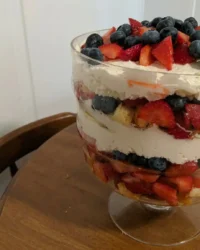
4th of July Trifle
- Total Time: 1 hour 30 mins
- Yield: 12 servings
- Diet: Vegetarian
Description
This technically precise layered dessert features airy angel food cake, stabilized white chocolate custard, and meticulously dried berries. Engineered for structural integrity, it offers a visually stunning and texturally balanced centerpiece perfect for summer celebrations.
Ingredients
- 14 oz angel food cake, cut into 1-inch cubes
- 6.8 oz instant white chocolate pudding mix
- 4 cups cold whole milk
- 32 oz fresh strawberries, hulled and sliced
- 18 oz fresh blueberries
- 16 oz thawed whipped topping
Instructions
- In a large chilled bowl, whisk the instant white chocolate pudding mix with cold whole milk for two minutes until smooth; refrigerate for at least 10 minutes to set.
- Place a tight, even layer of angel food cake cubes into the bottom of a 3.25-quart trifle dish.
- Spread half of the set pudding over the cake, using a spatula to ensure it reaches the edges of the glass.
- Press strawberry slices against the glass for presentation, then add a level layer of strawberries and blueberries over the pudding.
- Evenly spread 8 ounces of whipped topping over the fruit layer to seal it.
- Repeat the layering process with the remaining cake, pudding, berries, and whipped topping.
- Decorate the top with a concentric pattern of fruit and refrigerate for a minimum of one hour before serving.
Notes
For the best visual results, use an offset spatula to push the cream and pudding layers flush against the glass. Ensure your berries are completely dry after washing to prevent excess moisture from compromising the pudding’s thickness. This dessert is best served cold, using a long spoon to scoop through all layers simultaneously.
- Prep Time: 30 mins
- Cook Time: 0 mins
- Category: Dessert
- Method: Layering
- Cuisine: American
The Technical Foundation
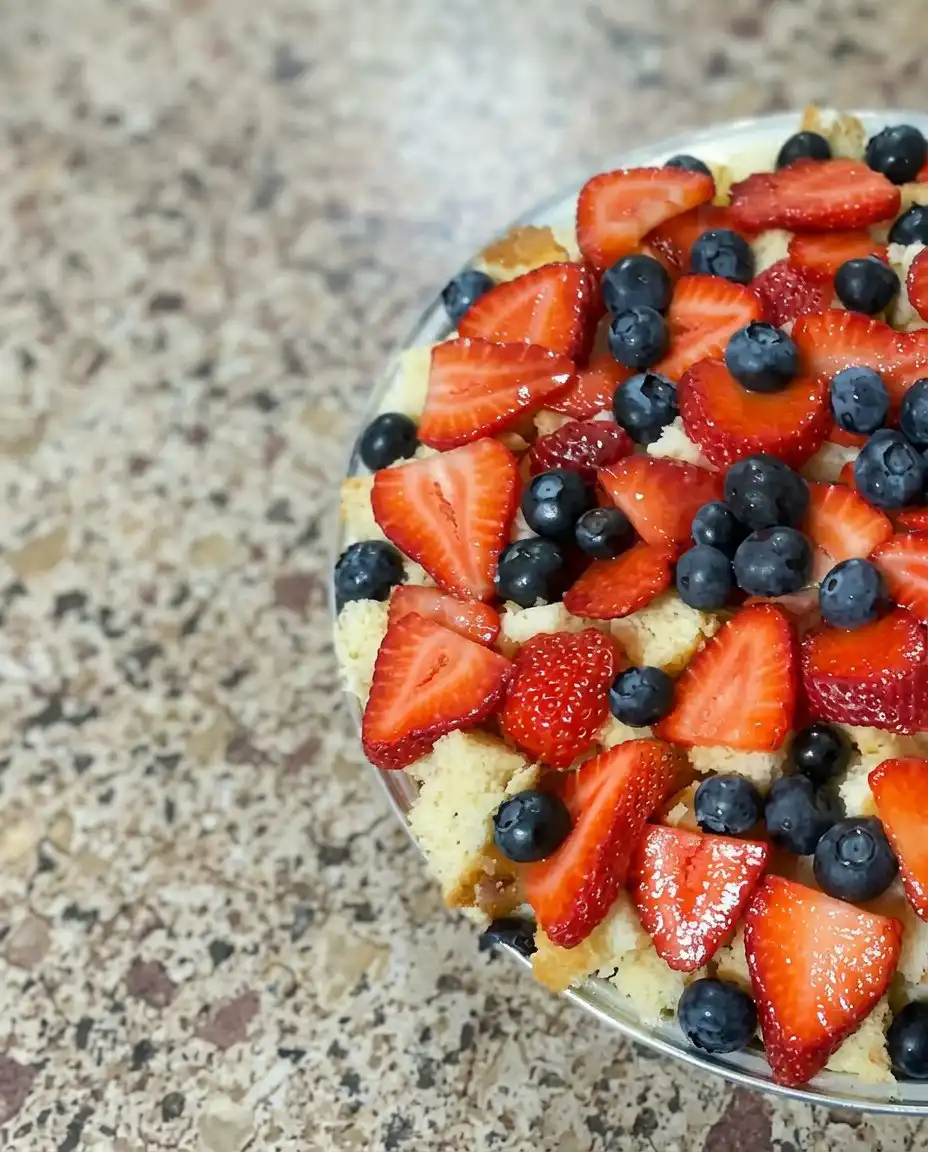
Every element in this trifle serves a structural purpose. If one component is too wet or too warm, the entire architecture fails. The beauty of this recipe lies in how standard ingredients can be manipulated through technique to mimic professional patisserie results.
- Angel Food Cake (14 oz): We rely on its fat-free, egg-white-heavy structure to absorb moisture slowly. Traditional butter sponges contain fats that repel the water in the pudding, leading to a greasy mouthfeel. The egg white matrix of angel food cake acts as a perfect capillary system. Cut it precisely into 1-inch cubes for uniform layering.
- Instant White Chocolate Pudding (6.8 oz): The thickening agents in commercial pudding, specifically modified cornstarch, provide a stable, gelatinous layer that won’t weep into the cake below. It sets quickly and holds its form beautifully when chilled. White chocolate provides a rich cocoa butter flavor without the heavy tannins of dark chocolate.
- Cold Whole Milk (4 cups): Using whole milk rather than skim provides the necessary milk fat to enrich the instant pudding base, granting it a smoother, richer mouthfeel. The temperature is critical; the milk must be icy cold to properly hydrate the starches in the pudding mix and trigger the setting reaction.
- Fresh Strawberries (32 oz) & Blueberries (18 oz): The natural pectin and acid provide structural and flavor contrast. They must be washed, hulled, sliced, and dried meticulously. Any residual tap water on the skin of the berries will dilute the pudding and destroy the clean lines of your layers.
- Thawed Whipped Topping (16 oz): Stabilized whipped toppings hold their piped or spread shape far longer than fresh whipped cream. They act as a structural sealant between the fruit layers and the cake, preventing the acidic juices of the macerating berries from prematurely breaking down the crumb.
The Method
Step 1: Prepare the Stabilized Custard
Begin by whisking the instant white chocolate pudding mix with the cold whole milk in a large, chilled bowl. Agitate the mixture vigorously for exactly two minutes to hydrate the starches evenly. You are looking for a smooth, lump-free consistency that heavily coats the back of a spoon. Immediately transfer the bowl to the refrigerator and chill for at least ten minutes until completely set. This chilling phase is non-negotiable. Warm pudding will immediately compromise the structure of your cake layers, turning a precise dessert into a collapsed soup.
Step 2: Establish the Foundation
Select a 3.25-quart trifle dish. The vertical, sheer glass walls are necessary to display the architectural precision of your work. Arrange a single layer of the 1-inch angel food cake cubes across the bottom. Pack them relatively tightly to form an even base, but avoid crushing the delicate crumb structure. The cake needs to maintain its airy pockets to properly absorb the ambient moisture during the resting phase.
Step 3: Layer the Moisture
Spoon exactly half of your chilled, set white chocolate pudding over the cake foundation. Use the back of a spoon or an offset spatula to push the pudding gently to the edges of the glass, creating a distinct, level visual line. The pudding should form a solid barrier that completely covers the cake cubes. Do not press too hard, or you will crush the foundational cake layer.
Step 4: Construct the Fruit Barrier
Take your meticulously dried strawberry slices and press them vertically against the glass above the pudding line for visual appeal. This technique creates the classic presentation expected in fine dining. Next, arrange a flat, single layer of strawberries across the top of the pudding, followed by an even layer of blueberries. Meticulous drying prevents excess water from seeping into the pudding. Any extra water will break the starch bonds and cause weeping.
Step 5: Seal with Cream
Spread one 8-ounce container of the thawed whipped topping evenly over the berries. This fat-rich layer seals the fruit. It acts as a hydrophobic barrier, preventing the next layer of cake from absorbing the acidic juices of the berries. Use your offset spatula to make certain the topping reaches the glass all the way around, locking the fruit in place.
Step 6: Repeat the Architecture
Repeat the sequence with mechanical precision. Add another tight, level layer of cake cubes. Follow this with the remaining half of the chilled pudding. Add another layer of thoroughly dried berries, pressing a few against the glass for structural continuity. Top with the final container of whipped topping. Finish the construction by arranging your remaining fruit in a precise, concentric pattern on the surface.
Step 7: The Mandatory Resting Phase
Place the assembled trifle into the refrigerator for a minimum of one hour. This resting period allows the moisture from the pudding and cream to slightly soften the exterior of the cake cubes while keeping the interior firm. It also lowers the core temperature of the entire dessert, which is essential for achieving a clean, vertical slice when serving. Do not rush this step; patience is the final ingredient in structural perfection.
Structural Wisdom
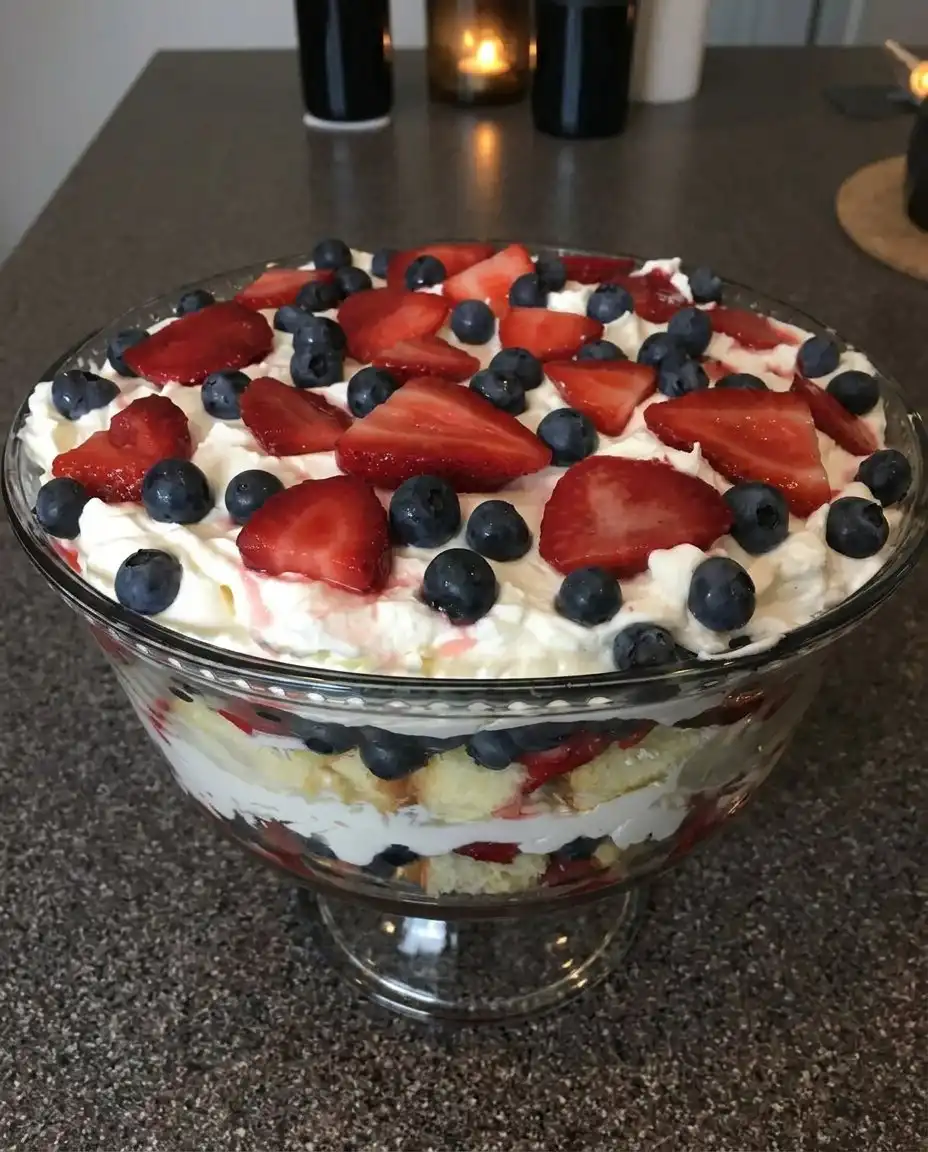
The secret to layered desserts is absolute moisture control. When washing your berries, pat them dry with paper towels and let them sit on a wire rack for ten minutes before assembling. Even a teaspoon of residual water will break down the pudding structure over time, leading to a watery base that ruins the mouthfeel. In professional pastry kitchens, we often use a cool blow dryer or a fan to guarantee that fruit skins are completely devoid of surface moisture before they touch a cream element.
If you wish to bake your own sponge rather than using store-bought, timing is critical. A slightly stale cake absorbs liquid far better than a fresh one because the starches have begun to retrograde. If you recently baked a strawberry vanilla cake, you can cube the leftover sponge and leave it exposed to the air for four hours on a sheet pan to dry the crumb before assembly. This creates an incredibly resilient structure that will hold its shape even after 24 hours in the refrigerator.
Lastly, mind your temperatures. The milk for your pudding must be ice-cold to activate the starches properly. A room-temperature liquid will yield a slack, runny custard that cannot support the weight of the fruit layers above it. If your kitchen is warm, chill your mixing bowl and whisk attachment for ten minutes before preparing the pudding. Thermal control is the cornerstone of all structural pastry work.
Precision Tweaks
While this 4th of July Trifle relies on a white chocolate and berry profile, the architecture can support numerous flavor modifications provided you respect the hydration ratios. Substituting a stabilized mascarpone cream for the whipped topping will yield a richer, denser mouthfeel reminiscent of a traditional Italian tiramisu. The higher butterfat content of the mascarpone will actually provide superior structural support for the upper layers.
If you prefer a more tart profile, a thin layer of lemon curd folded into the white chocolate pudding introduces a sharp acidity that pairs beautifully with the berries. The citric acid will also help to firm the pudding slightly. For those who enjoy deeper, more complex fruit notes, consider macerating a portion of the berries in a splash of elderflower liqueur. However, you must drain them completely through a fine-mesh sieve before layering, as excess alcohol will dissolve the cake crumb instantly.
You can also alter the foundational sponge. While angel food cake is traditional for its bright white color and fat-free matrix, substituting cubes of a rich raspberry white chocolate cake adds an entirely new dimension of flavor. A butter-based cake has a tighter, more dense crumb structure, meaning it will require a slightly longer chilling time in the refrigerator for the moisture to penetrate the sponge adequately.
Presentation Precision
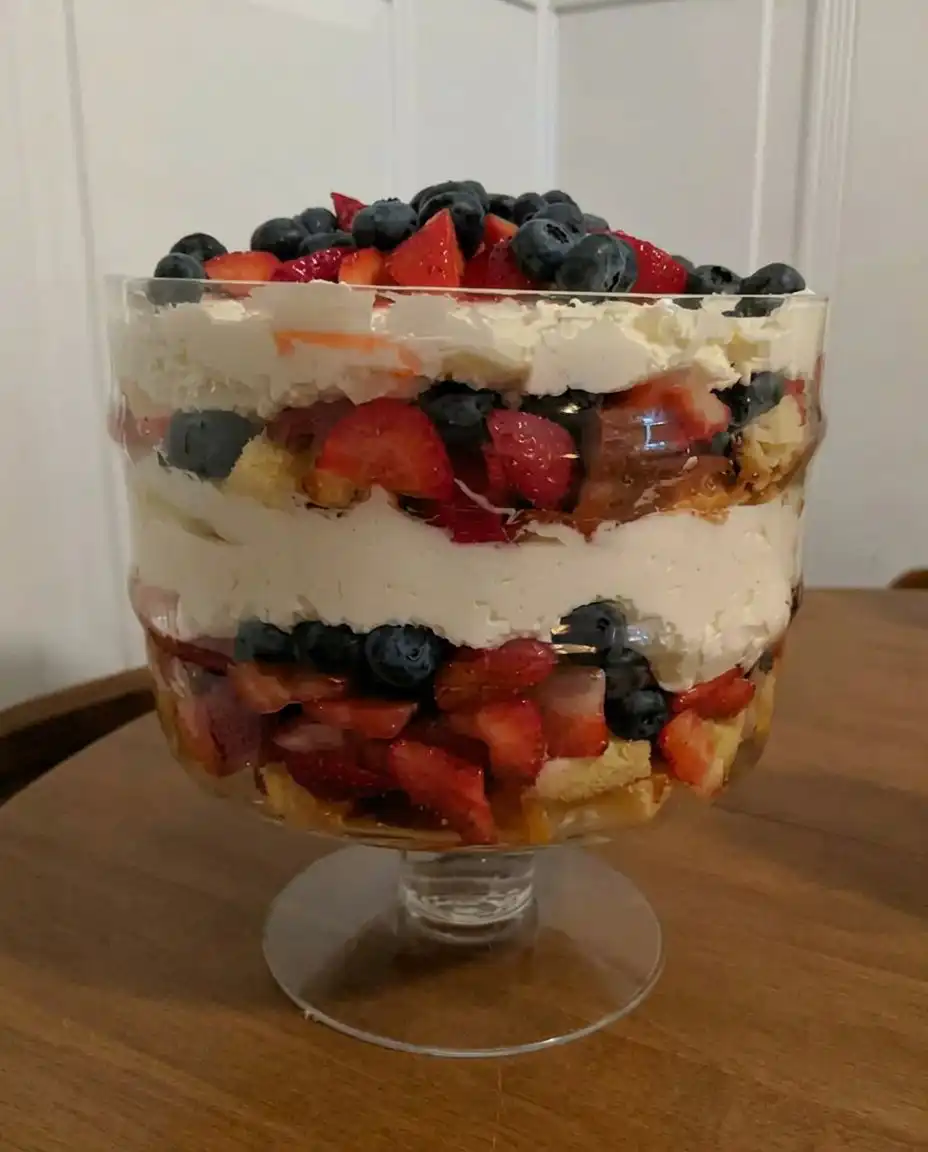
Serving a trifle can often devolve into a messy affair if not approached methodically. The goal is to maintain the distinct layers from the serving bowl to the plate. Use a large, deep serving spoon with a flat, squared edge rather than a rounded one. Drive the spoon straight down through all the layers to the very bottom of the glass before lifting. This vertical technique guarantees that each guest receives a proportionate ratio of cake, custard, and fruit in a single, coherent portion.
Plate the portions in shallow glass dessert bowls rather than flat plates. The bowls will contain the natural softening of the cream as it meets room temperature, preserving the aesthetic appeal. If the dessert has been sitting at room temperature during a summer party, return it to the refrigerator for twenty minutes between servings to firm up the structural integrity of the pudding and whipped topping.
For a sophisticated pairing, serve this dessert alongside a chilled glass of sparkling cider or an iced Earl Grey tea. The astringent tannins in the black tea will cleanse the palate of the dairy fat between bites, allowing the fresh berry flavor to shine anew each time. If you are serving a large crowd and need variety, presenting this alongside a traditional baked fruit cake offers guests a distinct textural choice between a cold, creamy dessert and a dense, structural classic.
Master the Craft
Creating the perfect 4th of July Trifle is a testament to the fact that simple ingredients, when treated with technical respect, can produce spectacular results. By mastering moisture control and temperature discipline, you transform a casual summer dessert into a masterclass in texture and presentation. The stark contrast between the yielding cake, the rich pudding, and the crisp berries is an absolute triumph of basic culinary architecture.
For another excellent perspective on holiday desserts and the mechanics of fruit layering, consider reviewing this patriotic trifle variation to see how other bakers tackle the structural challenges of summer produce. If you want to continue honing your skills with fruit-based pastries, examining our approach to strawberry cake provides an excellent lesson in balancing hydration within a baked crumb matrix.
I invite you to share your technically perfect layers with our dedicated baking community. Tag your triumphs on Instagram or post your cross-section photos on Facebook. You can also find more precision baking tutorials and visual guides on our YouTube channel or save this structural method for later reference on Pinterest.