In the rigorous pastry kitchens of my training in Derbyshire, the carrot cake was considered a study in hydraulic suspension rather than a mere sweet. We learned early on that the difference between a dense, gummy brick and a structurally sound, tender sponge lies entirely in how one manages the moisture release of the root vegetables during the bake. It is a balancing act of protein coagulation and sugar hygroscopy that separates the amateur effort from the professional standard.

This specific formula relies on the fluid nature of vegetable oil to coat the flour proteins, preventing excessive gluten formation while maintaining a crumb that remains supple for days. The addition of brown sugar introduces acidity to react with the baking soda, creating a superior lift, while the toasted pecans provide the necessary textural contrast to the soft, spiced crumb.
Structure Meets Texture
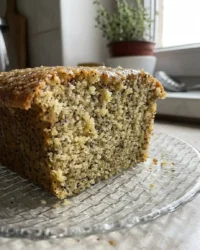
The primary reason this formulation succeeds where others fail is the precise ratio of fat to flour. Unlike butter-based cakes which solidify at room temperature—often resulting in a firmer, drier mouthfeel—the use of vegetable oil ensures the lipid network remains liquid. This grants the crumb an immediate melt-in-the-mouth quality that persists even after days of storage.
Furthermore, the spice profile is not merely a flavor addition but a chemical consideration. Cinnamon and vanilla are introduced to the fat phase, allowing the essential oils to disperse more effectively throughout the batter than if added to the dry mix. The result is a sponge that possesses structural integrity for layering, yet yields effortlessly to the fork, offering a sophisticated balance of warm aromatics and creamy, tangy frosting.
Print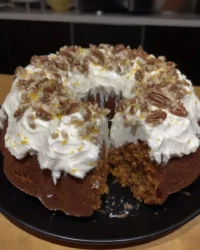
Carrot Cake Recipe
- Total Time: 1 hour 5 mins
- Yield: 12 servings
- Diet: Vegetarian
Description
This professional-grade carrot cake features a scientifically balanced crumb achieved through the use of neutral vegetable oil and fresh carrots. Paired with a stabilized cream cheese frosting, it offers a sophisticated texture that remains tender and moist for days.
Ingredients
- 260g all-purpose flour
- 2 tsp baking soda
- 1 tsp salt
- 1.5 tsp ground cinnamon
- 295ml vegetable oil
- 200g granulated sugar
- 190g brown sugar
- 1 tsp vanilla extract
- 4 large eggs, room temperature
- 300g freshly grated carrots
- 1/2 cup toasted pecans, chopped
- 1/4 cup raisins
- 225g full-fat block cream cheese, room temperature
- 2 cups powdered sugar, sifted
- 1 tsp cornstarch
- 1/4 cup heavy cream, cold
Instructions
- Preheat your oven to 350°F (180°C) and grease two 9-inch round cake pans, lining the bottoms with parchment paper for a clean release.
- In a medium bowl, whisk together the flour, baking soda, salt, and cinnamon until the mixture is completely homogeneous to avoid air pockets.
- In a separate large bowl, whisk the vegetable oil, granulated sugar, brown sugar, and vanilla extract until combined.
- Add the eggs one at a time to the oil mixture, whisking vigorously after each addition to create a stable emulsion.
- Using a large rubber spatula, gently fold the dry ingredients into the wet mixture in three parts, being careful not to over-work the batter.
- Fold in the grated carrots, toasted pecans, and raisins just until they are evenly distributed throughout the batter.
- Divide the batter evenly between the pans and bake for 35 to 45 minutes until the centers spring back when pressed and a tester comes out clean.
- Cool the cakes in their pans for 15 minutes to allow the structure to set before inverting them onto wire racks to cool completely.
- Prepare the frosting by beating the cream cheese until smooth, sifting in the powdered sugar and cornstarch, then whipping in the cold heavy cream to soft peaks.
Notes
For the most successful crumb, always grate your carrots fresh; pre-shredded carrots lack the necessary cellular moisture to hydrate the batter during baking. If your kitchen is warm, chill your mixing bowl and beaters before whipping the frosting to ensure the cream cheese remains stable and holds its shape.
- Prep Time: 25 mins
- Cook Time: 40 mins
- Category: Dessert
- Method: Baking
- Cuisine: American
The Structural Blueprint

To achieve the correct specific gravity and crumb texture, you must adhere to these ingredient specifications. Precision here dictates the outcome of the bake.
- Carrots (300g): You must grate these fresh. Pre-shredded carrots are coated in desiccating starches and preservatives that inhibit moisture release. We require the cellular water from fresh carrots to hydrate the batter during the bake.
- All-Purpose Flour (260g): A standard protein content of 10-11% is ideal here. It provides enough structure to suspend the nuts and raisins without creating a tough chew.
- Vegetable Oil (295ml): A neutral oil is essential. It coats the gluten strands, shortening them to create a tender crumb. Do not substitute with butter unless you are prepared for a significantly drier texture.
- Brown & Granulated Sugar (190g / 200g): We use a split ratio. The molasses in the brown sugar adds moisture (hygroscopy) and acidity to activate the baking soda, while the white sugar aids in creating a crisp outer crust.
- Eggs (4 large): These must be at room temperature to emulsify properly with the oil. They provide the structural scaffolding of the cake.
- Baking Soda (2 tsp): This requires the acidity from the brown sugar and carrots to activate. Verify your soda is fresh, or the cake will not rise.
- Cream Cheese (225g): Use full-fat block cream cheese, not the spreadable tub variety. The stabilizers in tub cheese will cause your frosting to weep and lose structure.
Methodical Assembly
Step 1: Thermal Equilibration and Prep
Position your oven rack in the absolute center to ensure even heat distribution. Preheat strictly to 350°F (180°C). Grease two 9-inch round cake pans and line the bottoms with parchment paper. This is a non-negotiable step for guaranteeing a clean release and preserving the structural integrity of the layers.
Step 2: Dispersion of Dry Agents
In a medium bowl, whisk together the flour, baking soda, salt, and cinnamon. You are looking for a homogeneous mixture. If the leavening agent is not evenly distributed, you will suffer from tunneling—large, unsightly air pockets—in the final crumb.
Step 3: Creating the Emulsion
In a separate bowl, whisk the oil, granulated sugar, brown sugar, and vanilla extract. Add the eggs one at a time, whisking vigorously after each addition. You are creating an emulsion here; the mixture should look smooth and slightly thickened. This traps air bubbles that will expand during baking.
Step 4: Gentle Folding
Switch to a large rubber spatula. Add the dry ingredients in three distinct parts. Fold gently—cut down the middle, sweep the bottom, and turn over. Stop mixing the moment the flour streaks disappear. Over-working the batter at this stage develops gluten, which is the enemy of a tender cake. Fold in the grated carrots, pecans, and raisins just until distributed.
Step 5: The Bake
Divide the batter evenly between the prepared pans; weighing them is the only way to be exact. Bake for 35 to 45 minutes. You are looking for a tactile cue: the tops should spring back gently when pressed, and a tester inserted into the center should come out clean. Visually, the cake will just begin to pull away from the pan walls.
Step 6: Structural Setting
Allow the cakes to cool in the pans for exactly 15 minutes. This allows the starch network to set. If you turn them out too early, they may fracture. After 15 minutes, invert onto wire racks, remove the parchment, and cool completely. Do not attempt to frost warm cake; the fat in the frosting will melt and slide off.
Step 7: Aerating the Frosting
Beat the room-temperature cream cheese until completely smooth. Sift in the powdered sugar and cornstarch (if using) and combine on low speed to avoid a dust cloud. Pour in the cold heavy cream and whip on medium-high. You are looking for the “soft peak” stage where the mixture holds its shape but remains spreadable. This technique incorporates air for a lighter mouthfeel.
Precision Protocols

- The Spoon and Level Method: When measuring flour by volume, never scoop directly from the bag. This compacts the flour and can lead to 20% more mass than intended, resulting in a dry cake. Fluff the flour, spoon it into the cup, and level it off with a straight edge. For absolute consistency, I always recommend weighing in grams.
- Managing Moisture Content: If your batter feels excessively stiff, your carrots may be dry. This often happens with old storage carrots. Conversely, if you are accustomed to handling high-moisture batters like in our succulent fruit fusion, you will recognize the sheen of a properly hydrated mix.
- Frosting Stability: If your kitchen is warm (above 23°C/73°F), the frosting may become slack. Chill the bowl and beaters beforehand. The addition of cornstarch acts as a stabilizer, binding free water in the cheese and cream to prevent weeping.
Textural Modifications
- Alternative Flour Blends: For a nutty, more rustic texture, you can substitute 25% of the all-purpose flour with whole wheat pastry flour. This increases the absorption rate, so you may need to check the bake time 2 minutes earlier.
- Fruit Additions: Some bakers prefer adding pineapple for enzyme activity and extra moisture. If you choose this path, ensure the pineapple is thoroughly drained and blotted, or the excess liquid will compromise the structure. This is similar to the fruit management techniques used in our raspberry white chocolate cake.
- Cupcake format: This batter translates well to cupcakes. Bake for 14–18 minutes. The smaller mass means heat penetrates faster, so vigilance is required to prevent drying out.
Plating and Presentation
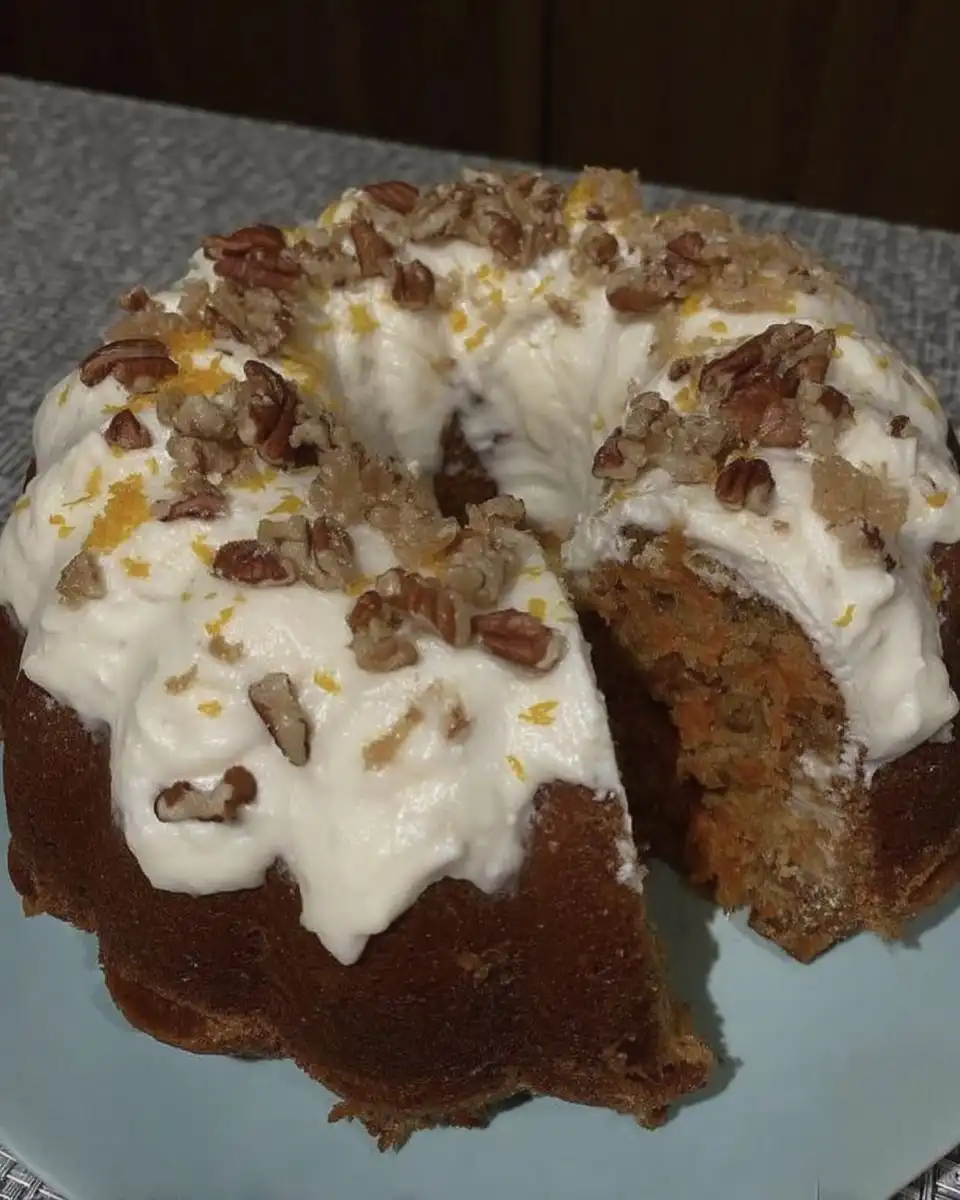
For the cleanest presentation, chill the cake for 20 minutes before slicing. This firms up the fat matrix in the frosting, allowing you to cut sharp, professional lines with a hot, dry knife. Wipe the blade between every single cut.
Serve this cake slightly cool or at room temperature. Unlike the dense, fudgy crumb of an old fashioned chocolate cake which might require warmth to soften, the oil-based crumb here remains tender even when cool. A garnish of toasted pecans hints at the interior texture.
The Final Calculus
Mastering this recipe is less about culinary flair and more about respecting the physical properties of your ingredients. When you grate fresh carrots and emulsify your fats correctly, you are rewarded with a dessert that rivals the density of a traditional fruit cake but possesses a far superior, lighter mouthfeel.
We must acknowledge the foundational ratios inspired by Inspired Taste, which serve as a robust baseline for this technical adaptation. Precision in the weigh-in leads to perfection on the plate.
If you have achieved the perfect crumb structure, I invite you to share your results. Tag us on Instagram, Facebook, or Pinterest.