The most frequent error in fruit-based cakes is a curdled batter that produces a dense, gummy center, yet this Classic Peach Pound Cake method ensures a perfectly stable emulsion.

This recipe relies on a specific sequence of emulsion and temperature control to maintain the delicate suspension of fruit within the crumb. By sifting freeze-dried peach powder directly into the dry components, we achieve a concentrated flavor profile without compromising the structural integrity of the crumb. The result is a refined texture that balances a crisp exterior with a tender, moist interior. This method proves that technical precision is the only path to a repeatable, professional crumb.
The Case for This Method: Classic Peach Pound Cake
Prep: 25 min · Serves: 12 · Difficulty: Advanced
- Concentrated fruit flavor through freeze-dried powder.
- A precise emulsion ensures a velvety crumb.
- Structured crust protects the soft interior fruit.
- Specific gravity control prevents fruit from sinking.
- This fresh peach cake recipe provides structural context.
Structure is what makes the melt possible.
Get The Full Cake Recipe
Print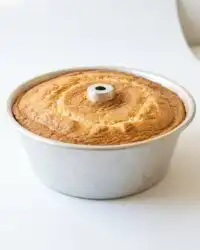
Classic Peach Pound Cake
- Total Time: 6 hours 15 mins
- Yield: 12 servings
- Diet: Vegetarian
Description
This professional-grade peach pound cake achieves a perfect, velvety crumb through precise emulsion techniques and the use of concentrated freeze-dried fruit powder. The result is a structurally stable, intensely flavorful dessert that balances a crisp, golden exterior with a tender, moist interior.
Ingredients
- 3 cups cake flour or all-purpose flour
- 2 teaspoons baking powder
- 1/4 teaspoon fine salt
- 1 ounce freeze-dried peaches
- 3 sticks unsalted butter, room temperature
- 3 cups granulated sugar
- 5 large eggs, room temperature
- 1 cup heavy whipping cream (for all-purpose flour) or 1 1/4 cups (for cake flour)
- 1/3 cup reserved peach juice
- 1 teaspoon vanilla extract
- 1 teaspoon peach extract
- 1 can sliced peaches in juice
- 1 1/4 cups confectioners’ sugar
- 2 1/2 tablespoons milk
- 1 tablespoon reserved peach juice
- 3 tablespoons melted butter
Instructions
- Drain the peaches. Place canned sliced peaches in a strainer over a bowl and let sit for 10 minutes to collect all liquid for the recipe.
- Process peach powder. Pulse freeze-dried peaches in a food processor for 60-90 seconds until they reach a fine, flour-like consistency.
- Sift dry ingredients. Sift together the flour, baking powder, salt, and peach powder twice to ensure even distribution.
- Mix liquid base. Whisk together the heavy cream, reserved peach juice, vanilla, butter, and peach extracts until fully combined.
- Aerate butter base. Beat butter and sugar on high speed in a stand mixer for 6 minutes until pale, voluminous, and creamy.
- Incorporate the eggs. Add eggs one at a time on medium speed, ensuring each is fully incorporated before adding the next.
- Combine alternating ingredients. Add the dry flour mixture and liquid cream mixture in three additions on the lowest speed, beginning and ending with dry ingredients.
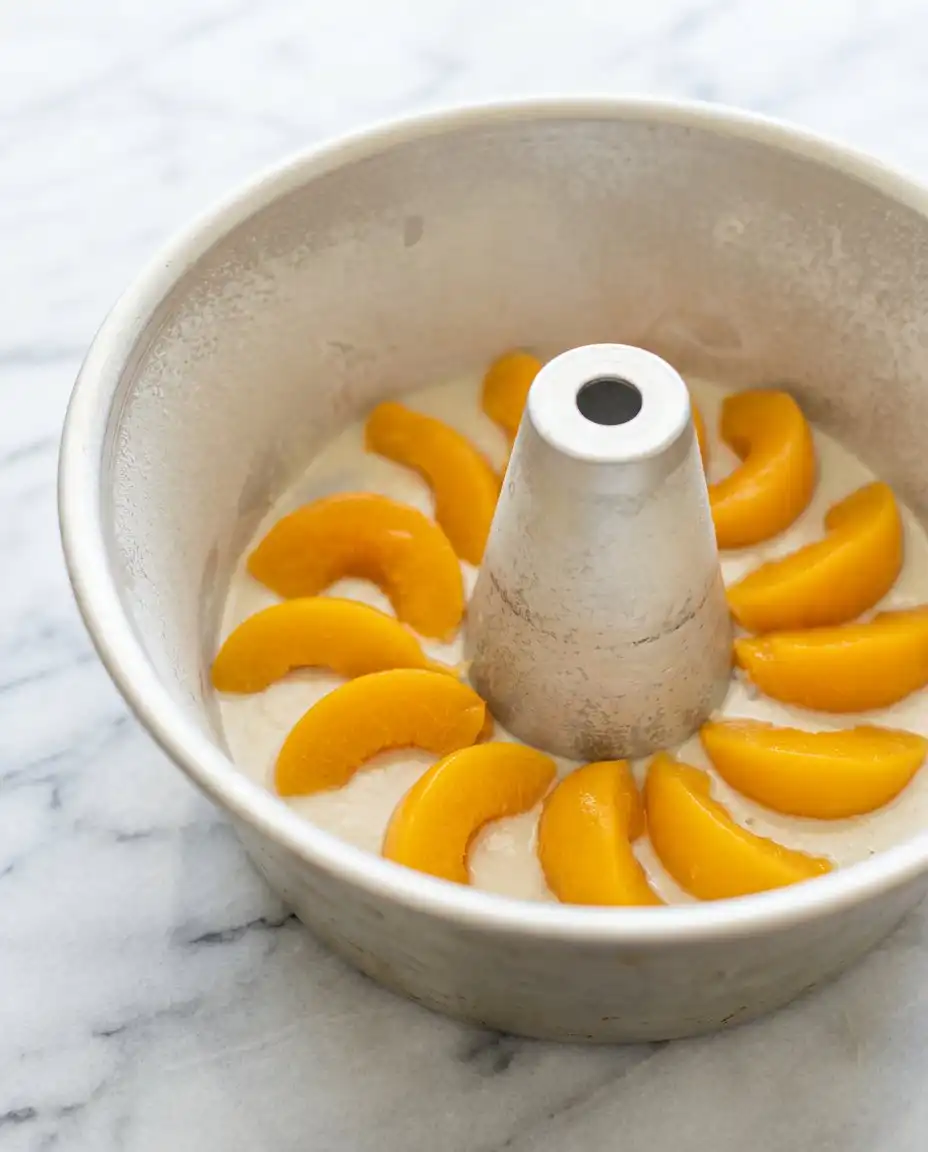
- Prepare the pan. Spray a tube or Bundt pan, arrange drained peach slices at the bottom, and carefully pour the batter over the fruit.
- Bake the cake. Bake at 325°F on the bottom rack for 1 hour and 20 minutes until a tester comes out clean.
- Cool the cake. Allow the cake to rest in the pan for 4 to 5 hours on a wire rack before inverting to ensure structural integrity.
- Create peach icing. Whisk together confectioners’ sugar, milk, peach juice, and melted butter until smooth and pourable.
- Finish and drizzle. Transfer icing to a squeeze bottle and drizzle over the cooled cake, allowing 15 minutes for the glaze to set.
Notes
- Ensure all dairy and egg components reach room temperature at least two hours before mixing to prevent batter curdling.
- Use a digital kitchen scale for flour measurements to maintain the exact ratios required for this high-ratio pound cake.
- Never skip the resting period in the pan, as it allows the internal structure and moisture to stabilize for easier removal.
- If the cake top browns too quickly, tent the pan loosely with aluminum foil during the final 20 minutes of baking.
- Prep Time: 25 mins
- Cook Time: 1 hour 20 mins
- Category: Dessert
- Method: Baking
- Cuisine: American
The Working Components
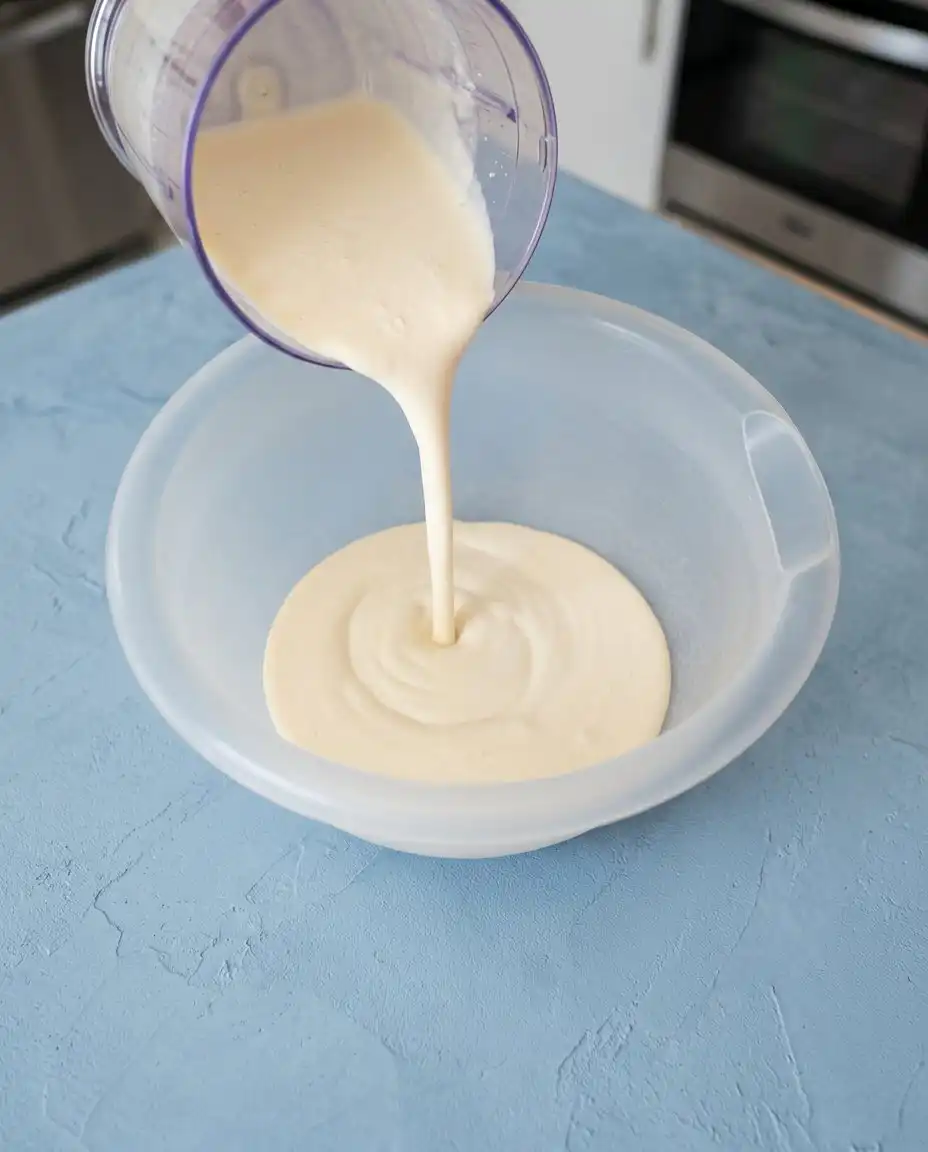
Precise ingredient selection is the foundation of a successful bake. Room temperature components are non-negotiable for achieving a stable emulsion during the mixing phase. This recipe utilizes a dual-peach approach to ensure flavor depth without excessive moisture interference.
- Cake flour or All-purpose flour: Cake flour provides a lower protein content for a tender crumb, while all-purpose offers more structural stability.
- Unsalted butter: Provides the fat phase for aeration during the creaming process.
- Freeze-dried peaches: Concentrated peach solids that provide intense flavor without adding water weight to the batter.
- Heavy whipping cream: Adds milk fat and moisture to provide a luxurious mouthfeel.
- Peach juice: Reserved from the canned fruit to hydrate the dry components with natural acidity.
- Large eggs: The primary emulsifier that binds the fat and water phases together.
| Ingredient | Why It Matters |
|---|---|
| Freeze-dried Peaches | Intense flavor without moisture |
| Heavy Cream | Fat content for tender crumb |
| Cake Flour | Low protein for soft texture |
| Peach Juice | Natural acidity for leavening |
From Bench to Bake
Step 1: Prepare the Sliced Peaches
Begin by opening a single can of sliced peaches packed in 100% juice. Place a fine-mesh strainer over a small glass bowl and empty the contents of the can into the strainer. Allow the fruit to sit for at least ten minutes to ensure every drop of juice is collected. This juice is vital for both the batter hydration and the final icing. Once drained, set the fruit and the liquid aside separately on your bench.
Step 2: Processing the Freeze-Dried Peach Powder
Measure exactly one ounce of freeze-dried peaches by weight. Place these into a small food processor and pulse until the fruit is reduced to a fine, uniform powder. This powder acts as a concentrated flavor delivery system. If the powder remains clumpy, it will not distribute evenly within the dry ingredients. Continue processing for 60 to 90 seconds until the texture resembles fine flour, then set aside in a dry environment.
Step 3: Sifting the Dry Components
Place a large sifter over a medium mixing bowl. Combine 3 cups of your chosen flour, 2 teaspoons of baking powder, the prepared peach powder, and 1/4 teaspoon of fine salt. Sift these together twice to ensure the freeze-dried particles are perfectly dispersed among the flour granules. This mechanical dispersion prevents localized clumps of fruit powder from seizing the moisture in the batter. Stir briefly with a large spoon to confirm homogeneity.
Step 4: Emulsifying the Liquid Base
The volume of heavy cream required depends on your flour choice. If using all-purpose flour, measure 1 cup; for cake flour, use 1 1/4 cups to account for higher absorption. In a separate bowl, whisk together the cream, 1/3 cup of the reserved peach juice, and the vanilla, butter, and peach extracts. Add the food coloring at this stage to achieve a uniform hue. Whisk until the liquid phase is fully combined and the color is streak-free.
Step 5: Aerating the Classic Peach Pound Cake Base
Fit your stand mixer with the paddle attachment and add 3 sticks of room-temperature unsalted butter and 3 cups of granulated sugar. Mix on high speed for exactly six minutes. This duration is necessary to reach the mechanical aeration stage where sugar crystals create millions of tiny air pockets in the fat. Stop the mixer twice during this period to scrape the bowl thoroughly. The mixture should appear pale, voluminous, and almost like whipped frosting.
Step 6: Incorporating the Eggs
Reduce the mixer speed to medium and add 5 large room-temperature eggs one at a time. Wait until each egg is fully incorporated before adding the next to maintain the emulsion. Avoid the temptation to increase speed, as high-velocity mixing after egg addition can over-develop gluten and lead to a tough crumb. The batter should look smooth and glossy once the final egg is absorbed into the fat-sugar matrix.
Step 7: The Alternating Addition Method
With the mixer on the lowest setting, add the dry flour mixture and the liquid peach cream mixture in three separate additions. Start and end with the dry ingredients to prevent the batter from breaking. Mix for only 15 to 20 seconds after each addition. This brief window of agitation is sufficient to hydrate the proteins without causing excessive gluten elasticity. Scrape the bottom of the bowl with a silicone spatula to ensure no dry pockets remain.
Step 8: Preparing the Structural Pan
Spray a 15-cup capacity tube pan or Bundt pan generously with non-stick baking spray containing flour. Arrange the drained peach slices in a single layer at the base of the pan. Carefully pour the prepared batter over the fruit, being mindful not to displace the arrangement. Use an offset palette knife to smooth the top. Tap the pan firmly on the bench twice to release any trapped air bubbles that could cause voids in the crumb.
Step 9: The Baking Phase
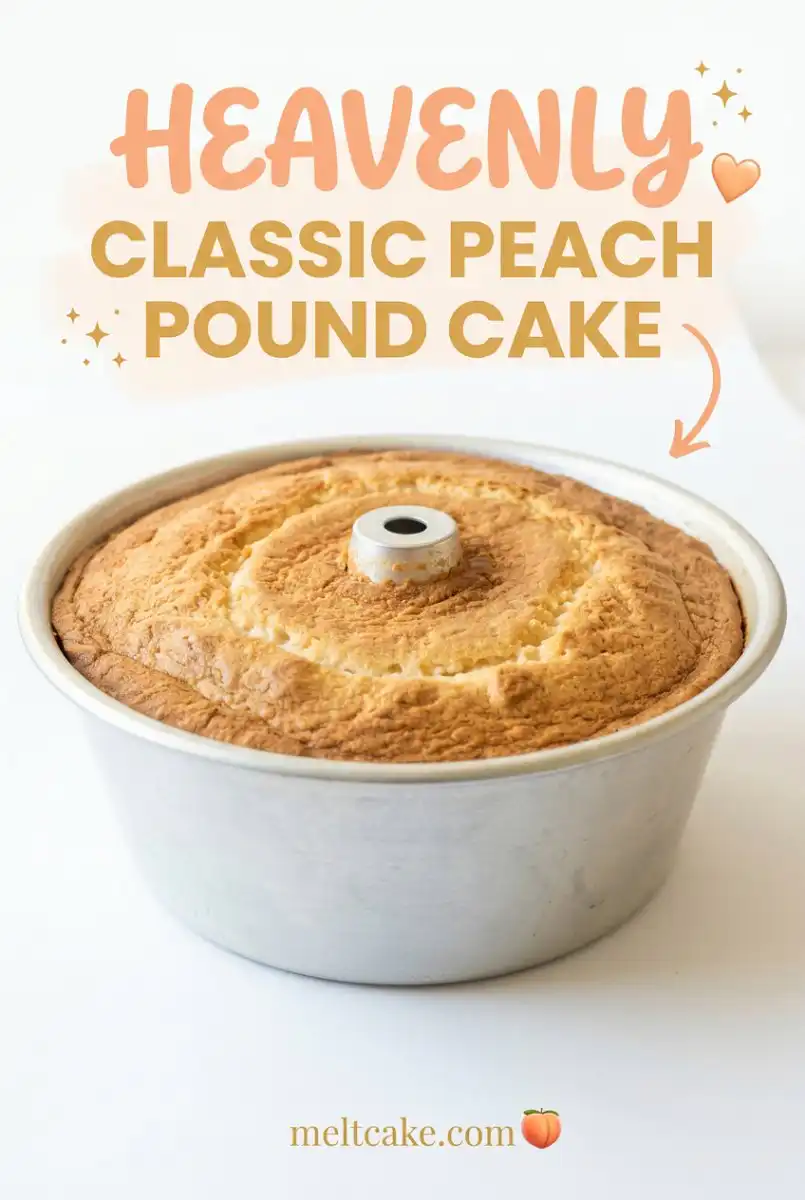
Preheat your oven to 325 degrees Fahrenheit. Place the pan on the bottom rack to ensure the heat reaches the dense center of the cake effectively. Bake for 1 hour and 20 minutes without opening the oven door prematurely. A probe thermometer or toothpick inserted into the thickest part should emerge clean and dry. This long, slow bake allows the internal structure to set while the exterior forms a protective, crisp shell.
Step 10: The Controlled Cooling Process
Remove the pan from the oven and place it on a wire cooling rack. Allow the cake to rest inside the pan for 4 to 5 hours. This timeframe is critical for the starches to retrogradate and the internal moisture to redistribute. If you attempt to de-pan the cake while it is still warm, the delicate fruit layer may tear. Once cooled, invert the pan onto a cooling rack placed over a baking sheet.
Step 11: Preparing the Peach Icing
In a clean bowl, whisk 1 1/4 cups of confectioners’ sugar with 2 1/2 tablespoons of warm milk and 1 tablespoon of peach juice. Add 3 tablespoons of melted butter and the extracts. The inclusion of butter provides a professional sheen and prevents the icing from becoming brittle. Whisk until the mixture reaches a smooth, pourable consistency. If the icing remains lumpy, sift the sugar next time or warm the mixture slightly to dissolve solids.
Step 12: Finishing and Drizzling
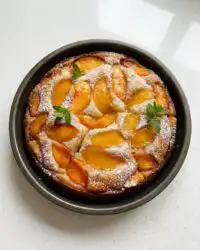
Transfer the icing to a squeeze bottle for maximum control. Drizzle the icing over the cooled cake in a deliberate zig-zag motion, allowing it to cascade down the sides. If the icing has thickened too much, a 10-second pulse in the microwave will restore its flow. Allow the icing to set for 15 minutes to form a dry skin before slicing. This wait ensures a clean cut that preserves the internal visual of the peach slices.
Where Most Bakes Go Wrong
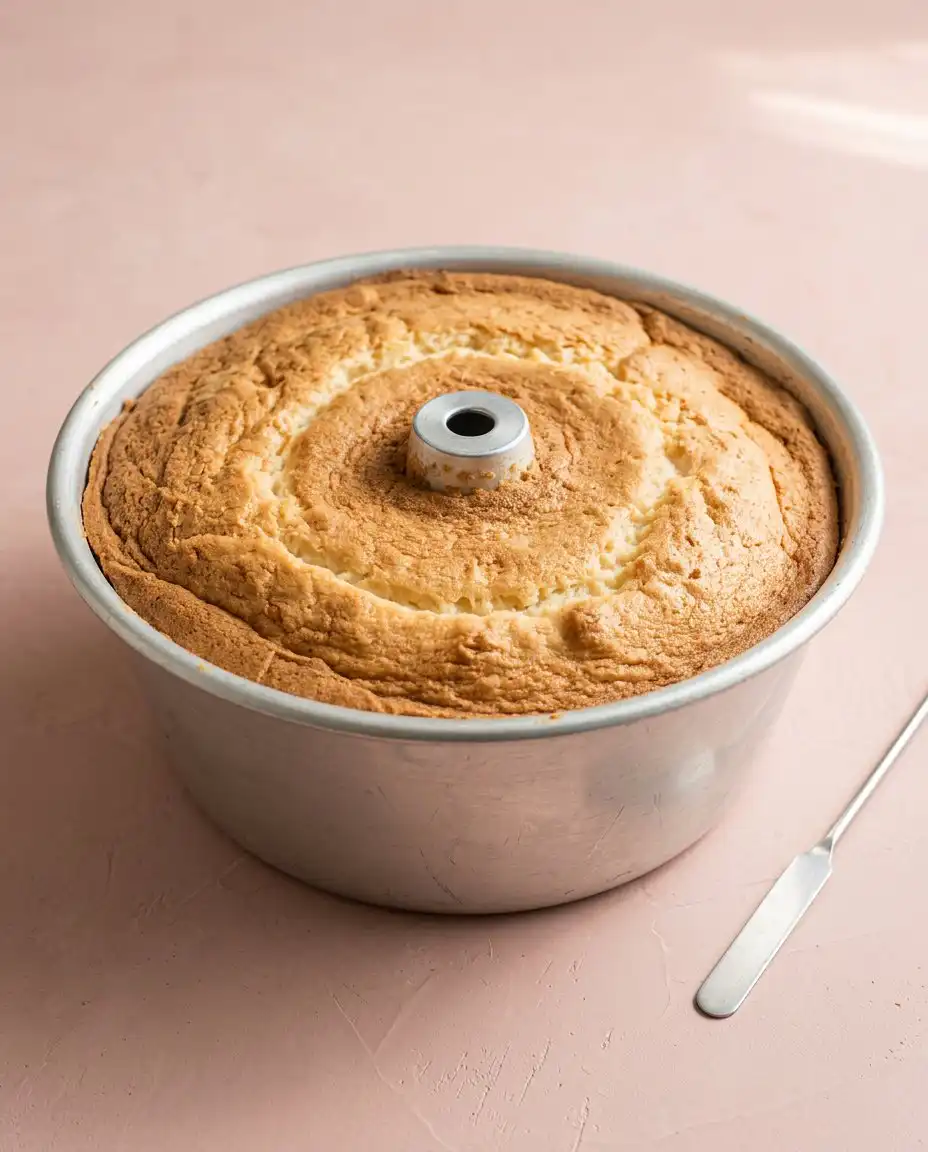
The temperature of your ingredients is the most common failure point. If your eggs or cream are cold, the butter will seize, causing the batter to curdle and the resulting crumb to be dense and oily. Always allow these items to sit on the bench for at least two hours before beginning. Structure is what makes the melt possible, and that structure starts with a perfect emulsion.
If the cake collapses in the center after removal from the oven, it was likely underbaked or the oven temperature was inaccurate. Always use an oven thermometer to verify that 325 degrees is actually 325 degrees. High-altitude bakers may need to increase the flour by two tablespoons to strengthen the cell walls of the cake. Understanding peach cobbler pound cake 2 can help you master the balance of fruit and batter.
Weigh your flour using a digital scale rather than relying on volume measurements. A cup of flour can vary by 20 percent depending on how it is packed, leading to inconsistent results. For the most accurate hydration, use 125 grams per cup as your baseline. This level of precision is the difference between a dry cake and a professional-grade dessert. For further reading on flavor balance, review these techniques for achieving a peachy pound cake flavor.
When sifting the freeze-dried powder, ensure your sifter has a fine enough mesh to catch large seeds but large enough for the fruit solids. Any large pieces of dried fruit that remain should be re-processed or discarded. These large pieces do not hydrate at the same rate as the powder and can create hard spots in the finished cake. Proper sifting ensures the flavor is integrated into every crumb.
Frequently Asked Questions
Can I use fresh peaches instead of canned ones?
Fresh peaches can be used, but they must be peeled and macerated in sugar and lemon juice first. This process mimics the texture and moisture content of canned peaches. Be aware that fresh fruit varies in water content, which may affect the final bake time and structural stability.
Why did my peaches sink to the bottom of the cake?
Fruit usually sinks because the batter is too thin or the fruit was too wet. Ensure you drain the peaches thoroughly and tap the pan to remove air pockets. The inclusion of freeze-dried powder in this recipe helps thicken the batter to support the fruit’s weight.
How should I store this pound cake to maintain its texture?
Keep the cake in an airtight container at room temperature for up to three days. For longer storage, refrigerate it for up to one week, though this may slightly firm the butter-heavy crumb. Always bring a refrigerated slice to room temperature before serving to restore the intended mouthfeel.
Is it possible to freeze this peach pound cake?
Yes, this cake freezes exceptionally well due to its high fat content. Wrap the un-iced cake tightly in plastic wrap and then foil to prevent freezer burn. It will remain at peak quality for up to three months; thaw it slowly in the refrigerator before applying the icing.
What is the difference between using cake flour and all-purpose flour here?
Cake flour has less protein and produces a finer, more delicate crumb. All-purpose flour provides more gluten structure, resulting in a heartier, taller cake. If you choose all-purpose, ensure you use the lower volume of heavy cream specified in the method to maintain the correct hydration.
Why is my icing too thin and transparent?
If your icing is runny, you likely added too much liquid or the butter was too hot. Add confectioners’ sugar one tablespoon at a time until the mixture coats the back of a spoon. The icing should be thick enough to hold its shape while slowly cascading down the cake’s ridges.
Tested Variations
For a more complex flavor profile, replace the vanilla extract with almond extract. The nutty notes of almond naturally complement the stone fruit characteristics of the peach. This variation maintains the structural integrity while shifting the aromatic focus. You can also explore how fruit interacts with different fats by comparing this to a peach cake made with alternative oils.
Those seeking a spiced version can add a half-teaspoon of freshly grated nutmeg to the dry ingredients. Nutmeg provides a warm, earthy contrast to the sweetness of the peach juice and icing. Ensure the spice is finely ground to avoid interrupting the velvety mouthfeel of the crumb. This adjustment is particularly suited for autumn gatherings where a deeper flavor profile is desired.
A textures variation involves adding chopped pecans to the bottom of the pan along with the peach slices. The pecans provide a roasted, crunchy contrast to the soft fruit and tender cake. To prevent the nuts from burning, ensure they are fully coated by the fruit juice or a small amount of the batter. This addition creates a more rustic, Southern-style presentation that many find appealing.
Finishing & Plating
Serving this cake requires a delicate touch to avoid crushing the tender crumb. Use a long, serrated bread knife and a gentle sawing motion to produce clean slices. For a formal presentation, place a single slice in the center of a chilled plate and garnish with a sprig of fresh mint. The contrast between the golden cake and the green mint provides a professional visual appeal.
A dollop of lightly sweetened whipped cream on the side can help balance the density of the pound cake. Ensure the cream is whipped to soft peaks to maintain a texture that melts into the cake. This pairing is particularly effective when the cake is served slightly warm. You may also find inspiration in how a peach cobbler pound cake is often served with a scoop of vanilla bean ice cream.
For a summer afternoon tea, serve this cake alongside a chilled oolong or Earl Grey tea. The floral notes of the tea highlight the aromatic peach extracts used in the batter and icing. This combination is a classic example of how structured desserts can be balanced with light, refreshing beverages. Always serve the cake at room temperature to ensure the butter-rich crumb is at its most tender state.
What the Technique Gives You
Mastering the emulsion and aeration required for this recipe provides a blueprint for all high-ratio cakes. The combination of freeze-dried fruit and precise temperature control results in a dessert that is both structurally sound and intensely flavored. By following the measured steps and technical cues provided, you ensure a result that surpasses standard home-baked efforts. This cake is a testament to the fact that precision on the bench leads to perfection on the plate.
I encourage you to document your process and share your results with our community of technical bakers. Seeing the crisp shell and the soft peach interior of your successful bake is the ultimate reward for the time invested. For more variations on this theme, you might explore our cream cheese peach cobbler pound cake for a different textural experience.
Please share your bakes and follow our technical journey on Pinterest, Facebook, or join our updates on Telegram. Your feedback and structural successes are what drive our commitment to pastry precision. We look forward to seeing your results at your next gathering.