In classical French pastry, the balance of heat and sugar dictates the structural integrity of caramelized fruit, a principle that transforms local ingredients into structured masterpieces.

When baking a Mango Upside Down Cake, the primary technical challenge lies in preventing the fruit topping from weeping into the underlying sponge cake during the baking process. A wet topping degrades the structural stability of the cake, turning a light crumb into a soggy, collapsed layer. By mastering the precise emulsion of room-temperature butter and sugar, we construct a resilient crumb that holds its shape. This careful preparation guarantees that the cake releases cleanly from the pan, revealing a gleaming layer of beautifully caramelized mangoes.
The Case for This Method with Mango Upside Down Cake
Prep: 25 min · Serves: 8 · Difficulty: Medium
- Maintains structural integrity of the moist sponge.
- Produces a beautifully clean fruit release.
- Achieves precise caramelization without burnt bitter notes.
- Balances rich butter with bright tropical fruit.
- Creates a uniform and highly stable crumb.
This approach mirrors the success of our classic peach upside down cake which relies on identical thermodynamic rules. Precision for the sake of mouthfeel guides every step of this process. Weigh it, time it, trust it to perform.
Get The Full Cake Recipe
Print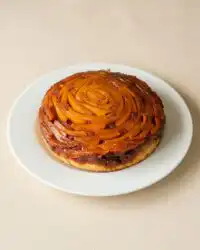
Mango Upside Down Cake
- Total Time: 1 hour 5 mins
- Yield: 8 servings
Description
This Mango Upside Down Cake balances a buttery, light-textured sponge with a vibrant, perfectly caramelized fruit topping. By mastering precise emulsion techniques and careful sugar work, you achieve a professional-grade dessert that releases cleanly from the pan every time.
Ingredients
- 3/4 cup granulated sugar
- 2 tablespoons water
- 500g firm-ripe mangoes
- 100g unsalted butter
- 1 cup powdered sugar
- 2 large eggs
- 2 cups all-purpose flour
- 1 1/2 teaspoons baking powder
- 1/4 cup whole milk
- 1 teaspoon vanilla essence
- 1 pinch salt
Instructions
- Caramelize the sugar. Combine sugar and water in a heavy-bottomed saucepan over low heat for 12-15 minutes until a deep copper amber, then pour into an 8×8 inch square baking pan.
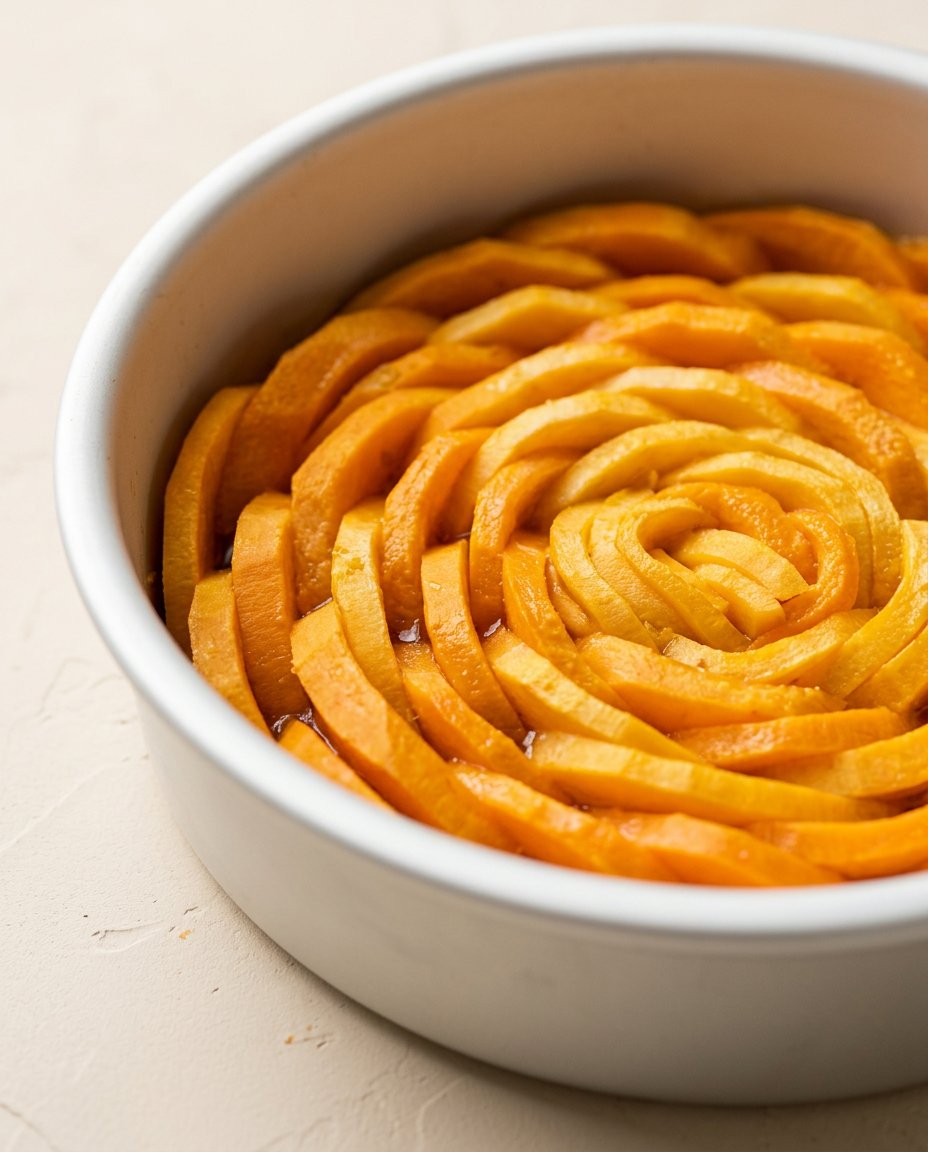
- Arrange the mangoes. Peel and slice mangoes into 1-centimeter thick slices, arranging them in tight overlapping rows over the set caramel layer.
- Create fat emulsion. Beat room-temperature butter for 60 seconds until creamy, add powdered sugar, and continue beating for 2-3 minutes to incorporate air.
- Incorporate the eggs. Add eggs one at a time, beating thoroughly after each to maintain a stable emulsion, and use a tablespoon of flour if the mixture begins to split.
- Combine dry ingredients. Sift the flour, baking powder, and salt together twice, then fold into the butter mixture alternating with milk and vanilla until just combined.
- Bake the cake. Spread the batter evenly over the mangoes and bake at 180 degrees Celsius for 35 to 40 minutes until a skewer comes out clean.
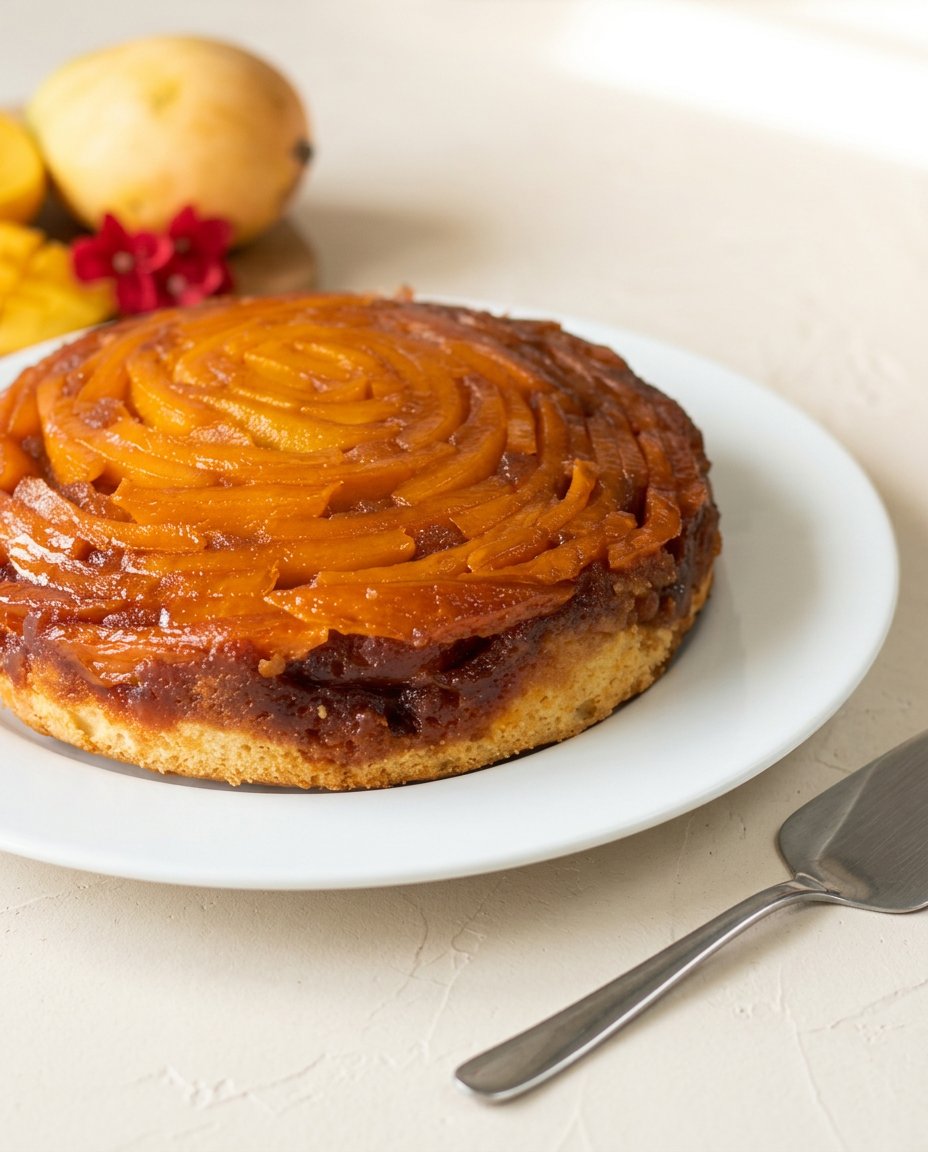
- Cool and release. Allow the cake to rest on a wire rack for 10 minutes, run a knife around the edges to loosen, and invert carefully onto a serving plate.
Notes
- Ensure all dairy and egg components are at exactly 20 degrees Celsius to prevent the emulsion from breaking.
- Use a digital kitchen scale for flour to maintain the structural ratio required to support the fruit.
- Never stir the caramelizing sugar with a spoon to avoid premature crystallization.
- Wait precisely 10 minutes before inverting to ensure the caramel remains fluid enough to release but set enough to hold its shape.
- Prep Time: 25 mins
- Cook Time: 40 mins
- Category: Dessert
- Method: Baking
- Cuisine: French-inspired
The Working Components

Every ingredient on the pastry bench must perform a specific functional role to balance moisture and density. We choose our components based on their chemical contribution to the final baked structure, making sure the fruit and cake merge beautifully. This precise selection prevents the crumb from collapsing under the weight of the dense mango topping.
- Cheeni (Sugar): Granulated sugar undergoes thermal degradation to create a complex caramel topping, which coats the baking pan and provides the base flavor for the caramelized fruit.
- Aam (Mango Slices): Firm-ripe mangoes provide natural sweetness and acidity while maintaining their physical shape without dissolving into a mushy puree under heat.
- Makhan (Butter): Unsalted butter, kept at exactly 20 degrees Celsius, forms the base of our fat-to-sugar emulsion to trap micro-pockets of air during creaming.
- Anday (Eggs): Large eggs act as the primary emulsifying agent and structural binder, providing both moisture and protein to set the cake walls.
- Maida (All-purpose flour): Sifted flour provides the gluten network necessary to support the moist fruit topping without becoming dense.
- Baking Powder: This chemical leavening agent releases carbon dioxide gas when heated, lifting the batter around the heavy fruit.
- Doodh (Milk): Whole milk hydrates the dry ingredients, dissolving remaining sugar crystals and relaxing the gluten network just enough to guarantee a tender crumb.
| Ingredient | Why It Matters |
|---|---|
| Granulated Sugar | Caramelizes at 160 degrees Celsius to create a fluid, protective barrier for the fruit. |
| Firm-Ripe Mangoes | Maintain physical structure during the high-heat baking process without collapsing. |
| Unsalted Butter | Forms a stable emulsion that traps air and creates a tender crumb. |
| Sifted Flour | Establishes the protein structure required to support the fruit layer. |
From Bench to Bake
Step 1: Caramelizing the Sugar Layer
Place 3/4 cup of granulated sugar and 2 tablespoons of water into a clean, heavy-bottomed saucepan. Set the heat to low and allow the mixture to cook undisturbed for 12 to 15 minutes. Watch the color transition from clear to a pale amber, then to a deep copper hue. Do not stir the pan during this phase, as agitating the solution can initiate crystallization, which ruins the texture of your syrup. The caramel must reach a fluid, glassy state before you pour it cleanly into the bottom of an 8×8 inch square baking pan.
Step 2: Arranging the Mango Layer
Peel and slice your half-kilogram of ripe mangoes into even, 1-centimeter thick slices to guarantee consistent baking. Carefully arrange these slices in tight, overlapping rows over the warm, set caramel in the pan. Press the fruit gently into the sweet syrup layer to secure their positions and prevent them from shifting when you pour the heavy batter. This layout creates a beautifully patterned top layer that releases smoothly once inverted. Set this pan aside on your kitchen bench to cool while you begin preparing the cake batter.
Step 3: Preparing the Fat Emulsion
Measure exactly 100 grams of unsalted butter, making sure it is at room temperature, around 20 degrees Celsius. Place the butter into a clean bowl and beat with a hand mixer or stand mixer for exactly 60 seconds on medium speed. The fat should look smooth, creamy, and pale yellow, showing no cold lumps. Add 1 cup of powdered sugar to the whipped butter and beat for another 2 to 3 minutes. This action traps tiny air bubbles within the fat, which is the foundational secret to a light cake texture.
Step 4: Adding the Eggs with Precision
Add your room-temperature eggs one at a time to the butter and sugar mixture, beating thoroughly after each addition. Each egg must be fully incorporated before you introduce the next to maintain a stable emulsion. If you notice the mixture splitting or looking like curdled milk, beat in a single tablespoon of your weighed flour to bind the excess moisture. The finished batter should look smooth, glossy, and hold a light ribbon stage consistency. This emulsion prevents the fat from separating during the bake.
Step 5: Sifting and Folding the Dry Elements
Place a fine-mesh sifter over a separate mixing bowl to prepare your structured dry ingredients. Add 2 cups of all-purpose flour, 1.5 teaspoons of baking powder, and a pinch of fine salt to the sifter. Sift these ingredients together twice to distribute the leavening agent evenly and aerate the flour particles. Alternating with 1/4 cup of whole milk and 1 teaspoon of vanilla essence, fold these dry ingredients into your creamed butter mixture. Use a rubber spatula to fold with light, sweeping motions until no flour pockets remain.
Step 6: Baking the Mango Upside Down Cake
Scrape the finished batter into the prepared pan over the arranged mango slices, taking care not to disturb the fruit pattern. Use an offset palette knife to smooth the surface, making sure the batter fills the corners of the pan. Place the pan in a preheated oven set to exactly 180 degrees Celsius and bake for 35 to 40 minutes. The cake is baked when the top feels springy to a gentle touch and a wooden skewer inserted into the center emerges clean. This heat gelatinizes the starches, setting the crumb around the tender fruit.
Step 7: Loosening and Cool Down
Remove the baking pan from the oven and set it on a wire rack to rest for exactly 10 minutes. Use a thin, flexible offset palette knife to run around the edges of the pan, releasing the cake walls. Letting the cake sit for this brief window allows the caramelized sugars to settle slightly without cooling completely and sticking to the pan. If you wait too long, the caramel will solidify, cementing the mango slices to the metal bottom. Thirty seconds decides everything between a flawless release and a broken topping.
Technique Refinements
To prevent your caramelized sugar from crystallizing during the boiling process, avoid inserting any metal spoons or whisks into the pan. Instead, gently swirl the pan by its handle if you notice uneven browning, allowing the heat to distribute smoothly. Using a heavy-bottomed saucepan is critical because thin metal creates hot spots that can burn the sugar before the crystals fully melt. For a detailed guide on sugar chemistry, read how to properly caramelize sugar to master this delicate step.
Always check that your butter and eggs are at the same room temperature before you begin creaming. When cold eggs hit warm, whipped butter, they cause the fat to seize and curdle, breaking the delicate emulsion. If your batter curdles, here is why and how to fix it: the temperature differential has forced the fat out of emulsion, which you can easily resolve by placing the mixing bowl over a warm water bath for ten seconds while beating vigorously.
Choosing the right mango is a critical structural decision that determines whether your topping holds its form or melts into mush. Choose firm-ripe mangoes, such as Kent or Tommy Atkins, which contain higher pectin levels and lower moisture content than softer varieties. These structural qualities keep the fruit intact during baking, unlike the delicate texture required for a classic mango sponge cake which relies on pureed fruit.
Sifting the flour twice is not an optional aesthetic step; it is a mechanical necessity for aerating the dry ingredients. This step ensures that the baking powder is thoroughly distributed, preventing localized over-leavening that causes the cake to rise unevenly and collapse in the center. The double-sifted flour also folds into the wet emulsion much faster, which prevents overworking the gluten network and keeps the cake crumb tender.
When inverting the cake, timing is your most critical variable. If you attempt to flip the cake immediately out of the oven, the hot, fluid caramel and soft fruit will slide apart, destroying the pattern. Conversely, if you let the cake cool completely in the pan, the caramel will harden and stick permanently. Aim for the golden window of 10 to 12 minutes of cooling time to achieve the ideal release.
Always use a digital scale to weigh your butter and flour rather than relying on volume cups. Flour can pack down in a cup, adding up to thirty percent more starch to your batter, which dries out the sponge. A dry sponge will absorb the natural juices from the mangoes, turning the top layer sticky and leaving the rest of the cake tough.
Frequently Asked Questions
How do you flip an upside-down cake without breaking it?
To flip the cake safely, let it cool on a wire rack for exactly 10 minutes so the caramel settles but remains warm. Place a flat serving platter upside down over the top of the baking pan, then firmly grip both the pan and the plate together using heat-resistant oven mitts. Invert the pan in one swift, confident motion, then allow it to sit upside down for 60 seconds so gravity can pull the caramelized fruit away from the bottom before you gently lift the pan.
Should you eat mango upside-down cake warm or cold?
Serving this cake warm or at room temperature offers the best textural experience. Warm caramel remains fluid and rich, which enhances the melt-in-the-mouth quality of the sponge layer. If you serve the cake straight from the refrigerator, the butter in the crumb and the caramel topping will feel firm and dense, masking the delicate tropical flavors.
Can you make mango upside-down cake in a skillet?
Yes, a well-seasoned cast-iron skillet is an excellent vessel for this dessert. The thick iron retains heat exceptionally well, ensuring a beautiful, uniform caramelization of the sugar and mangoes. If you use a skillet, reduce the baking time by approximately five minutes, as the pan retains heat and continues to cook the batter even after it is removed from the oven.
What is the best type of mango for upside-down cake?
The best mangoes for baking are firm-ripe specimens of the Kent, Keitt, or Tommy Atkins varieties. These cultivars feature a sturdy, non-fibrous flesh that holds its clean shape under high temperatures. Avoid overripe or highly fibrous mangoes, which release too much liquid and turn stringy when baked.
Can you use canned or frozen mangoes?
While fresh mangoes provide the best structural stability, you can use frozen mangoes if they are thawed and thoroughly drained on paper towels. Canned mangoes are generally too soft and saturated with syrup, which introduces excess moisture that will make the sponge soggy. If using frozen slices, choose thick cuts to guarantee they do not dissolve during the 40-minute bake.
Does mango upside-down cake turn brown when baked?
The exposed sponge cake will bake to a beautiful golden brown, while the hidden mango topping will deepen in color as the sugar caramelizes. Since the fruit is protected from direct dry heat by the batter, it does not burn or dry out. Instead, it gently steams in the caramel syrup, maintaining its bright yellow-orange hue under a glossy glaze.
Can you substitute mango for pineapple in upside-down cake?
Yes, mango is an excellent direct substitute for classic pineapple slices because it shares a similar acid-to-sugar ratio. However, because mangoes contain slightly less water than pineapple, the resulting caramel layer will be slightly thicker and more concentrated. This makes the cake hold its shape exceptionally well during slicing.
Can you make this cake eggless?
To make an eggless version, substitute the two large eggs with half a cup of plain, unsweetened yogurt or sour cream. These ingredients provide the necessary acidity and moisture to activate the baking powder, maintaining a soft crumb structure. Beat the yogurt thoroughly with the creamed butter and sugar to ensure a stable, smooth emulsion.
Considered Adjustments
For a deeper, more complex caramel layer, you can replace the white granulated sugar in the pan with dark brown sugar. This adjustment adds natural molasses to the bottom of the pan, yielding a rich, butterscotch-like flavor profile that contrasts beautifully with the acidic mango. This technique mirrors our brown sugar peach upside down cake, which uses molasses to enrich the stone fruit. Make sure you pack the brown sugar firmly into the pan to secure even melting.
To introduce a subtle warmth that complements the tropical fruit, sift half a teaspoon of ground cardamom or ginger into the dry flour mixture. These spices interact beautifully with the natural volatile oils in the mangoes without overpowering the delicate butter crumb. Keep the spice measurements conservative to preserve the natural balance of the cake.
If you prefer a nutty texture, replace thirty grams of the all-purpose flour with finely ground almond flour. The almond flour introduces lipids that interrupt gluten formation, yielding an exceptionally tender and moist crumb. This modification slightly increases the density of the sponge, providing excellent support for juicier mango slices.
Serving the Structure
To present this dessert beautifully, slice it while it is still warm using a sharp chef’s knife dipped in hot water. A warm, clean blade cuts through the sticky caramelized fruit layer without tearing the tender sponge beneath. Serve each slice on a warm dessert plate to prevent the caramel from cooling and seizing too quickly.
A dollop of unsweetened, lightly whipped cream or crème fraîche makes an ideal accompaniment to the sweet caramelized topping. The acidity in the crème fraîche cuts through the rich butter and sugar, highlighting the natural brightness of the fruit. This balance is similar to how we plate our mango butter cake to balance fat and fruit acidity.
For a formal gathering, pair this warm dessert with a hot cup of Earl Grey tea or a light dessert wine. The bergamot notes in the tea complement the tropical fruit aromatics beautifully, cleaning the palate between bites. Avoid sugary drinks, as the cake contains ample sweetness within its caramelized crown.
What the Technique Gives You
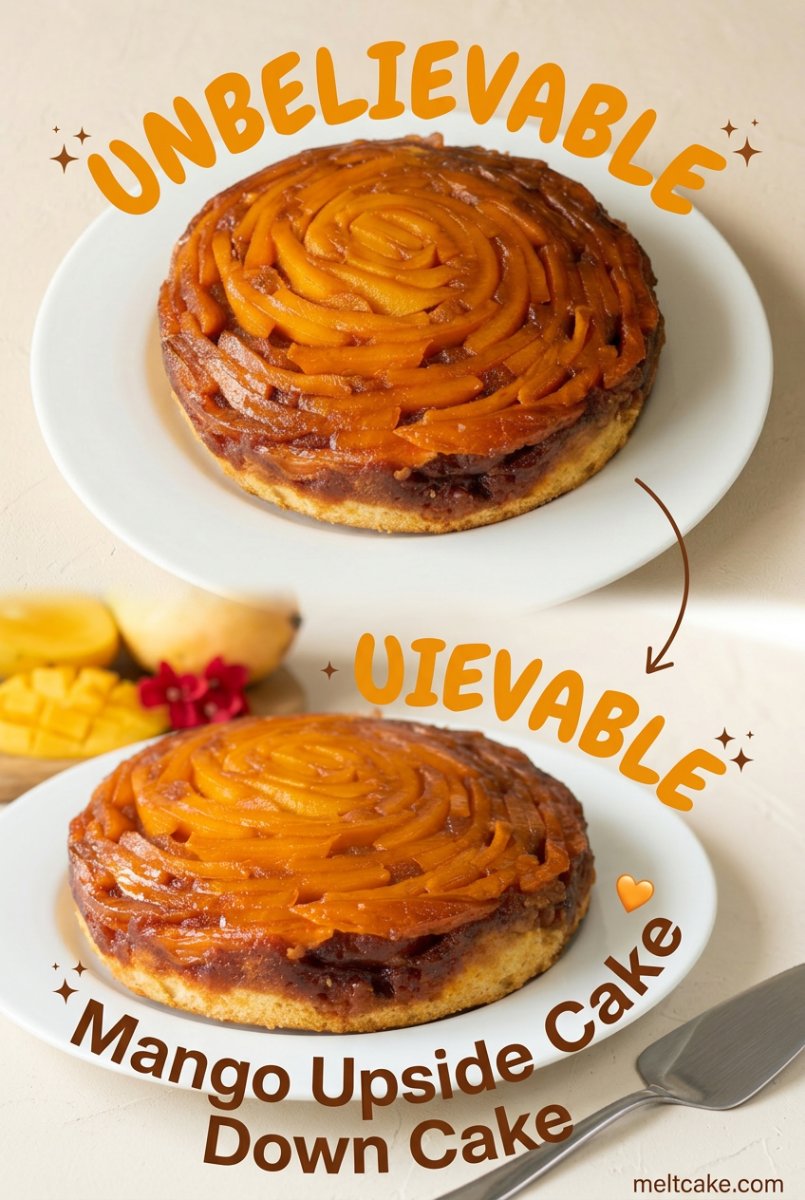
Mastering the chemistry of caramelization and emulsion gives you full control over the textures in your pastry kitchen. By weighing your ingredients and timing each stage precisely, you prevent the common pitfalls of soggy toppings and collapsed sponges. This cake proves that structural precision is what makes the melt possible.
If you enjoy working with tropical flavors and precise textures, you should also try our classic mango mousse cake to master gelatin stabilization. Both recipes celebrate the unique properties of this seasonal fruit while teaching essential pastry mechanics. Bring these techniques to your next weekend baking session and watch your skills grow.
Share your baking progress with our community of ambitious home bakers. Find more technical tips on our social channels on Pinterest, Facebook, and TikTok.