My British pastry training taught me that stone fruit desserts require structural integrity. This Peaches and Cream Layer Cake balances a stable sponge with the sensuality of melting cream.

We utilize a methodical approach to ensure the crumb remains tender while supporting three tiers of macerated fruit. This recipe is a technical triumph of seasonal texture and stability.
Structure Meets Texture
This Peaches and Cream Layer Cake is a masterclass in balancing moisture and density. Unlike standard sponges that collapse under fresh fruit, this recipe creates a resilient crumb that absorbs the peach syrup without losing its form. The addition of vanilla bean paste provides a sophisticated aromatic profile that complements the natural acidity of the peaches.
You will appreciate how the stabilized whipped cream maintains its height between the layers. This is not just a dessert; it is a structural achievement where the crispness of the peach skin meets the velvet-soft interior of the cake. Achieving this specific mouthfeel requires precision in temperature and timing, making the final result a true baker’s victory.
Print
Peaches and Cream Layer Cake
- Total Time: 1 hour 53 mins
- Yield: 1 cake (8-10 servings)
Description
This refined layer cake features a delicate, structured sponge layered with fresh, macerated peaches and velvety, stabilized whipped cream. It is a technical masterpiece designed to showcase seasonal fruit while maintaining a clean, professional aesthetic.
Ingredients
- 2 1/4 cups cake flour
- 1/2 cup + 2 tbsp unsalted butter, softened
- 1 cup buttermilk
- 3 cups fresh peaches, sliced
- 1/4 cup + 2 tbsp granulated sugar (for maceration)
- 3 eggs, room temperature
- Vanilla bean paste
- Salt, baking powder, and baking soda
- Heavy cream
- Powdered sugar
Instructions
- Preheat your oven to 350°F (175°C) and prepare three 6-inch cake pans.
- Cream the butter and granulated sugar until pale and voluminous.
- Incorporate the eggs one at a time followed by the vanilla bean paste.
- Gradually mix in the buttermilk.
- Fold in the sifted dry ingredients until just combined.
- Divide batter into pans and bake for 35 to 38 minutes; cool completely.
- Combine sliced peaches with sugar and let sit for 30 minutes.
- Whip heavy cream with powdered sugar and vanilla bean paste until stiff.
- Level the cakes and assemble by layering the sponge, peach syrup, fruit, and whipped cream.
Notes
For the best results, ensure all dairy and egg components are at room temperature before you begin mixing to prevent the batter from breaking. If you find the whipped cream is becoming too soft during assembly, simply chill your bowl in the refrigerator for a few minutes before continuing. Always slice the finished cake with a warm, clean knife to maintain perfectly sharp layers.
- Prep Time: 45 mins
- Cook Time: 38 mins
- Category: Dessert
- Method: Baking
- Cuisine: Modern British
The Technical Foundation
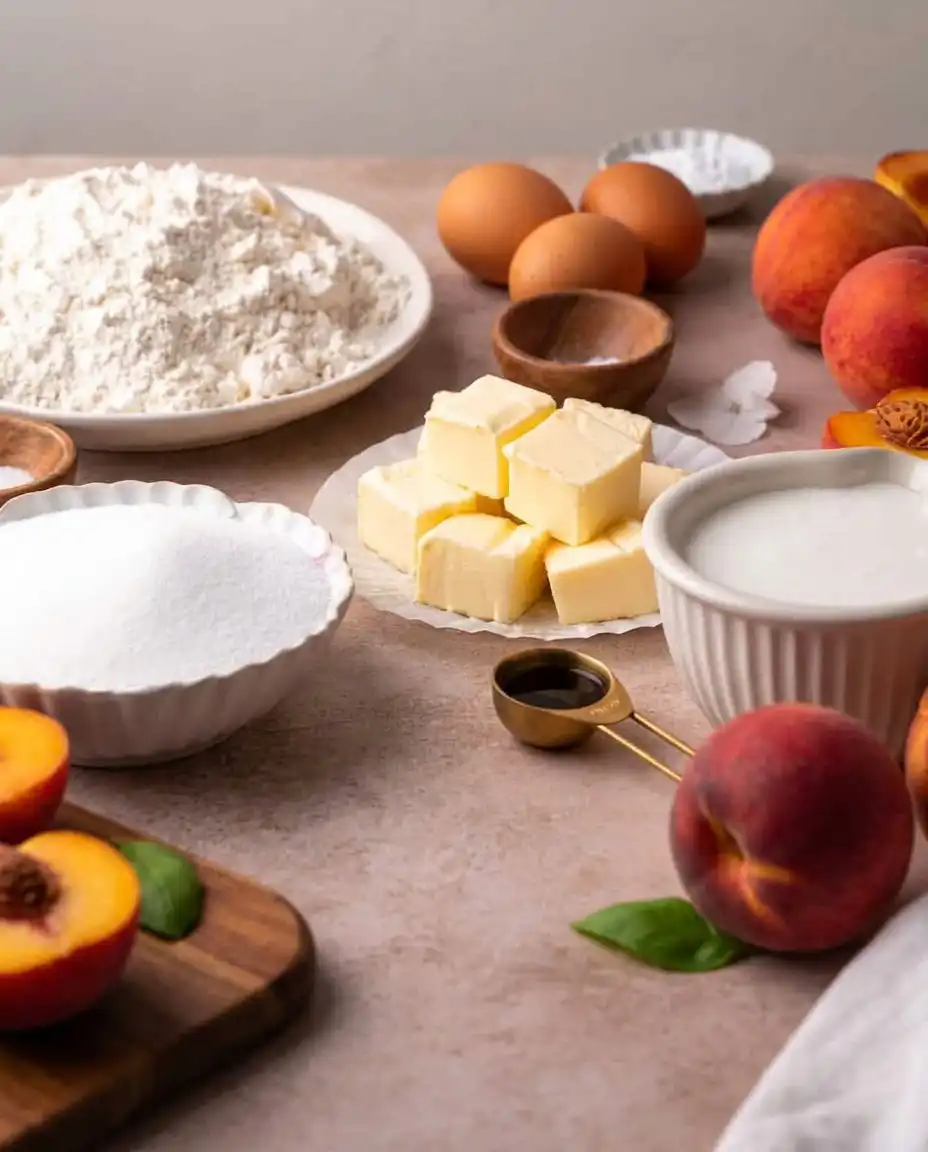
Every ingredient in this Peaches and Cream Layer Cake serves a specific purpose for structural success. We prioritize quality to ensure the texture remains consistent throughout the baking and assembly process.
- Cake Flour (2 1/4 cups): We choose cake flour specifically for its lower protein content, which results in a finer, more delicate crumb structure than all-purpose flour.
- Unsalted Butter (1/2 cup + 2 tbsp): Softened to exactly 65°F (18°C) to ensure a stable emulsion during the creaming stage.
- Buttermilk (1 cup): The acidity works with the leavening agents to tenderize the gluten, producing a sponge that melts on the tongue.
- Fresh Peaches (3 cups): Select fruit that is ripe but firm. The sugar will macerate them, creating a natural syrup that seasons the sponge.
- Vanilla Bean Paste: This provides both visual luxury with those iconic black specks and a deep, concentrated flavor that liquid extracts cannot match.
- Eggs (3, room temperature): Essential for a stable protein structure. Cold eggs can break your butter emulsion, leading to a greasy or dense finish.
The Method
Step 1: Prepare the Oven and Tins
Preheat your oven to 350°F (175°C). Prepare three 6-inch cake pans with grease and parchment circles. Precision in pan preparation prevents the delicate sponge from tearing during extraction.
Step 2: Cream the Butter and Sugar
In a large bowl, cream the butter and granulated sugar together. Use a medium-high speed until the mixture is pale and voluminous. This mechanical aeration is the first step in creating a light, structured crumb.
How do you assemble a peaches and cream layer cake?
Start with a level cake base. Drizzle 2-3 tablespoons of peach syrup to hydrate the crumb, then arrange sliced peaches in a single layer. Spread stabilized whipped cream over the fruit, ensuring it reaches the edges to provide a ‘seal’ for the next layer of sponge.
Can you use canned peaches instead of fresh?
Yes, but you must drain them thoroughly and pat them dry. Fresh peaches provide a superior structural crunch, whereas canned peaches will be softer. If using canned, skip the maceration step as they are already sweetened.
Should a Peaches and Cream Cake be refrigerated?
Absolutely. Because this cake uses fresh whipped cream and macerated fruit, it must be stored in the refrigerator to maintain food safety and structural integrity. Take it out 20 minutes before serving for the best texture.
How do you make the cake layers moist?
The key is the buttermilk and the macerated peach syrup. By drizzling the syrup directly onto the sponge during assembly, you infuse the cake with moisture and flavor without compromising its ability to stand tall.
Step 3: Emulsify the Proteins
Add the room-temperature eggs one at a time, followed by the vanilla bean paste. Ensure each egg is fully incorporated before adding the next. This creates a stable emulsion that will hold the air bubbles during the bake.
Step 4: Integrate the Buttermilk
Slowly pour in the buttermilk while mixing on a low speed. If the mixture looks slightly curdled, do not worry; the addition of the dry ingredients will bring the batter back into a smooth suspension.
Step 5: Sift and Fold Dry Ingredients
In a separate bowl, sift the cake flour, salt, baking powder, and baking soda. Sifting is non-negotiable for a uniform texture. Add the dry components to the wet in three stages, mixing just until no streaks of flour remain. Over-mixing at this stage will develop the gluten and result in a tough cake.
Step 6: Bake for Structural Success
Divide the batter evenly—ideally using a kitchen scale for precision. Bake for 35 to 38 minutes. A toothpick should come out clean, and the center should spring back slightly when touched. Let the cakes rest in the pans for five minutes before transferring to a wire rack.
Step 7: Macerate the Peach Slices
Combine the sliced peaches with 1/4 cup plus 2 tablespoons of sugar. Let them sit for 30 minutes. This process draws out the juices, creating a syrup that we will use to hydrate the cake layers during assembly.
Step 8: Stabilize the Whipped Cream
Whip the heavy cream until it reaches stiff peaks. Sift in the powdered sugar and fold in the vanilla bean paste. The sugar acts as a stabilizer, ensuring the cream does not weep once the cake is stacked.
Step 9: Assemble the Tiers
Trim the domed tops off your cooled cakes for a level surface. Drizzle peach syrup over the first layer, followed by a layer of peaches and whipped cream. Repeat this for the second and third layers, finishing with a final arrangement of peaches on top.
Precision Secrets
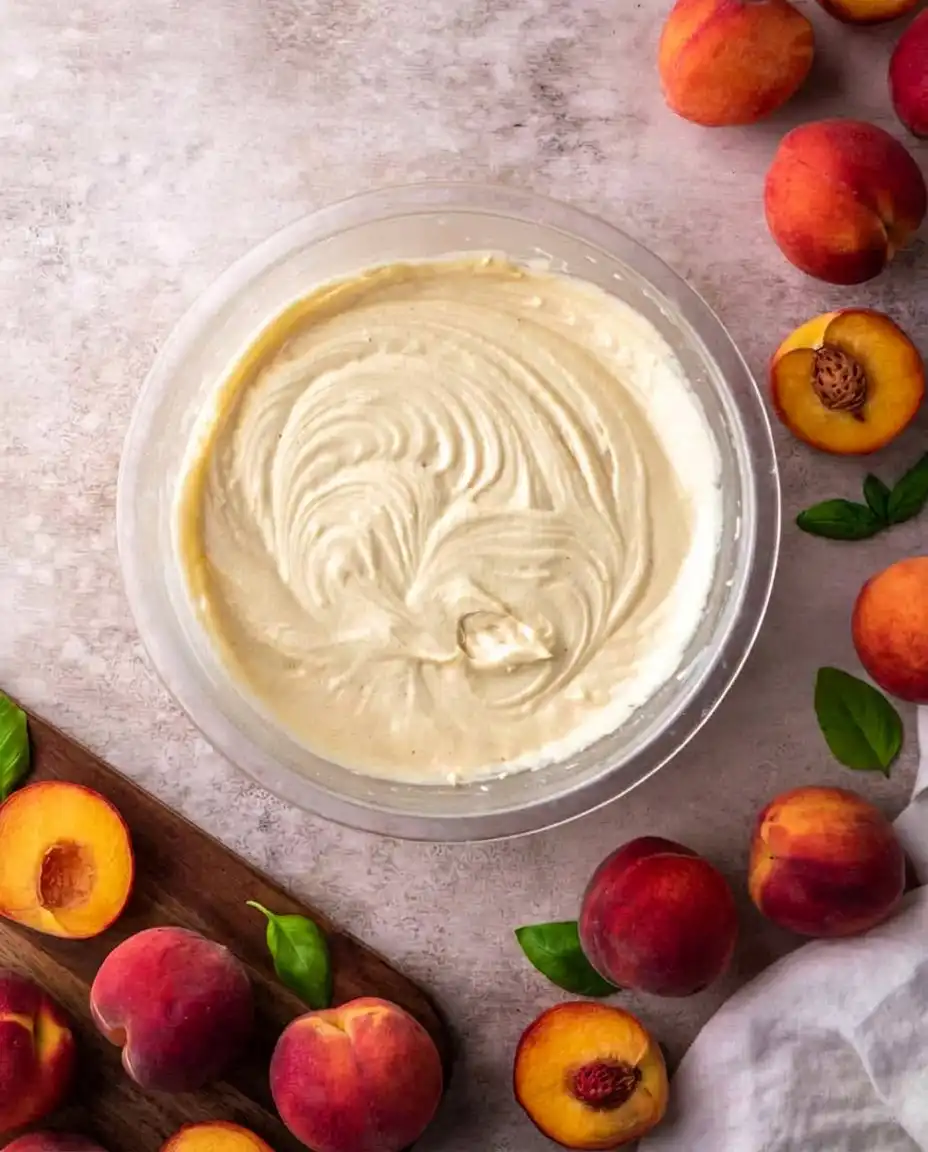
Temperature is your most critical tool when making a Peaches and Cream Layer Cake. Ensure your buttermilk and eggs are at room temperature to maintain a smooth batter consistency. If your cream begins to lose its structure, place your mixing bowl in the freezer for ten minutes before finishing the whip. For more details on handling stone fruit moisture, refer to our guide on the peach cake method. Using a scale to weigh your batter ensures even layers, which is vital for a professional-looking finish. For further inspiration on peach-based structures, you might find this resource helpful.
Technical Variations
While this recipe focuses on fresh fruit, you can adjust the structural elements for different seasons. If peaches are out of season, a nectarine or apricot swap works perfectly without changing the maceration timing. For an added layer of complexity, you can substitute a portion of the buttermilk with sour cream to create a denser, more pound-cake-like texture, similar to our peach cobbler pound cake. You may also consider adding a thin layer of peach jam between the fruit and the cream to reinforce the fruit flavor without adding extra liquid.
Presentation Precision
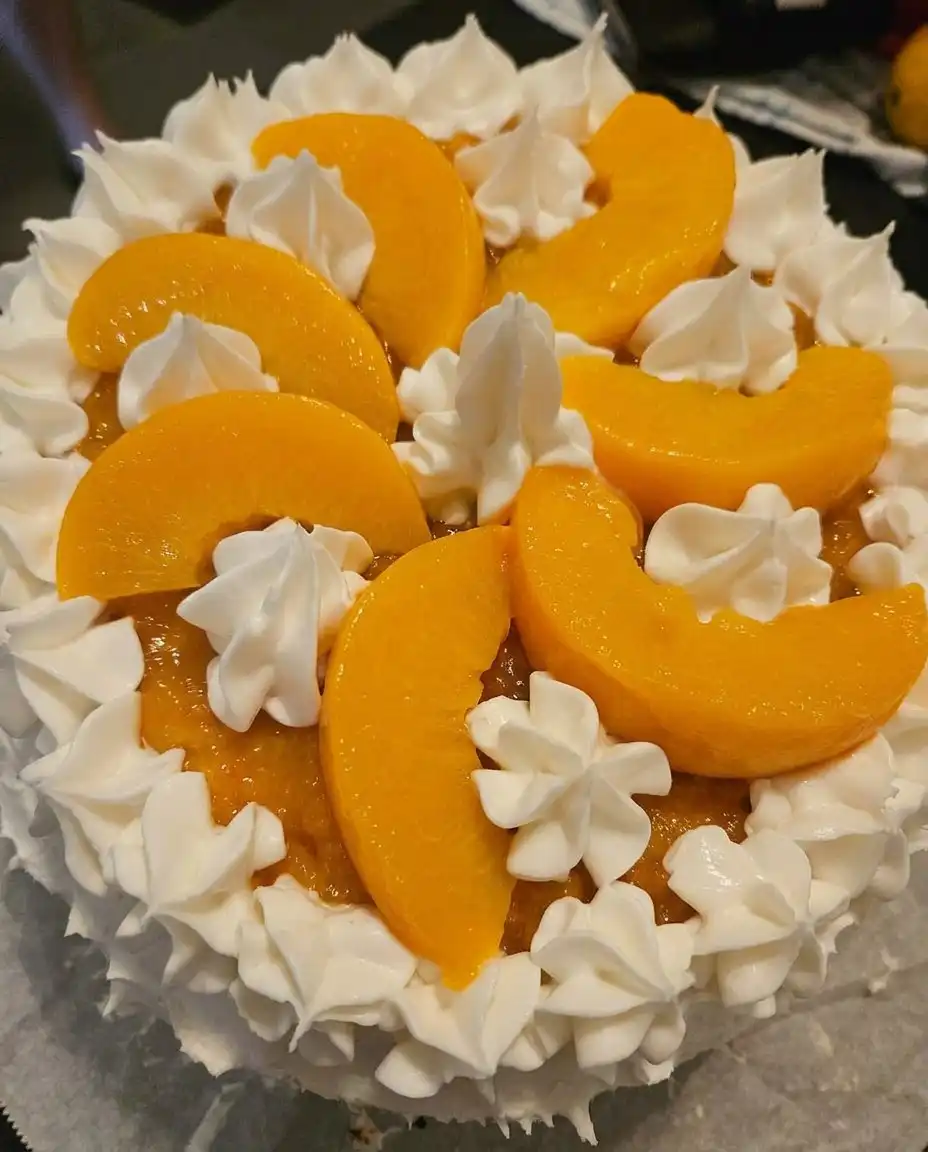
To serve this Peaches and Cream Layer Cake, use a sharp, thin-bladed knife dipped in hot water. Wipe the blade clean between every slice to ensure the cream layers remain distinct and beautiful. This cake pairs excellently with a light Earl Grey tea, which complements the vanilla bean notes. If you are looking for a different cultural take on this flavor profile, try our russian peach cake recipe for your next gathering. Serve each slice chilled to preserve the ‘melt-on-contact’ experience of the whipped cream.
Master the Craft
Creating a successful Peaches and Cream Layer Cake is a testament to a baker’s precision and patience. By focusing on the structural integrity of the sponge and the stability of the cream, you create a dessert that is as beautiful as it is delicious. For another variation on fruit-forward baking, our peach upside down cake recipe offers a fantastic technical challenge. Share your baking triumphs with us on social media and continue honing your pastry skills.
Follow us for more precision baking: Pinterest, Instagram, Facebook.