A controlled stovetop environment allows this preparation to achieve a precise structural set, where a golden caramel shell protects the creamy interior of the fruit and crumb.

This method for a No Bake Caramel Peach Upside Down Cake relies on thermal conduction rather than convection to create a remarkably moist crumb. By maintaining a sealed environment in a heavy-bottomed pan, we ensure the steam facilitates a uniform rise without the risk of an oven’s uneven hotspots. Precision in the fat emulsion phase is the technical pivot point that prevents a dense or rubbery finish, resulting in a texture that balances the weight of the stone fruit with the lightness of the aerated batter.
What Makes the Texture Right for No Bake Caramel Peach Upside Down Cake
Prep: 20 min · Serves: 8 · Difficulty: Medium
- Uniform crumb structure from steam-assisted stovetop cooking
- Deep amber caramelization achieved with specific thermal control
- Moist interior protected by a crisp fruit shell
- Balanced sweetness using precisely weighed pastry components
- Consistent results through technical temperature and timing management
Structure is what makes the melt possible in this precise stovetop preparation. This recipe utilizes the principles of a caramel cake to create a sophisticated dessert without traditional oven heat.
Get The Full Cake Recipe
Print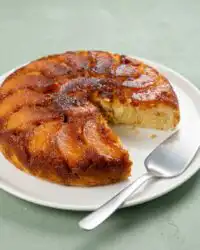
No Bake Caramel Peach Upside Down Cake
- Total Time: 50 mins
- Yield: 8 servings
Description
This stovetop cake uses a controlled steaming method to create a perfectly moist crumb and a rich, golden caramel shell. By carefully managing heat and emulsion, this dessert achieves oven-quality results using only a heavy-bottomed pan.
Ingredients
- Fresh peaches, peeled and sliced into eight segments
- 150g granulated sugar (plus extra for the caramel base)
- Eggs
- Melted unsalted butter
- Neutral oil
- Whole milk
- Vanilla powder
- Baking powder
- Flour
Instructions
- Prepare fruit base. Peel and slice the peaches into eight uniform segments, ensuring they are at room temperature to avoid seizing the sugar.
- Create ribbon stage. Whisk the eggs and 150 grams of sugar together until the mixture is thick, pale, and ribbons off the whisk.
- Incorporate fats. Slowly add the melted butter, oil, and milk to the egg mixture while whisking constantly to maintain a stable emulsion.
- Fold dry ingredients. Sift in the flour, baking powder, and vanilla powder, folding gently with a spatula until just combined to avoid overworking the gluten.
- Cook on stovetop. Caramelize sugar in a non-stick pan, whisk in melted butter, arrange peaches, top with batter, and cook covered on low heat for 25 to 30 minutes.
- Test and invert. Verify doneness with a toothpick, allow the cake to rest for five minutes, then invert onto a plate while still warm.
Notes
- Use a digital kitchen scale for ingredient ratios to guarantee the batter sets correctly on the stovetop.
- Ensure the pan lid is tightly sealed to maintain the steam environment essential for the cake to rise.
- Do not lift the lid during the first 20 minutes of cooking to prevent the loss of critical trapped steam.
- Select a heavy-bottomed pan to prevent localized hot spots that can cause the caramel to burn prematurely.
- Rest the cake for exactly five minutes after removing from heat to allow the caramel to stabilize before flipping.
- Prep Time: 20 mins
- Cook Time: 30 mins
- Category: Dessert
- Method: Stovetop
- Cuisine: Modern
The Working Components

Success in this recipe depends on the interaction between the fruit acids and the leavening agents, and the stabilization of the fat emulsion. Every gram is calculated to ensure the batter supports the weight of the peaches without collapsing under the weight of the caramel sauce.
- Fresh Peaches: These provide the structural skin and foundational acidity to balance the sugar.
- Granulated Sugar: Essential for both the caramelization process and the structural integrity of the cake crumb.
- Unsalted Butter: High-quality fat that creates a silky emulsion when combined with the milk and eggs.
- Neutral Oil: Provides a tender mouthfeel that remains soft even at lower service temperatures.
- Whole Milk: Supplies the liquid necessary for the gelatinisation of the flour starches.
- Vanilla Powder: An aromatic component that survives the long, low heat of the stovetop bake.
- Baking Powder: The chemical leaven that creates the necessary aeration in an enclosed pan environment.
| Ingredient | Why It Matters |
|---|---|
| Peaches | Provides a set crust that protects the soft crumb |
| Butter and Oil | Creates a specific fat ratio for optimal tenderness |
| Whole Milk | Facilitates the emulsion and hydration of flour |
| Sugar | Reaches the amber stage for deep flavor profile |
| Flour | Provides the gluten structure required for the invert |
The Tested Procedure
Step 1: Prepare the Structural Fruit Base
Peel the peaches carefully using a sharp paring knife to ensure a smooth surface for the caramel to adhere to later. Slice the fruit into eight uniform segments, as consistent thickness is required for even heat distribution during the cooking process. Set these segments aside on a clean bench so they reach room temperature, which prevents the sugar from seizing when they are added to the pan.
Step 2: Establish the Ribbon Stage Emulsion
In a large bowl, combine the eggs and 150 grams of sugar, whisking vigorously until you reach the ribbon stage. The ribbon stage is a technical term describing a batter that is thick and pale, leaving a trail like a ribbon on the surface when the whisk is lifted. This aeration is critical for a stovetop cake, providing the initial structure that the baking powder will later expand.
Step 3: Incorporate the Liquid Fats
Introduce the melted butter, oil, and milk to the egg mixture, whisking constantly to maintain the emulsion you have established. Use a slow, steady stream to ensure the fats are fully integrated into the aqueous environment of the eggs and milk. A successful emulsion here prevents the cake from being greasy and ensures a uniform crumb that does not separate during the bake.
Step 4: Integrate the Dry Structural Elements
Sift the flour, baking powder, and vanilla powder into the bowl to remove any clumps that could create air pockets or dry spots. Use a large metal spoon or a silicone spatula to fold the dry ingredients into the wet mixture, stopping the moment no streaks of white remain. Over-mixing at this stage will develop too much gluten, leading to a tough, bready texture rather than a delicate cake crumb.
Step 5: Cooking the No Bake Caramel Peach Upside Down Cake
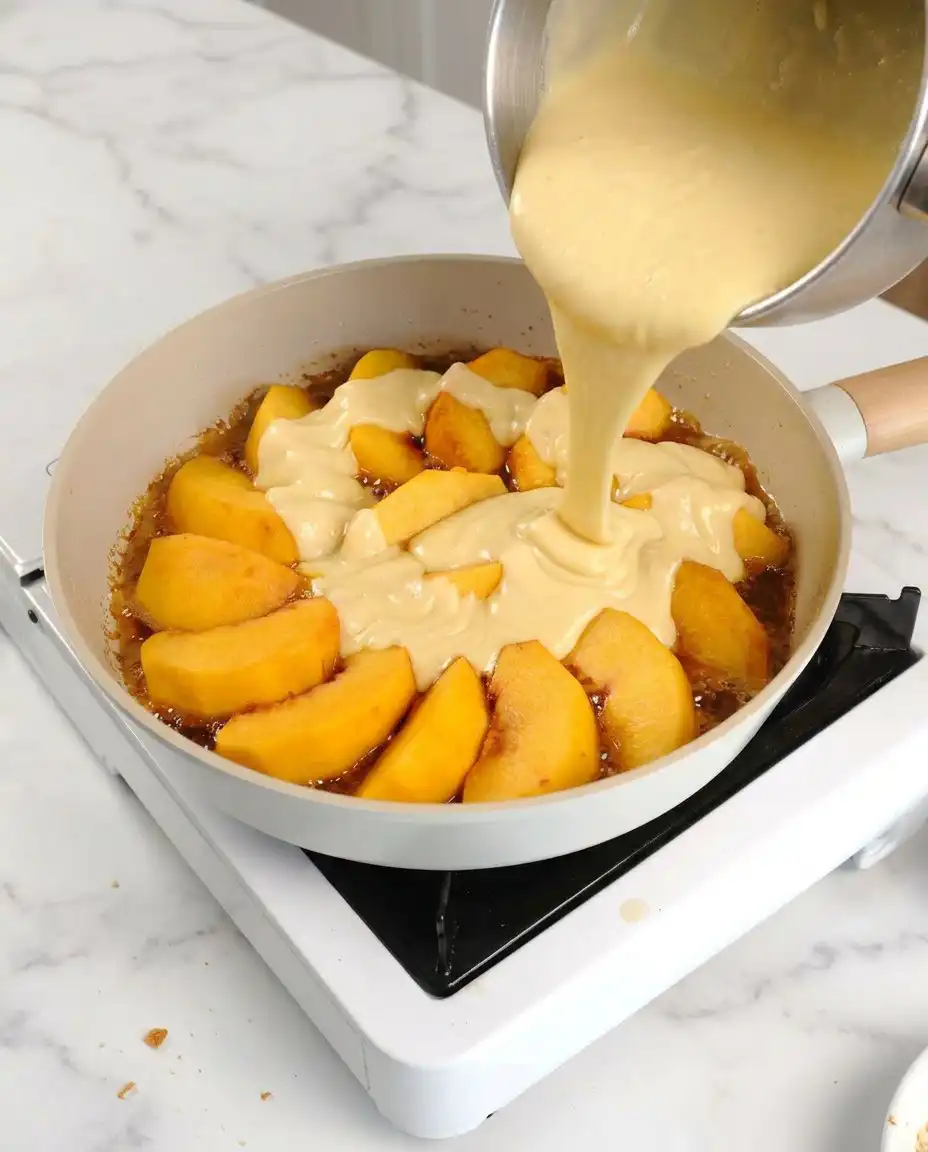
Place the sugar for the caramel in a high-quality non-stick pan over medium heat and monitor it until it reaches a deep amber color. Add the melted butter, whisking until the mixture is smooth and glossy, then arrange the peach slices in a circular pattern. Pour the batter over the fruit, cover with a tight-fitting lid, and reduce the heat to low for 25 to 30 minutes. Do not open the lid for the first 20 minutes, as the trapped steam is necessary for the cake to rise properly in the pan.
Step 6: The Toothpick Test and Inversion
Insert a wooden toothpick into the center of the cake; if it comes out clean with no wet batter, the internal temperature has reached the necessary set point. Remove the pan from the heat and allow the cake to rest for five minutes, which lets the structure firm up slightly before the invert. Place a large plate over the pan and quickly but firmly flip it over, allowing the peaches and caramel to sit atop the golden cake.
Pastry Bench Tips

Using a digital scale is non-negotiable for this recipe, as the ratio of liquid to dry ingredients must be exact to ensure the cake sets on the stovetop. Small deviations in volume measurements can result in a batter that is too heavy for the low-heat environment.
If the caramel sugar begins to crystallize or turn grainy, it is likely due to agitation or impurities on the pan surface. To fix this, add a tiny splash of water or a drop of lemon juice to dissolve the crystals and allow the sugar to re-melt into a smooth liquid.
Select a pan with a heavy bottom, such as cast iron or thick-walled aluminum, to ensure even heat distribution across the entire surface. Thin pans create localized hot spots that will burn the sugar before the cake crumb has a chance to set properly.
For those interested in technical fruit preparations, you may find that understanding how to bake upside down cakes with fresh fruit provides additional insight into the thermal needs of different stone fruits. This knowledge helps when adjusting the cooking time for firmer or riper peaches.
Maintain a strictly low heat setting once the batter is added; thirty seconds decides everything when it comes to the transition from a perfect amber caramel to a bitter, burnt sugar. If your stove runs hot, consider using a heat diffuser to protect the bottom of the cake during the long cooking window.
Always ensure the lid of your pan creates a proper seal to trap the steam inside the vessel. If your lid is loose, wrap a clean kitchen towel around it to prevent the moisture from escaping, which is essential for the gelatinisation of the starch and the rise of the crumb.
This method for a peach upside down cake recipe relies on the specific cooling time before inversion. If the cake is inverted too early, the caramel will run off the sides; if too late, the sugar will set and stick to the pan.
Frequently Asked Questions
Do I need to peel the peaches?
Yes, peeling the peaches is necessary to achieve the desired mouthfeel and structural cohesion in this recipe. The skin can become tough and leathery during the long stovetop cooking process, creating an unpleasant texture that separates from the caramel. Removing the skin allows the fruit to soften into the cake and bond perfectly with the sugar layer.
Can I use canned or frozen peaches?
Canned peaches can be used if they are thoroughly drained and patted dry to prevent excess moisture from diluting the caramel. Frozen peaches are more difficult to manage because they release significant amounts of water as they thaw, which can prevent the cake batter from setting. If using frozen fruit, thaw them completely and drain all liquid before arranging them in the pan.
When do I invert the cake?
The inversion should occur exactly five minutes after the pan is removed from the heat. This short rest period allows the internal structure of the cake to stabilize while the caramel remains in a liquid state. If you wait too long, the sugar will cool and act as an adhesive, causing the fruit to stick to the bottom of the pan.
What should I do if peaches stick to the pan?
If the peaches stick, it is usually because the caramel was allowed to cool for too long before inversion or the pan lacked sufficient fat. To fix this, place the pan back on low heat for 60 seconds to re-melt the sugar, then attempt the inversion again. Ensure you are using a high-quality non-stick pan to minimize this risk in future attempts.
Does peach upside-down cake need to be refrigerated?
Because this cake contains fresh fruit and a significant amount of moisture, it should be stored in the refrigerator if not consumed within 24 hours. Cold temperatures will firm up the caramel and the fat in the cake, so it is best to bring individual slices to room temperature before serving. This ensures the intended melt-in-the-mouth texture is preserved.
Can I freeze this cake for later?
Freezing is not recommended for this specific recipe because the high moisture content of the peaches causes cellular breakdown when frozen. Upon thawing, the fruit can become mushy and the caramel may seep into the cake crumb, destroying the distinct layers. For the best structural experience, this cake should be eaten fresh within two days of preparation.
Considered Adjustments
While the peach provides the traditional structural skin, you can substitute other stone fruits like plums or apricots to alter the acidity profile. Ensure these fruits are sliced to the same thickness to maintain the precise 25-minute cooking window required for a proper set.
For a deeper flavor profile, you might consider making a peach cake base that incorporates brown sugar in the batter instead of granulated sugar. This adjustment increases the moisture content, so you may need to increase the flour by five grams to maintain the structural integrity during the inversion.
If you prefer a more complex spice profile, incorporate half a teaspoon of ground cardamom or ginger into the dry ingredients. These spices complement the caramelization of the sugar without interfering with the chemical reaction of the baking powder and the egg emulsion.
Finishing & Plating
Serve this cake while it is still slightly warm from the pan to ensure the caramel remains in its most viscous and flavorful state. The contrast between the warm, fruit-topped cake and a cold accompaniment creates a superior sensory experience. I recommend a dollop of unsweetened whipped cream or a high-quality vanilla bean ice cream to balance the intensity of the amber sugar.
For a formal presentation, use an offset palette knife to clean the edges of the cake after inverting it onto the plate. This ensures a sharp, professional silhouette that showcases the height of the crumb. If you find yourself enjoying the process of fruit-based desserts, a peach dump cake offers a different but equally rewarding structural study in textures.
Precision for the sake of mouthfeel is best observed when the cake is sliced with a sharp serrated knife, which prevents compressing the aerated crumb. Arrange each slice on a pre-warmed plate to maintain the temperature of the caramel as it is delivered to the table. A side of light Earl Grey tea provides a clean astringency that cuts through the richness of the butter and sugar.

What the Technique Gives You
Mastering the stovetop method for this cake provides a versatile skill that can be applied to many fruit-based desserts. By focusing on the ribbon stage of the eggs and the careful management of the sugar’s temperature, you produce a dessert that rivals any oven-baked counterpart. The structural skin of the caramelized peaches protects a crumb that remains exceptionally moist due to the enclosed steam environment of the pan.
Weigh it, time it, and trust it; the results speak for themselves when the cake is finally inverted. This preparation is a testament to the fact that precision in the pastry kitchen leads directly to a more refined eating experience. If you are interested in exploring more complex sugar work, consider trying a chocolate caramel toffee crunch cake for your next technical challenge.
Please share your results with me and the baking community. You can find more technical insights and updates on our social channels.