In my London pastry training, managing high-moisture produce within a loaf was the ultimate test. This recipe demonstrates how technical precision creates a resilient yet tender crumb structure.

A successful Carrot Apple Zucchini Bread requires a delicate balance of cellular structure and hydration. By using honey to lock in moisture and carefully prepared vegetables, we produce a loaf that remains fresh for days without losing its integrity. It is the perfect marriage of garden-fresh ingredients and British baking discipline.
Structure Meets Texture
Master the art of high-moisture quick breads with this technically superior method.
- 🥕 Beautiful crumb structure stays remarkably moist
- 🍏 Natural fruit sugars provide complex sweetness
- ⚖️ Perfect balance of density and lift
- 🏗️ Strong internal frame prevents mid-loaf collapse
- ⏱️ Simple method yields professional pastry results
Get The Full Cake Recipe
Print
Carrot Apple Zucchini Bread
- Total Time: 1 hour 15 mins
- Yield: 1 loaf
- Diet: Vegetarian
Description
This technical quick bread expertly balances fresh zucchini, carrots, and apples to create a moist, sturdy loaf. By mastering moisture control and structural integrity, you will achieve a professional-quality crumb that stays fresh for days.
Ingredients
- 2 cups all-purpose flour
- 1 cup sugar
- 1/2 cup honey
- 2 large eggs
- 1/2 cup vegetable oil
- 1 cup grated zucchini
- 1 cup grated carrots
- 1 cup finely chopped apples
- 1/2 cup chopped pecans
- 1 tsp baking soda
- 1 tsp baking powder
- 1 tsp cinnamon
- 1/2 tsp ground cloves
- 1/2 tsp ground nutmeg
- 1/2 tsp salt
Instructions
- Preheat your oven and grease a heavy-gauge loaf pan.
- In a large bowl, whisk together the flour, sugar, baking soda, baking powder, spices, and salt for at least 60 seconds.
- In a separate bowl, whisk the eggs until homogenous, then slowly stream in the oil and honey.
- Pour the liquid mixture into the dry ingredients and fold gently until just combined.
- Fold in the grated zucchini, carrots, apples, and pecans until evenly distributed.
- Transfer the batter to the prepared loaf pan and smooth the top.
- Bake until a skewer inserted into the center comes out clean, allowing the bread to cool for at least two hours before slicing.
Notes
Ensure that your zucchini is well-drained by squeezing out excess moisture with a clean kitchen towel to maintain the desired texture. Allowing the loaf to cool completely is essential, as the crumb structure continues to set as the temperature drops, preventing a compressed or gummy slice.
- Prep Time: 20 mins
- Cook Time: 55 mins
- Category: Quick Bread
- Method: Baking
- Cuisine: British-inspired
The Technical Foundation
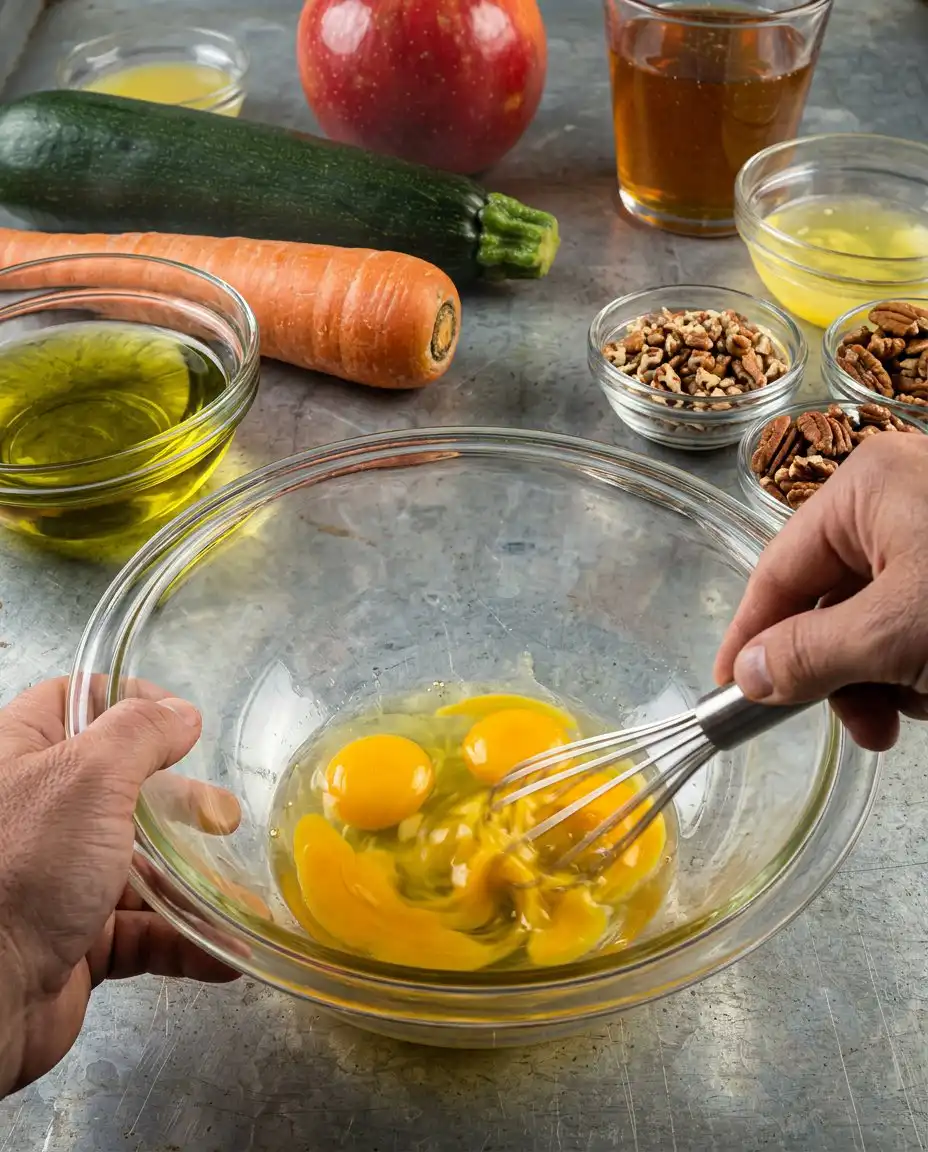
Every component in this Carrot Apple Zucchini Bread serves a specific functional purpose to maintain the structural integrity of the loaf. We are not just mixing ingredients; we are building a stable matrix that can support the weight of the fresh produce.
The Dry Components
I recommend a high-quality all-purpose flour with a protein content around 10-11%. This provides enough gluten for structure without making the bread tough. We use a double-leavening system of both baking soda and baking powder to manage the heavy additions. The spices—clove, cinnamon, and nutmeg—must be fresh to provide the aromatic depth that characterizes a classic British bake.
Liquid and Moisture Management
Eggs act as our primary binder and structural protein, while oil provides the necessary fat for a melt-in-your-mouth feel. Honey is the secret weapon here; as an invert sugar, it is hygroscopic, meaning it actively pulls moisture from the air to prevent the bread from drying out.
The Triple-Threat Produce
- Zucchini: Provides soft bulk and moisture; should be grated using a medium-hole box grater.
- Carrots: Offer structural fibers and natural color; use a fine grate for even distribution.
- Apples: The acidity helps tenderize the crumb while adding pockets of sweetness.
Frequently Asked Questions
Do I leave the skin on the zucchini, carrot, and apples?
I recommend leaving the skin on the zucchini for color and fiber, but peeling the carrots and apples. Carrot skin can sometimes carry a bitter, earthy taste, while apple skins can become tough and leathery during the long bake time required for a loaf.
How do I keep the bread from going soggy?
Sogginess is usually a result of excess moisture from the zucchini or under-baking. Ensure you squeeze out excess juice from the zucchini and always use a skewer to verify the center is fully set. Allow the bread to cool completely on a wire rack to prevent steam from softening the crust.
Should I squeeze the juice out of the apples and carrots?
No, I advise against squeezing the carrots and apples. The zucchini holds the most volatile water, whereas the carrots and apples release their moisture more slowly, which is necessary for the loaf’s internal hydration.
Can I freeze the loaves?
Yes, this loaf freezes exceptionally well due to the honey and oil content. Wrap the cooled bread tightly in plastic wrap followed by a layer of foil. It will maintain its quality for up to three months.
The Method
Step 1: Precision Sifting and Blending
Whisk together the flour, salt, baking soda, baking powder, sugar, and spices in a large bowl. I insist on whisking for at least 60 seconds to guarantee that the leavening agents are perfectly distributed. Any clumps of baking soda will result in an uneven rise and a metallic aftertaste.
Step 2: Emulsifying the Liquids
In a separate vessel, beat the eggs until the yolks and whites are completely homogenous. Slowly stream in the oil while whisking to create a stable emulsion. Stir in the honey and any liquid flavorings. A stable emulsion at this stage results in a more uniform crumb later.
Step 3: Combining the Phases
Create a well in the center of your dry ingredients and pour in the liquid mixture. Use a large spatula to fold the ingredients together until just combined. We want to avoid over-mixing, which would over-develop the gluten and lead to a rubbery texture. Stop when no streaks of dry flour remain.
Step 4: Incorporating the Produce
Fold in the grated zucchini, carrots, and apples along with the pecans. The moisture from the produce will immediately begin to interact with the flour. Work quickly but gently. The goal is a uniform distribution of colors and textures throughout the batter.
Step 5: Preparing the Vessel
Transfer the batter into a greased loaf pan. I recommend using a heavy-gauge aluminum pan for even heat conduction. Smooth the top with a spatula to ensure a level rise during the baking process.
Step 6: The Bake and Thermal Test
Bake in the center of the oven until the internal structure has set. The bread is finished when a wooden skewer inserted into the center comes out clean of wet batter. Do not rely solely on time; visual cues and internal temperature are your best guides for success.
Precision Secrets
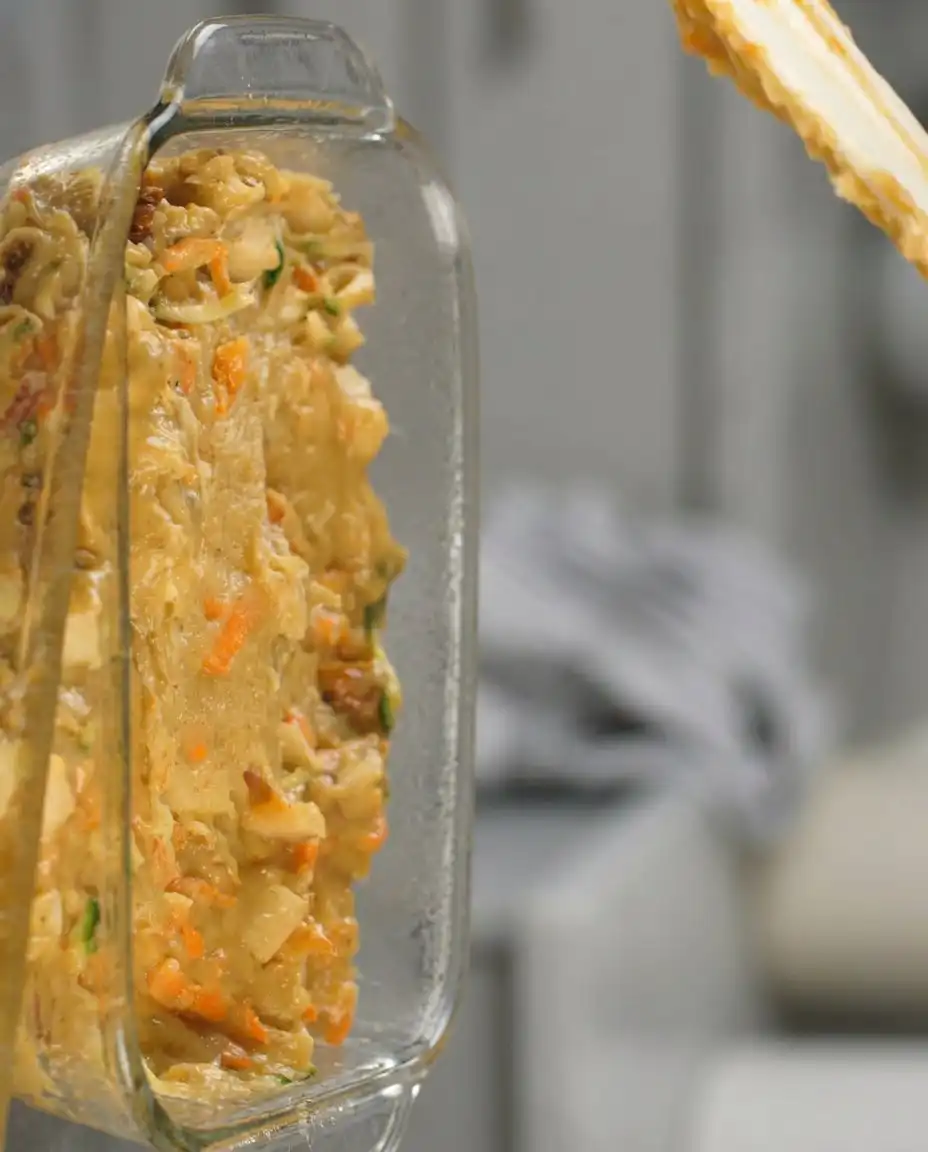
To achieve the perfect texture, you must control the water content of your produce. If your zucchini is particularly watery after grating, I suggest a light squeeze with a kitchen towel to remove excess liquid. This prevents the loaf from becoming soggy or developing a gummy bottom layer. For a deeper flavor profile, toast your pecans at 350°F (177°C) for six minutes before adding them to the batter. This releases the oils and creates a more robust crunch. If you find the top browning too quickly, tent the pan loosely with foil. For more insight into vegetable-based bakes, see my guide on a carrot-cake-recipe for advanced crumb techniques.
Technical Tweaks
For those seeking a lighter profile, you can substitute half of the oil with unsweetened applesauce, though this will slightly alter the shelf-life stability. If you prefer a more decadent finish, adding 100g of dark chocolate chips creates a rich contrast against the spices. You can also bake this batter in muffin tins for individual servings; just reduce the baking time by half. For another seasonal variation with similar moisture management, try our apple-spice-cake which focuses on spice infusion.
Presentation Precision

Allow the bread to cool for at least two hours before slicing. This wait time is critical as the structure continues to set as it cools; cutting too early will cause the crumb to tear and compress. Use a long, serrated bread knife and a gentle sawing motion to achieve clean, professional slices. This bread is excellent on its own, but a thin layer of salted butter or a smear of cream cheese adds a wonderful fatty contrast to the spices. For those interested in more nutritious options, look at our healthy-cake selection for pairing ideas.
The Technical Truth
Mastering this Carrot Apple Zucchini Bread is a milestone for any baker looking to understand the interplay between hydration and structure. The result is a loaf that stands tall, tastes exquisite, and showcases the beauty of garden produce. If you enjoyed this methodical approach to fruit-based bakes, you might also like our cake-with-fruit collection. Please share your baking triumphs with me on Pinterest, Instagram, or Facebook.