Gelatinisation occurs when starch granules absorb liquid and swell under heat, providing the necessary stability for the thick custard core of this Two-Layer Boston Cream Cake.

Achieving the perfect balance in a Two-Layer Boston Cream Cake requires a specific understanding of structural integrity versus mouthfeel. The sponge must be resilient enough to support the weight of the pastry cream without becoming compressed or dry. This version utilizes a classic butter cake base that maintains its crumb even after the custard has set. The result is a dessert where the layers remain distinct yet harmonize perfectly upon the first bite.
The Case for This Two-Layer Boston Cream Cake Method
Prep: 30 min · Serves: 12 · Difficulty: Medium
- Rich pastry cream provides a velvety mouthfeel.
- Sturdy sponge layers support the heavy filling.
- Glossy chocolate ganache creates a professional finish.
- Balanced sweetness highlights the high-quality vanilla bean.
Structure is what makes the melt possible.
Technicians of the pastry bench understand that a classic vanilla bean layer cake base provides the necessary foundation for a Two-Layer Boston Cream Cake. The crumb density is calculated to absorb a minimal amount of moisture from the filling without losing its structural skin. This prevents the common failure mode where the cake becomes an indistinguishable mass of softened starch. Precision in the cooling phase ensures that the chocolate remains glossy rather than dulling through poor tempering or improper storage temperature.
Get The Full Cake Recipe
Print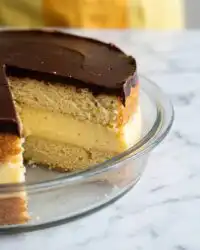
Two-Layer Boston Cream Cake
- Total Time: 2 hours
- Yield: 12 servings
- Diet: Vegetarian
Description
This elevated Boston Cream Cake features a stable, airy butter sponge layered with rich, vanilla-infused pastry cream. Finished with a glossy milk chocolate ganache, it provides a perfect harmony of velvety texture and professional, classic flavor.
Ingredients
- 2 rounds of Old Fashioned Butter Cake
- 1 cup granulated sugar
- 1/4 cup cornstarch
- 1/4 teaspoon salt
- 4 large egg yolks
- 2 cups half and half
- 4 tablespoons unsalted butter
- 1 teaspoon pure vanilla extract
- 1 cup milk chocolate chips
- 1/2 cup heavy cream
Instructions
- Prepare the cake. Ensure both butter cake rounds are completely cooled for at least one hour before wrapping them in plastic to set the structure.
- Combine dry ingredients. Whisk the sugar, cornstarch, and salt in a small bowl until perfectly combined to avoid any clumps.
- Emulsify egg yolks. Beat the egg yolks into the dry mix until the color lightens and the mixture forms a thick, smooth paste.
- Heat the dairy. Place half and half and butter in a heavy-bottomed saucepan over medium-high heat until the butter melts and the mixture reaches a gentle simmer.
- Temper the eggs. Gradually whisk a small stream of the hot dairy into the egg paste, then return the entire mixture back to the saucepan.
- Gelatinize the custard. Bring the mixture to a boil while whisking constantly for 60 to 120 seconds until it thickens significantly.
- Cool the cream. Remove from heat, stir in vanilla, and chill in a shallow bowl with plastic wrap pressed directly against the surface.
- Prepare for assembly. Whisk the chilled custard vigorously to achieve a smooth, spreadable consistency that holds its shape.
- Establish the base. Place one cake round on a plate and spread half the custard evenly, leaving a one-centimeter border at the edge.
- Assemble the layers. Add the second cake layer, spread the remaining custard, top with the final cake, and chill for 30 minutes to bond.
- Create the ganache. Heat milk chocolate chips and heavy cream in short increments, stirring until smooth and glossy.
- Glaze the cake. Pour the slightly warm ganache over the center, allowing it to drip naturally down the sides before serving.
Notes
- Ensure the custard reaches a full boil to properly deactivate enzymes that could cause the cream to weep or lose structure.
- Use a level or serrated knife to ensure your cake layers are perfectly flat to prevent the filling from sliding during assembly.
- Always measure ingredients by weight rather than volume to maintain the delicate structural balance of the sponge and custard.
- Whisk the chilled pastry cream thoroughly before spreading to transform the firm gel back into a smooth, luxurious filling.
- Allow the finished cake to rest briefly at room temperature before slicing to ensure the butter in the sponge is not overly cold.
- Prep Time: 30 mins
- Cook Time: 20 mins
- Category: Dessert
- Method: Baking and Stovetop
- Cuisine: American
Weighed & Ready
Successful pastry relies on the interaction between protein structures and fats. In this Two-Layer Boston Cream Cake, the high fat content of the half and half provides a luxurious coat to the tongue, while the cornstarch creates a matrix that holds the custard firm against the weight of the sponge. Quality vanilla and butter are non-negotiable for achieving a professional flavor profile.
- Old Fashioned Butter Cake: This provides the structural sponge necessary to hold the weight of the custard.
- Cornstarch: Acts as the primary thickening agent that allows the custard to hold a clean edge when sliced.
- Egg Yolks: These provide lecithin, a natural emulsifier that binds the water and fats into a smooth filling.
- Half and Half: Increases the fat percentage for a richer mouthfeel than standard whole milk.
- Milk Chocolate Chips: Chosen for their specific sugar-to-fat ratio that ensures a pourable, glossy finish.
| Ingredient | Why It Matters |
|---|---|
| Cornstarch | Provides structural set for the custard. |
| Egg Yolks | Emulsifies the filling for a smooth texture. |
| Half and Half | Adds fat for a rich, velvety mouthfeel. |
| Milk Chocolate | Forms a glossy, pourable ganache coating |
The Tested Procedure
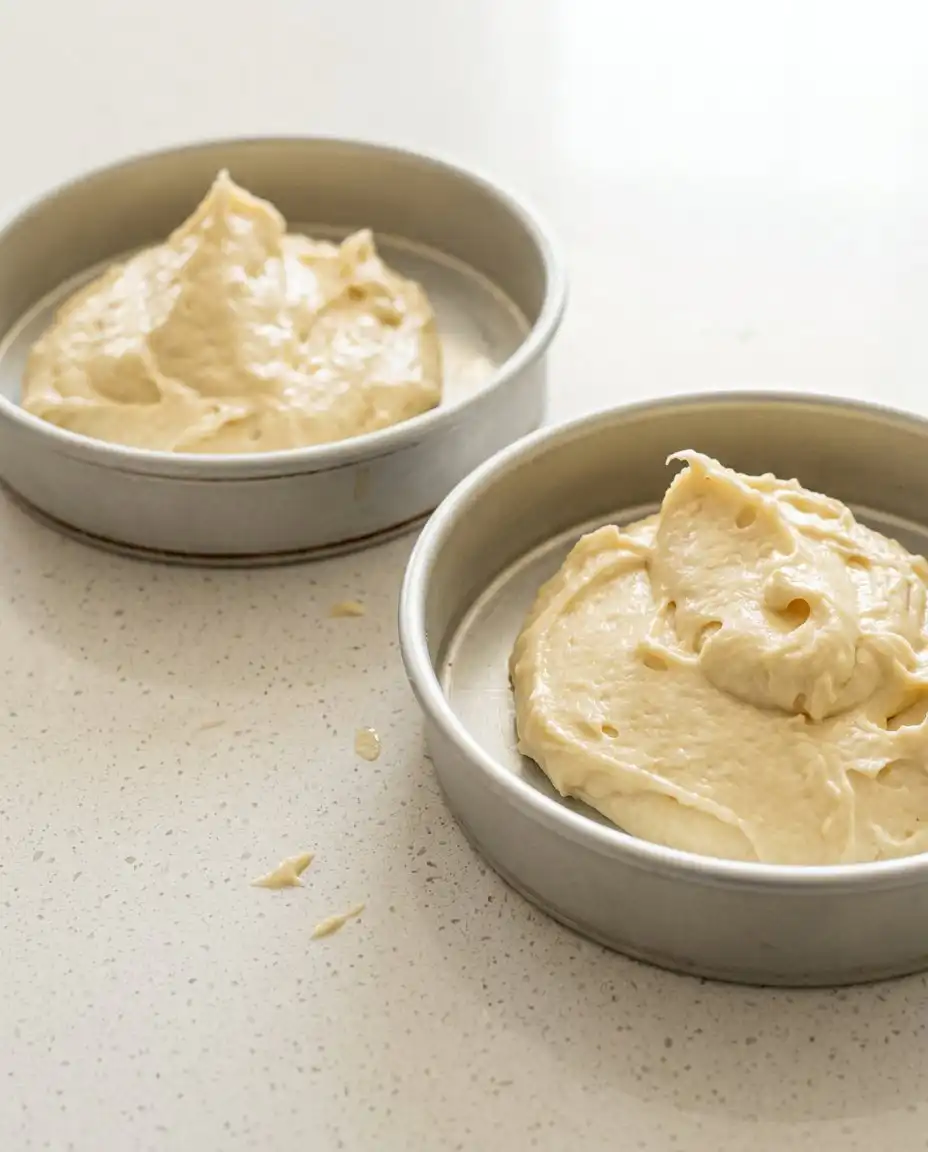
Step 1: Prepare the Butter Cake
Follow the instructions for the Old Fashioned Butter Cake to produce two stable rounds. Allow the layers to cool for a full hour before wrapping them in plastic to prevent the release of steam from softening the crust. This resting period allows the gluten structure to set, which is vital for a Two-Layer Boston Cream Cake that needs to be sliced cleanly later.
Step 2: Combine Dry Custard Elements
In a small bowl, whisk together the sugar, cornstarch, and salt until no clumps of starch remain. This mechanical dispersion prevents the cornstarch from hydrating unevenly, which often leads to lumps in the finished pastry cream. A consistent dry mix ensures that every gram of sugar is evenly distributed throughout the protein matrix.
Step 3: Emulsify the Egg Yolks
Separate the egg yolks from the whites with care to avoid any fat contamination in the whites. Whisk the yolks into the sugar and starch mixture until the color lightens slightly and the texture becomes a thick paste. This step begins the process of coating the sugar crystals in yolk fat, which helps manage the rate of hydration.
Step 4: Heat the Dairy and Butter
Add the half and half and the four tablespoons of butter to a heavy-bottomed saucepan over medium-high heat. The heavy bottom is essential to prevent hot spots that could scorch the dairy proteins or cause the butter to separate. Stir gently until the butter is fully melted and the liquid reaches a gentle simmer, just before a full boil.
Step 5: Temper the Egg Mixture
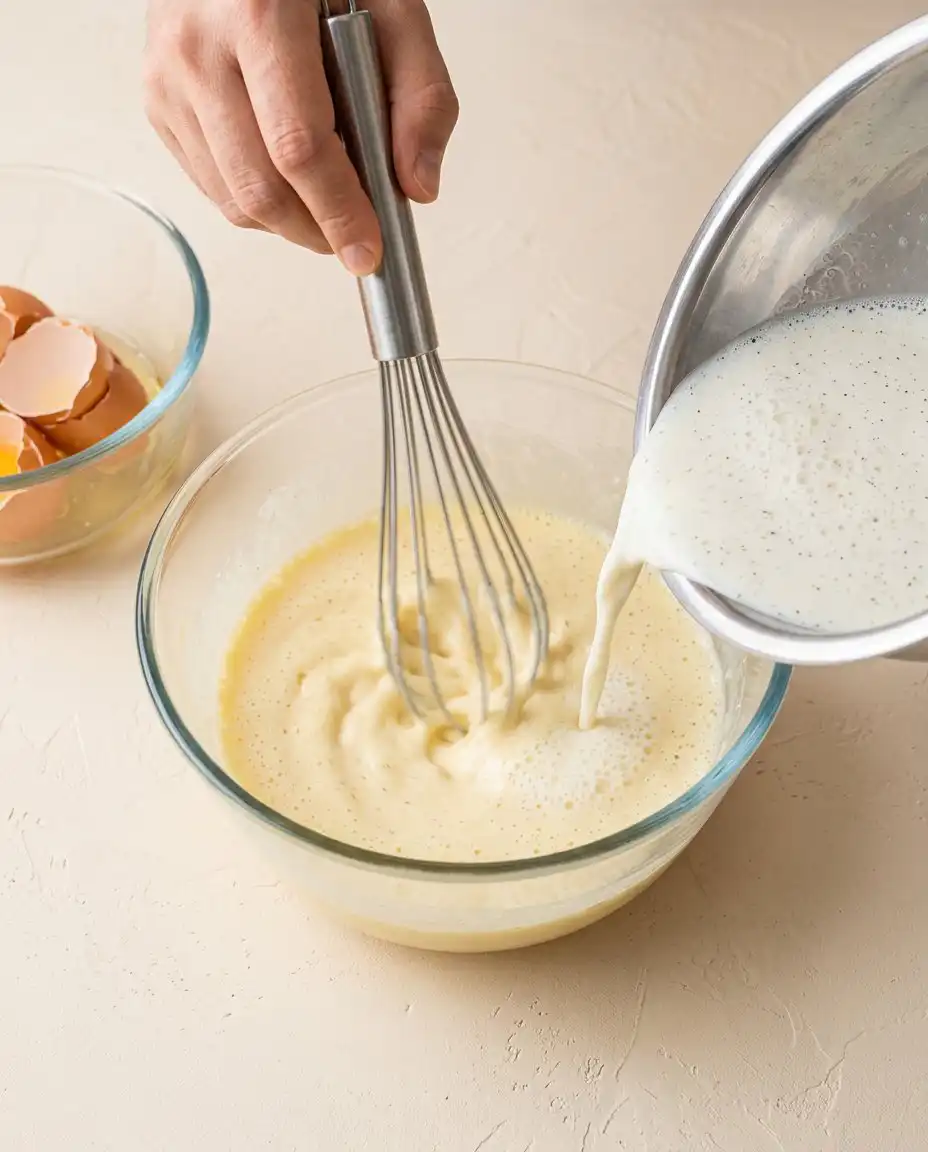
Slowly pour a small stream of the hot dairy into the egg paste while whisking constantly. This tempering process raises the temperature of the eggs gradually to prevent them from curdling or scrambling upon contact with high heat. Once about half of the liquid is incorporated, the mixture is ready to return to the main saucepan.
Step 6: Execute the Gelatinisation Phase
Return the tempered eggs to the pan and bring the entire mixture to a boil while whisking without pause. The starch requires the heat of a boil to fully activate its thickening properties, a process that typically takes 60 to 120 seconds. You will feel the resistance increase against your whisk as the custard achieves its final structural set.
Step 7: Finalize and Cool the Cream
Remove the pan from the heat immediately after thickening and stir in the pure vanilla extract. Pour the custard into a shallow bowl and press plastic wrap directly against the surface of the cream to prevent a skin from forming. Chill the mixture completely in the refrigerator until it reaches a temperature of 4 degrees Celsius, ensuring a firm set.
Step 8: Prepare the Custard for Assembly
Once chilled, remove the pastry cream from the refrigerator and whisk it vigorously with a fork or balloon whisk. This mechanical action breaks the solid gel into a creamy, spreadable consistency that maintains its body. It should be smooth and hold a peak without flowing back into a puddle.
Step 9: Establish the Base Layer
Center one cake round on a flat serving plate or a cardboard cake round. Distribute exactly half of the prepared pastry cream over the top, using an offset palette knife to push it within one centimeter of the edge. The weight of the upper layer will eventually push the cream to the very edge for a clean visual appearance.
Step 10: Assemble the Two-Layer Boston Cream Cake Components
Place the second cake layer directly onto the custard, ensuring it is level and centered. Apply the remaining pastry cream to this layer and then top it with the final cake round. Place the entire assembly into the refrigerator for at least thirty minutes to allow the layers to bond and the structure to stabilize before applying the chocolate.
Step 11: Create the Chocolate Ganache
Combine the milk chocolate chips and heavy cream in a double boiler or a microwave-safe bowl. Heat in 20-second increments, stirring between each interval to distribute the heat evenly and encourage an emulsion. Stop heating once the chocolate is mostly melted and let the residual heat finish the process to avoid seizing the mixture.
Step 12: Glaze the Cake Surface
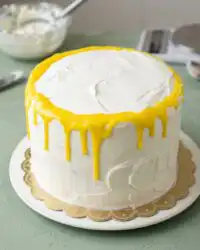
Allow the ganache to cool until it reaches the thickness of a pourable pudding and is slightly warm to the touch. Carefully pour the chocolate over the center of the Two-Layer Boston Cream Cake, allowing it to move toward the edges and drip naturally down the sides. The contrast between the dark chocolate and the yellow cake provides the signature aesthetic of this classic dessert.
Technique Refinements
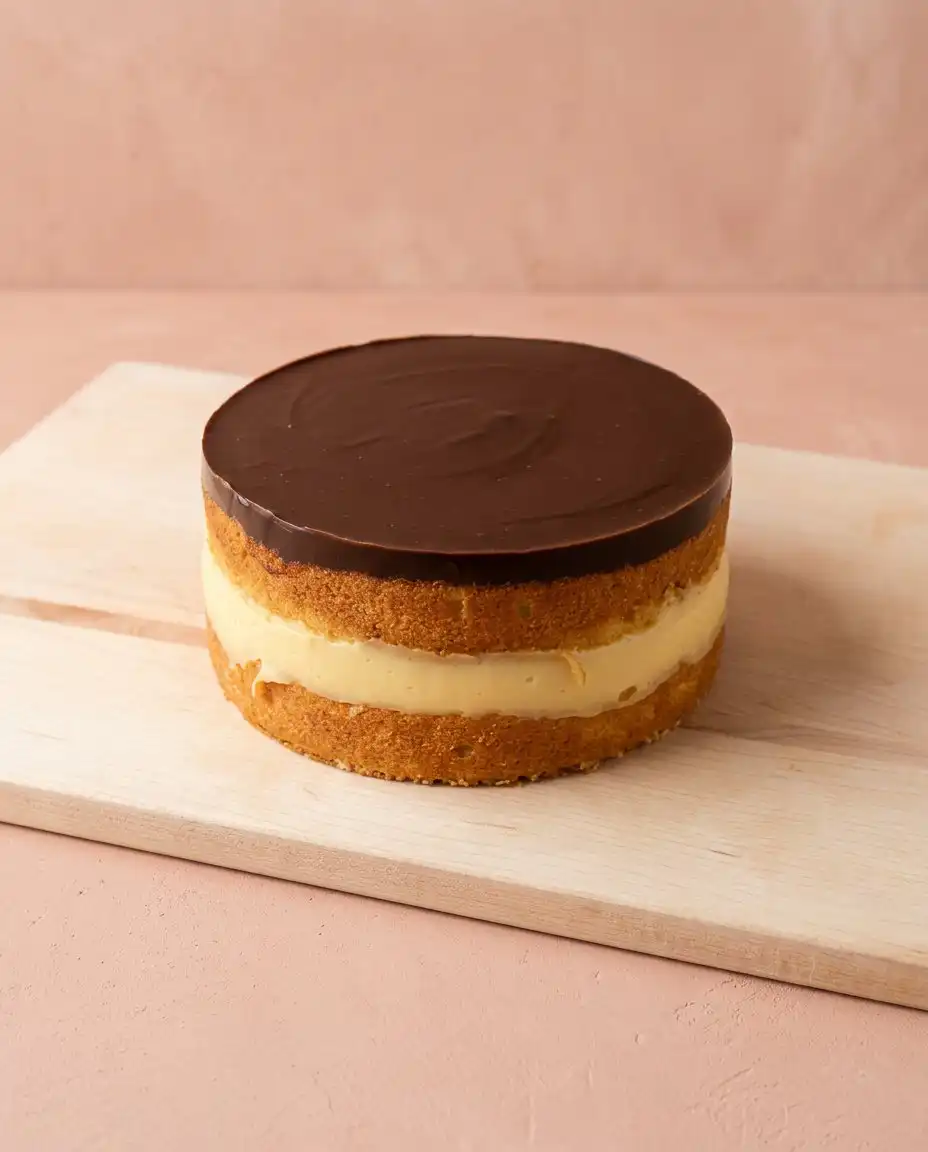
The most common failure in this Two-Layer Boston Cream Cake is a runny custard. If your cream fails to set, it is likely because the mixture did not reach a true boil for a full minute to deactivate amylase, an enzyme in egg yolks that can break down starch. Ensure you see large bubbles popping on the surface before removing it from the heat.
For a more intense flavor profile, consider incorporating elements from a chocolate layer cake by using a dark chocolate ganache with a higher cocoa butter content. This provides a sharper snap to the glaze that contrasts beautifully with the soft custard. Precision for the sake of mouthfeel is the goal here.
Temperature control is vital for the ganache application phase. The 30-second window between tender and tough, melted and seized, is where most bakers lose the glossy finish. According to how to achieve a stable pastry cream, a steady cooling process is better than rushing the set in the freezer.
Always weigh your flour and sugar on a digital scale rather than using volume measurements. A few extra grams of flour can turn a light sponge into a dense, bready brick that ruins the delicate balance of the Two-Layer Boston Cream Cake. Weigh it, time it, trust it.
When assembling the cake, use a level to ensure your sponge layers are perfectly flat. If the cake domes in the middle, the custard will naturally slide toward the edges, leading to a structural collapse once the top layer is added. Trim the tops of your cakes with a serrated knife if necessary to create a flat bench.
If your ganache appears grainy or separated, the emulsion has broken. You can often fix this by whisking in a teaspoon of warm heavy cream or a drop of corn syrup to bring the fats and solids back together. The crisp shell protects the creamy interior, so the glaze must be perfect.
Store the finished cake in a dedicated cake carrier to prevent it from absorbing refrigerator odors. The fats in the butter and cream are highly susceptible to picking up the scents of other foods, which can degrade the clean vanilla profile of the dessert.
Frequently Asked Questions
Why did my pastry cream turn out watery?
Pastry cream usually becomes watery if the cornstarch was not fully cooked. The mixture must reach a full boil for at least one minute to neutralize the amylase enzyme in the egg yolks. Without this step, the enzyme will break down the starch molecules over time, turning your firm filling into a liquid.
Can I make this cake a day in advance?
Yes, this cake actually benefits from being made a day ahead. The resting time in the refrigerator allows the moisture from the custard to hydrate the sponge slightly, creating a more cohesive texture. Ensure it is tightly covered to prevent the chocolate from blooming or the cake from drying out.
How should I store leftovers of this cake?
Because of the high dairy content in the custard and ganache, this cake must be stored in the refrigerator. Place it in an airtight container or a cake dome to maintain its moisture levels. It will remain at peak quality for up to three days before the sponge begins to soften excessively.
Can I freeze the Boston Cream Cake?
Freezing is not recommended for this specific recipe because the cornstarch-based custard will break down during the thawing process. The ice crystals damage the starch matrix, leading to a weeping, grainy texture. It is best enjoyed fresh or from the refrigerator within a few days.
What can I use if I do not have half and half?
You can create a substitute by mixing equal parts whole milk and heavy cream. This maintains the necessary fat percentage required for the rich mouthfeel of the custard. Using only whole milk will result in a thinner, less indulgent filling that may not hold its shape as well between the layers.
My ganache is too thick to pour, what should I do?
If the ganache has cooled too much and become stiff, gently reheat it in the microwave for five to ten seconds. Stir it thoroughly to redistribute the heat until it reaches a pourable, pudding-like consistency. Do not overheat it, as this can cause the chocolate to lose its shine or seize.
Considered Adjustments
For a deeper, more robust flavor, you might substitute the yellow sponge with a moist devils food layer cake base. This variation, sometimes referred to as a Washington Pie in older texts, offers a bitter cocoa contrast to the sweet vanilla custard. Ensure the chocolate cake is fully cooled to prevent the custard from melting during assembly.
A fruit-forward variation can be achieved by adding a thin layer of raspberry preserves beneath the pastry cream. The acidity of the fruit cuts through the richness of the fats, providing a more complex palate. This adjustment requires a very thin application of jam to ensure the Two-Layer Boston Cream Cake layers do not slip.
You may also experiment with different dairy bases for the custard. Using coconut milk can provide a subtle tropical note, though you may need to increase the cornstarch by five grams to account for the different protein structure. This variation keeps the spirit of the Two-Layer Boston Cream Cake while catering to different taste preferences.
Serving the Structure
When plating the Two-Layer Boston Cream Cake, use a sharp, thin-bladed knife dipped in hot water and wiped dry between every cut. This ensures that the chocolate ganache does not drag through the cream, maintaining the clean lines of the individual layers. Serve the slices slightly chilled but allow them to sit at room temperature for ten minutes to soften the butter in the sponge.
This dessert pairs excellently with a banana pudding layer cake if you are hosting a larger gathering that requires a variety of textures. The soft, creamy nature of both cakes creates a cohesive dessert spread. A simple cup of black tea or a sharp espresso provides the necessary bitterness to balance the sugar levels of the ganache and custard.
For a more formal presentation, garnish each plate with a few fresh berries or a small sprig of mint. The acidity of berries like raspberries or blackberries provides a bright counterpoint to the heavy dairy components. Serving the cake on a chilled plate can also help the custard maintain its vertical integrity during a long dinner service.
Recipe Recap
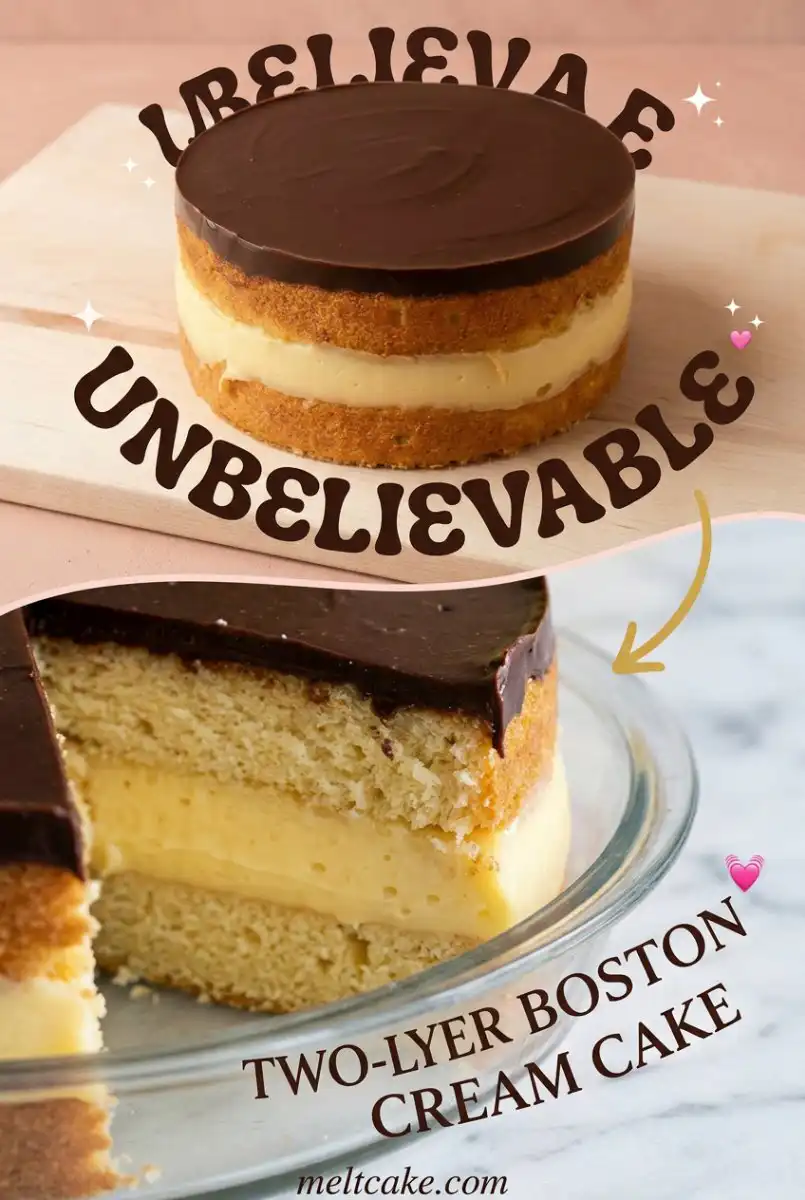
Mastering the Two-Layer Boston Cream Cake is a rite of passage for any serious home baker interested in the physics of pastry. By focusing on the gelatinisation of the custard and the structural integrity of the butter cake, you create a dessert that is far superior to any store-bought version. The precision required in the tempering and boiling stages pays off with a texture that is both firm and meltingly tender.
If you find yourself enjoying the process of building multi-dimensional desserts, you might consider trying a classic two layer yellow cake chocolate frosting for your next project. It uses similar principles of crumb management and fat emulsification. Please share your results and technical successes with the baking community as you refine your bench skills.