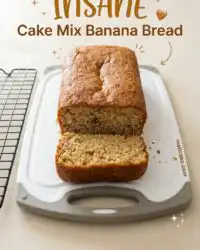
A dense centre and a dry, crumbly crust are the dual failures of poorly balanced quick breads, but using a structured base guarantees tender crumb structural integrity.

Preparing a reliable Cake Mix Banana Bread relies on understanding how pre-tempered starches interact with fruit moisture in the baking environment. By employing the balanced formulation of a cake mix, we bypass the typical volatility of traditional flour hydration while securing a remarkably tender crumb structure. This scientific approach guarantees that your baked loaf retains its shape under the heavy load of fruit solids. The resulting quick bread offers a consistent, tight-crumbed slice that holds its structural integrity perfectly from the oven to the cooling rack.
Why Precision Pays Off Here with Cake Mix Banana Bread
Prep: 5 min · Serves: 8 · Difficulty: Easy
Using a pre-formulated baking base allows us to achieve an ideal balance between starch gelatinisation and fat distribution. By bypassing the usual flour-measuring variances, we can focus entirely on the temperature and moisture parameters that decide quick bread success. This approach transforms a simple baking task into a highly reliable exercise in texture management. For those interested in expanding their repertoire of cake mix recipes, this structured formula offers an ideal entry point.
- Eliminates structural failures from over-measuring flour.
- Secures a remarkably consistent moisture level.
- Establishes a uniform gluten-starch baking matrix.
- Prevents dense or collapsed loaf centers.
- Simplifies preparation without compromising crumb quality.
This method delivers a structurally sound, highly tender slice with unwavering consistency.
Get The Full Cake Recipe
Print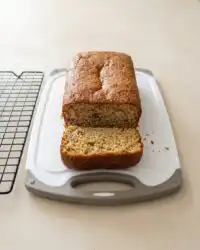
Cake Mix Banana Bread
- Total Time: 1 hour 5 mins
- Yield: 8 servings
Description
This Cake Mix Banana Bread provides a reliable and structurally sound quick bread that delivers a tender, consistent crumb using a simplified base. By leveraging the specific starch and emulsifier properties of yellow cake mix, this method ensures bakery-quality results with every loaf.
Ingredients
- 1 box (approx. 15-18 oz) Yellow Cake Mix
- 600 grams Ripe Bananas (peeled and mashed)
- 2 large eggs
- 57 grams melted butter
- 1 teaspoon ground cinnamon
Instructions
- Prepare oven and pan. Preheat oven to 350°F (177°C) and grease a metal loaf pan before lining with parchment paper with a two-inch overhang.
- Mash the bananas. Weigh 600 grams of peeled banana pulp and mash until it forms a smooth, fluid slurry with minimal solid fragments.
- Create liquid emulsion. Whisk two room-temperature eggs and 57 grams of warm melted butter into the banana slurry until the mixture reaches a cohesive, glossy pale yellow state.
- Combine dry ingredients. Sift the cake mix and cinnamon over the liquid, folding gently with a spatula until just combined and no dry pockets of flour remain.
- Deposit and bake. Pour the batter into the prepared pan, smoothing the top, and bake for 45 to 50 minutes until a probe thermometer in the center reads 200°F (93°C).
- Cool the loaf. Rest the bread in the pan for 10 minutes before transferring to a wire rack to cool completely to ensure the crumb structure sets properly.
Notes
- Use a digital scale to weigh your banana pulp rather than measuring by volume for the most consistent texture.
- Ensure the melted butter has cooled slightly before adding to the eggs to prevent premature protein coagulation.
- Minimize your folding technique to avoid overworking the gluten, which keeps the crumb tender and light.
- Always use a metal loaf pan instead of glass to ensure proper heat conduction and an even rise.
- Wait for the loaf to cool completely on a rack before slicing to avoid a gummy or compressed interior texture.
- Prep Time: 15 mins
- Cook Time: 50 mins
- Category: Quick Bread
- Method: Baking
- Cuisine: American
Ingredients & Their Role
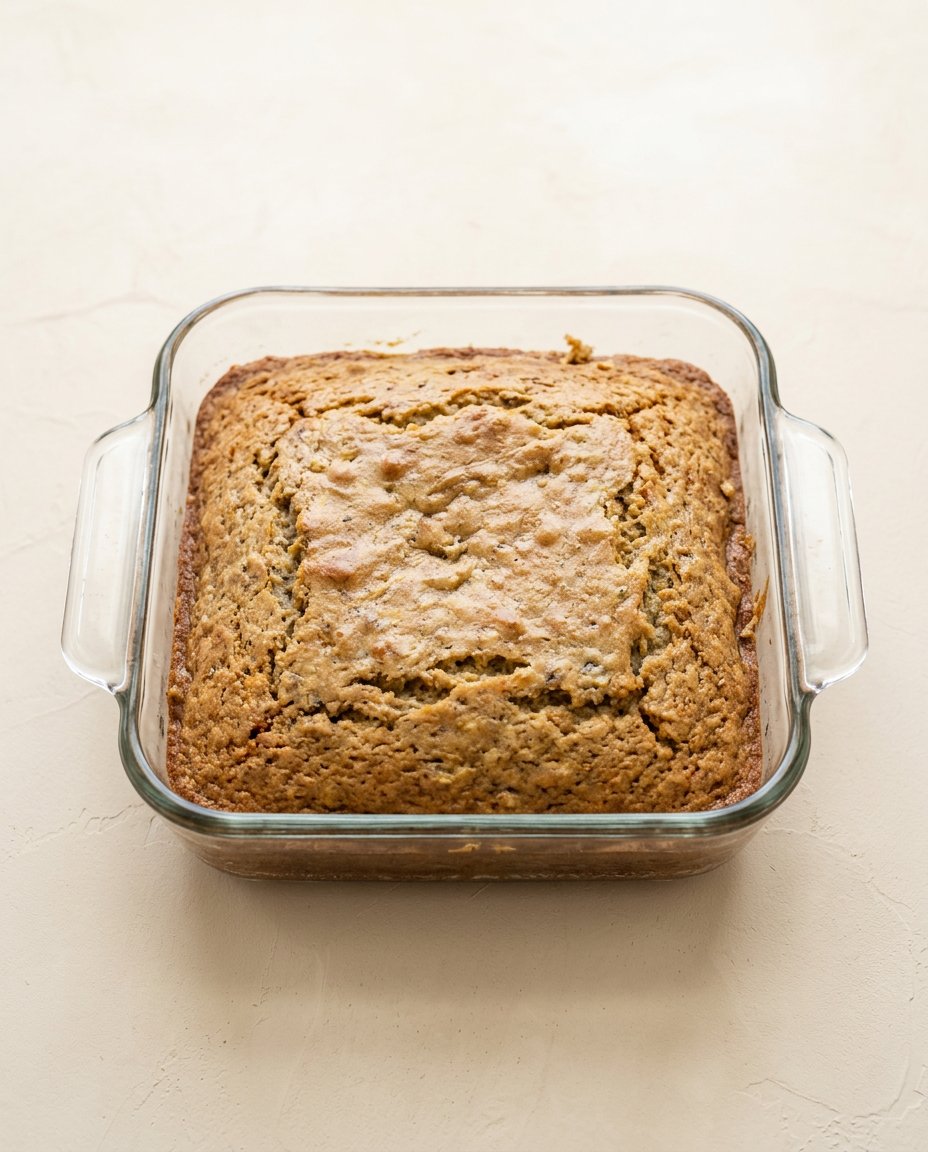
Every component in this formula works to establish a balanced starch-fat matrix. Managing the interaction between dry starch granules and liquid moisture guarantees a uniform rise and a tender slice. We must treat these ingredients as chemical building blocks that govern the eventual texture of our loaf.
- Yellow Cake Mix: This base provides pre-sifted soft wheat flour, finely granulated sugar, and specific emulsifiers that help suspend fat and liquid. The chlorinated cake flour used in the mix has a low protein content, which limits gluten development and guarantees a soft, tender mouthfeel. These pre-blended starches are engineered to absorb moisture uniformly, preventing dry pockets.
- Ripe Bananas: These provide natural fructose and essential water molecules to hydrate the dry starches, triggering proper gelatinisation. As bananas ripen, their starches convert to sugars, increasing the overall sweetness and liquid content of the fruit pulp. We must carefully measure this component to guarantee the correct hydration levels without flooding the batter.
- Eggs: The proteins in the albumen and yolk coagulate during baking, constructing the essential cellular walls of the bread. Egg yolks also contribute lecithin, a natural emulsifier that holds the water and fat phases in a stable suspension. This structural support prevents the loaf from collapsing as it cools.
- Melted Butter: This lipid coats the starch and protein molecules, preventing excess gluten development to preserve a soft crumb. The fat acts as a shortening agent, lubricating the structural matrix so the slice feels rich and tender. Using melted butter instead of oil also contributes a superior dairy flavor profile.
- Ground Cinnamon: This optional dry spice adds complex aromatics to the crumb without interfering with the liquid hydration ratios. The spice particles are suspended throughout the starch matrix, releasing warm scent compounds during baking. It provides a classic flavor depth that balances the sweet notes of the yellow cake base.
| Ingredient | Why It Matters |
|---|---|
| Yellow Cake Mix | Establishes the primary starch matrix and balanced emulsifiers |
| Ripe Bananas | Provides fructose and essential water for starch gelatinisation |
| Eggs | Delivers protein structural support and emulsifying lecithin |
| Melted Butter | Coats gluten molecules to preserve tender crumb softness |
Step-by-Step Technique
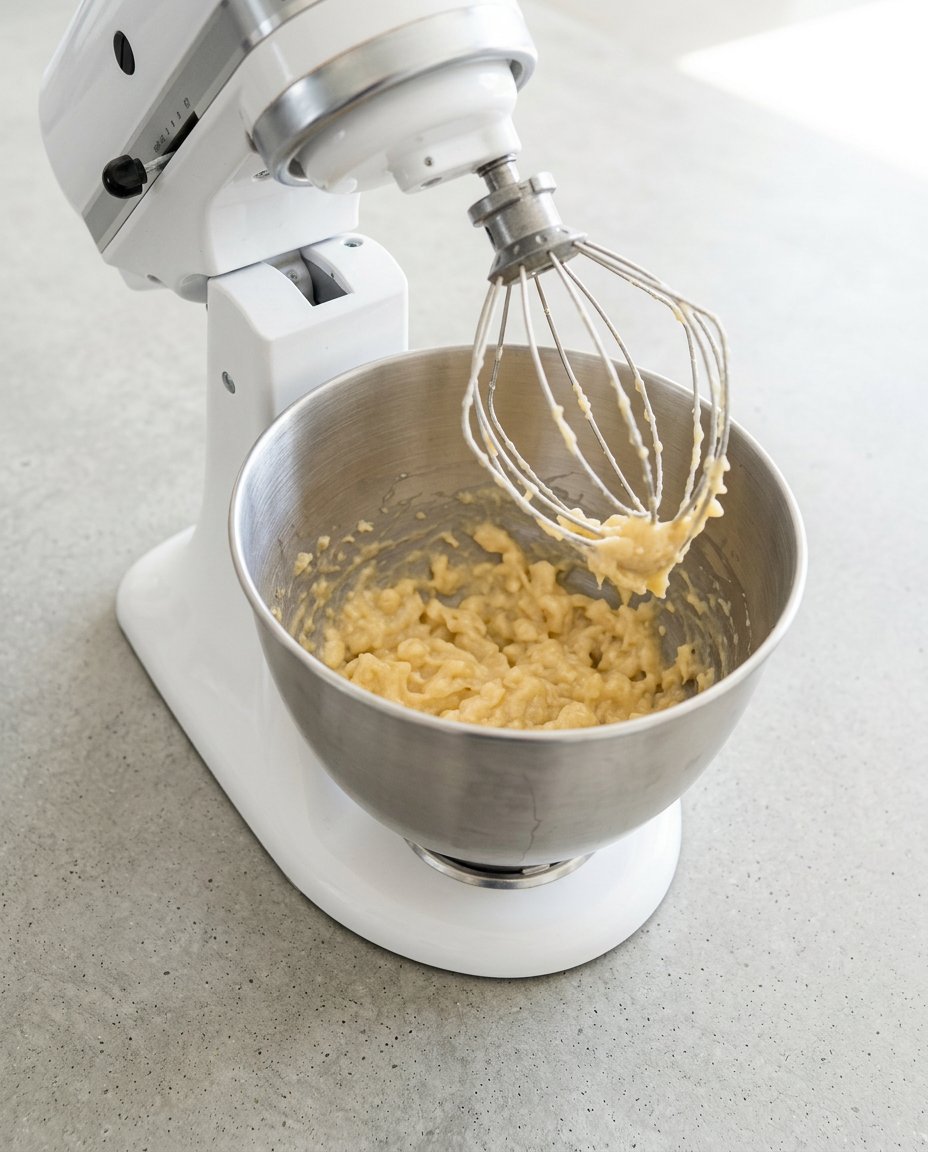
Step 1: Prep the Oven and Pan
Preheating your oven to exactly 350°F (177°C) establishes the thermal environment necessary for controlled leavening. Metal loaf pans, preferably heavy-gauge aluminized steel, conduct thermal energy far more uniformly than ceramic or glass alternatives. Apply a thin, even barrier of melted butter or oil to the interior surfaces, then line the pan with parchment paper, leaving a two-inch overhang on the long sides. This parchment cradle prevents shear stress on the outer crust when unmolding, maintaining the structural form of the loaf.
Step 2: Mash the Bananas
As bananas ripen, their complex starches degrade into simple sugars—fructose, glucose, and sucrose—reducing the fruit’s structural starch content while increasing water availability. Use a digital scale to weigh exactly 600 grams of peeled banana pulp, which corresponds to approximately four to five medium fruits. Mash this pulp thoroughly using a rigid fork or masher until it forms a fluid slurry with minimal solid fragments. This uniform liquefaction guarantees even water distribution throughout the batter, preventing dense, soggy pockets of starch from forming during baking.
Step 3: Create the Liquid Emulsion
Introduce two room-temperature eggs and 57 grams (one-quarter cup) of warm melted butter directly into your weighted banana slurry. Whisk these components together vigorously to establish a stable temporary emulsion, allowing the lecithin in the egg yolks to bind the fat-soluble butter molecules with the water-heavy banana pulp. This specific sequencing coats the fruit-bound water with fat before the dry starch particles can intercept the liquid. The mixture will transition to a cohesive, glossy pale yellow state, indicating a uniform dispersion of lipids.
Step 4: Mix the Cake Mix Banana Bread Batter
Sift the dry yellow cake mix and ground cinnamon directly over your liquid emulsion, preparing to combine the phases. Using a broad wooden spoon or a stiff silicone spatula, gently fold the dry mix into the liquid slurry using minimal strokes. Yellow cake mix contains low-protein chlorinated flour which resists tough gluten development, but over-mixing will still cross-link these proteins and toughen the crumb. Stop folding the instant the dry pockets of flour disappear, leaving a thick, lumpy batter that exhibits high viscosity and holds its shape.
Step 5: Deposit and Bake
Decant the heavy batter into your prepared parchment-lined loaf pan, using an offset palette knife to distribute it evenly into the corners. Bake on the center rack of your preheated oven at 350°F (177°C) for 45 to 50 minutes without opening the oven door during the first 30 minutes to prevent thermal shock. Watch for a deep, characteristic split along the crown, indicating that the internal gases have expanded and ruptured the set outer crust. The loaf is completely baked when a digital probe thermometer inserted into the geometric center registers exactly 200°F (93°C).
Step 6: Cool and Set the Structure
Remove the loaf from the oven and let it rest undisturbed in its pan on a wire cooling rack for exactly 10 minutes. During this resting window, the hot amylose starch molecules begin to recrystallize, transforming from a fluid sol state into a semi-rigid gel network that supports the loaf’s weight. Gently lift the bread from the pan using the parchment handles and transfer it directly to the wire rack to cool fully. Slicing too early allows steam to escape prematurely, causing the tender crumb structure to collapse into a gummy, dense texture.
Pastry Bench Tips
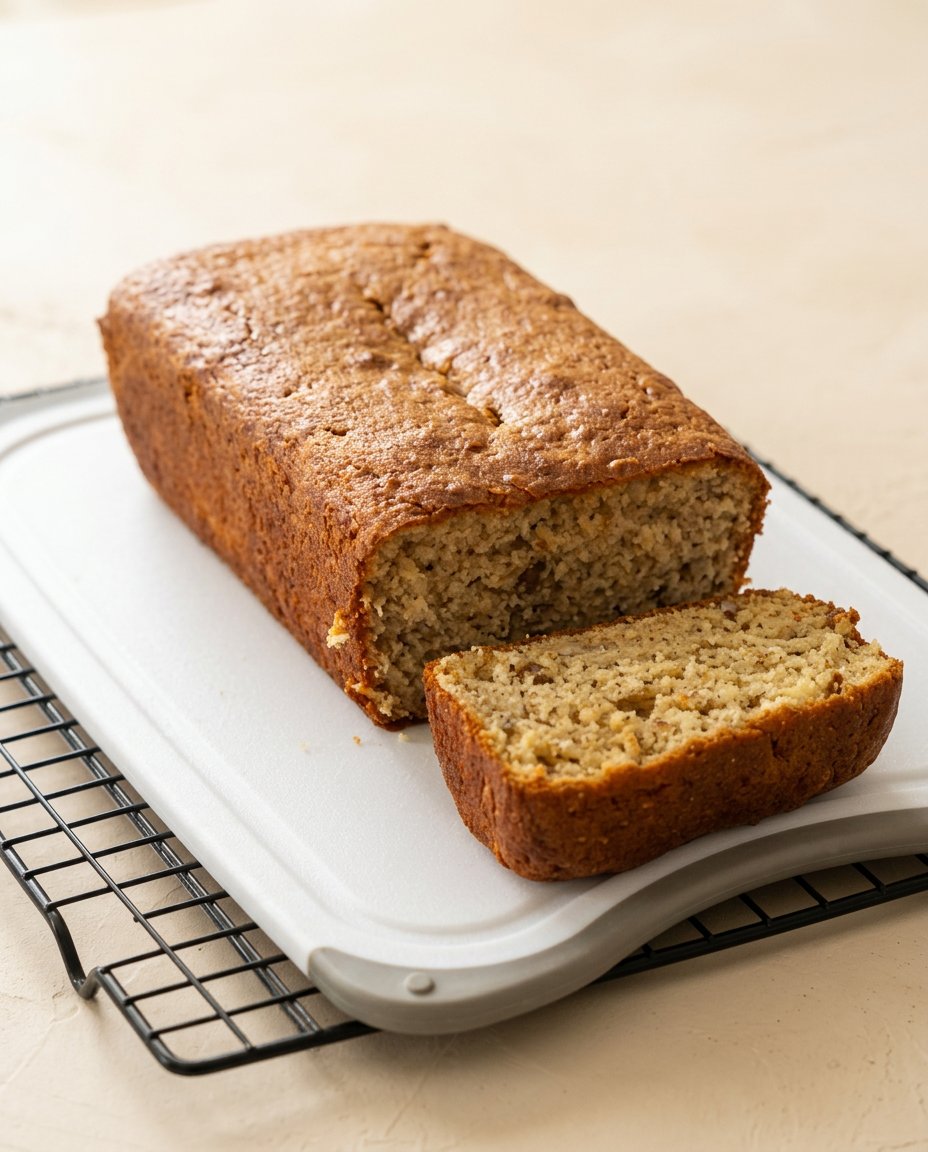
Weighing your bananas using a digital scale is the only way to avoid structural failures in quick breads. While volume measurements like cups are common, banana density varies wildly based on ripeness and mashing style, and an extra 50 grams of fruit can easily cause your center to collapse. If your banana bread collapses in the middle, here is why and how to fix it: the batter contained too much moisture from over-measured bananas, which can be corrected by strictly weighing your mashed fruit to exactly 600 grams next time. This level of accuracy keeps your starch-to-liquid ratio balanced.
Maintaining the correct ingredient temperatures is critical for establishing a stable emulsion during mixing. Make sure your eggs are at room temperature, around 68°F (20°C), and your melted butter has cooled slightly so it does not scramble the egg proteins upon contact. This temperature alignment prevents the fat from solidifying prematurely into cold lumps, which would yield a greasy, uneven bake. Consistent temperatures allow the liquids and lipids to bind harmoniously.
Integrating a high-quality banana cake technique is a great way to understand how chemical leaveners react in quick breads. Unlike traditional scratch recipes that require careful creaming, this cake mix method relies on pre-blended chemical leaveners inside the box, which react immediately when hydrated. Minimize the time between mixing and baking to guarantee these leaveners do not lose their carbon dioxide gas before the oven heat can set the crust. A rapid transition from bench to bake preserves the best rise.
Selecting a metal loaf pan rather than a glass or ceramic dish yields a cleaner crust and a superior rise. Metal conducts heat rapidly, establishing the structural skin of the loaf early in the baking process so the interior can rise fully. Glass pans hold heat too long, often burning the exterior before the dense center is fully cooked. A heavy aluminum pan acts as an efficient conductor, driving heat directly to the core of the batter.
Testing the internal temperature with a digital probe thermometer is far more accurate than using a simple toothpick. A toothpick can slide out clean even if the starch gelatinisation is incomplete in the absolute center of the dense loaf. Aim for an internal reading of 200°F to 205°F (93°C to 96°C) to guarantee the loaf is fully set without being dried out. This temperature threshold marks the exact point where egg proteins and starches achieve complete structural set.
Resist the urge to slice the loaf while it is still warm from the oven. Slicing too early releases trapped steam, which destroys the delicate crumb structure and turns a baked loaf gummy. Allow the bread to cool for at least one full hour on a wire rack so the starch matrix can set completely. As the loaf cools, the moisture redistributes evenly, resulting in a cleaner slice and a better mouthfeel.
Frequently Asked Questions
Can you use cake mix to make banana bread?
Yes, employing cake mix as a structural base is a highly reliable method for quick bread. The pre-sifted flour, sugar, and leaveners in the box provide a scientifically balanced foundation that simplifies the baking process. This approach guarantees a tender crumb structure while saving valuable preparation time. It allows you to bypass the typical measuring errors that lead to dense or dry loaves.
What are the ingredients for cake mix banana bread?
The core formulation requires one box of yellow cake mix, four to five ripe bananas, two room-temperature eggs, and a quarter-cup of melted butter. You can also add ground cinnamon for a warm, spicy aromatic note. These components work together to establish a robust starch-and-fat emulsion that bakes evenly. No additional flour, sugar, or chemical leavening is necessary.
What is the best flavor of cake mix to use?
Yellow cake mix offers the most authentic, classic quick bread flavor profile. However, spice cake mix or white cake mix can be used to alter the aromatic qualities of the loaf. Avoid using chocolate cake mixes unless you want a heavy cocoa flavor that masks the natural banana notes. The choice of mix dictates the background flavor notes while maintaining the same baking chemistry.
Do you follow the instructions on the cake box?
No, do not follow the box instructions for liquid or fat measurements. We use only the dry mix itself as our flour-and-sugar base, adding mashed fruit, eggs, and butter to establish a thick bread batter. Following the box instructions would result in a thin, watery batter incapable of holding the fruit. The thick consistency is crucial for keeping the banana solids suspended during baking.
What can I add to cake mix banana bread?
You can easily fold in toasted nuts, chocolate chips, or dried fruit to add texture to the crumb. Be sure to toss these inclusions in a little dry mix first to keep them suspended in the heavy batter. A streusel topping can also be applied to create a crisp, set crust on top. These additions let you customize the bread without disrupting the underlying starch structure.
How long do you bake it and at what temperature?
Bake the loaf at 350°F (177°C) for 45 to 50 minutes until a digital thermometer reads 200°F (93°C). Baking at this temperature allows the heat to penetrate the dense center of the bread without burning the delicate exterior. Avoid opening the oven door too early, which can cause the bread to collapse. Rely on visual cues like a deep golden color and a split crown.
How do you store cake mix banana bread to keep it moist?
Keep the cooled loaf in an airtight container at room temperature for up to four days to preserve its soft crumb. For longer storage, wrap individual slices tightly in plastic wrap and freeze them in a heavy bag for up to three months. Avoid refrigerating the bread, as the cold temperature accelerates starch retrogradation and dries it out. Reheat frozen slices in a toaster or warm oven for best results.
Tested Variations
For bakers seeking a deeper, more caramelized flavor profile, substituting a spice cake mix for the yellow cake mix is an excellent path. This adjustment introduces a complex blend of nutmeg, clove, and ginger that pairs beautifully with the natural sweetness of ripe bananas. If you prefer to experiment with other classic flavor bases, our detailed guide on making a moist zucchini banana cake offers excellent insights into balancing vegetable moisture with spiced flour matrices. Both methods highlight how a pre-formulated mix can be modified without losing structural integrity.
Adding textured components requires careful suspension techniques to prevent the pieces from sinking to the bottom of the pan. If you decide to incorporate 100 grams of toasted chopped walnuts or dark chocolate chips, toss them in a tablespoon of the dry cake mix before folding them in. This starch coating creates friction between the inclusions and the batter, holding them in suspension during the baking process. Without this step, heavy additions will sink to the bottom, creating a dense, scorched base.
To study the comparative structure of this recipe, you might reference the technique study of quick bread structure which illustrates how a four-ingredient system performs. Adding a streusel topping made of cold butter, brown sugar, and flour provides a crisp, crackly shell that contrasts beautifully with the soft interior. Be sure to apply the streusel gently to the top of the batter right before baking to avoid collapsing the delicate air pockets. This addition adds an enjoyable textural contrast to every slice.
Serving the Structure
Serving this structurally precise loaf requires a calculated approach to slicing. Use a sharp, serrated bread knife and make long, sawing motions rather than pressing straight down, which would crush the delicate crumb. A thickness of exactly 1.5 centimeters per slice provides the ideal ratio of crisp outer crust to tender, soft center. Slicing with precision preserves the cellular structure of the bread, guaranteeing each piece remains light and intact.
This quick bread shines when served slightly warm, which softens the butter fats and releases the aromatic banana compounds. Place individual slices under a broiler for exactly 90 seconds, or toast them lightly in a dry skillet to develop a thin, golden crust on the cut faces. This caramelization adds an appealing crunch that contrasts beautifully with the soft interior crumb. Pair a warm slice with a clean cup of black tea to balance the rich sweetness of the bread.
For an elegant presentation at the table, consider layering thin slices of this bread with a rich pastry cream. This approach mirrors the structural composition of a classic banana pudding layer cake, where dense cake bases support smooth dairy layers. You can also serve it with a dollop of unsweetened whipped cream or a drizzle of warm caramel. This pairing highlights the structural versatility of the banana quick bread, transforming it from a simple breakfast slice into a sophisticated dessert.
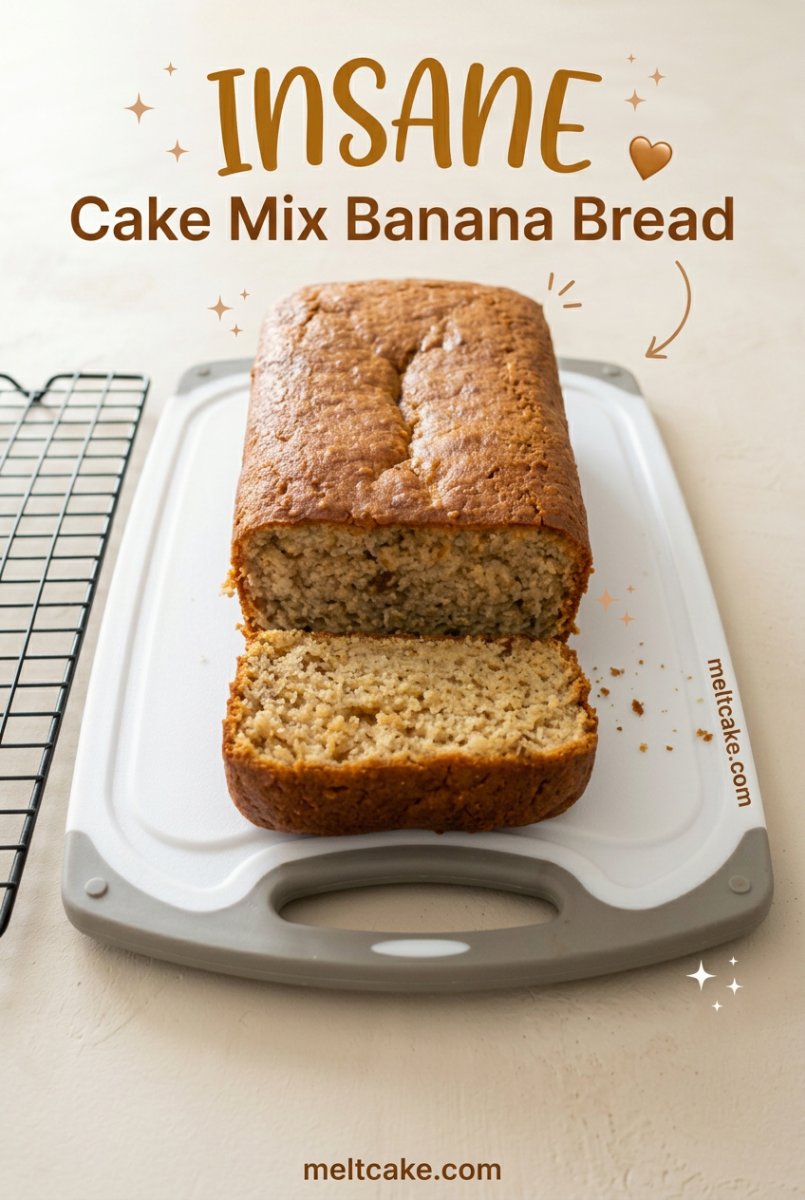
Final Notes
Flawless quick bread proves that structure is what makes the melt possible, even when working with simplified ingredient lists. By understanding the science of starch gelatinisation and starch-to-fat ratios, you can produce a bakery-quality loaf with absolute consistency. It is a testament to the fact that precision on the pastry bench always pays off in final mouthfeel. Simplified baking does not mean compromising on technical execution or texture.
We highly recommend applying these foundational pastry principles to our banana coffee cake for your next baking session. Testing different structural textures will refine your pastry intuition and build confidence in your kitchen. Weigh your ingredients, time your bake accurately, and trust the process to deliver excellent results. Each bake offers an opportunity to observe how starch and lipids interact under heat.
We invite you to share your baking results and technical triumphs with our pastry community online. Let us know how your crumb turned out, and connect with us on Pinterest or follow our community updates on Facebook to stay updated on our latest technical baking guides. Your feedback helps us continue refining our formulas on the pastry bench. Happy baking, and may your loaves rise perfectly every time.