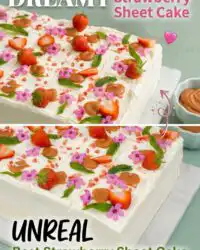
Maintaining a precise 20 degrees Celsius for your butter determines whether the Best Strawberry Sheet Cake achieves a stable emulsion or a greasy, collapsed crumb structure.

Achieving the Best Strawberry Sheet Cake requires more than just mixing fruit and flour; it demands a rigorous focus on fat suspension and protein stability. Structure is what makes the melt possible. By balancing the moisture of the strawberry puree with a set ganache, you create a sponge that remains resilient under the weight of a rich elderflower buttercream.
What Makes the Texture of the Best Strawberry Sheet Cake Right
Prep: 30 min · Serves: 24 · Difficulty: Medium
- Uniform crumb structure prevents sagging
- Intense fruit reduction adds depth
- Shelf stable ganache ensures longevity
- Precise hydration for tender mouthfeel
- Professional sheet layout for scaling
This method guarantees a consistent result that outperforms any standard strawberry cake.
Get The Full Cake Recipe
Print
Best Strawberry Sheet Cake
- Total Time: 1 hour 10 mins
- Yield: 24 servings
Description
This professional-grade strawberry sheet cake features a delicate, buttery sponge layered with a glossy white chocolate strawberry ganache and a refined elderflower buttercream. It is designed for bakers who value technical precision and perfect structural integrity in every slice.
Ingredients
- 620g unsalted butter, softened
- 10 large eggs, room temperature
- 600g caster sugar
- 600g self-raising flour
- 300g strawberry puree, reduced
- 300g white chocolate, finely chopped
- 50ml glucose syrup
- 30ml elderflower cordial
- 100g icing sugar
- Fresh berries for layering
Instructions
- Cream the butter. Beat softened butter and caster sugar in a stand mixer for eight minutes until pale and airy.
- Emulsify the eggs. Add ten whisked eggs gradually, beating for 30 seconds after each addition to ensure a stable emulsion.
- Incorporate dry base. Sift the self-raising flour and gently fold it into the wet mixture until just combined to maintain a tender sponge.
- Bake the cakes. Divide batter into two 9×13 inch tins and bake at 170 degrees Celsius for 35 to 40 minutes.
- Create infusion syrup. Simmer sugar, water, elderflower cordial, and mint leaves, then strain and let cool.
- Develop the ganache. Pour heated strawberry puree and glucose syrup over white chocolate, stir to emulsify, and finish with cold butter for gloss.
- Construct the layers. Brush cooled cakes with syrup, spread ganache and sliced berries between layers, and stack the cakes.
- Apply final buttercream. Whip butter, icing sugar, and cordial to soft-peak stage, then apply a crumb coat and final layer to the assembled cake.
Notes
- Use a digital scale rather than volume measurements to ensure the flour-to-fat ratio remains perfect for a stable crumb.
- Monitor the internal temperature of the cake with a probe thermometer to avoid overbaking and drying out the sponge.
- Ensure all ingredients, especially eggs and butter, are at a uniform 20 degrees Celsius to prevent the emulsion from splitting during mixing.
- Chill the cake for thirty minutes before applying the final buttercream to provide a firm, stable base that prevents structural shifting.
- Scrape down the bottom of the mixing bowl frequently during the creaming stage to incorporate hidden pockets of butter and sugar.
- Prep Time: 30 mins
- Cook Time: 40 mins
- Category: Dessert
- Method: Baking
- Cuisine: British
The Working Components
Success at the pastry bench starts with the weight and temperature of your raw materials. Each component serves a technical purpose, from the protein in the eggs to the glucose syrup that prevents sugar crystallization in the ganache.
- Unsalted Butter: Provides the lipid base for aeration during the creaming stage, essential for a light sponge.
- Caster Sugar: The fine crystals dissolve rapidly into the fat, creating tiny air pockets that expand during the bake.
- Self Raising Flour: Contains a precise ratio of leavening agents to lift the dense strawberry-infused batter without collapsing.
- Strawberry Puree: Reduced to concentrate flavor and remove excess water, preventing the sponge from becoming soggy.
- White Chocolate: Acts as the structural fat in the ganache, providing a set texture that melts at body temperature.
- Glucose Syrup: An invert sugar that controls the water activity and ensures a smooth, glossy emulsion in your frosting.
- Elderflower Cordial: Adds a floral top note that cuts through the richness of the butter and sugar.
| Ingredient | Why It Matters |
|---|---|
| 620g Butter | Creates the emulsion base for volume |
| 10 Large Eggs | Provides protein for structural integrity |
| White Chocolate | Sets the filling for a clean slice |
| Strawberry Puree | Concentrates acidity and natural sugars |
| Caster Sugar | Facilitates aeration and moisture retention |
From Bench to Bake
Step 1: Creaming for Volume
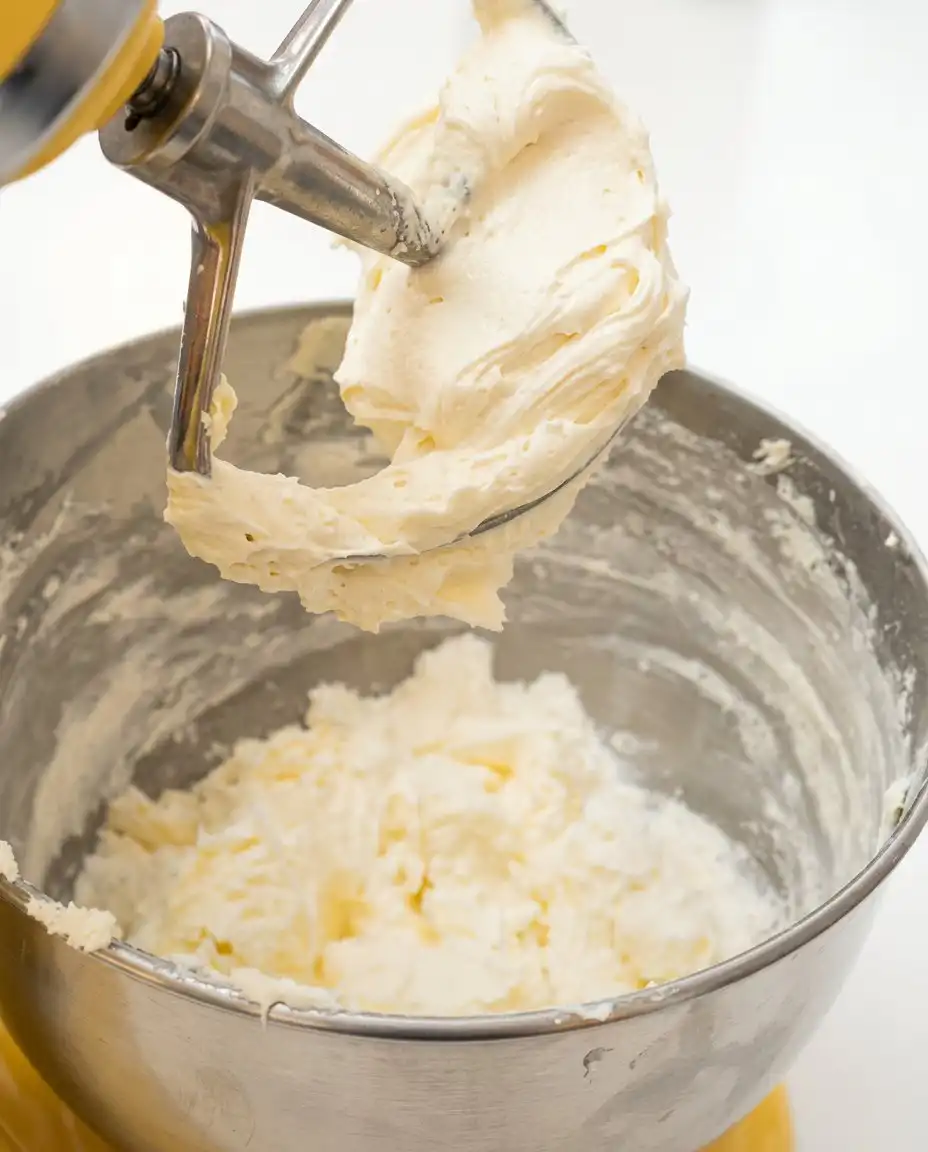
Place the softened butter and caster sugar into the bowl of a stand mixer fitted with the paddle attachment. Beat on medium speed for exactly eight minutes until the mixture is pale and has a texture resembling whipped cream. This process creates the physical framework of air bubbles that the leavening agents will later expand, so do not rush this technical foundation.
Step 2: Emulsifying the Eggs
Whisk the ten eggs in a separate jug to break the membranes before adding them to the butter mixture one at a time. Beating for 30 seconds after each addition confirms that the fat and liquid have fully emulsified rather than curdled. If the mixture begins to split, add a tablespoon of your flour to bind the water and fat together through mechanical force.
Step 3: Incorporating the Dry Base
Sift the self-raising flour from a height to aerate the particles before folding it into the wet components. Use a large metal spoon or a silicone spatula to cut through the center and lift the batter over the flour, repeating until no streaks remain. This gentle folding prevents the over-development of gluten, which would result in a tough, bread-like texture rather than a tender sponge.
Step 4: Baking the Best Strawberry Sheet Cake
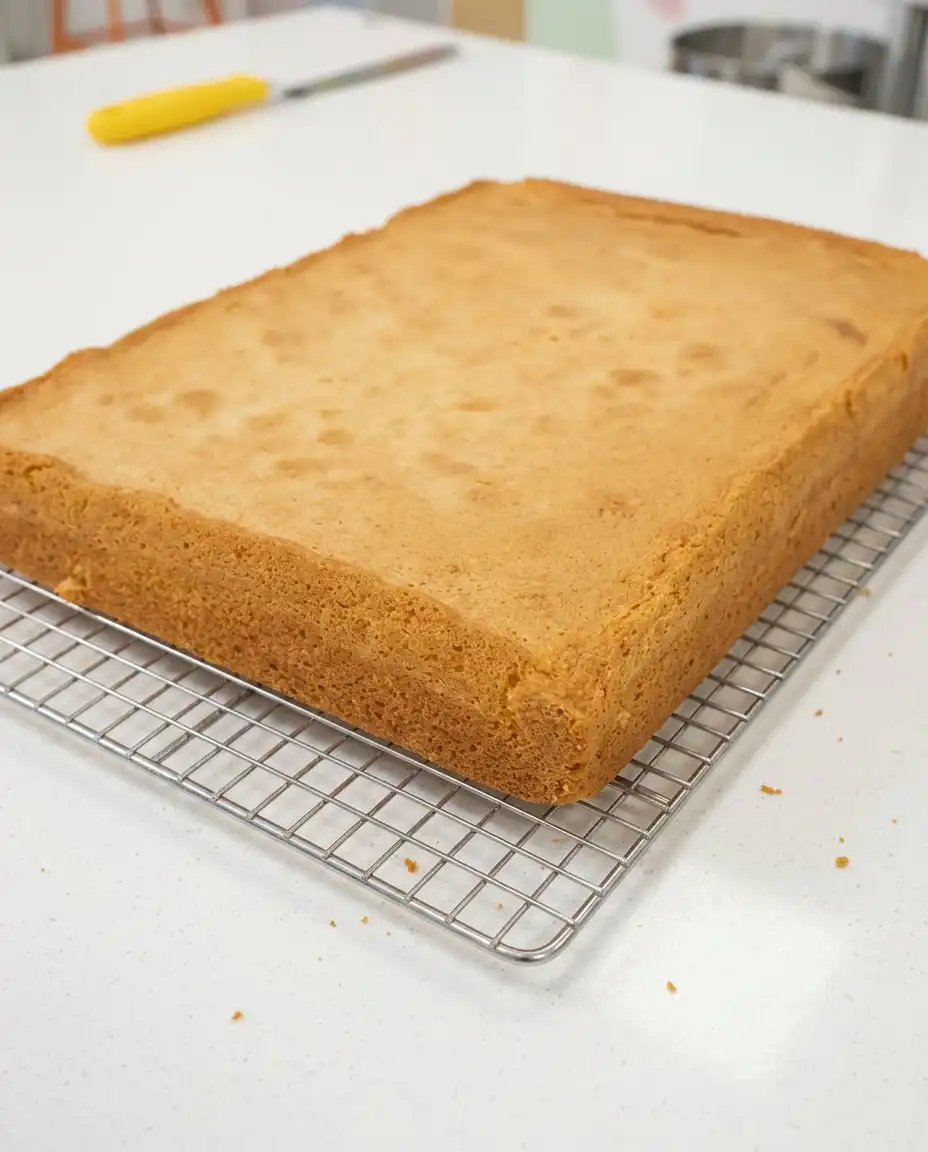
Divide the batter equally between two lined 9×13 inch rectangle tins, smoothing the surface with an offset palette knife for a flat finish. Bake at 170 degrees Celsius for 35 to 40 minutes, or until a probe thermometer reads 98 degrees Celsius at the center. The 30-second window between a perfectly set crumb and a dry sponge is narrow, so monitor the internal temperature closely.
Step 5: Preparing the Infusion Syrup
While the cakes bake, combine the sugar, water, elderflower cordial, and mint leaves in a small saucepan over medium heat. Simmer until the sugar crystals vanish, then remove from the heat to steep for ten minutes before straining. This syrup provides the necessary hydration to keep the sponge soft while adding a sophisticated floral depth to the strawberry profile.
Step 6: Developing the Strawberry Ganache
Heat the strawberry puree and glucose syrup until it reaches a gentle simmer, then pour it over the finely chopped white chocolate. Allow it to sit for two minutes to allow the heat to penetrate the cocoa butter before stirring from the center outwards to create a tight emulsion. Stir in the cold butter at the end to add a professional gloss and a silkier mouthfeel to the finished layer.
Step 7: Constructing the Layers
Brush the warm cakes with the elderflower syrup and allow them to cool completely on a wire rack to set the structure. Spread a thick layer of the strawberry ganache over one cake, then top with sliced fresh berries to create a textural contrast. Place the second cake on top, pressing gently to confirm the layers have bonded without forcing the filling out the sides.
Step 8: Finishing with Buttercream
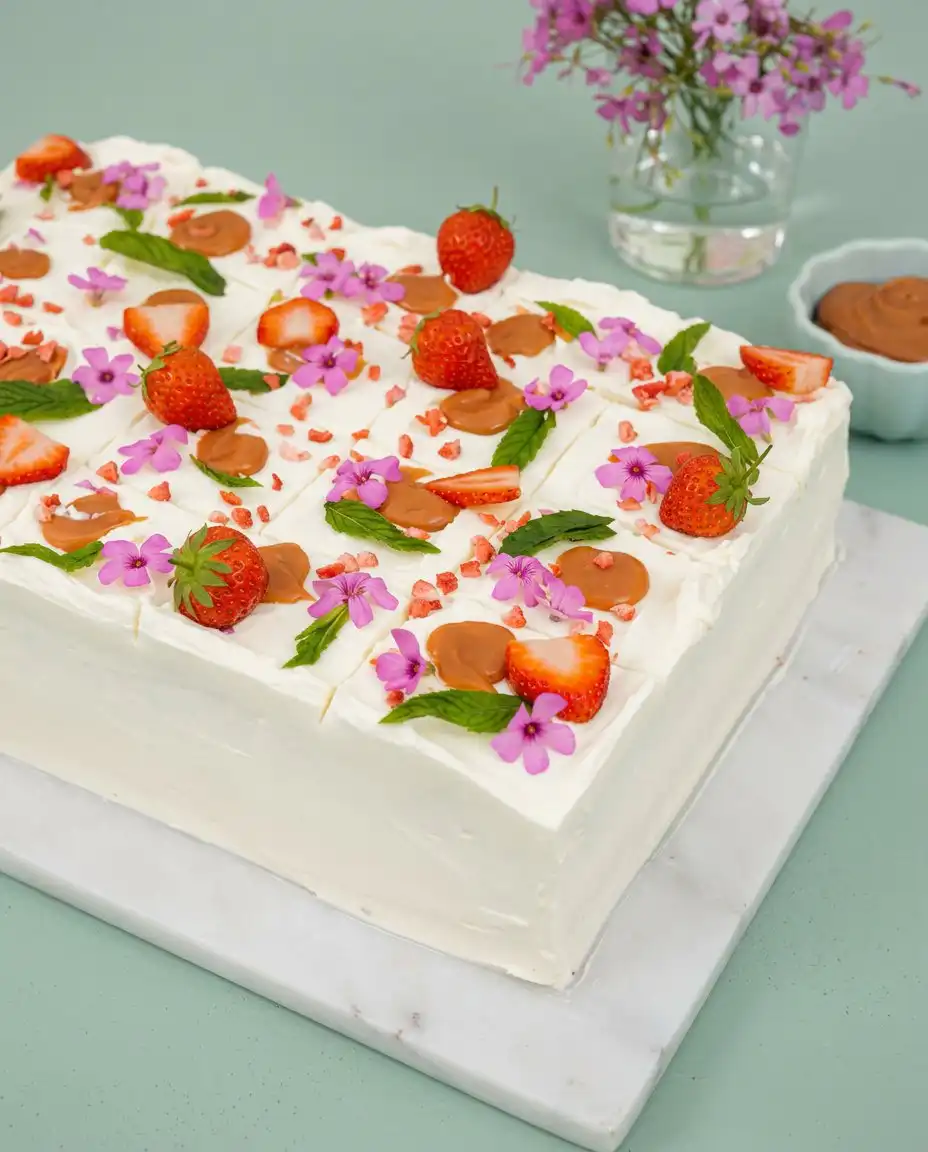
Beat the soft butter and icing sugar with the elderflower cordial for five minutes until it achieves a soft-peak stage. Apply a thin crumb coat to the entire sheet cake, chill for twenty minutes, and then apply the final layer of buttercream using a textured scrape or smooth finish. Decorate with edible flowers and mint leaves just before the service to maintain their turgidity and color.
Technique Refinements
Temperature control is the most frequent point of failure in high-fat sponges. Confirm that your eggs and milk are at the same ambient temperature as your butter, ideally 20 degrees Celsius. If you add cold eggs to creamed butter, the fat will seize and the emulsion will break, leading to an uneven rise and a dense, greasy layer.
When working with the strawberry ganache, the ratio of solids to liquids is sensitive. If your ganache appears grainy or has separated, the emulsion has failed due to excessive heat or improper stirring. To fix a broken ganache, whisk in a teaspoon of room-temperature milk very slowly until the mixture becomes smooth and shiny again.
Precision for the sake of mouthfeel requires a digital scale rather than volume measurements. Weighing your flour and sugar to the gram avoids the common error of over-packing a measuring cup, which can add up to 20% more flour than required. This extra starch absorbs too much moisture, leaving the fresh strawberry cake dry and crumbly.
To achieve a perfectly flat sheet cake for professional presentation, use damp cake strips around the outside of your tins. These strips insulate the edges, allowing the center and the sides to rise at the same rate. This prevents the domed top that often requires leveling, which wastes perfectly good sponge and alters the final height of your dessert.
Always use a high-quality white chocolate with at least 28% cocoa butter for the ganache layer. Lower-quality coatings often contain vegetable fats that do not set with the same structural integrity as real cocoa butter. For more details on choosing fats for sponges, you can read how to bake strawberry sheet cake to understand the role of fat in heat distribution.
If the cake feels too soft to handle during assembly, chill the sponge for thirty minutes. Cold cake is structurally more sound and less likely to crack when being moved from the rack to the serving board. This stability allows you to apply the ganache and buttercream with greater force and precision, resulting in sharper edges and cleaner lines.
Scrape the bottom of your mixing bowl every two minutes during the creaming and egg-incorporation stages. Dense pockets of unmixed fat or sugar often hide at the very base of the bowl, which can cause large holes or greasy streaks in the baked sponge. A consistent, homogeneous batter is the only way to ensure a uniform crumb across the entire 9×13 surface area.
Frequently Asked Questions
Why did my sheet cake sink in the middle after I removed it from the oven?
A sinking center usually indicates that the structure was not fully set before the cake was disturbed. This happens if the oven door was opened too early, causing a sudden temperature drop, or if the creaming stage incorporated too much air that the protein structure couldn’t support. Confirm the internal temperature reaches 98 degrees Celsius before removing it from the heat.
Can I use frozen strawberries for the puree in the ganache?
Frozen strawberries are acceptable, provided they are thawed and drained before being pureed and reduced. Frozen fruit often contains more water than fresh fruit, so you must simmer the puree for longer to achieve the correct concentration. Failure to reduce the liquid sufficiently will result in a soupy ganache that cannot hold the weight of the top sponge.
Is it possible to substitute the self-raising flour with all-purpose flour?
You can substitute it by adding two teaspoons of baking powder for every 150g of all-purpose flour. However, the commercial blending of self-raising flour is more precise and ensures the leavening agents are distributed evenly throughout the starch. For a cake of this size, consistency in the rise is vital for a professional appearance.
How should I store the Best Strawberry Sheet Cake to keep it fresh?
Due to the fresh fruit filling and the high butter content, this cake should be stored in an airtight container in a cool environment. It will remain at peak texture for up to three days, but the buttercream will begin to absorb odors if left uncovered in a refrigerator. Bring the cake to room temperature for one hour before serving to allow the fats to soften.
My buttercream is too soft to hold its shape. How can I fix it?
Soft buttercream is usually the result of butter that was too warm or adding too much cordial at once. To rectify this, chill the entire bowl for fifteen minutes and then beat it again on medium speed. The cold will help the fat crystals realign, providing the necessary tension to hold the soft-peak stage for decorating.
Can I bake this recipe in different sized tins?
While the batter can be adapted, the timing and heat distribution are optimized for the 9×13 inch rectangle tins. Smaller, deeper tins will require a lower temperature and a longer bake time to prevent the outside from burning before the center is cooked. If you choose to scale the recipe, always use a digital scale to maintain the exact ratios of fat to flour.
Variations That Hold
For a different flavor profile that retains the structural benefits of this recipe, consider a citrus-infused version. Replace the elderflower cordial with a concentrated lemon or lime reduction, and swap the strawberry puree for a strained raspberry coulis. This maintains the acidity levels necessary for the leavening reaction while providing a sharp, bright alternative to the floral notes.
If you prefer a more rustic texture, you can incorporate a layer of freeze-dried berry powder into the buttercream. This provides a concentrated burst of flavor and a slight crunch without adding the moisture that fresh berries introduce. For those who enjoy a more complex textural experience, the strawberry crunch cake offers a specialized crumble topping that can be adapted for this sheet format.
To make a more decadent version, substitute the white chocolate ganache for a dark chocolate and strawberry emulsion. Dark chocolate has a higher percentage of cocoa solids, which will result in a firmer set and a more intense flavor contrast. Ensure you increase the glucose syrup slightly to keep the ganache pliable, as the higher cocoa content can make the layer brittle when chilled.
Finishing & Plating
When serving a sheet cake of this scale, precision in slicing is as important as precision in baking. Use a long, serrated knife dipped in hot water and wiped dry between every cut to ensure the ganache and buttercream do not smear across the sponge. For a professional presentation, trim the outer half-centimeter of the cake to reveal the perfectly layered interior before cutting into uniform squares.
For a more formal setting, plate each square on a chilled porcelain dish and garnish with a single mint leaf and a dusting of freeze-dried strawberry powder. The contrast between the soft sponge and the cold plate enhances the perceived freshness of the fruit. If you are serving this at an outdoor event, consider a version like the strawberry poke cake 3 which handles temperature fluctuations with more resilience due to its higher moisture content.
Pair this dessert with a lightly sparkling elderflower pressé or a crisp glass of Prosecco to complement the floral notes in the buttercream. The carbonation acts as a palate cleanser, cutting through the rich lipids of the white chocolate ganache and the butter-heavy sponge. This balance allows the natural acidity of the fresh strawberries to remain the primary focus of the experience.

Final Notes
The Best Strawberry Sheet Cake represents the ideal intersection of British sponge tradition and modern pastry technique. By focusing on the emulsion of fats and the reduction of fruit moisture, you create a dessert that is both structurally sound and exceptionally tender. Precision for the sake of mouthfeel is not a burden but a tool that ensures your efforts on the pastry bench are rewarded with a consistent, professional result.
As you master the creaming and folding techniques required for this bake, you will find that these principles apply to almost every high-quality sponge. For more inspiration on fruit-based desserts, consider trying the strawberry shortcake for a different take on the classic berry and cream pairing. Each recipe offers a new opportunity to refine your technical skills and understand the chemistry of baking.
I encourage you to share your results and technical observations with our community of ambitious home bakers. Your insights into oven dynamics and flavor balances help everyone achieve a better standard of pastry. Connect with us on our social channels to see more detailed technique videos and bench notes.