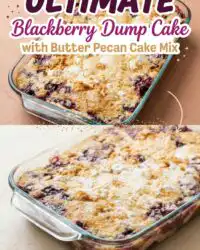
Gelatinisation of fruit starches dictates whether a baked pudding maintains a clear structure or collapses into a soggy puddle.

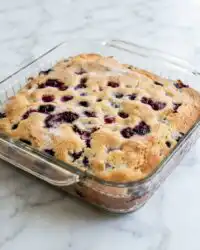
Achieving a thick, jammy layer underneath a perfectly crisp crumb requires careful heat management and balanced dry-to-wet ratios. This Blackberry Dump Cake with Butter Pecan Cake Mix relies on the moisture of fresh fruit to hydrate the dry mix, transforming it into a cohesive cobbler-style crust. By controlling how the fats melt into the starches, you create a dessert that is structurally sound yet incredibly tender. We will examine the precise mechanisms that turn simple ingredients into a highly refined texture.
What Makes the Texture Right for This Blackberry Dump Cake with Butter Pecan Cake Mix
Prep: 10 min · Serves: 12 · Difficulty: Easy
- Crisp pecan topping offers perfect textural contrast.
- Thick blackberry jam layer holds its shape.
- Precise butter placement prevents dry flour spots.
- Baking time ensures ideal fruit starch gelation.
- Effortless assembly saves valuable kitchen bench space.
Baking desserts like this requires understanding how starch absorbs liquid during the bake. Unlike a traditional pastry crust, this method allows the fruit juices to boil up and hydrate the dry flour particles from below. This process mimics the technique used in classic 3 ingredient dump cake preparations, where simplicity meets structural efficiency.
The inclusion of pecans in the cake mix introduces a rustic crunch that breaks up the soft crumb. When the salted butter melts at 35 degrees Celsius (95 degrees Fahrenheit), it coats the flour and sugar, creating mini-pockets of shortbread-like texture. This dual texture is the hallmark of professional baking, providing sensory interest in every single bite.
This specific method guarantees that your topping stays crisp while the bottom layer remains beautifully jammy. We will apply this precise technique to master the balance between moist fruit and a crunchy, structural crust. Structure is what makes the melt possible.
Get The Full Cake Recipe
Print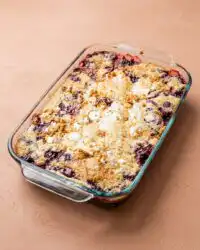
Blackberry Dump Cake with Butter Pecan Cake Mix
- Total Time: 1 hour 10 mins
- Yield: 12 servings
- Diet: Vegetarian
Description
This easy-to-assemble dessert features a jammy blackberry base topped with a crisp, buttery pecan crust. By balancing fresh fruit moisture with a dry cake mix layer, this recipe achieves a professional-quality texture through simple thermodynamic principles.
Ingredients
- 6 cups fresh blackberries
- 1 tablespoon lemon juice
- 3 tablespoons dark brown sugar
- 15.25 ounces butter pecan cake mix
- 12 tablespoons salted butter, cold
Instructions
- Prepare the oven. Preheat your oven to 176 degrees Celsius (350 degrees Fahrenheit) and lightly grease a 9×13-inch baking pan.
- Assemble fruit base. Spread blackberries in the prepared pan and toss gently with lemon juice.
- Add brown sugar. Sprinkle the dark brown sugar evenly over the berries and let sit for 5 minutes to release natural juices.
- Layer the cake. Scatter the dry butter pecan cake mix over the berries and use an offset spatula to level the surface without packing it down.
- Position the butter. Slice the cold butter into 12 equal pieces and place them in a grid pattern across the top of the cake mix.
- Bake the cake. Bake for 45 to 60 minutes until the fruit is bubbling and the topping is a deep golden brown.
- Rest and cool. Transfer the pan to a wire rack and allow it to cool for at least 15 minutes to let the fruit filling set before serving.
Notes
- Ensure blackberries are completely dry after washing to prevent excess steam that can lead to a soggy crust.
- Use a light-colored baking dish to promote even browning and prevent the bottom sugars from scorching.
- Distribute butter pats evenly to ensure every part of the dry cake mix is hydrated during the melting process.
- Allow the dessert to rest after baking so the natural pectins in the fruit can form a stable, jammy consistency.
- Prep Time: 10 mins
- Cook Time: 60 mins
- Category: Dessert
- Method: Baking
- Cuisine: American
Weighed & Ready
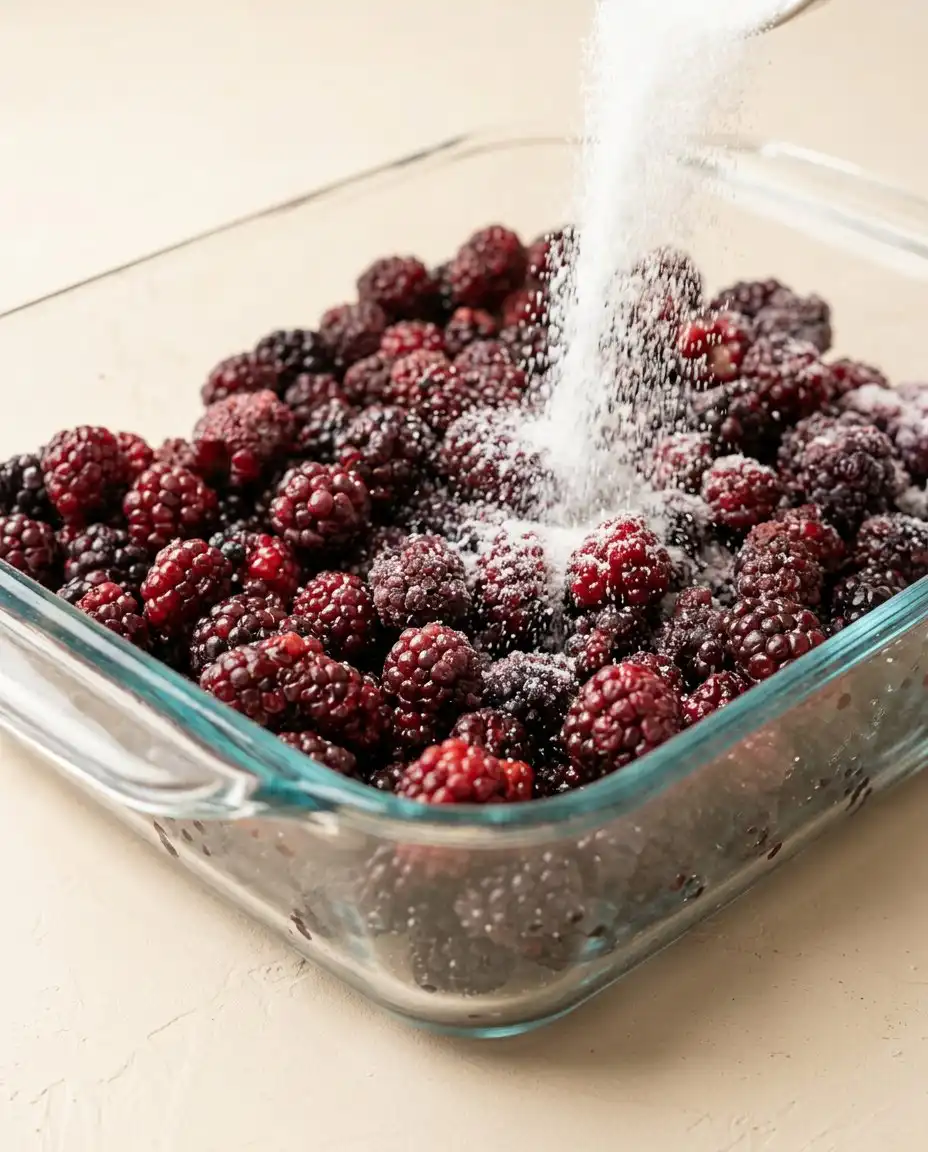
Every component in this recipe plays a vital thermodynamic role, converting heat and moisture into a set pudding. Selecting fresh berries and high-fat butter ensures the crumb sets correctly without turning into a heavy paste. Weighing your ingredients carefully on a digital scale will yield the most consistent results on the pastry bench.
The chemical composition of these elements dictates how they behave under extreme heat. For instance, the high sugar content in the cake mix caramelizes when exposed to the melting fat of the butter. This reaction forms a protective shell that traps the steam rising from the boiling fruit, forcing it to hydrate the middle layers of flour.
- Fresh Blackberries: Provide the acidic base and natural pectin needed to establish a set, jammy consistency under high heat. This natural pectin acts as a thickener, turning the fruit juices into a cohesive gel rather than a watery layer.
- Lemon Juice: Lowers the pH of the fruit mixture, which accelerates pectin gelation and balances the sweetness of the sugar. This acid is key to preventing the berry layer from tasting overly sweet and cloying.
- Brown Sugar: Introduces molasses, adding depth and moisture while caramelising around the edges of the baking dish. The caramelised sugars create a rich, chewy border that contrasts beautifully with the soft center.
- Butter Pecan Cake Mix: Serves as the starch and sugar skeleton, absorbing the fats and juices to form a crisp, biscuity crust. The pre-incorporated pecan flavors add a nutty dimension that standard yellow cake mixes lack.
- Salted Butter: Melts slowly over the dry flour layer, creating an emulsion that prevents dry flour pockets and enhances the pecan flavor. The salt in the butter balances the high sugar profile of the cake mix precisely.
| Ingredient | Why It Matters |
|---|---|
| Fresh Blackberries | Releases moisture and natural pectin to form the structural fruit base. |
| Lemon Juice | Lowers pH to activate pectin gelation and brighten flavor. |
| Brown Sugar | Supplies moisture and caramelisation for a rich under-layer. |
| Butter Pecan Cake Mix | Provides flour and fat-soluble sugars to construct the crumb. |
| Salted Butter | Creates a melting emulsion that binds the dry cake mix during baking. |
Understanding how these components interact is key to a clean bake. The moisture from the boiling berries must rise through the dry cake mix at exactly the right rate to hydrate the starches without dissolving them completely. If the ratio of fruit to flour is off, you risk either a dusty surface or a wet, unappealing sludge. Keeping these ratios precise ensures a beautiful, professional finish.
The Tested Procedure
Step 1: Oven Calibration and Pan Preparation
Preheat your oven to 176 degrees Celsius (350 degrees Fahrenheit) and place an oven thermometer on the center rack to verify accuracy. Lightly grease the bottom and sides of a 9×13-inch (23×33 cm) ceramic or metal baking pan with a thin film of unsalted butter or neutral oil. A metal pan will conduct heat more rapidly, producing a crisper bottom edge, while ceramic offers gentler, more even heat distribution. Make sure the pan is dry before proceeding to prevent premature starch hydration.
Step 2: Fruit Base Assembly
Distribute 6 cups (approx 900 grams) of fresh, rinsed, and thoroughly dried blackberries across the bottom of the prepared pan. Pour 1 tablespoon of freshly squeezed lemon juice evenly over the berries, stirring gently with a silicone spatula to coat each piece. This acid introduction is crucial because it helps break down the outer cell walls of the fruit, facilitating a quicker release of natural juices. Verify the berries form a uniform, single layer with minimal gaps between them.
Step 3: Starch Gelation Enrichment
Sprinkle 3 tablespoons of dark brown sugar evenly over the acidified blackberries. The molasses in the brown sugar draws out the fruit’s moisture via osmosis, establishing a rich liquid bed at the base of the pan. This syrup is what will eventually boil and rise up to hydrate the dry mix above. Let the mixture sit for 5 minutes at room temperature until a glossy, wet sheen coats the fruit.
Step 4: Layering the Blackberry Dump Cake with Butter Pecan Cake Mix
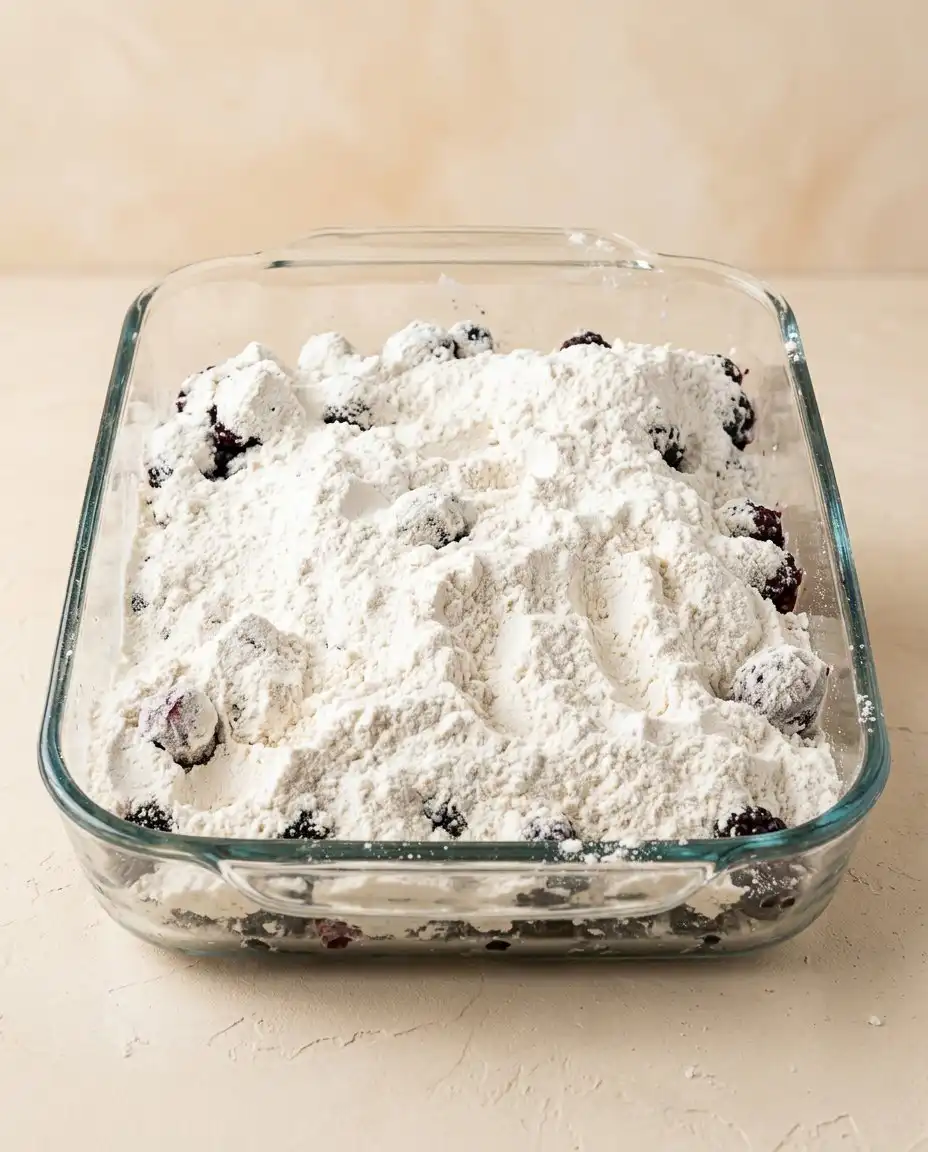
Measure 15.25 ounces (432 grams) of the butter pecan cake mix and scatter it gently over the resting berry layer. Use an offset palette knife to smooth the dry powder into a completely level surface, avoiding pressing down, which packs the flour too tightly. A packed layer restricts steam flow, leading to pockets of dry, unbaked flour. This dry bed must remain aerated so the rising steam can penetrate and gelatinise the starches evenly.
Step 5: Slicing and Positioning the Butter
Take 12 tablespoons (170 grams) of cold salted butter and slice it into 12 identical pats of equal thickness. Place these butter squares in a grid pattern over the surface of the dry cake mix, spacing them exactly 2 inches (5 cm) apart. Placing the butter with this level of precision ensures that as it melts, the fat spreads uniformly across the flour bed. This prevents dry patches while creating a delicate, shortbread-like crust where the butter saturates the starches.
Step 6: Thermal Baking Phase
Slide the pan onto the center rack of your preheated oven and bake for 45 to 60 minutes. Observe the surface at the 35-minute mark; the butter should be completely melted, and the edges should show active, thick bubbling. The starch gelatinisation is complete when the fruit juices bubble through the crust and the top turns a deep golden brown. The crust will feel firm and set when gently tapped with the back of a spoon.
Step 7: Structuring and Cooling
Remove the pan from the oven and place it on a wire cooling rack to rest for at least 15 minutes. This cooling window is essential because it allows the fruit starches to set, turning the hot liquid into a thick, cohesive jam. Cutting into the dessert too quickly will cause the fruit base to run, ruining the distinct dual-layer structure. Let the residual heat finish tempering the crust to a crisp, biscuity finish.
Technique Refinements
For the cleanest slices, temperature management is key. Allowing the dessert to cool to 50 degrees Celsius (122 degrees Fahrenheit) stabilizes the pectin matrix, ensuring the fruit layer does not bleed into the butter pecan topping. This is a standard practice when baking classic fruit-based cherry dump cake or cobblers.
If your topping remains powdery and dry, it is because the butter was not distributed evenly or the fruit lacked sufficient moisture to generate steam. To fix this mid-bake, melt 2 tablespoons of butter and gently brush or drizzle it over the dry flour patches. In future bakes, make sure the cold butter slices cover the entire surface area of the dry cake mix.
Washing the fresh blackberries too close to assembly time can introduce excess surface water, which dilutes the fruit starches and prevents proper gelation. Always wash your fruit at least 30 minutes before baking, spreading them on paper towels to air-dry completely. For more on adjusting fruit moisture levels, examine the details within this blackberry crumble cake method.
You can improve the structural integrity of the cake mix by whisking a pinch of sea salt and finely chopped toasted pecans into the dry mix before layering. This redistributes the leavening agents and introduces a physical barrier that prevents the starch from packing down. The result is a lighter, more shattered crumb texture.
Avoid using dark metal baking pans if you prefer a softer, golden crust. Dark metal absorbs and radiates heat too aggressively, which can scorch the bottom sugars before the top cake mix has fully hydrated. A light-colored aluminum or heavy ceramic dish is the professional choice for balanced thermal conduction.
Using a digital scale to weigh your butter slices ensures that each portion is exactly 14 grams. This level of accuracy prevents greasy spots where the butter has oversaturated the starch, as well as dry spots where too little fat was present. Precision on the pastry bench translates directly to a superior mouthfeel.
Should you observe the edges burning before the center is set, cover the pan loosely with aluminum foil. This deflects the direct radiant heat while allowing the internal steam to continue cooking the flour. Keep the foil tented so it does not touch the melting butter on the surface.
Frequently Asked Questions
Can I use frozen blackberries instead of fresh ones?
Yes, frozen blackberries work perfectly in this recipe. Do not thaw them before assembly, as thawing releases excess water that will make the starch layer soggy. Increase the baking time by 5 to 10 minutes to compensate for the lower initial temperature of the fruit. This guarantees the center heats through completely without burning the top crust.
Why is my dump cake still dry on top after baking?
Dry patches occur when the butter slices are cut too thick or placed too far apart, preventing them from melting evenly across the surface. Next time, verify the butter is sliced thinly and distributed in a complete grid. You can also lightly mist the dry spots with cooking spray before baking to assist hydration and promote starch gelation.
How should I store leftover blackberry dump cake?
Allow the dessert to cool completely to room temperature before covering it tightly with foil or plastic wrap. Store it in the refrigerator for up to 4 days to preserve the structure of the fruit. Reheat individual portions in a 150 degree Celsius (300 degree Fahrenheit) oven for 10 minutes to restore the crispness of the topping. Avoid reheating in the microwave as it turns the crust soggy.
Can I make this dessert gluten-free?
You can easily swap the standard cake mix for a certified gluten-free yellow or white cake mix. Because gluten-free flours absorb moisture differently, you may need to add an extra tablespoon of butter to guarantee complete hydration. The overall baking time and temperature remain exactly the same. Make sure the fruit layer is fully boiling to activate the alternative starches.
What is the purpose of adding lemon juice to the fruit?
Lemon juice is essential for lowering the pH, which allows the natural pectin in the blackberries to bond and form a set gel. Without this acid, the fruit filling would remain runny and thin, soaking the bottom crust. It also cuts through the heavy sweetness of the butter pecan cake mix. This simple chemical adjustment is key to professional-level pastry texture.
Can I cut the butter into the cake mix instead of slicing it?
While you can rub the butter into the dry mix to form a crumble, it changes the classic dump cake texture. Slicing the butter and placing it on top allows it to slowly seep through the dry flour, creating distinct layers of crisp shortbread and tender cake. The slow-melt process is what defines this specific structural style.
How do I prevent the berries from sticking to the bottom of the pan?
Greasing the pan thoroughly with cold butter or a reliable cooking spray creates an effective barrier. Additionally, the brown sugar creates a thin layer of syrup that keeps the fruit from scorching against the hot metal or ceramic. Verify your oven rack is in the center position so the bottom of the pan does not receive too much direct heat.
Can I reduce the amount of sugar used?
You can reduce the brown sugar if your blackberries are exceptionally sweet or ripe. However, keep in mind that sugar is a structural ingredient that liquefies under heat to help hydrate the flour. Reducing it significantly may result in a drier top crust. Keep at least one tablespoon to guarantee adequate syrup formation.
Considered Adjustments
Toasted Almond and Blackberry Crust. Replace the butter pecan mix with a yellow or white cake mix, and stir in 50 grams of sliced, toasted almonds and a drop of almond extract. The nut oils release during baking, altering the starch structure to produce an incredibly fragrant, marzipan-like crumb. This technique adds an elegant French pastry note to the dessert, providing a clean contrast to the dark fruit.
Autumn Spiced Stone Fruit Blend. Introduce sliced peaches or plums alongside the blackberries to create a multi-dimensional fruit base. This variation mirrors the spiced profile of a traditional apple dump cake, utilizing ground cinnamon and nutmeg to complement the rich butter pecan topping. Verify the stone fruits are sliced thin, to about 5 millimeters, so they soften at the same rate as the berries.
Cardamom and Brown Butter Topping. Melt the salted butter in a saucepan until the milk solids turn a deep amber color, then drizzle this brown butter directly over the dry mix. Dust the dry cake mix with 2 grams of ground cardamom before adding the butter to infuse the entire crumb with warm, herbal notes. This thermal preparation of the fat alters how it coats the flour, resulting in a deeper caramelisation.
Serving the Structure
Serving this dessert at the proper temperature is essential for enjoying its contrasting textures. Serve it warm, about 15 minutes out of the oven, when the butter pecan topping is still crisp and the blackberry layer is thick and jammy. If you let it cool completely, the fruit will set fully, making it perfect for clean slicing and elegant plating.
A scoop of high-fat vanilla bean ice cream is the classic accompaniment, providing a cold, creamy contrast to the warm, bubbling fruit. As the ice cream melts, it forms a custard-like sauce that wraps around the crisp pecan crumbs without softening them too quickly. For a more decadent variation, you can serve it alongside a rich, warm custard, similar to the pairings used for a heavy chocolate cherry dump cake.
For formal gatherings, spoon the warm dessert into individual ceramic ramekins immediately after baking. This contains the rustic structure of the runnier fruit juices, presenting a neat, portioned dessert to your guests. Dust the top lightly with powdered sugar or freshly grated nutmeg right before serving to add a professional finishing touch.
To enhance the plating further, garnish each dish with a few fresh, unbaked blackberries and a sprig of fresh mint. The fresh fruit provides a bright, tart contrast to the baked, jammy berry base. This simple visual and textural addition refines the entire presentation on the table.
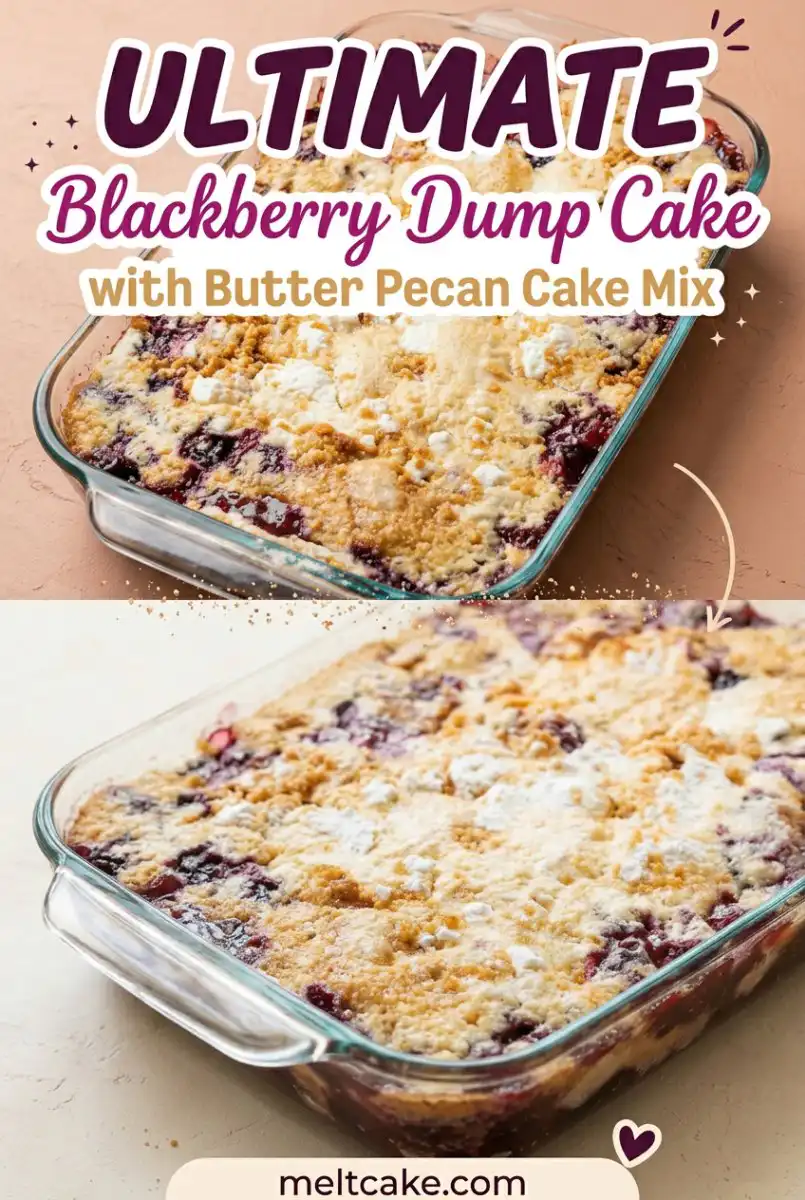
What the Technique Gives You
Mastering the simple physics of a dump cake reveals how starch and fat can self-regulate in the oven to create a dessert of exceptional texture. By understanding how the boiling fruit steam hydrates the dry mix while the melting butter crisps it from above, you gain a valuable technique for your pastry repertoire. This recipe proves that you do not need hours of labor to achieve a highly satisfying, structurally sound dessert.
If you enjoy this methodical approach to baking, explore our other refined cake mix recipes to expand your home pastry skills. Each recipe is designed to teach you the technical details behind successful baking, producing consistent results every time. Keep your scale calibrated, watch your oven temperatures, and trust the science of baking.
Share your baking results with us and join our community of ambitious home bakers. Follow our latest kitchen experiments and structural guides on Pinterest, Facebook, and TikTok for daily technique refinements. We look forward to seeing how your blackberry bakes turn out on the bench.