During my time in a London patisserie, I realized that the structural integrity of a Cherry Amaretto Bundt Cake depends entirely on the precision of the initial butter aeration.

This recipe creates a sophisticated balance of stone fruit and nutty liqueur. By using specific sifting techniques, we achieve a crumb that is remarkably sturdy yet melts upon tasting.
Why This Cherry Amaretto Bundt Cake is a Technical Triumph
This recipe provides a structural victory for the home baker who values precision. The dense, velvet-like crumb is punctuated by bursts of fresh cherry, while the amaretto provides a delicate aromatic depth. It is a beautiful demonstration of how precise ingredient temperatures yield a superior mouthfeel. You will appreciate the way the cake holds its intricate shape while offering a tender, moist interior that stays fresh for days.
Unlike many recipes that rely on artificial flavors, this method uses the chemical synergy between stone fruits and almond-derived liqueur to create a natural, deep profile. The use of a tube pan allows for a crisp outer crust that protects the softest interior, a textural contrast that defines professional baking. This cake is not merely a dessert; it is a lesson in moisture control and crumb structure. By following this methodical approach, you master the ability to suspend heavy fruit in a delicate batter without it sinking to the bottom.
Print
Cherry Amaretto Bundt Cake
- Total Time: 1 hour 20 mins
- Yield: 12 servings
- Diet: Vegetarian
Description
This sophisticated bundt cake features a dense, velvet-like crumb punctuated by fresh cherries and the aromatic depth of amaretto liqueur. By utilizing precise sifting and emulsification techniques, this recipe achieves a professional-grade structure that is both sturdy and tender.
Ingredients
- 2 cups fresh cherries, pitted and halved
- 3 cups Swan Cake Flour (plus 2 tablespoons for tossing)
- 1 teaspoon salt
- 2 teaspoons baking powder
- 1 cup unsalted butter, room temperature
- 2 cups granulated sugar
- 4 large eggs, room temperature
- 1 teaspoon almond extract
- 1/2 cup whole milk
- 1/2 cup amaretto liqueur
Instructions
- Preheat your oven to 350°F (175°C) and thoroughly coat a bundt pan with baking spray or a butter and flour mixture.
- Sift the cake flour, salt, and baking powder together twice to ensure uniform aeration and remove any clumps.
- In an electric mixer, cream the room-temperature butter and granulated sugar for at least five minutes until the mixture is pale and voluminous.
- Add the eggs one at a time, beating for 30 seconds after each addition to maintain a stable emulsion.
- Mix in the almond extract until well combined.
- With the mixer on low, add the flour mixture in three parts, alternating with the combined milk and amaretto in two parts, beginning and ending with the flour.
- Toss the halved cherries in the reserved two tablespoons of flour until coated, then gently fold them into the batter by hand using a spatula.
- Pour the batter into the prepared pan and tap it firmly once on the counter to release large air bubbles.
- Bake for 50-55 minutes until a thin skewer inserted into the center comes out clean.
- Let the cake rest in the pan for exactly 15-20 minutes before inverting it onto a wire rack to cool completely.
Notes
To ensure a perfect release from the pan, avoid leaving the cake to cool for more than 20 minutes, as the sugars can begin to stick to the mold. If the cake feels stuck, placing the pan on a hot, damp towel for several minutes can help steam the edges loose for a cleaner inversion.
- Prep Time: 25 mins
- Cook Time: 55 mins
- Category: Dessert
- Method: Baking
- Cuisine: American
The Technical Foundation for Your Bundt
Success begins with the quality of your building blocks. Each ingredient plays a specific role in maintaining the structural integrity of this cake.
- Fresh Cherries: Only use fresh fruit; frozen varieties release too much moisture and compromise the internal integrity. We pit and halve them to keep the pieces small enough to stay suspended.
- Swan Cake Flour: This specific flour is vital because its low protein content (around 7-8%) ensures a tender structure. Using all-purpose flour would result in a tough, bread-like texture that lacks the signature melt-on-the-tongue quality.
- Amaretto Liqueur: This adds moisture and a complex almond-toned aroma. If you omit this, you must replace the volume exactly with milk to maintain the hydration ratio.
- Butter and Eggs: These must be at room temperature, specifically around 68°F (20°C). Cold butter will not trap the air needed for a light crumb, and cold eggs will curdle the emulsion.
- Granulated Sugar: Beyond sweetness, sugar is a structural component that tenderizes the crumb by interfering with gluten development and holding moisture.
- Baking Powder: Our primary leavening agent that creates the air pockets for that perfect lift inside the heavy pan.
The Method for Perfect Texture
Step 1: Prep Your Ingredients and Mold
Preheat your oven to 350°F (175°C). Coating the pan is a critical step in preserving the structural beauty of your cake. Use a high-quality release spray or a mixture of melted butter and flour to reach every crevice of your Heritage pan. Sift the cake flour, salt, and baking powder together twice. This second sifting is not optional; it breaks up clumps and provides the uniform aeration required for a professional crumb.
Step 2: The Emulsification Process
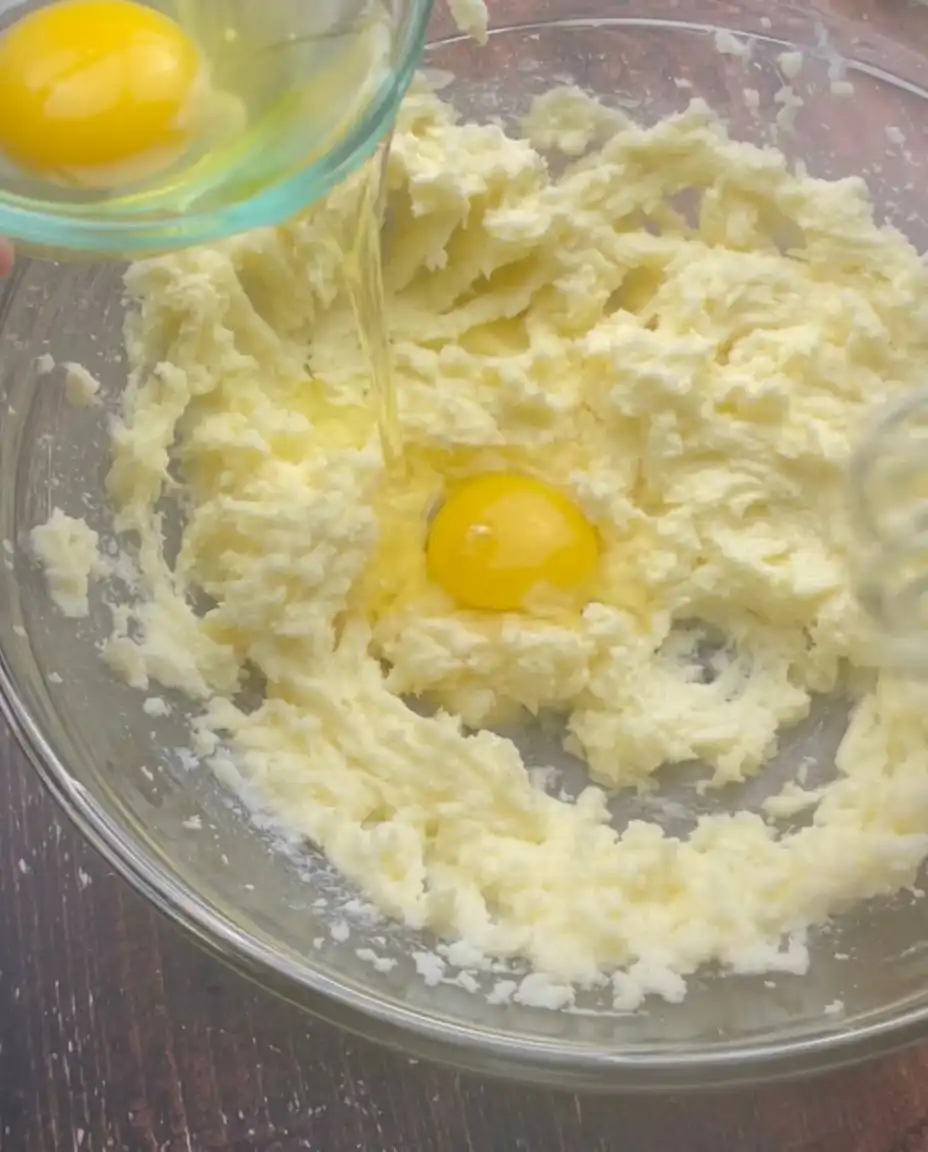
In your electric mixer, cream the room-temperature butter and granulated sugar for at least five minutes. You are looking for a pale, voluminous texture that resembles whipped cream. Add the eggs one at a time, beating for 30 seconds after each addition. This slow process makes sure the fat and water in the eggs form a stable emulsion with the butter. Add the almond extract at this stage to distribute the flavor evenly throughout the fat.
Step 3: Alternating the Dry and Liquid Additions
Lower your mixer speed to the minimum. Add one-third of the flour mixture, then half of the combined milk and amaretto. Repeat this, finishing with the final third of the flour. This technique prevents the batter from breaking or over-developing gluten. Stop the mixer immediately once the last streaks of flour disappear to preserve the delicate texture.
Step 4: Suspending the Fruit
Toss your halved cherries in the two tablespoons of flour until they are fully coated. This coating creates a bridge between the fruit and the batter, preventing the cherries from sliding to the bottom. Gently fold the cherries into the batter with a spatula. Do not use the mixer for this; over-mixing will turn the batter pink and destroy the aesthetic of the golden cake.
Step 5: The Bake and Set
Pour the batter into the prepared pan and tap it firmly on the counter once to release large air bubbles. Bake for 50-55 minutes. Check for doneness by inserting a thin skewer; it should come out clean or with a few moist crumbs. Allow the cake to rest in the pan for exactly 15-20 minutes. This cooling period is vital as the proteins and starches set, giving the cake the strength to survive the inversion process.
Jordan’s Technical Secrets
The most common failure in Bundt baking is a cake that sticks or breaks upon release. To prevent this, never leave the cake in the pan for more than 20 minutes; as it cools, the sugar in the crust begins to act like glue. Understanding the science of a bundt-cake involves knowing that the central tube provides the heat necessary to cook the center of the cake as quickly as the edges, preventing a gummy core. If your cake is stubborn, place the pan on a hot, damp towel for five minutes to steam the edges loose. Always measure your flour by weight or by spooning it into the cup; packing it will lead to a dry, dense cake that lacks the desired melt.
Technical Variations for Advanced Bakers
For those who prefer a different fruit profile, this method works beautifully as a cherry-cake by adding the zest of two lemons to the sugar during the creaming stage. The acidity of the lemon cuts through the richness of the butter perfectly. You can also replace the amaretto with a high-quality almond syrup if you are avoiding spirits, though the texture may be slightly more dense due to the higher sugar content in syrup. If you are looking for a more casual result with a higher moisture-to-flour ratio, compare this structure to a cherry-dump-cake to see how different mixing methods affect the final crumb and mouthfeel.
Presentation and Slicing Precision
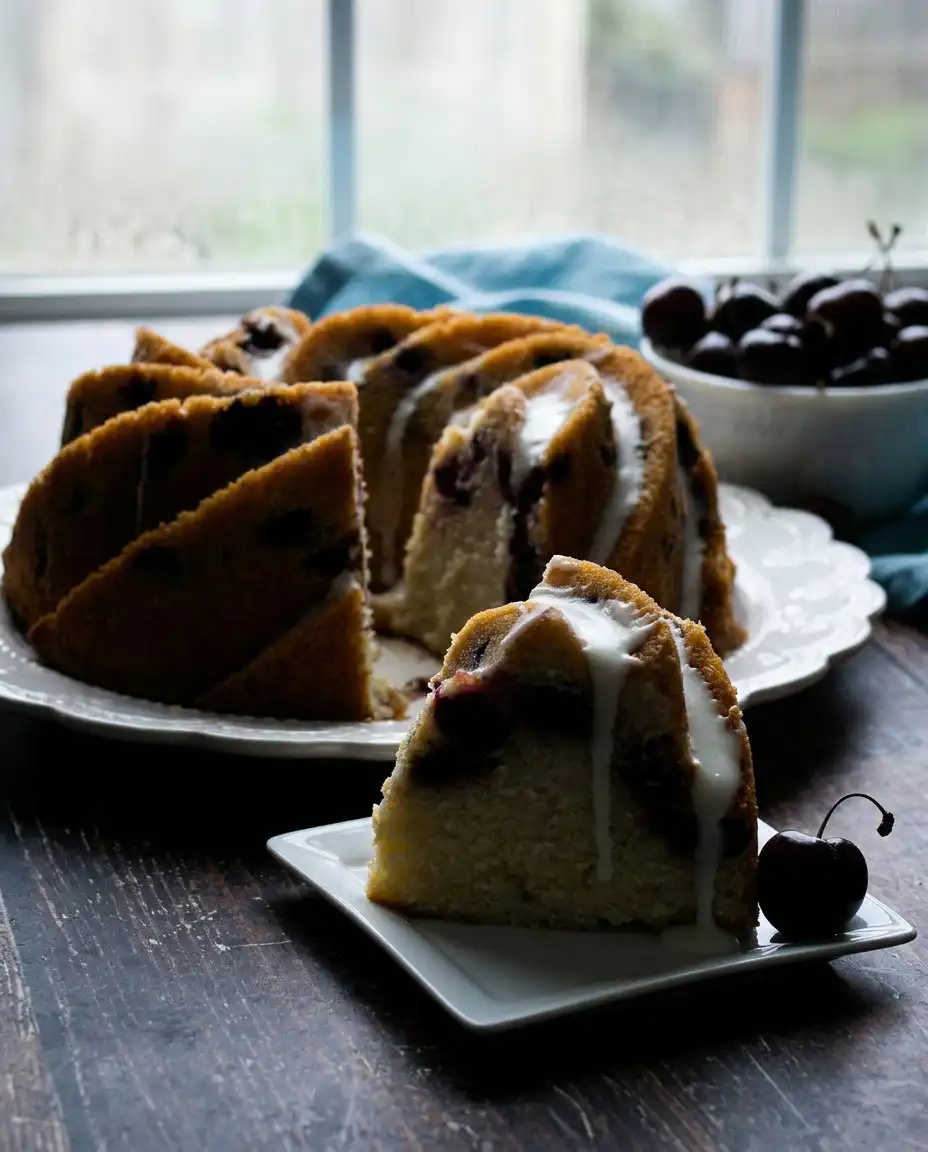
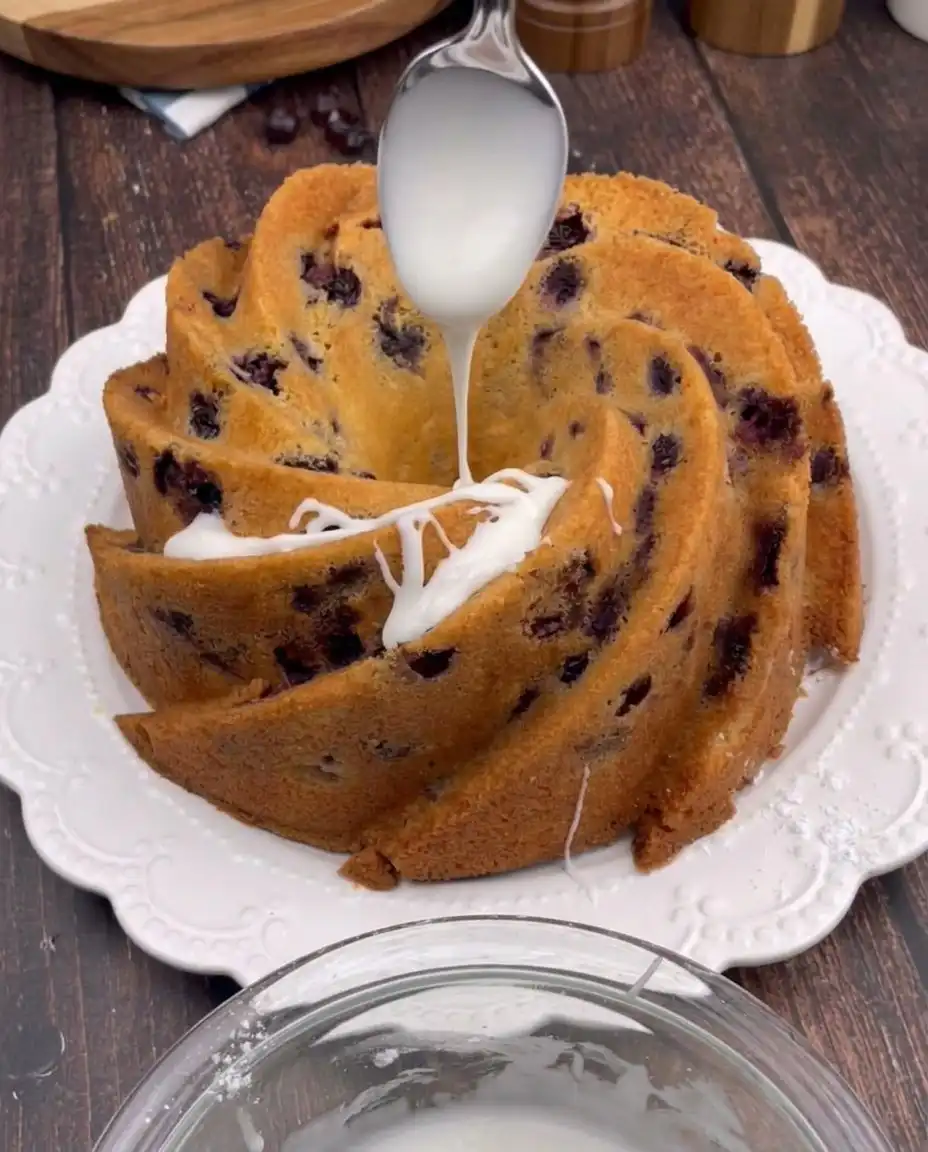
Wait until the cake is entirely cold before applying the glaze to avoid the liquid melting into the crumb. Use a wire rack over a baking sheet to catch any drips, creating a clean look. This dessert is a sophisticated alternative to a chocolate-cherry-dump-cake because of its refined shape and subtle flavor. Slice with a long, thin serrated knife using a gentle sawing motion. This prevents the weight of the knife from compressing the delicate air pockets we worked so hard to create during the creaming stage. Pair with a dollop of unsweetened whipped cream or a sharp mascarpone to balance the sweetness of the glaze.
Master the Craft of the Bundt
Mastering the Cherry Amaretto Bundt Cake is a victory for any serious baker who values technical precision. It proves that with the right technique, a single-layer cake can be just as spectacular as any tiered creation. This recipe is a testament to the fact that structure and melt are not mutually exclusive when ingredients are handled with care. If you enjoyed this technical challenge, you might also like this cherry-almond-bundt-cake-with-amaretto-adventures-in-cooking. Share your bake with me and join our community of devoted bakers on Instagram, Pinterest, or Facebook.