As a boy in Istanbul, I watched my aunts tie soft silk ribbons around boxes of honeyed pastries, a touch of grace before the sweetness was ever revealed. This Coquette Cake reminds me of that same delicate balance—a visual gift that invites you to linger before the first tender, buttery bite. In my kitchen, beauty is never just for show; it is an invitation to experience a texture that melts like a summer sunset over the Bosphorus.

The coquette aesthetic is a celebration of the soft, the ruffled, and the romantic, bringing a vintage soul to the modern table. When you combine a fine-crumbed sponge with layers of airy, silky buttercream, you create a dessert that feels like a shared secret. It is about patience, the steady hand of the piper, and the joy of creating something that looks as exquisite as it tastes.
The Texture of Timeless Romance
There is a specific magic in a cake that looks like it belongs in a Victorian parlor yet tastes like a modern dream. You will love this creation because it prioritizes the sensory experience of a classic vanilla crumb paired with the glossy, supple nature of high-quality buttercream. It is not just a cake; it is a centerpiece that demands a slower pace of life, encouraging you to admire the ruffles before the fork glides through the layers.
The mouthfeel is where the true mastery lies. Unlike dense, heavy bakes, this style relies on a lightness that feels uplifting and luxurious. Every bite offers a consistent, velvet-like give that pairs perfectly with a strong cup of Turkish coffee. It is a tribute to the Mediterranean philosophy that we eat first with our eyes, then with our soul. The vintage aesthetic, with its intricate piping and soft pink hues, brings a sense of gratitude and celebration to even the simplest afternoon tea.
Print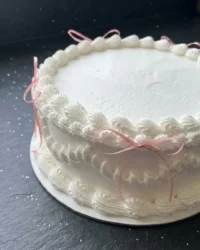
Coquette Cake
- Total Time: 1 hour 50 mins
- Yield: 12 servings
- Diet: Vegetarian
Description
This elegant Coquette Cake captures the vintage romance of the Victorian era with its delicate heart shape and intricate piped ruffles. A light vanilla crumb paired with silky, pale buttercream makes it the perfect centerpiece for a sophisticated afternoon tea or celebration.
Ingredients
- 2 8-inch round vanilla cakes, cooled and leveled
- 9 cups vanilla buttercream, whipped until pale and airy
- Deep Pink food color gel
- Fuchsia food color gel
- Silk bows (optional, for decoration)
- 12-inch cake drum
- 10-inch cardboard base
Instructions
- Shape the heart by cutting a ‘V’ from the bottom of the 8-inch cake rounds and using the excess cake to form the top lobes, securing them with a dab of buttercream.
- Apply a thin crumb coat over the entire surface to seal in moisture and chill in the refrigerator for 30 minutes until firm.
- Spread a final layer of buttercream over the chilled cake, using an icing smoother on a turntable to create a flat, glossy finish with sharp edges.
- Tint the remaining buttercream with pink and fuchsia gels and fill piping bags fitted with Wilton tips 102 and 32.
- Using the Wilton 102 tip, pipe rhythmic ruffles along the base and the top edges of the heart-shaped cake.
- Layer shell borders using the Wilton 32 tip to create the characteristic depth of a vintage aesthetic.
- Use the Wilton 3 tip to add delicate pearl-like dots or a written message across the surface of the cake.
- Add optional silk bows as a final flourish and allow the cake to reach room temperature before serving to ensure the buttercream is soft and luxurious.
Notes
For the most stable piping, ensure your buttercream is at a perfect room temperature; if it becomes too warm from your hands, wrap the piping bag in a cold damp cloth for a few minutes. Using gel-based food coloring is essential as it provides vibrant tones without thinning the frosting’s consistency. For a perfectly symmetrical heart, you may want to create a parchment paper template before cutting your cake layers.
- Prep Time: 45 mins
- Cook Time: 35 mins
- Category: Dessert
- Method: Baking and Piping
- Cuisine: International
The Foundation of Aesthetic Perfection

To craft a Coquette Cake that holds its shape while remaining impossibly moist, the quality of your pantry staples is paramount. We are building layers of flavor and structure that must work in harmony.
- Vanilla Buttercream: You will need approximately 9 cups of high-quality buttercream. This is the ‘silk’ of your cake. It must be whipped until it is pale and airy, yet firm enough to hold the delicate ‘U’ shapes and shells of vintage piping.
- Tender Cake Layers: Two 8-inch round cakes serve as our canvas. I prefer a sponge with a tight, velvet crumb that doesn’t crumble under the weight of the decor.
- Food Color Gels: Using concentrated gels like Deep Pink and Fuchsia allows us to achieve vibrant, romantic tones without thinning the consistency of our frosting.
- Structural Tools: A 12-inch cake drum and a 10-inch cardboard base are the silent heroes here, providing the stability needed to move and display your masterpiece.
- Precision Piping Tips: The Wilton 4B, 32, and 102 tips are the brushes for our edible art, creating the textures of lace, fabric, and rose petals.
The Method of the Vintage Heart
Step 1: Shaping the Soul
Begin with your cooled and leveled 8-inch cake layers. Using a serrated knife and a steady hand, we will transform these rounds into a heart. I find it best to cut a ‘V’ shape from the bottom and use the excess to round out the top lobes, securing them with a dab of buttercream. It should look like a soft, romantic heart before we ever apply the first coat.
Step 2: The Moisture Seal
Apply a thin crumb coat over the entire surface. This is a vital step in Mediterranean baking—we are locking in the moisture of the sponge. Use your angled spatula to smooth the buttercream, filling any gaps between the shaped pieces. Let this chill in the refrigerator until firm to the touch, about thirty minutes of patient waiting.
Step 3: The Silky Canvas
Once the crumb coat is set, apply your final layer of buttercream. Place the cake on your turntable and use the icing smoother to create a finish as flat and glossy as a calm sea. The sides should be sharp and the top perfectly level, providing a clean stage for the intricate vintage details to follow.
Step 4: The Art of the Ruffle
Now we begin the vintage piping. Fill your bags with the tinted buttercream. Using the Wilton 102 tip, create delicate ruffles along the base and the top edge. The movement should be rhythmic and gentle. Follow this with shell borders using the 32 tip, layering the textures to create depth. It is this layering of different ‘fabrics’ of frosting that gives the cake its coquette character.
Step 5: The Final Flourish
With the Wilton Tip 3, you can write a sweet message or add tiny dots that mimic pearls across the surface. This is the moment to add your actual silk bows if you choose. The cake should look vibrant and spectacular, a true treasure of the baker’s craft. Allow it to sit at room temperature for a short while before serving so the buttercream regains its luxurious, melt-in-your-mouth texture.
Mehmet’s Secrets for Silky Piping

Temperature is the most important ingredient when working with such intricate decor. Your buttercream must be at a perfect room temperature—if it is too cold, it will break and look jagged; if it is too warm, the ruffles will sag and lose their definition. I always recommend testing a small strip of piping on a plate before touching the cake itself. For the most reliable base, I often suggest looking into the velvet-crumb-collection to find a sponge that stands up to the weight of nine cups of frosting while remaining light on the tongue. If your hands run warm, wrap a cold damp cloth around your piping bag every few minutes to keep the frosting stable and glossy.
Regional Twists and Aesthetic Flairs
While the classic pink Coquette Cake is a timeless beauty, I often enjoy infusing it with Mediterranean scents. Try adding a teaspoon of rose water or orange blossom water to your buttercream for a floral note that matches the visual romance. For a deeper flavor profile, you might consider the raspberry-white-chocolate-cake variation, where the tartness of the berries cuts through the richness of the vanilla silk. You can also swap the pink for a soft sage green or a creamy ivory, using fresh pistachios or dried rose petals to accent the piping for a more rustic, Aegean-inspired look.
A Mediterranean Tea Time

This cake is a celebration, and it deserves to be served with intention. I love to present this on a raised glass stand, surrounded by small bowls of fresh berries. For a truly uplifting experience, pair a slice with a tart fruit accompaniment like our succulent-fruit-fusion, which provides a vibrant contrast to the sweet vanilla. Serve it alongside a steaming pot of tea or a thick Turkish coffee. The bitterness of the coffee acts as the perfect foil to the rich buttercream, allowing every textural detail of the cake to shine through.
The Sweet Soul of the Coquette
In the end, baking a cake of this beauty is an act of devotion. It is about taking the time to turn simple ingredients into something spectacular that brings joy to the table. Whether you are celebrating a special occasion or simply want to bring a bit of vintage glamour to your home, remember that patience is the secret to the perfect soak and the perfect pipe. For more inspiration on traditional bakes with a modern twist, see our fruit-cake guide. If you want to see more detailed vintage techniques, this vintage heart cake tutorial is a wonderful resource. I would love to see your beautiful creations, so please share them with our community on Instagram, Pinterest, or Facebook. Keep baking with heart, and let every slice be a reminder of the sweetness in life.