An emulsion—the precise suspension of fat within liquid—serves as the structural foundation of an ideal cookie texture.

When you bake a batch of Funfetti Cake Mix Cookies, you are bypassing traditional flour measurements to rely on a carefully engineered dry base. This approach guarantees that the pre-gelatinised starches within the mix absorb moisture with remarkable efficiency. By managing the liquid-to-fat ratio precisely, we can prevent the dough from spreading excessively on the hot baking tray. The result is a biscuit that possesses a set outer crust protecting a dense, soft interior.
What Makes the Texture Right for Funfetti Cake Mix Cookies
Prep: 10 min · Serves: 24 · Difficulty: Easy
- Precise moisture balance prevents excess cookie spreading.
- High starch content yields a tender crumb.
- Uniform suspension promotes consistent baking times.
- Egg-to-fat emulsion creates a velvety interior.
- Crisp exterior shell protects the moist crumb.
Using standard cake mix cookies as our base allows us to focus entirely on structural control. This is the recipe my family requests every single weekend.
Get The Full Cake Recipe
Print
Funfetti Cake Mix Cookies
- Total Time: 1 hour 18 mins
- Yield: 24 cookies
- Diet: Vegetarian
Description
These Funfetti Cake Mix Cookies combine a stable, pre-gelatinized base with white chocolate chips and colorful sprinkles for a perfect chewy center and crispy shell. They are a reliable, structural delight that simplifies the science of baking into a consistent, family-favorite treat.
Ingredients
- 1 box Funfetti cake mix
- 2 large eggs
- 118 ml (1/2 cup) vegetable oil
- 170 g (1 cup) white chocolate chips
- 2 tablespoons rainbow sprinkle jimmies
Instructions
- Prepare the equipment. Preheat your oven to 176°C (350°F) and line a heavy-gauge baking sheet with parchment paper.
- Combine wet and dry. Mix the cake mix, oil, and eggs in a bowl with an electric mixer on medium-low for 90 seconds until a thick paste forms.
- Fold in extras. Use a silicone spatula to gently fold the white chocolate chips and rainbow sprinkles into the dough.
- Chill the dough. Cover and refrigerate the dough for 45 minutes to solidify fats and ensure the starch hydrates properly.
- Portion the dough. Scoop 1.5 tablespoon portions of dough, roll into smooth balls, and place on the baking sheet with 5 centimetres of spacing.
- Bake the cookies. Bake for 8 minutes until the edges are set and a delicate crust forms while the center remains soft.
- Rest the cookies. Let the cookies sit on the hot pan for 5 minutes after removing from the oven to complete the center gelatinization.
- Transfer to rack. Move the cookies to a wire rack to cool completely for 15 minutes before serving or storing.
Notes
- Use a digital scale for measuring ingredients to ensure the perfect liquid-to-fat ratio.
- Always use parchment paper instead of non-stick sprays to provide enough surface tension for the cookies to rise.
- Press a few extra chocolate chips onto the tops of the dough balls before baking for a professional aesthetic.
- If the dough spreads too much, return the portioned balls to the freezer for 15 minutes to firm up the fat.
- Prep Time: 10 mins
- Cook Time: 8 mins
- Category: Dessert
- Method: Baking
- Cuisine: American
Weighed & Ready
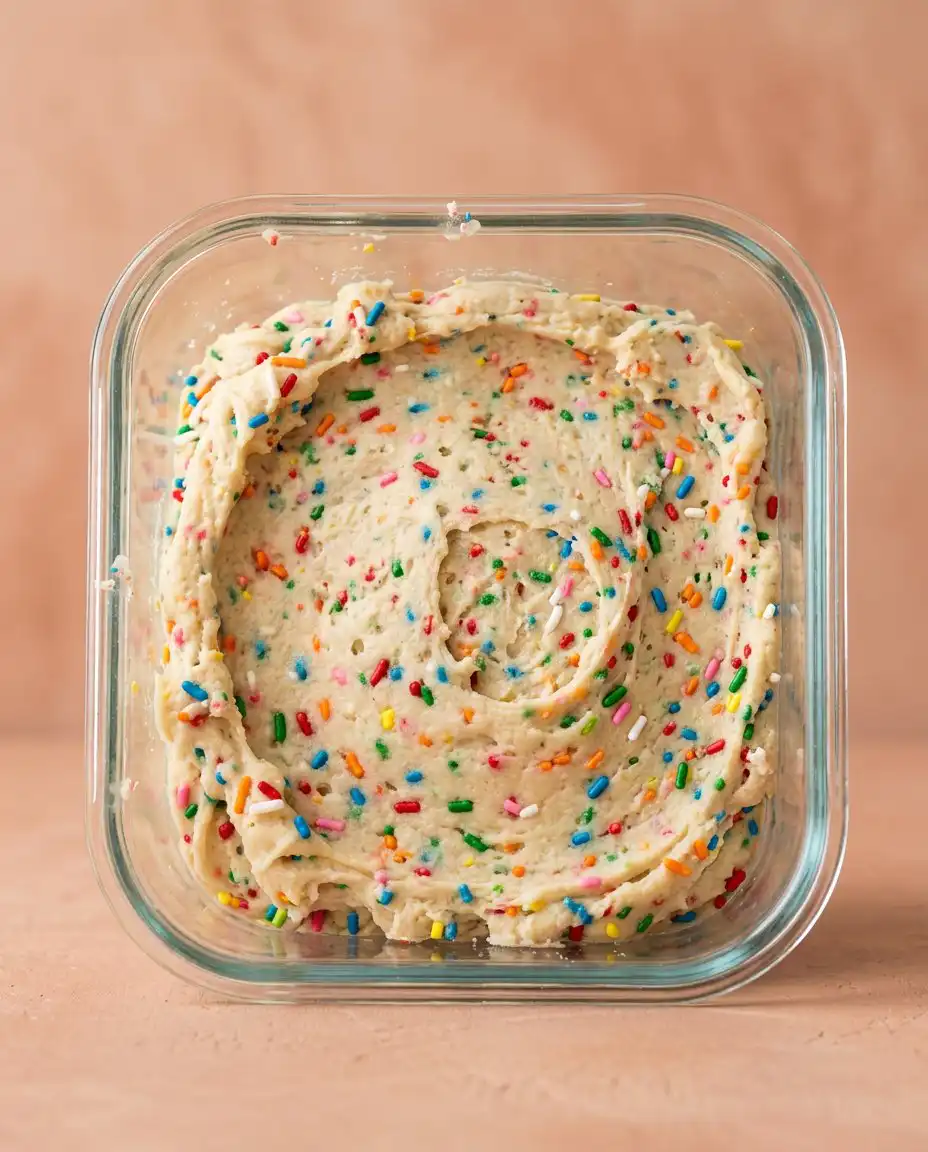
Baking is an exact science where each component performs a specific structural duty. When preparing these Funfetti Cake Mix Cookies, we must analyze how the pre-formulated dry ingredients interact with added lipids and proteins. Every gram of fat and moisture is calculated to prevent spreading while securing a soft, chewy crumb. Unlike traditional scratch baking, using a commercial mix means we are working with pre-gelatinised starches and stabilized leaveners. This requires a strict adherence to wet-to-dry ratios to guarantee the final crumb structure does not collapse under high heat.
- Funfetti Cake Mix: This dry base contains flour, sugar, and leavening agents formulated to absorb liquids uniformly during the mixing phase.
- Large Eggs: These provide structural proteins that coagulate under heat, preventing the cookies from collapsing as they expand.
- Vegetable Oil: This pure fat coats the flour molecules, inhibiting excessive gluten development to maintain a tender mouthfeel.
- White Chocolate Chips: These add distinct pockets of sweet, creamy fat that melt slowly, creating texture contrast against the baked dough.
- Rainbow Sprinkle Jimmies: These sugar-based cylinders dissolve minimally during baking, maintaining clear visual definition and slight crunch.
| Ingredient | Why It Matters |
|---|---|
| Funfetti Cake Mix | Standardises the starch-to-sugar ratio for consistent rise and spread. |
| Large Eggs | Establishes the liquid-protein emulsion required to bind the thick dough. |
| Vegetable Oil | Lubricates the starch molecules to prevent dryness and maintain moisture. |
| White Chocolate Chips | Forms structural pockets of fat that remain solid at room temperature. |
| Rainbow Sprinkles | Introduces localized sugar crystals that add minor textural variations. |
The Tested Procedure
Step 1: Prepare the Pastry Bench and Preheat
Set your oven rack to the middle position and preheat to exactly 176°C (350°F). Line a large, heavy-gauge baking sheet with high-quality parchment paper to guarantee even heat distribution and prevent localized burning. Arrange your digital scale, electric hand mixer, and mixing bowls systematically on the bench to maintain an orderly workflow. Clean, dry tools are essential to prevent introducing stray moisture that could disrupt the starch-to-fat balance.
Step 2: Combine the Primary Wet and Dry Elements
In a clean, dry mixing bowl, place the complete box of Funfetti cake mix. Pour in exactly 118 millilitres (1/2 cup) of vegetable oil and add the two large eggs. Using a hand-held electric mixer on medium-low speed, blend the mixture for exactly 90 seconds. The mixture will quickly transition from a dry powder into a thick, sticky, cohesive paste that clings to the beaters.
Step 3: Incorporate the Structural Sweeteners and Color
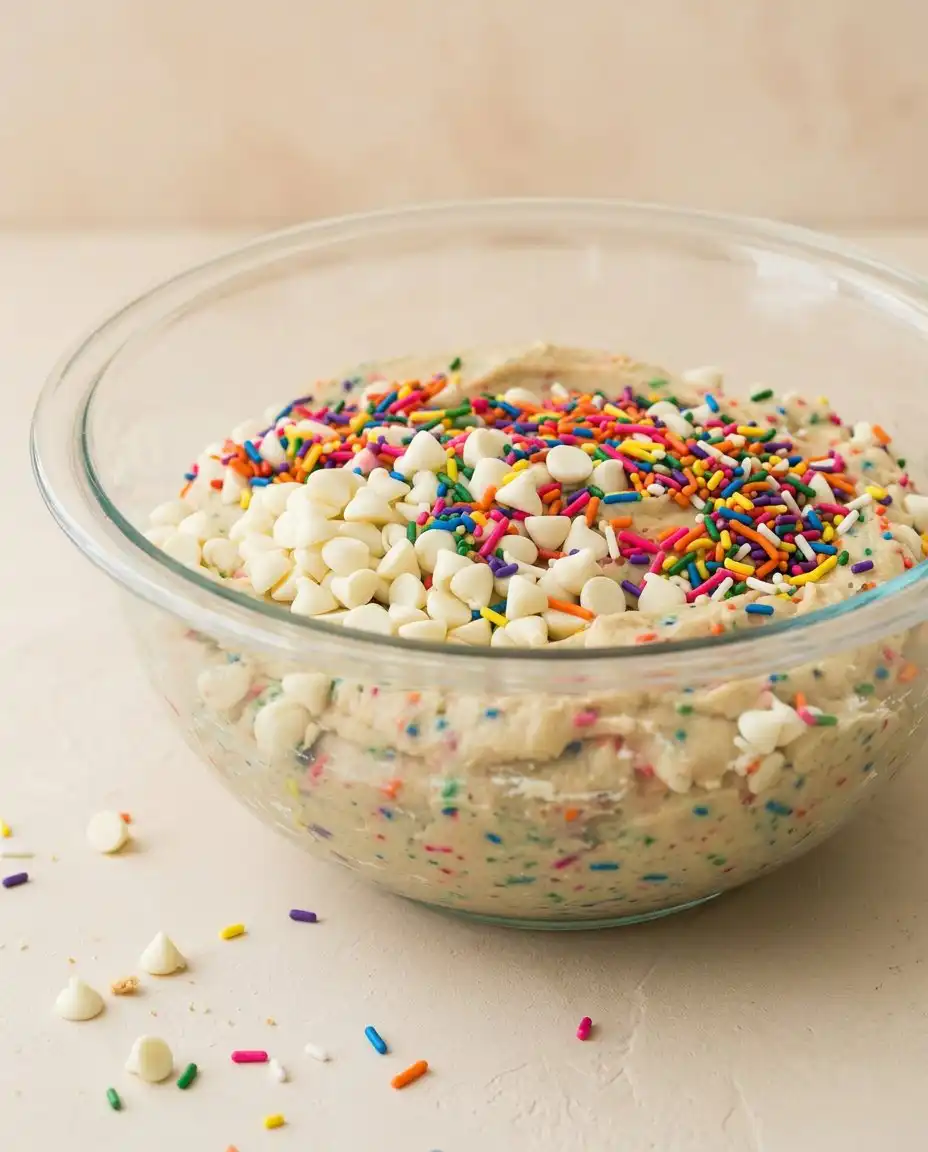
Switch your electric mixer for a sturdy silicone spatula. Gently fold in 170 grams (1 cup) of white chocolate chips and 2 tablespoons of rainbow sprinkle jimmies. Mix with long, deliberate folding motions until the chips and sprinkles are evenly distributed. Avoid overworking the dough, as excess mechanical friction can warm the fats and cause the sprinkles to bleed color into the pale dough.
Step 4: Chill the Dough for Structural Integrity
Cover the bowl tightly with plastic wrap to prevent moisture loss. Place the bowl into the refrigerator for exactly 45 minutes to let the fats solidify and the starches fully hydrate. Chilling the dough stabilizes the fat particles, which controls the rate of melting and prevents flat, thin cookies during baking. This resting phase also permits the starch to gelatinise slightly at a lower temperature, resulting in a thicker cookie.
Step 5: Portion and Shape the Funfetti Cake Mix Cookies
Using a portion scoop, divide the chilled dough into balls of 1.5 tablespoons each, weighing approximately 30 grams. Roll each portion between your palms with light pressure until it forms a smooth, round sphere. Arrange these spheres on your prepared baking sheet, leaving exactly 5 centimetres (2 inches) of space between each. Work quickly during this portioning stage to prevent the warmth of your hands from melting the stabilized fats.
Step 6: Bake the Cookies with Precision
Slide the baking sheet onto the middle rack of your preheated oven. Bake for precisely 8 minutes, watching the surfaces carefully as the cookies rise. They should expand uniformly, forming a delicate set outer crust while the very center remains soft and pale. Do not leave the oven door open during baking, as drafts can lower the temperature and disrupt the rise.
Step 7: Manage the Cooling Transition
Remove the sheet from the oven immediately when the edges are set but the center remains slightly underbaked. Allow the cookies to rest undisturbed on the warm baking pan for exactly 5 minutes. During this cooling phase, the residual heat completes the center gelatinisation—the process where starch absorbs liquid and swells—securing a soft texture without drying out. This step is critical for maintaining a tender crumb that holds its shape.
Step 8: Transfer to the Wire Rack
Using a wide, offset palette knife, gently transfer each cookie to a wire cooling rack. Let them cool completely for 15 minutes to allow the starches and fats to set. Once cooled, the cookies will possess a tender, melt-in-the-mouth texture protected by a micro-thin, crispy exterior skin. Store them only after they reach room temperature to prevent condensation inside your storage vessel.
Technique Refinements

To achieve a truly professional result, use a digital scale to weigh your dry cake mix and eggs. Variations in commercial egg sizes can disrupt the liquid-to-fat emulsion, resulting in either a dry cookie or an overly greasy one. Measuring by weight rather than volume eliminates variables and guarantees consistent results batch after batch.
If your cookies are spreading into thin, flat puddles, here is why and how to fix it: your dough has become too warm, or you substituted a thin liquid fat. Return the portioned dough balls to the freezer for 15 minutes before baking to solidify the fat and restore structure. This rapid chilling stops fat from melting faster than the flour structure can set under heat.
Avoid using non-stick sprays on your baking sheets, as the excess surface fat encourages the dough to slide and spread during the first 3 minutes of baking. Instead, always use commercial-grade parchment paper or a silicone baking mat to provide the necessary surface tension. This tension helps the cookie hold its shape, creating a taller profile and a softer center.
When you experiment with various cake mix recipes, remember that different brands contain varying levels of sodium and leavening agents. Selecting a premium brand guarantees that the leavening agents react predictably under high heat. This choice prevents the chemical metallic taste sometimes found in budget mixes.
For the highest aesthetic appeal, press a few extra white chocolate chips and sprinkle jimmies directly into the top of each dough ball immediately before they enter the oven. This technical placement guarantees that the toppings remain visible on the set crust rather than sinking into the melting center. It also creates beautiful visual contrast against the baked surface.
Should you seek further scientific insights on baking with pre-made bases, you may reference this detailed guide on baking cookies with cake mix which explains the chemical reaction of chemical leaveners in commercial mixes. Understanding how these starches undergo gelatinisation is key to mastering easy baking recipes.
Frequently Asked Questions
What ingredients do I need?
To bake these cookies, you need one standard box of Funfetti cake mix, two large eggs, and 118 millilitres of vegetable oil. Additionally, you will require 170 grams of white chocolate chips and two tablespoons of rainbow sprinkles. This small ingredient list relies on the pre-balanced starches within the mix to establish structural success. By avoiding raw flour and sugar measurements, you decrease the chances of human measurement error.
Can I use melted butter instead of oil?
Yes, you can substitute melted butter for the vegetable oil at a one-to-one ratio. However, butter contains approximately 18 percent water, which will increase gluten development and produce a slightly cakey texture. If you prefer a chewier, more dense biscuit, vegetable oil remains the superior fat choice. The lack of water in oil prevents excess gluten structure from forming during mixing.
How long do I bake them?
Bake the cookies in a preheated oven at 176°C (350°F) for precisely 7 to 9 minutes. They should be removed when the outer edges are lightly golden and set, while the centers remain soft and pale. The 30-second window between tender and tough determines the success of this bake. Cooling on the hot pan for five minutes allows the interior starch to complete its gelatinisation naturally.
Why are my cookies flat and spreading everywhere?
Excessive spreading occurs when the fat in the dough melts before the egg proteins have coagulated to form a stable structure. This is often caused by skipping the mandatory refrigeration step or using warm mixing bowls. Chilling the dough for at least 45 minutes guarantees the fat remains solid long enough for the structure to set. Avoid placing cold dough onto a baking sheet that is still warm from a previous batch.
Why are my cookies dense and hard?
Cookies become dense and hard when the dough is overmixed or baked for too long. Overmixing develops excess gluten within the cake mix flour, making the crumb tough. Additionally, baking past the 9-minute mark dries out the essential moisture, leaving the cookies brittle once cooled. Always use an oven thermometer to verify the temperature is accurate, as even a ten-degree variation can alter the final bake.
How do I store baked cookies?
Store your cooled cookies in an airtight container at room temperature for up to one week. To preserve their soft, chewy texture, place a slice of plain white bread inside the container. The cookies will absorb moisture from the bread, preventing their structural skin from drying out. Avoid refrigerating the baked cookies, as cold temperatures accelerate starch retrogradation, making them turn stale faster.
Can I freeze them?
You can freeze both the unbaked dough balls and the fully baked cookies. Place the portioned dough spheres on a tray in the freezer for one hour, then transfer them to a freezer-safe bag for up to three months. Bake directly from frozen, adding exactly two minutes to the total baking time. For baked cookies, thaw them slowly at room temperature inside their container to keep the moisture balanced.
Considered Adjustments
The Double-Chocolate Variant: You can replace the classic funfetti base with a deep chocolate mix, maintaining the exact oil and egg ratios. This adjustment creates a dense, brownie-like texture. Swap the white chocolate chips for dark chocolate chunks to establish a bitter-sweet balance that cuts through the starch. This chocolate variation provides a completely different mouthfeel while using the same reliable technique.
The Birthday Cookie Cake: Instead of rolling individual spheres, press the entire batch of dough into a lined 20-centimetre springform pan. Bake at 176°C (350°F) for 18 to 20 minutes to create a singular, large cookie cake that can be sliced into clean, structural wedges. Let it cool fully before slicing to guarantee clean cuts that reveal the colorful interior.
The Citrus-Infused Sprinkled Biscuit: Incorporating 5 grams of freshly grated lemon zest into the wet mixture adds a bright acidity that balances the sweetness of the white chocolate. The essential oils in the lemon zest emulsify with the vegetable oil, releasing a delicate aroma as the structural skin bakes. This bright touch lifts the sensory experience without compromising dough hydration.
Serving the Structure
Presenting these cookies requires an appreciation for the contrast between the crisp outer skin and the dense, velvety center. Arrange them on a flat, neutral-toned ceramic platter to highlight the colorful sprinkles without unnecessary distraction. Serve them alongside a cold glass of whole milk, which provides a clean palate cleanser that cuts through the rich sweetness of the white chocolate chips. This combination balances the fat and sugar levels, making each bite as enjoyable as the first.
For formal gatherings, pair these cookies with a slice of classic funfetti birthday layer cake recipe to create a thematic dessert table. The cookies offer a portable, chewy alternative to the airy crumb of the traditional cake. Serve both at room temperature to allow the fats to soften to their ideal texture, yielding a pleasant mouthfeel. This duality of textures showcases how the same flavor profile can perform differently based on structural mechanics.
Should you wish to serve them as a warm dessert, heat individual cookies in a microwave for exactly 8 seconds. This mild heat liquefies the cocoa butter within the white chocolate chips, producing a melting interior texture that mimics a freshly baked cookie. Pair this warm biscuit with a scoop of premium vanilla bean ice cream to introduce temperature contrast to your plate.

Final Notes
Mastering the texture of cake mix cookies proves that simple shortcuts can achieve pastry-level precision when treated with respect. By controlling the temperature of your dough and timing the bake carefully, you create a treat that is both uniform and satisfying. This method demonstrates that structure is what makes the melt possible, turning basic ingredients into an excellent dessert with a soft interior and crispy shell.
Review our detailed guide on the classic funfetti cake to further develop your bench skills. We invite you to bake a batch, share your results with your fellow bakers, and connect with us on our social platforms. Join our culinary community on Pinterest, Facebook, and TikTok to share your pastry creations.