Osmosis—the physical migration of water across a semi-permeable membrane—is the exact structural mechanism that dictates the success of this dense, fruit-laden bake.

This classic Harvest Apple Cake relies entirely on the slow extraction of moisture from raw fruit to hydrate its flour, bypassing the need for milk or water. By letting sugar draw the juices from diced apples over sixty minutes, we create a viscous, highly concentrated syrup that coats each piece of fruit. The resulting crumb is exceptionally dense yet tender, offering a rich and stable crumb that preserves its moisture for days. It is a masterful study in how simple structural manipulation can yield a dessert that is robust yet exquisitely soft.
The Case for This Harvest Apple Cake Method
Prep: 75 min · Serves: 12 · Difficulty: Medium
- Osmotic syrup creates a uniquely tender crumb.
- Toasted pecans add an essential textural contrast.
- Freshly grated nutmeg provides a superior aroma.
- No chemical emulsions or electric mixers needed.
- Room temperature storage keeps the crumb soft.
Structure is what makes the melt possible.
Ambitious bakers understand that relying on the inherent water content of fresh fruit is far more reliable than adding external liquids. When you prepare a classic apple spice cake, the balance of hydration and starch determines whether your crumb remains structural or collapses into a soggy mass. This method controls that moisture release from the very first step, making certain that your bake achieves the ideal density.
By using the fruit as the primary source of moisture, we bypass the risk of a dry crumb. The sugar binds with the water molecules released by the fruit, forming a protective barrier that prevents gluten overdevelopment. This results in an exceptionally tender mouthfeel that remains stable for several days on the pastry bench.
Get The Full Cake Recipe
Print
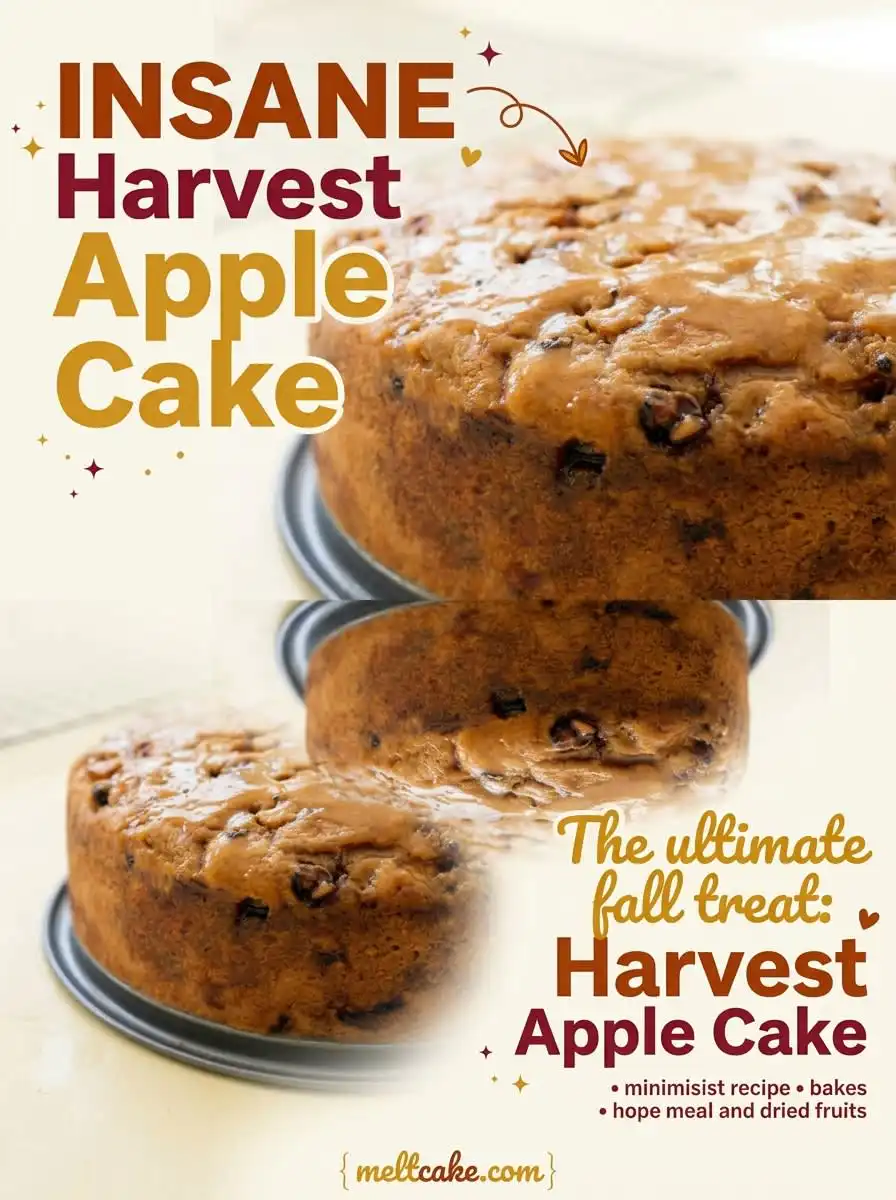
Harvest Apple Cake
- Total Time: 2 hours 15 mins
- Yield: 12 servings
- Diet: Vegetarian
Description
This dense, fruit-forward Harvest Apple Cake utilizes an osmotic sugar-drawing technique to create a naturally moist crumb without the need for additional liquid. The result is a robust, spice-laden dessert that maintains its tender texture for days.
Ingredients
- Firm apples (Fuji or Honeycrisp), diced
- Granulated sugar
- All-purpose flour
- Baking soda
- Cinnamon
- Freshly grated nutmeg
- Large eggs
- Vegetable oil
- Vanilla extract
- Chopped pecans
Instructions
- Prep the apples. Dice firm apples into uniform twelve-millimeter cubes, ensuring consistent size for even baking.
- Draw out moisture. Combine the diced apples with granulated sugar in a bowl and let sit for sixty minutes, stirring every fifteen minutes to create a natural syrup.
- Combine dry ingredients. Whisk together the flour, baking soda, cinnamon, and freshly grated nutmeg in a separate bowl until well integrated.
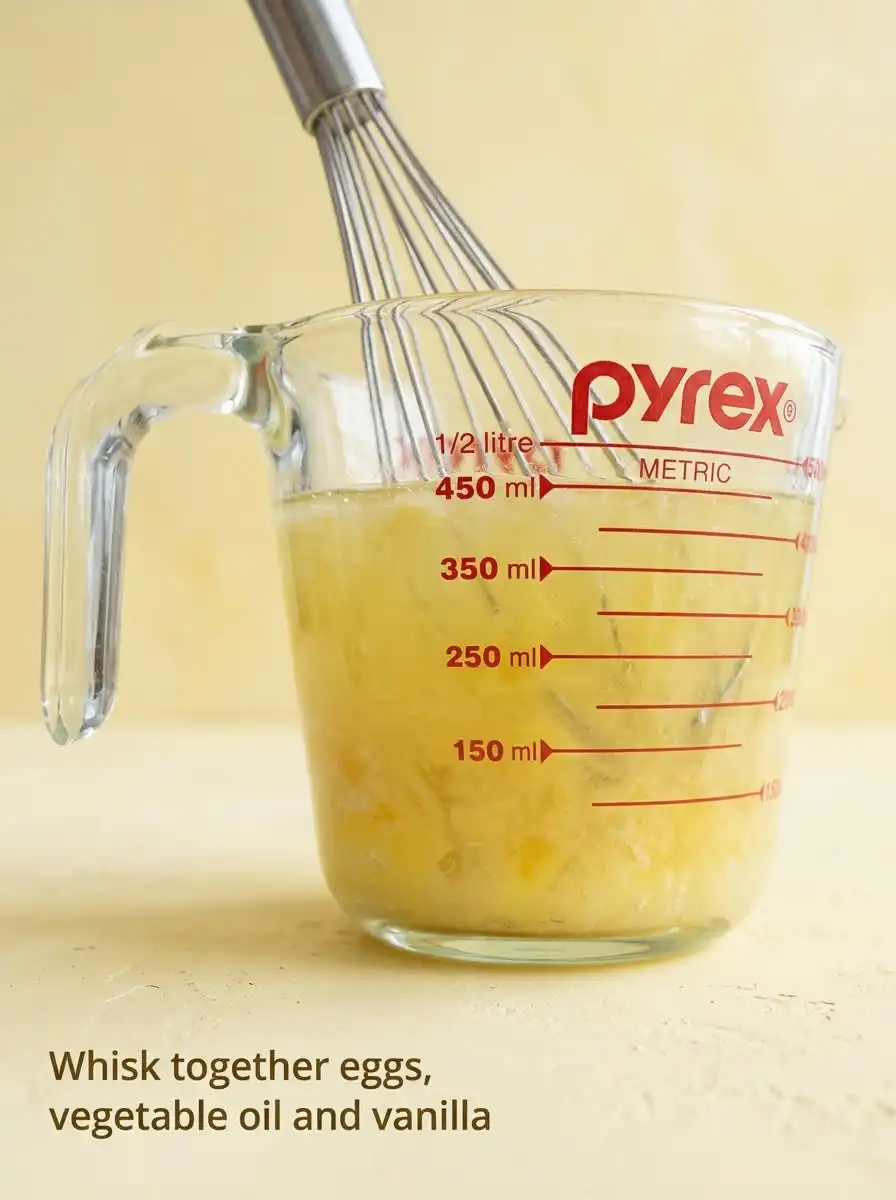
- Mix wet components. Beat the eggs, vegetable oil, and vanilla into the dry mixture until a thick, stiff paste forms.
- Fold in fruit. Add the macerated apple mixture and all collected syrup to the flour paste, folding until the batter becomes glossy and cohesive.
- Incorporate the nuts. Gently fold the chopped pecans into the batter until they are distributed evenly throughout.
- Bake the cake. Transfer the batter to an ungreased 13×9-inch metal pan and bake at 350°F (177°C) for 50 to 60 minutes until a tester comes out clean.
- Cool the cake. Allow the cake to rest on a wire rack for at least two hours to allow the crumb structure to fully set before slicing.
Notes
- Use a digital scale for measuring flour to maintain the structural integrity required for this dense cake.
- Always grate whole nutmeg fresh rather than using pre-ground to capture the most intense aromatic oils.
- Avoid using soft apple varieties like Red Delicious, as they will turn into applesauce during the baking process.
- Letting the finished cake rest overnight in plastic wrap allows moisture to migrate evenly, resulting in a more flavorful and tender crumb.
- Prep Time: 75 mins
- Cook Time: 60 mins
- Category: Dessert
- Method: Baking
- Cuisine: American
Ingredients & Their Role
Baking is a science of ratios, where every gram of flour and milliliter of fat plays a structural role. In this specific formulation, the absence of added liquid dairy or water means each component must perform multiple functions. Understanding these roles helps you achieve the correct crumb density and moisture level.
- Diced Apples: These provide both structural mass and the liquid phase of the cake batter. We use firm varieties that release their moisture steadily without disintegrating into sauce during the bake.
- Granulated Sugar: This acts as an osmotic agent, drawing water from the fruit cells to create the hydrating syrup. It also tenderizes the crumb by interfering with gluten formation.
- All-Purpose Flour: The structural backbone of the bake, providing the gluten matrix required to support the heavy fruit. We weigh this precisely to avoid a dry or crumbly texture.
- Vegetable Oil: Unlike butter, oil remains fully liquid at room temperature, which guarantees a remarkably soft crumb. It coats the flour proteins, preventing them from bonding too tightly.
- Freshly Grated Nutmeg: This spice provides deep, complex volatile oils that ground spices lose within weeks. Gration straight from the seed preserves the sharp, warm aromatics.
- Chopped Pecans: These add a necessary firm texture to contrast with the soft fruit and tender crumb. Toasting them beforehand coaxes out natural oils and intensifies structural crunch.
| Ingredient | Why It Matters |
|---|---|
| Diced Apples | Maintain structural integrity and release essential moisture. |
| Granulated Sugar | Performs osmotic extraction to create the cake syrup. |
| Vegetable Oil | Keeps the gluten strands lubricated and soft. |
| Fresh Nutmeg | Provides complex, warm aromatic compounds that resist fading. |
From Bench to Bake
Step 1: Prep Your Fresh Apples
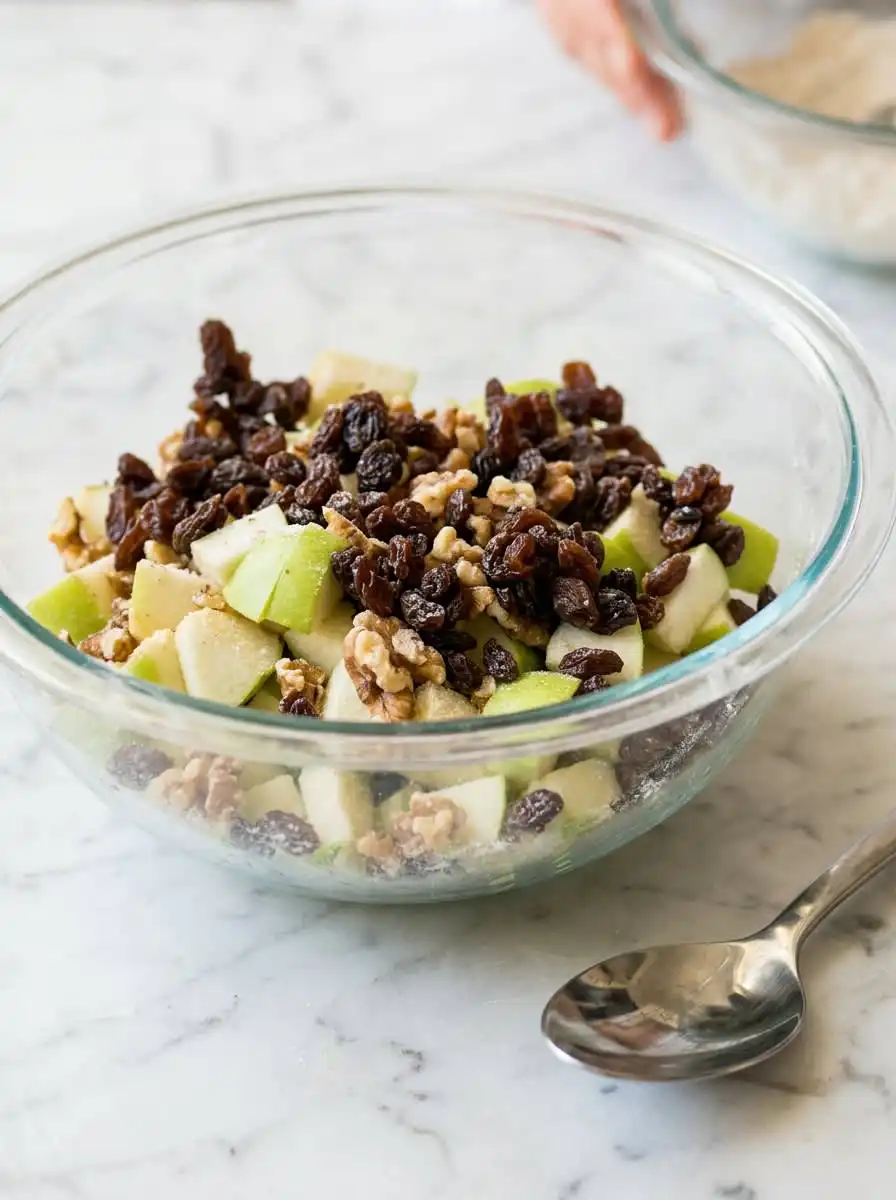
Select a combination of firm apples, such as Fuji and Honeycrisp, and dice them into uniform twelve-millimeter cubes. Keeping the dice consistent guarantees that they bake at the same rate, avoiding pockets of undercooked fruit. Avoid using soft varieties like Red Delicious, which collapse into mush when exposed to thermal heat. Weigh your diced fruit on a digital scale to ensure exact proportions for the hydration process.
Step 2: Begin the Osmotic Draw
Combine the diced apples and the granulated sugar in a wide glass bowl, stirring thoroughly to coat every piece. Let the mixture stand at room temperature for sixty minutes, stirring every fifteen minutes. You will watch the dry sugar transform into a clear, viscous syrup as it draws moisture out of the apple cells through osmosis. This liquid is the sole hydration source for our flour, so do not discard any of it.
Step 3: Sift Your Dry Components
In a separate bowl, whisk together the all-purpose flour, baking soda, cinnamon, and freshly grated nutmeg. Sifting these dry ingredients distributes the chemical leavener uniformly throughout the starch matrix. This step is critical because sodium bicarbonate requires even distribution to neutralize acids and facilitate Maillard browning. A well-sifted dry mix ensures that the spice notes are suspended evenly throughout the finished structure.
Step 4: Emulsify the Wet Ingredients
Beat the large eggs, vegetable oil, and vanilla extract directly into your dry flour mixture until a thick paste forms. This mixture will seem incredibly dry and stiff, resembling a cookie dough rather than a traditional pourable cake batter. Do not panic or add liquid; this high viscosity is a deliberate structural choice. It provides the mechanical strength needed to hold the heavy fruit suspended within the baking pan.
Step 5: Combine Your Harvest Apple Cake Batter
Pour the macerated apple mixture, along with every drop of the extracted sugar syrup, into the stiff flour paste. Use a sturdy wooden spoon or heavy spatula to fold the two components together with slow, deliberate sweeps. The liquid syrup will dissolve the thick paste, creating a glossy, cohesive batter that smells intensely of cinnamon and fresh fruit. This is where the starches begin to absorb the fruit sugars, preparing for starch gelatinisation in the oven.
Step 6: Incorporate the Pecan Crunch
Scatter the chopped pecans into the batter and fold them in gently until they are distributed evenly. Use a hand-cranked nut chopper to achieve an ideal mix of fine and coarse pecan pieces. The fine dust will disperse through the crumb to add a rich background nuttiness, while the larger pieces provide essential pockets of crunchy texture. This dual-texture approach ensures that every forkful has structural complexity.
Step 7: Bake to Set the Crust
Transfer the heavy batter into an ungreased thirteen-by-nine-inch metal baking pan, smoothing the surface with an offset palette knife. Bake at 177 degrees Celsius (350 degrees Fahrenheit) for fifty to sixty minutes until the top is deep golden brown. The cake is done when a metal tester inserted into the center comes out clean, indicating the starches have fully set. The structure is set when the edges pull away slightly from the sides of the pan.
Step 8: Cool to Set the Crumb
Place the hot pan on a wire cooling rack and let it rest undisturbed for at least two hours before slicing. During this period, the starches complete their gelatinisation process, and the internal moisture redistributes evenly throughout the cake. Cutting into the cake too early will cause it to tear and release vital steam, which turns a moist crumb dry. Patience at this stage is what allows the delicate crumb structure to solidify.
Pastry Bench Tips
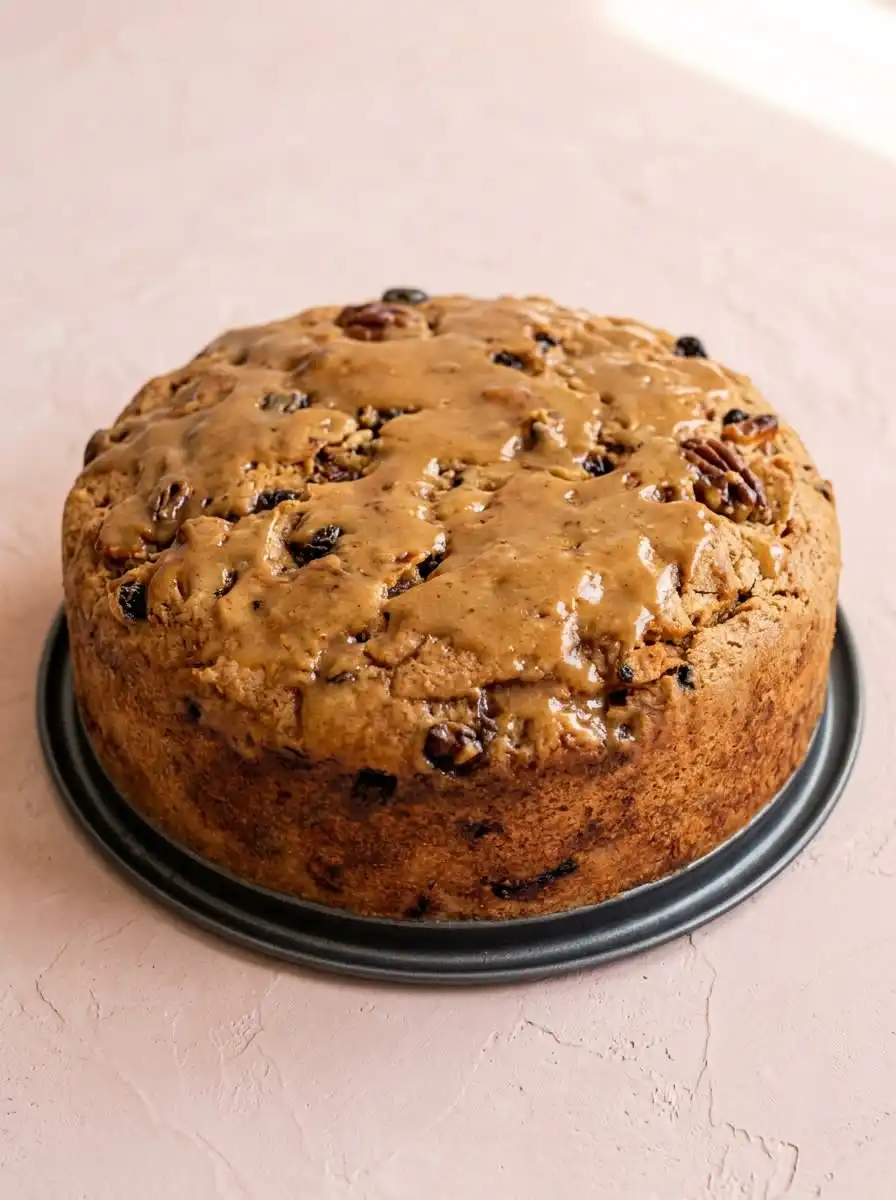
If your cake remains gummy or wet in the center, here is why and how to fix it. This common failure mode happens when the oven temperature is too low or the apples released more water than the flour could absorb. To correct this, verify your oven with an independent thermometer and verify you bake the cake until a tester inserted into the very center shows no wet batter.
Investing in a dedicated nut chopper with a hand crank is a wise choice for serious home bakers. This simple tool allows you to control the exact size of your pecan grind, preventing the oily paste that electric food processors often produce. The resulting dry, cuts make certain the nuts remain suspended in the batter rather than sinking.
Freshly grated nutmeg contains volatile aromatic oils that are vastly superior to pre-ground varieties found in supermarket jars. Grating the whole nutmeg seed over a fine microplane right before mixing preserves these delicate flavor compounds. Use slightly less than the recipe calls for if you are sensitive to its powerful, woody warmth.
For bakers who enjoy a slightly different fruit-to-cake ratio, baking an apple dump cake offers a distinct structural experience. While that dessert relies on a loose, buttery topping, this cake requires a fully developed gluten network to hold its dense fruit load. Understanding how starch holds fruit is key to mastering all fruit-based desserts.
The choice of baking pan material significantly affects the heat transfer rate and the final crust texture. A light-colored metal pan distributes heat evenly, producing a tender crust, whereas dark or glass pans can cause the edges to overcook. For the best balance of a crisp crust and a soft interior, stick to professional-grade aluminum pans.
Allowing the cake to sit overnight wrapped in plastic wrap at room temperature will completely transform its texture. The moisture within the apples will slowly migrate into the surrounding crumb, softening any dry edges. This overnight rest allows the spices to bloom, resulting in a significantly more cohesive flavor profile.
You can find more historical notes and context on this traditional baking style in the original harvest apple cake preparation. Observing how classic recipes manage the water activity of fresh fruit is an excellent way to build your technical baking intuition. Weigh it, time it, trust it.
Frequently Asked Questions
What are the best apples for an apple cake?
The best apples are firm, crisp varieties that maintain their structural shape when exposed to oven heat. Fuji, Honeycrisp, and Granny Smith are excellent choices because they resist collapsing into mush. Avoid soft apples like Red Delicious, which lack the acid and cellular density required for a successful bake.
Should you peel apples for apple harvest cake?
Peeling is entirely a matter of textural preference, though leaving the skins on adds a rustic appeal and pleasant chew. If you prefer a completely uniform and soft crumb, peeling the fruit is recommended. If you keep the skins, make certain to wash the fruit thoroughly to remove any natural or food-grade waxes.
Do you need to cook apples before putting them in cake?
No, cooking the apples beforehand is unnecessary and will actually ruin the structure of this specific cake. The raw apples release their moisture slowly during the baking process, which hydrates the batter and keeps the crumb soft. Pre-cooking would release this liquid too early, resulting in a dry cake.
What makes an apple harvest cake so moist?
The exceptional moisture comes from the slow release of water from the fresh apples during the bake, combined with the vegetable oil. Sugar also acts as a humectant, locking in this moisture so it does not evaporate. This combination ensures the cake remains tender for days without becoming soggy.
How do you tell if an apple cake is done?
Insert a thin metal cake tester or toothpick into the center of the cake. It should come out clean, with no wet batter clinging to it, though a few moist crumbs are acceptable. You can also look for the edges of the cake gently pulling away from the sides of the metal pan.
Can you use vegetable oil instead of butter in an apple cake?
Yes, vegetable oil is actually preferred in this style of cake because it remains liquid at room temperature. Butter contains water and milk solids that solidify when cooled, which can make a dense cake feel heavy or dry. Oil coats the flour proteins more efficiently, keeping the crumb exceptionally soft.
What spices go into a harvest apple cake?
This recipe relies on a warming blend of ground cinnamon and freshly grated nutmeg to complement the sweet apples. The cinnamon provides a woody sweetness, while the nutmeg offers a sharp, complex aromatic profile. You can adjust the quantities of these spices slightly to suit your personal palate.
Can you freeze harvest apple cake?
Yes, this cake freezes beautifully because of its high fat and sugar content, which protects the crumb from freezer burn. Wrap the completely cooled cake tightly in two layers of plastic wrap, followed by a layer of aluminum foil. Freeze for up to three months, and thaw at room temperature before serving.
Considered Adjustments
The Acidic Balance Variation
To balance the natural sweetness of the Fuji and Honeycrisp apples, you can substitute half of the fruit volume with tart Granny Smith apples. This modification introduces malic acid, which cuts through the dense sugar syrup and provides a brighter flavor profile. Since Granny Smith apples have a slightly higher water content, extend the baking time by five minutes so the extra moisture evaporates.
The Cranberry Tartness Twist
For a sharp, seasonal contrast, replace half a cup of the diced apples with fresh, halved cranberries. The cranberries will release their acidic juices during the baking process, creating pockets of bright red color and sharp tartness. If you enjoy this flavor profile, you might also consider baking an apple cranberry dump cake for your next gathering.
The Toasted Walnut Substitute
If pecans are unavailable, walnuts make an excellent structural substitute because they possess a similar fat content and cellular density. Toast the walnuts in a dry pan at 160 degrees Celsius for eight minutes before chopping them. This pre-baking step coaxes out the oils and creates a crisp barrier that prevents the nuts from absorbing too much cake moisture.
Serving the Structure
Serving this dense, spiced dessert requires an understanding of temperature and texture. At room temperature, the crumb is soft and the fruit is jammy, making it ideal for a casual afternoon tea. Slice the cake with a long, sharp serrated knife to guarantee clean cuts through the soft apples and crunchy pecans.
For a more formal presentation, serve a warm slice alongside a scoop of vanilla bean ice cream. The heat from the cake will melt the ice cream slowly, creating a rich, creamy sauce that complements the spiced crumb. This structural interplay between warm cake and cold cream is a classic pastry technique that never fails.
If you enjoy serving spiced fruit desserts during morning gatherings, consider comparing this to a pecan streusel coffee cake. While that cake features a lighter crumb and a crumbly topping, both desserts highlight the wonderful harmony of nuts and sweet spices. Pair either slice with a cup of strong black tea to cleanse the palate.
What the Technique Gives You
Mastering the osmotic draw of fruit moisture yields a cake of extraordinary character and keeping qualities. This method proves that understanding the physical properties of your ingredients is far more valuable than relying on complex kitchen machinery. By allowing the sugar and apples to work together, you create a dessert that is naturally moist and structurally sound.
Whether you are baking this for a autumn gathering or sharing it with your family on a quiet weekend, it is sure to become a seasonal staple. If you are looking for another baking project that explores warm autumn spices, try our pumpkin spice layer cake cinnamon frosting for a more decorated centerpiece. Each recipe teaches us that patience and precision on the pastry bench are always rewarded.
Please share your baking results and let us know how your cake turned out. Connect with our community on Pinterest, Facebook, and TikTok to share photos of your bakes and find more technical pastry discussions.