During my early training in a professional London kitchen, I learned that the secret to a perfect swirl wasn’t just in the flick of the wrist, but in the density of the batters. A true Marvel Cake requires a structural balance where the cocoa and vanilla components share a near-identical specific gravity. This precision guarantees that as the crumb sets, the flavors merge without muddying the visual definition or sacrificing the moistness of the sponge.

This recipe uses an olive oil base to achieve a superior level of moisture and a crumb that practically melts on the tongue. By hydrating the cocoa powder separately with hot water, we maintain a silky mouthfeel that avoids the common pitfall of a dry chocolate streak. The result is a cake that is as technically sound as it is visually striking.
A Masterclass in Structural Contrast
The allure of a Marvel Cake lies in its visual complexity and its deceptive simplicity. Many bakers struggle with the density of the chocolate portion, often resulting in a heavy, dry streak that interrupts the softness of the vanilla sponge. My approach solves this by treating the cocoa as a separate hydration element, creating a uniform density that makes certain you get a perfect melt in every bite.
This cake provides a superior mouthfeel that butter-based sponges often lack because the liquid fat of olive oil remains fluid at room temperature, providing a persistent moistness. By using a stand mixer to emulsify the eggs and oil, we create a stable structure that supports the weight of the marble swirls without collapsing. It is a triumph of texture that rewards the baker who values precision over guesswork.
Print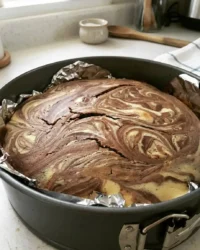
Marvel Cake
- Total Time: 1 hour 20 mins
- Yield: 12 servings
- Diet: Vegetarian
Description
Elevate your dessert table with this sophisticated Marvel Cake, featuring a luxuriously moist olive oil base and perfectly defined chocolate swirls. By blooming the cocoa separately, this recipe achieves a flawless texture that balances deep chocolate richness with delicate vanilla sponge.
Ingredients
- 3/4 cup cocoa powder
- 2 1/2 cups granulated sugar, divided
- 3 cups all-purpose flour
- 1 cup olive oil
- 5 large eggs, room temperature
- 1 cup whole milk
- 1 tablespoon baking powder
- 1 teaspoon vanilla powder
- 1/2 teaspoon salt
- 1/2 cup hot water
Instructions
- Preheat your oven to 350°F (175°C) and thoroughly grease a standard bundt pan with butter or oil.
- In a medium bowl, whisk together the cocoa powder, 1/2 cup of sugar, and hot water until a smooth, glossy paste forms.
- In a separate bowl, whisk the flour, baking powder, vanilla powder, and salt for at least 30 seconds to ensure even distribution.
- Using a stand mixer, beat the remaining 2 cups of sugar and the eggs on medium-high speed until they reach a thick ribbon stage, then slowly stream in the olive oil while mixing.
- Reduce speed to low and alternately add the flour mixture and milk in two batches, mixing until just combined and scraping down the sides.
- Transfer approximately 3 cups of the vanilla batter into the bowl with the cocoa paste and whisk by hand until fully incorporated.
- Pour a layer of vanilla batter into the prepared pan, add staggered dollops of cocoa batter, and repeat until all batter is used without stirring.
- Bake for 50 to 60 minutes or until a toothpick inserted into the thickest part comes out clean.
- Cool in the pan for 10-12 minutes before inverting onto a wire rack to cool completely.
Notes
To ensure a stable emulsion and prevent the oil from seizing, it is critical that your eggs and milk are at room temperature before starting. For the most professional visual effect, resist the urge to swirl the batter with a knife; the natural settling of the dollops during the baking process creates a cleaner marble definition. Store leftovers in an airtight container at room temperature to maintain the moisture provided by the olive oil.
- Prep Time: 20 mins
- Cook Time: 1 hour
- Category: Dessert
- Method: Baking
- Cuisine: European
The Technical Foundation of Marble Sponges
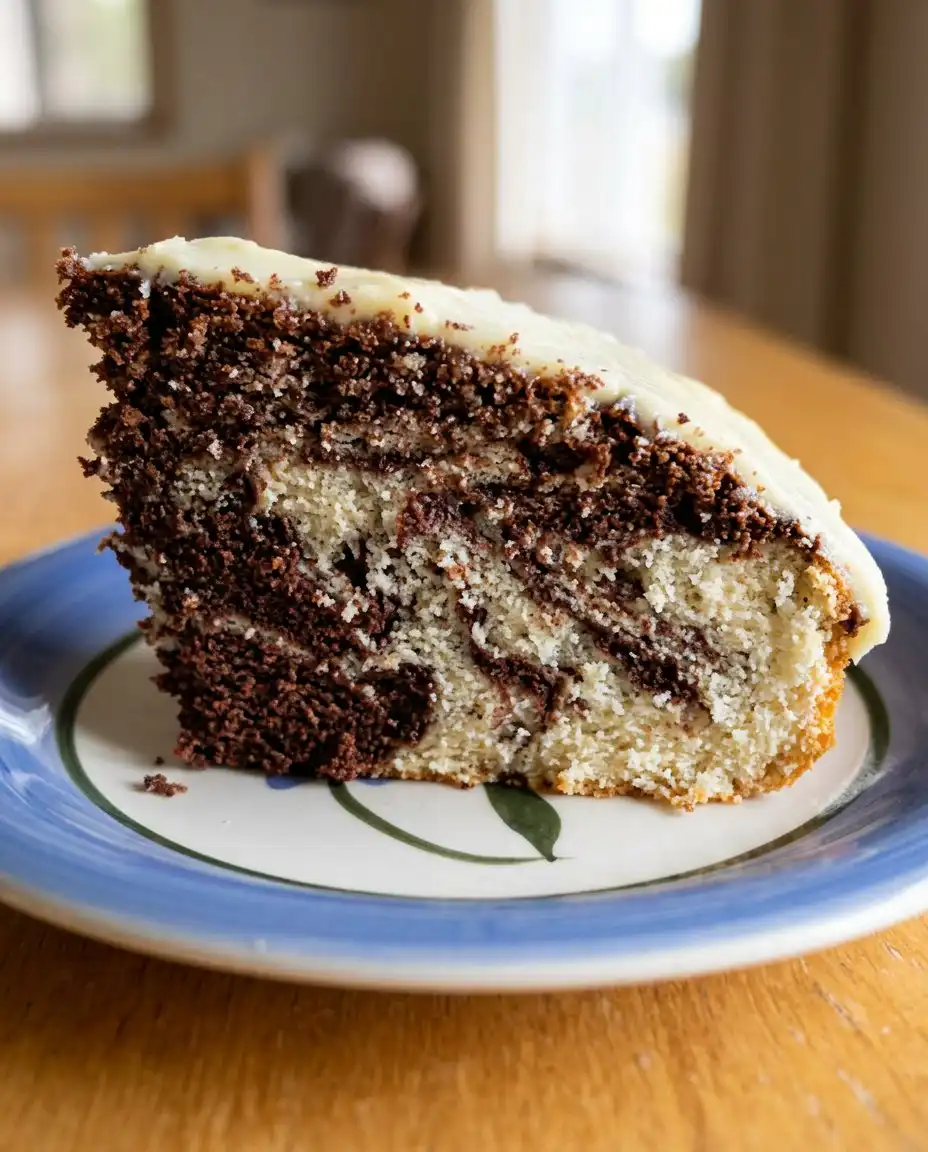
To achieve the perfect Marvel Cake, one must understand how each ingredient contributes to the final architecture of the crumb. We are looking for a balance between the protein structure of the flour and the lubricating properties of the fats. Every component must be at the correct temperature to maintain the integrity of the emulsion.
- Cocoa Powder (3/4 cup): This provides the deep chocolate profile. We hydrate it with hot water to ‘bloom’ the flavor and create a paste that matches the weight of the vanilla batter.
- Granulated Sugar (2 1/2 cups): Divided into two parts, it serves both as a sweetener and as a structural tenderizer that interferes with gluten formation.
- All-Purpose Flour (3 cups): Provides the essential protein (gluten) needed to hold the cake’s height and support the marbling.
- Olive Oil (1 cup): A liquid fat that guarantees the cake remains soft even after refrigeration, offering a Mediterranean richness.
- Large Eggs (5): These are the primary emulsifiers and leavening agents; they must be at room temperature to incorporate air effectively.
- Whole Milk (1 cup): Adds moisture and a hint of protein to soften the final texture.
- Baking Powder and Salt: The chemical leavening and flavor seasoning that provide the lift and balance the sweetness.
The Method of Structural Swirling
Step 1: Prep and Thermal Calibration
Pre-heat your oven to 350 degrees Fahrenheit (175 degrees Celsius). It is vital to position the oven rack in the middle to allow for even heat distribution. Grease a standard bundt pan thoroughly with butter or oil to prevent the delicate crust from sticking during the release phase.
Step 2: Hydrating the Cocoa Element
In a medium-sized bowl, combine the cocoa powder, 1/2 cup (120 grams) of sugar, and the hot water. Stir this mixture vigorously until it forms a smooth, glossy paste. Hydrating the cocoa this way prevents it from stealing moisture from the rest of the batter, which is the primary cause of dry chocolate streaks in inferior marble cakes.
Step 3: Aerating the Dry Components
In a separate small bowl, whisk together the all-purpose flour, baking powder, vanilla powder, and salt. Spend at least 30 seconds whisking to break up any clumps and to distribute the leavening agents evenly. This step is a small but necessary precision that prevents uneven rising or ‘pockets’ of baking powder.
Step 4: Emulsifying Eggs and Oil
In the large bowl of a stand mixer, beat the remaining 2 cups (400 grams) of sugar and the eggs on medium-high speed. You are looking for the ‘ribbon stage’—where the mixture is pale, thick, and falls back into the bowl in a slow, defined trail. Slowly pour in the olive oil in a steady stream while continuing to mix to create a stable, creamy emulsion.
Step 5: Alternating Hydration Cycles
Set the mixer speed to low. Add approximately half of the flour mixture and mix until just combined. Pour in half of the milk. Repeat this process with the remaining flour and milk. Scrape down the sides of the bowl with a rubber spatula to make certain no unmixed pockets remain. Do not over-mix here, as we want to keep the gluten strands short and tender.
Step 6: Creating the Two Batters
Measure out approximately 3 cups of the vanilla batter and transfer it into the bowl containing your cocoa paste. Use a hand whisk to combine them thoroughly. By hand-mixing this stage, you maintain control over the aeration and create a chocolate batter that is equal in density to the vanilla batter.
Step 7: The Marbling Technique
Pour enough plain vanilla batter into the prepared bundt pan to cover the bottom surface. Using a large spoon, drop dollops of the cocoa batter on top of the plain batter in a staggered pattern. Pour the remaining vanilla batter over the chocolate spots, and then finish with the remaining cocoa batter. Avoid stirring the batters with a knife; the way the batters fall into each other during the bake creates a more natural, sophisticated marble.
Step 8: The Bake and Structural Set
Bake for 50 to 60 minutes. Use a wooden toothpick or a metal skewer to check for doneness; it should come out clean when inserted into the thickest part of the cake. The cake should be springy to the touch, indicating the protein structure has set and the moisture is locked in.
Step 9: Controlled Cooling
Allow the cake to rest in the bundt pan for exactly 10-12 minutes. This brief period allows the internal steam to settle, making the structure firm enough to handle. Invert the pan onto a wire cooling rack and lift it away carefully. Let the cake cool completely before finishing.
Precision Secrets for a Flawless Crumb
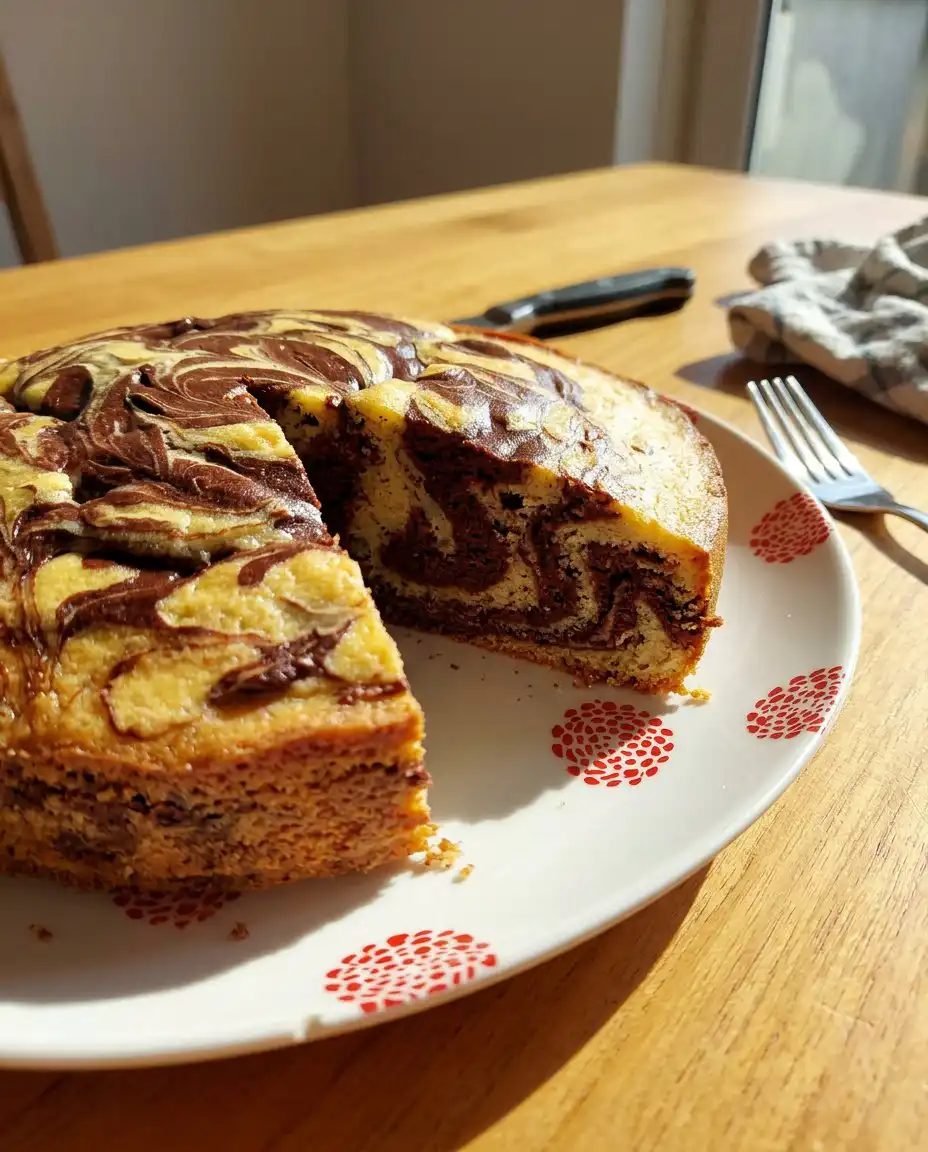
Temperature control is the most frequent point of failure for home bakers. Make certain your eggs are at room temperature before you begin; cold eggs will cause the olive oil to seize, resulting in a broken emulsion and a greasy texture. For a deeper understanding of chocolate physics, you might look at this marble cake inspiration which details traditional ratios. Additionally, if you find your chocolate swirls are sinking to the bottom, it usually means your vanilla batter was too thin; always measure your flour by weight rather than volume to keep the density consistent. For more on managing rich chocolate profiles and structural integrity, see our guide on the old-fashioned chocolate cake.
Technical Tweaks for Advanced Bakers
You can modify the flavor profile of this Marvel Cake without compromising its structural beauty. Consider adding the zest of two oranges to the vanilla batter; the citrus oils cut through the richness of the olive oil and pair perfectly with the cocoa. If you want a more complex texture, you can substitute 1/2 cup of the all-purpose flour with finely ground almond flour to create a tighter, more tender crumb. For those who enjoy a nutty contrast, our Snickers cake offers excellent inspiration on how to combine distinct layers of flavor and texture within a single dessert.
Presentation and Textural Balance
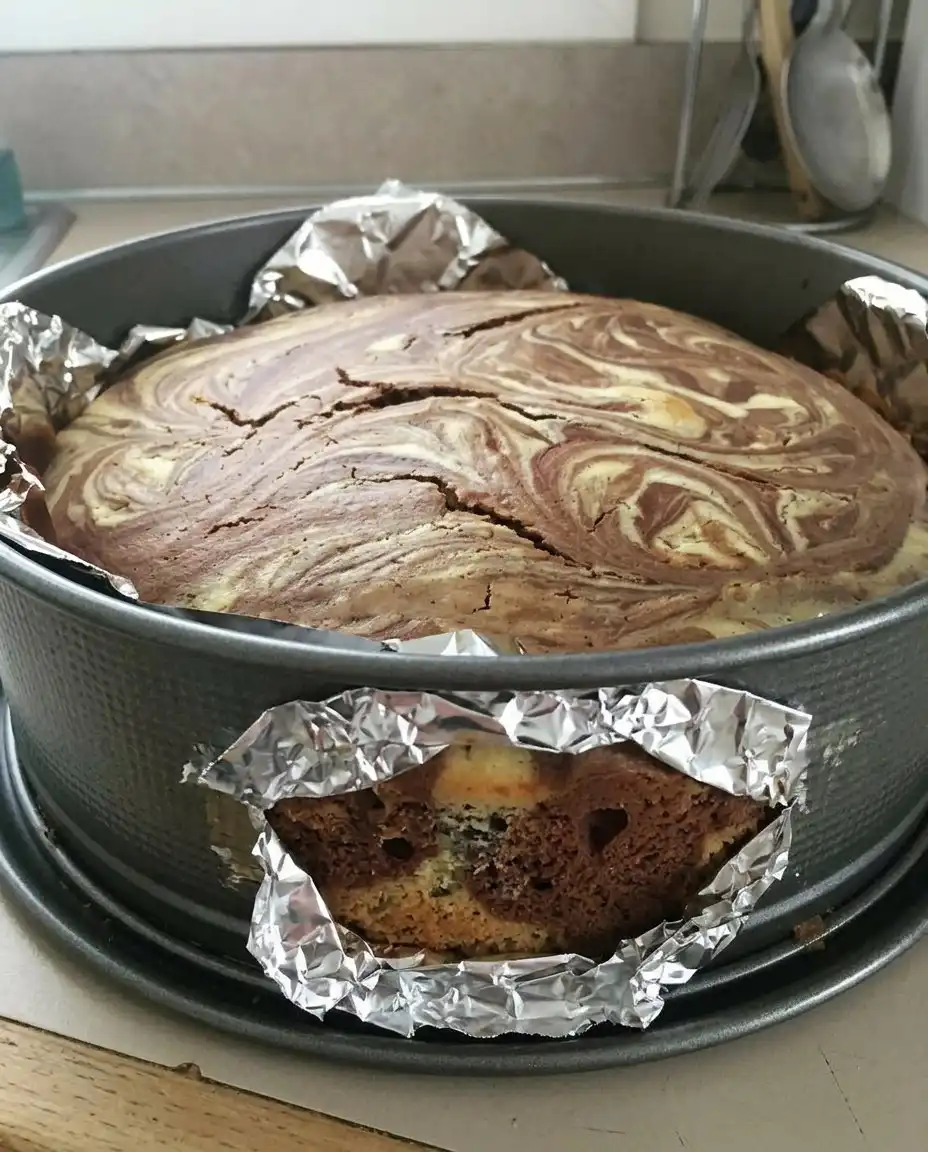
When you are ready to serve the Marvel Cake, a light dusting of icing sugar is the most sophisticated finish. It highlights the intricate shapes of the bundt pan without masking the flavor of the cake itself. For a themed presentation similar to our car cake, you can use stencils to create sharp, geometric patterns with the sugar on the surface of each slice. I recommend serving this at room temperature to ensure the olive oil fats remain fluid, providing that signature melt-in-your-mouth experience. A side of lightly sweetened whipped cream or a sharp berry coulis can provide a beautiful acidic balance to the chocolate.
Master the Craft of Marbling
Achieving the perfect Marvel Cake is a victory for any baker who values the intersection of visual art and pastry science. By focusing on the hydration of the cocoa and the stability of the olive oil emulsion, you create a dessert that is as beautiful to look at as it is satisfying to eat. This recipe proves that technical mastery and simple ingredients can produce spectacular results. For another project that balances color and texture, try our lemon rainbow cake. Please share your baking triumphs with us and join our community of devoted bakers on Facebook, Instagram, and Pinterest.