In my village, the arrival of autumn meant the scent of warm grains and toasted nuts would drift through the open kitchen windows. My grandmother always insisted that the secret to any dessert with grains was the soak—a patient ritual that allowed the heart of the grain to soften and release its sweetness. This recipe reminds me of those quiet Mediterranean mornings where we waited for the dough to tell us it was ready.

This Oatmeal Cake is a departure from the dry, dense bars you might expect; instead, it is an impossibly moist sponge that feels like a warm embrace. By saturating the oats in boiling water before they ever touch the batter, we create a texture that is silky and tender, topped with a bubbling, caramelized crown of coconut and walnuts. It is a humble dessert that carries the soul of a bakery masterpiece.
Melt-in-Your-Mouth Perfection
The magic of this cake lies in the contrast of textures that dance across your palate with every bite. The base is a deep, amber-hued sponge that is remarkably soft, thanks to the double-moisture hit of soaked oats and brown sugar. It doesn’t just crumble; it yields gracefully to the pressure of a fork, offering a mouthfeel that is both substantial and light.
Then comes the topping—a rich, decadent layer of toasted coconut and chopped nuts that we broil until it turns into a gilded landscape of caramel. This topping seeps slightly into the top layer of the cake while it is still warm, creating a syrupy bond that is the hallmark of a true Mediterranean-inspired treat. It is sweet without being heavy, and the warmth of cinnamon and nutmeg provides a sensory depth that lingers long after the last bite.
Baking this cake is also an exercise in patience and reward. The way the kitchen fills with the scent of toasted oats and spices is a preamble to the joy of serving it. It is a timeless recipe that fits perfectly into the rhythm of a busy home, yet it feels special enough to serve as the centerpiece of a celebratory gathering. You will love how the simple ingredients transform into something so luxurious and comforting.
Print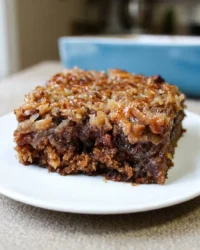
Oatmeal Cake
- Total Time: 1 hour 8 mins
- Yield: 12 servings
- Diet: Vegetarian
Description
Experience an incredibly moist sponge cake that elevates simple pantry staples into a luxurious Mediterranean-inspired treat. This recipe features a unique oat-soaking technique and a decadent, broiled crown of caramelized coconut and walnuts for the ultimate texture contrast.
Ingredients
- 1 cup old-fashioned oats
- 1 1/4 cups boiling water
- 1/2 cup butter, softened
- 1 cup white sugar
- 1 cup firmly packed brown sugar
- 2 large eggs
- 1 teaspoon vanilla extract
- 1 1/2 cups all-purpose flour
- 1 teaspoon baking soda
- 1/2 teaspoon salt
- 1 teaspoon ground cinnamon
- 1/2 teaspoon ground nutmeg
- 6 tablespoons butter, melted
- 1 cup shredded coconut
- 1 cup finely chopped walnuts
- 1 cup brown sugar (for topping)
- 1/4 cup evaporated milk
Instructions
- Preheat your oven to 350 degrees Fahrenheit (175 Celsius) and grease a 9×13 inch baking dish.
- Pour boiling water over the uncooked old-fashioned oats in a heat-proof bowl and let soak for 20 minutes.
- In a large bowl, cream together the softened butter, white sugar, and brown sugar until light and airy.
- Beat in the eggs one at a time, followed by the vanilla extract and the soaked oatmeal mixture.
- Sift together the flour, baking soda, salt, cinnamon, and nutmeg, then gradually add to the wet mixture, stirring until just combined.
- Pour the batter into the prepared baking dish and bake in the center of the oven for 30 minutes.
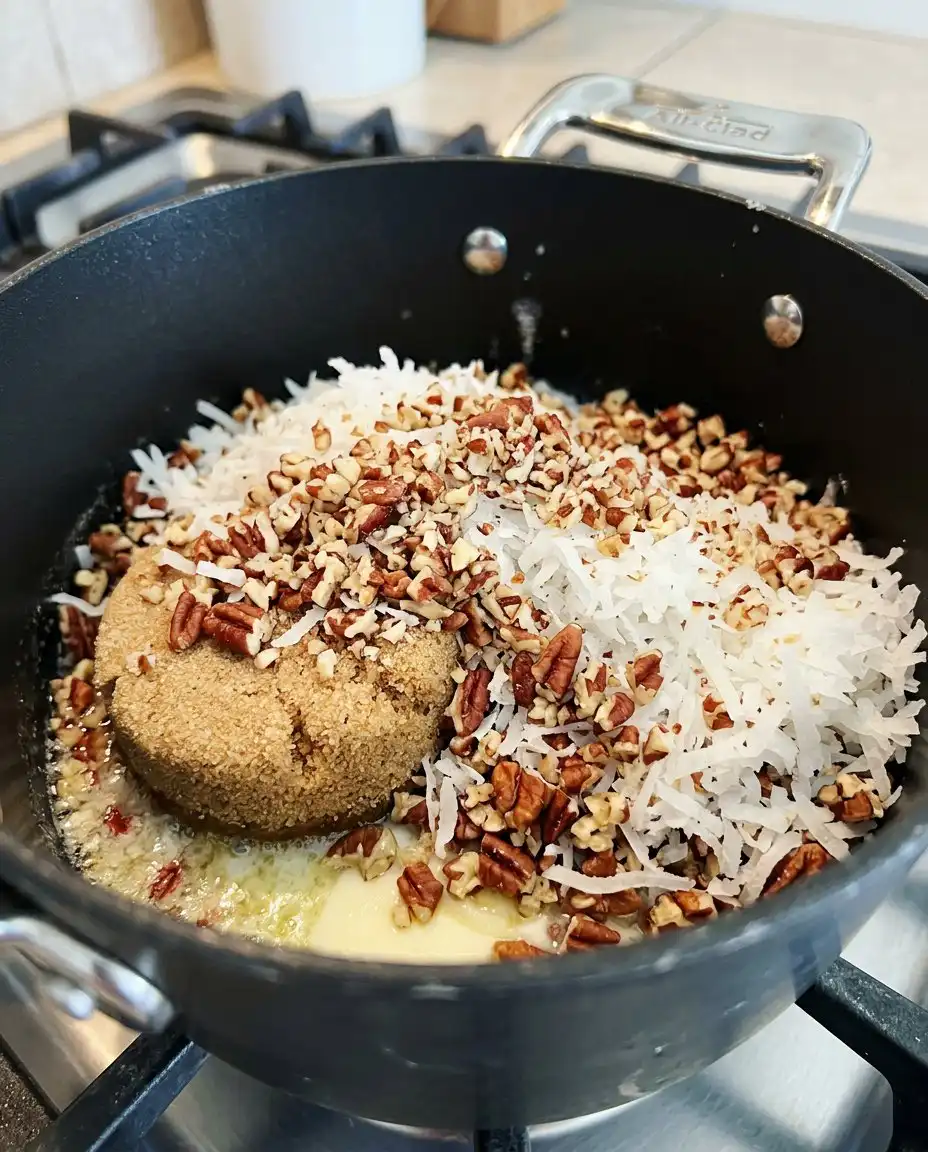
- In a small saucepan over medium heat, melt the topping butter and stir in the shredded coconut, chopped nuts, brown sugar, and evaporated milk until thoroughly combined.
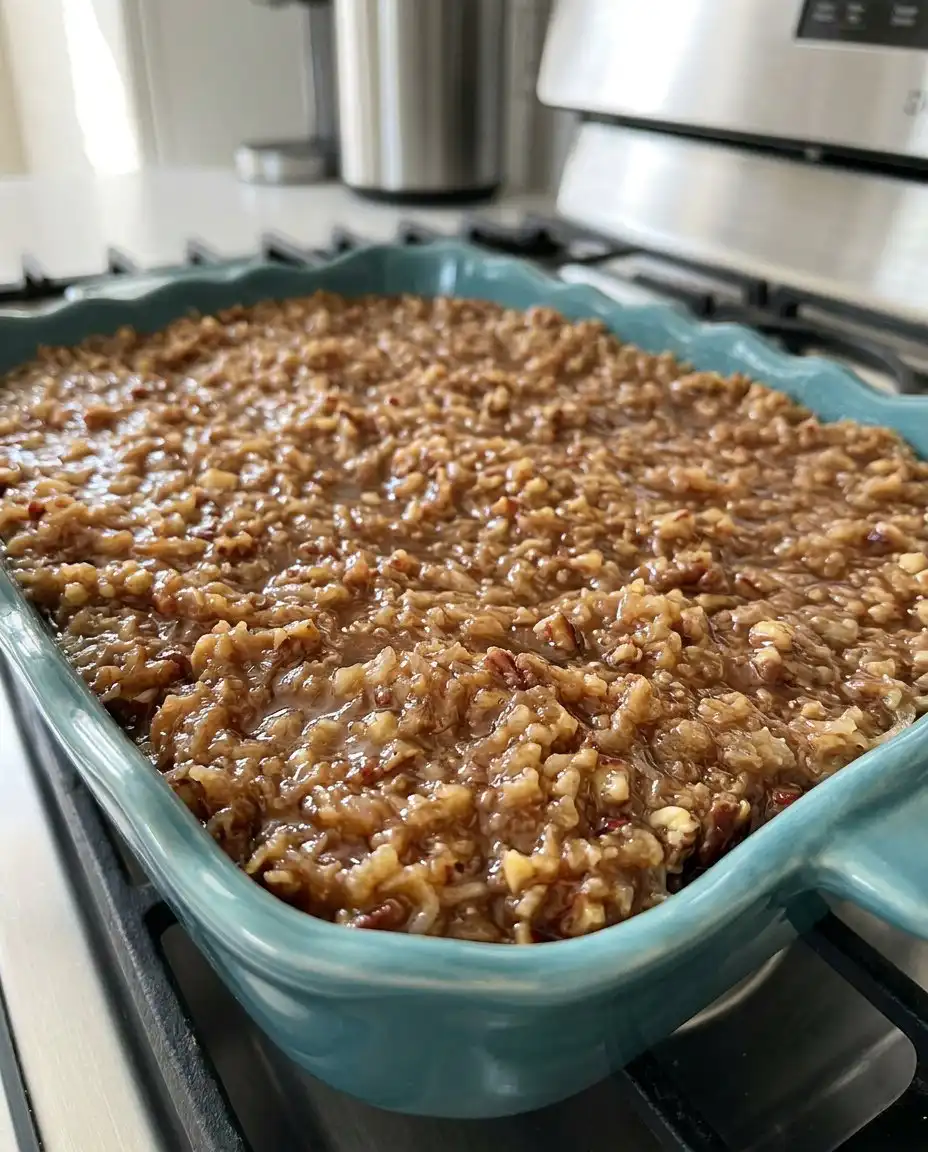
- Remove the cake from the oven and immediately spread the topping mixture over the hot surface using a spatula.
- Place the cake under the broiler for 2 to 3 minutes, watching closely until the topping bubbles and turns a deep golden brown.
- Remove and allow to set slightly before serving.
Notes
To ensure the most tender crumb, allow the oats the full 20 minutes to hydrate as this prevents any graininess in the final sponge. If your broiler heat is uneven, rotate the pan halfway through the browning process to achieve a perfectly uniform caramelized crust across the entire surface.
- Prep Time: 35 mins
- Cook Time: 33 mins
- Category: Dessert
- Method: Baking
- Cuisine: Mediterranean-inspired
The Foundation of Moisture
To achieve that signature melt-in-your-mouth texture, every ingredient in this Mediterranean-inspired pantry must play its part with precision. We start with old-fashioned oats, which are the soul of the cake. These are not just mixed in; they are transformed by boiling water, a process that breaks down the starch and creates a creamy base that guarantees a moist crumb.
- Old-Fashioned Oats: These provide the essential structure and a slight chew that makes the cake satisfying.
- Boiling Water: The catalyst for softness, it hydrates the oats and keeps the sponge from ever feeling dry.
- Butter and Sugars: A blend of white and firmly packed brown sugar creates a complex sweetness, while the butter provides the rich, velvety mouthfeel Mehmet loves.
- Spices: Cinnamon and nutmeg are our aromatic heroes, adding a warm, earthy glow to the flavor profile.
- Evaporated Milk: This is the secret to the topping’s creamy, fudge-like consistency that sets beautifully under the broiler.
- Coconut and Nuts: These provide the textural finish, offering a toasted crunch that balances the soft cake beneath.
Using high-quality butter and fresh spices makes a world of difference here. The fat in the butter carries the flavor of the cinnamon through every fiber of the cake, while the evaporated milk ensures the topping doesn’t just sit on top, but becomes part of the cake’s identity.
The Method of the Perfect Soak
Step 1: The Initial Transformation
Begin by preheating your oven to 350 degrees Fahrenheit (175 Celsius). In a heat-proof bowl, pour the measured boiling water directly over the uncooked old-fashioned oats. Set this aside for 20 minutes; this quiet time allows the oats to fully absorb the liquid and soften into a thick, comforting mixture that will define the cake’s moisture.
Step 2: Creating the Creamy Cloud
While the oats are soaking, take your softened butter and both the white and brown sugars. Cream them together in a large bowl until the mixture is pale and light. Add the eggs one at a time, beating well after each addition to make certain the fats and sugars are fully unified and airy.
Step 3: Integrating the Heart
Once the 20 minutes are up, add the vanilla extract and the soaked oatmeal mixture to your creamed butter and sugar. The batter will look thick and rich. Stir gently to incorporate, ensuring the oats are evenly distributed through the liquid base.
Step 4: The Aromatic Flourish
Sift together your all-purpose flour, baking soda, salt, cinnamon, and nutmeg. Gradually add these dry ingredients to the wet mixture. Mix until just combined; you want to see the spices streak through the batter, signaling that the flavor is reaching every corner of the bowl.
Step 5: Preparing for the Heat
Pour the finished batter into a greased 9×13 inch baking dish. Smooth the top with a spatula so the cake rises evenly. The batter should look glossy and smell like a warm spice market.
Step 6: The Golden Bake
Slide the pan into the center of the oven and bake for 30 minutes. You are looking for the edges to pull away slightly from the sides and a toothpick inserted in the center to come out clean. The kitchen should now smell heavenly.
Step 7: Crafting the Gilded Crown
While the cake is in its final minutes of baking, prepare the topping. In a small saucepan over medium heat, melt the butter. Stir in the shredded coconut, finely chopped nuts, brown sugar, and evaporated milk. This mixture should look like liquid gold.
Step 8: The Final Mix
Ensure all the topping ingredients are thoroughly combined and the sugar has begun to melt into the milk. It should be a thick, spreadable consistency that is ready to meet the hot cake.
Step 9: The Immediate Frosting
As soon as you remove the cake from the oven, pour the topping mixture over the surface. Use a spatula to spread it gently to the very edges. The heat from the cake will help the topping start to sink into the sponge.
Step 10: The Broiled Finish
Place the cake under the broiler for just 2 to 3 minutes. Stay close and watch it carefully; the sugar and coconut will bubble and turn a deep, beautiful brown. Remove it the moment it reaches a toasted, caramelized finish.
Texture Mastery and Syrup Wisdom
The most critical part of this recipe is the patience you show during the first step. If you rush the oat-soaking process, the texture will be grainy rather than melt-in-your-mouth. I always recommend using old-fashioned oats over quick oats; the larger flakes hold their integrity much better, giving the cake a soul. When you are ready for more traditional bakes, you can see how we apply similar moisture techniques in our old-fashioned-chocolate-cake.
Another secret is the temperature of the topping. Adding the topping to the cake while both are warm allows the evaporated milk and melted sugar to penetrate the top millimeter of the sponge, creating a moist barrier that keeps the cake fresh for days. If you find your topping is browning too fast under the broiler, move the oven rack down one level. The goal is a gentle toast, not a burn. Always use a timer for the broiler—seconds matter when working with sugar and coconut.
Regional Flavor Twists
While this version is a classic, you can easily bring more Mediterranean influence to the table. Try replacing the walnuts with toasted pistachios and adding a teaspoon of orange blossom water to the topping for a floral, citrusy lift. This creates a profile similar to the dense, fruit-forward bakes found in our fruit-cake collection.
For those who love a deeper, darker flavor, replace half of the brown sugar in the topping with honey or date syrup. This makes the topping even stickier and gives it a complex, earthy sweetness. If you want a bit of a spicy kick, a pinch of cardamom added alongside the cinnamon will transform the aroma into something truly spectacular. You can also experiment with adding finely chopped dried figs into the batter for a chewy surprise that mimics the textures of an Aegean garden.
At the Table

This cake is best served slightly warm, allowing the caramelized topping to remain soft and the spices to be at their most aromatic. In the Mediterranean tradition, we serve a square of this cake alongside a small cup of strong, bitter Turkish coffee. The contrast between the dark coffee and the sweet, cinnamon-laced cake is a sensory revelation. For more pairing ideas, discover our full recipe-index.
If you are serving this as a formal dessert, a dollop of thick, unsweetened whipped cream or a spoonful of Greek yogurt on the side can balance the richness of the coconut topping. It also pairs beautifully with fresh, sliced figs or a handful of pomegranate seeds for a vibrant pop of color and acidity. This cake is sturdy enough for a picnic but refined enough for a sunset dinner party.
The Sweet Truth
Baking this Oatmeal Cake is a reminder that the best things in life require a little bit of time and a lot of heart. The way the oats soften and the topping bubbles into a golden crust is a small piece of kitchen magic that I am honored to share with you. If you appreciate the art of a perfect sponge, you will find much to love in our velvet-crumb-collection. For more inspiration and a look behind the scenes of my Mediterranean kitchen, please join our community on Pinterest, Instagram, and Facebook. Happy baking, and may your kitchen always be filled with the scent of warm cinnamon. This recipe was inspired by the traditional methods found at Just A Pinch.