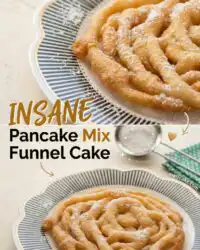
A grease-logged funnel cake is the result of an unbalanced batter and incorrect oil temperature, but precision transforms simple pancake mix into a crisp, structural marvel.

When we attempt to recreate carnival treats at home, we often encounter a soggy, dense interior that lacks the airy crispness of the original. By employing a structured approach to hydration and heat transfer, this Pancake Mix Funnel Cake method guarantees a rigid outer shell that yields immediately to a tender, hollow crumb. We achieve this texture not through luck, but by maintaining an exact emulsion of starches and fats at a precise temperature. Trusting the scale and the thermometer safeguards your batter fry so it remains crisp, clean, and structurally sound.
The Case for This Method: Pancake Mix Funnel Cake
Prep: 5 min · Serves: 4 · Difficulty: Medium
- Crisp exterior shell resists rapid oil saturation.
- Fast hydration cycle minimizes gluten development.
- Vanilla and sugar stabilize starch structure.
- Precise consistency creates clean, uniform ribbons.
- Reliable texture without complex pastry school steps.
By understanding how heat gelatinises the starch in your funnel cake recipe, you will achieve a consistent, golden crunch every single time.
Get The Full Cake Recipe
Print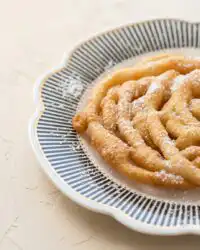
Pancake Mix Funnel Cake
- Total Time: 15 mins
- Yield: 4 servings
Description
Transform pantry staples into a carnival-style treat with this reliable method for crispy, golden funnel cakes. By focusing on precise oil temperature and batter hydration, you can achieve a light, airy interior that is perfectly balanced by a crunchy, structured shell.
Ingredients
- 1 cup buttermilk pancake mix
- 1 tablespoon granulated sugar
- 1 teaspoon vanilla extract
- 1/2 cup cold water
- Confectioners’ sugar for dusting
- Vegetable oil for frying
Instructions
- Establish the station. Fill a heavy-bottomed skillet halfway with vegetable oil and heat it over medium until it reaches exactly 350 degrees Fahrenheit.
- Combine dry ingredients. In a bowl, whisk together the pancake mix and granulated sugar until well aerated and lump-free.
- Hydrate the batter. Stir in the vanilla extract and gradually add cold water until the batter reaches a smooth ribbon consistency that holds its shape for three seconds.
- Prepare the piping bag. Transfer the batter into a pastry bag or sturdy zip-top bag, ensuring there are no trapped air pockets near the nozzle.
- Fry the cake. Squeeze the batter into the hot oil in an overlapping circular pattern, building a six-inch disc, and cook for sixty seconds per side until golden.
- Drain and dust. Remove the pastry from the oil, let the excess fat drain on a paper towel-lined plate, and finish with a light dusting of confectioners’ sugar.
Notes
- Ensure the batter rests for three minutes before frying to allow the leavening agents and starches to activate properly.
- Test the oil temperature frequently with a thermometer to keep it constant at 350 degrees Fahrenheit for the best crisp results.
- Use a fine-mesh sieve when applying the confectioners’ sugar for a consistent and professional-looking coating.
- If the batter spreads too thin in the oil, whisk in a small amount of additional pancake mix to achieve the correct ribbon viscosity.
- Prep Time: 5 mins
- Cook Time: 10 mins
- Category: Dessert
- Method: Deep Frying
- Cuisine: American
Weighed & Ready
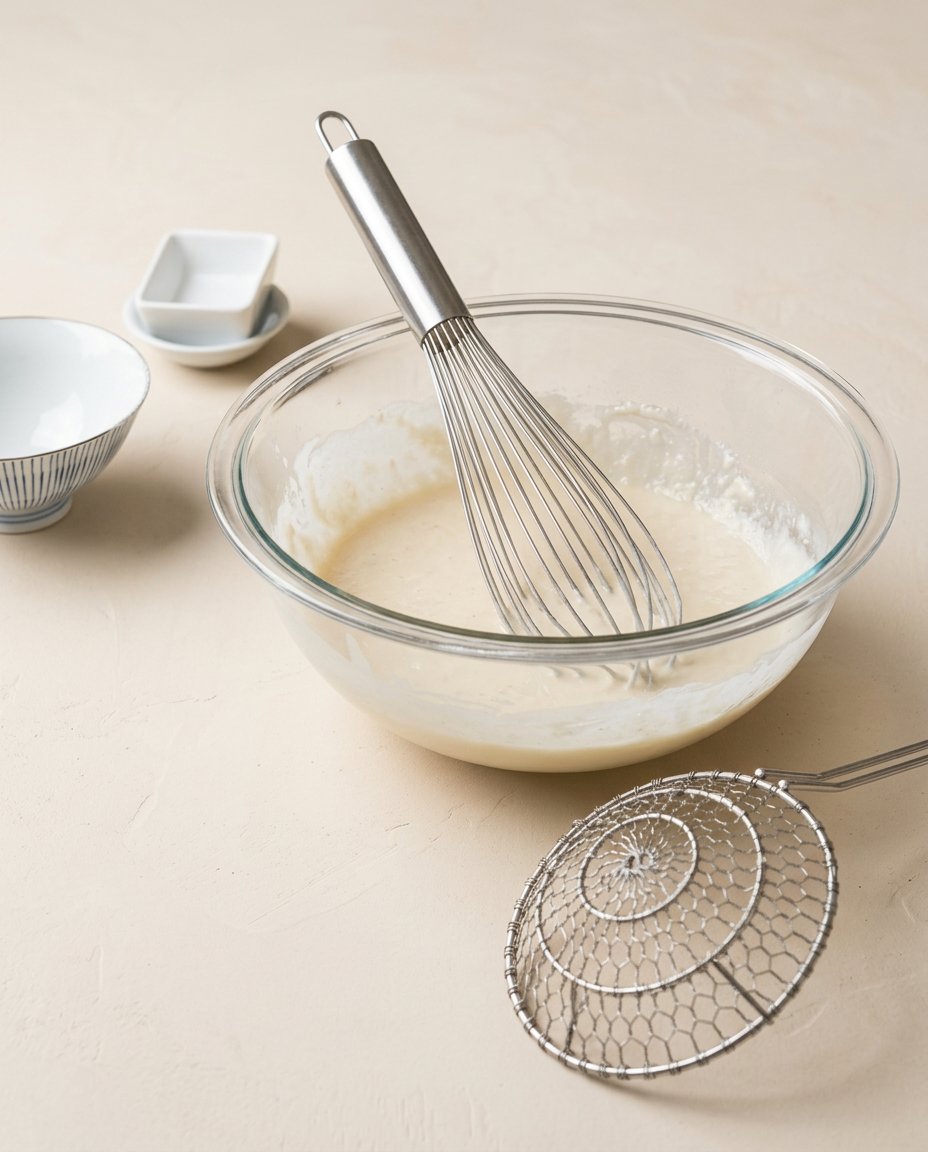
Preparing the baking bench is a quiet discipline that guarantees consistency before the heat is applied. Each physical component in this batter plays a specific mechanical role in establishing the final texture. We balance these ingredients precisely to control the viscosity and density of the finished pastry.
- Buttermilk pancake mix: This dry base contains pre-measured leavening agents and balanced flours that react immediately when hydrated. The pre-formulated composition guarantees a consistent rise and cellular structure in the hot oil without requiring the addition of separate baking powders or salts.
- Vegetable oil: A clean fat with a high smoke point is necessary to maintain a constant frying temperature of 350 degrees Fahrenheit. It acts as an efficient heat-transfer medium that sets the outer crust within seconds of contact, preventing the interior from absorbing excess grease.
- Granulated sugar: Beyond adding a delicate sweetness, sugar caramelizes during the brief frying cycle to reinforce the structural walls of the ribbons. This caramelized network helps the pastry retain its shape and provides a satisfying crunch that resists softening.
- Vanilla extract: This alcohol-based aromatic disperses evenly through the liquid phase to provide depth while tenderizing the delicate crumb. The alcohol content evaporates rapidly in the hot oil, contributing to the quick expansion and steam leavening of the batter.
- Cold liquid: Using cold water or buttermilk hydrates the starches at a controlled rate, preventing premature gluten development that would make the pastry tough. The volume of liquid dictates the viscosity of the stream, which determines whether the ribbons hold their shape or dissolve.
- Confectioners’ sugar: Fine sugar crystals absorb minimal residual surface moisture, creating a beautiful white finish that does not melt into a wet glaze. Dusting the pastry while it is slightly warm allows the sugar to adhere properly without becoming damp.
| Ingredient | Why It Matters |
|---|---|
| Buttermilk Pancake Mix | Establishes the crumb structure and provides balanced leavening. |
| Vegetable Oil | Offers a stable heat-transfer medium that seals the outer crust quickly. |
| Granulated Sugar | Promotes surface caramelization and adds essential structural crispness. |
| Vanilla Extract | Delivers aromatics and complex depth to the quick-mixing batter. |
| Cold Liquid | Controls hydration and regulates the viscosity of the stream. |
The Method
Step 1: Establish the Frying Bench
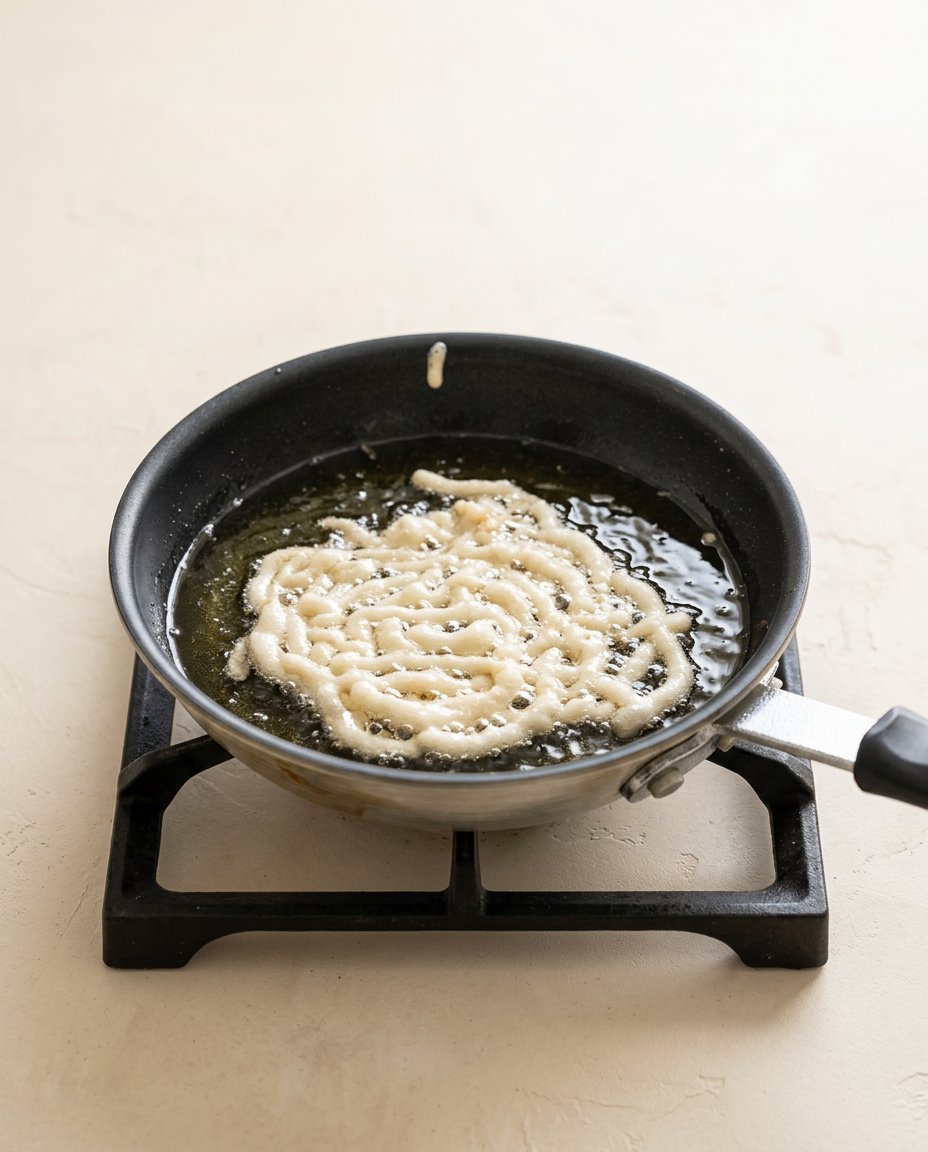
Assemble your digital scale, a probe thermometer, a pastry bag, and a heavy-bottomed ten-inch skillet on your clean bench. Fill the skillet halfway with fresh vegetable oil, verifying there is enough depth for the batter to float freely without touching the bottom of the pan. Place the vessel over medium heat to slowly elevate the temperature of the oil to exactly 350 degrees Fahrenheit. This slow ascent allows the heat to distribute uniformly across the metal, preventing localized hot spots that could burn your pastry.
Step 2: Measure the Dry Components
Place your mixing bowl on the digital scale and weigh out exactly one cup of buttermilk pancake mix and one tablespoon of granulated sugar. Whisk these dry ingredients together with a fine wire whisk to aerate the mixture and break up any packed lumps. Incorporating air at this stage guarantees a lighter batter that expands rapidly when it contacts the hot frying medium. Keep the bowl separate from any moisture until you are fully ready to begin the hydration process.
Step 3: Mix the Pancake Mix Funnel Cake Batter
Pour one teaspoon of vanilla extract into the dry mixture, then gradually whisk in approximately one-half cup of cold water a few tablespoons at a time. The batter should reach a ribbon stage consistency, where it flows smoothly off the whisk in a thick, continuous stream that holds its shape for three seconds before merging. If the batter is too viscous, it will not flow through the nozzle, but if it is too fluid, it will dissolve into greasy droplets. Whisk only until the dry pockets disappear to avoid over-working the gluten, which results in a tough exterior.
Step 4: Transfer to the Piping Bag
Fit a pastry bag with a plain circular nozzle measuring a quarter of an inch in diameter, or use a sturdy zip-top bag with the corner precisely snipped. Fold the wide opening of the bag over your hand to create a clean collar, then pour the rested batter into the chamber using a silicone spatula. Push the batter down toward the nozzle to eliminate any trapped air pockets that could disrupt the continuous stream during piping. Rest the prepared bag horizontally on a clean parchment sheet while you check your thermometer.
Step 5: Pipe the Ribbons with Precision
Confirm the oil has reached its stable frying temperature of 350 degrees Fahrenheit before piping a single drop of batter. Hold the bag perpendicular to the skillet, roughly two inches above the surface of the oil, and squeeze with consistent, steady pressure. Guide the stream in a continuous, overlapping circular motion, crisscrossing the ribbons to build a cohesive, six-inch circular disc. Work rapidly within a twenty-second window to guarantee the entire disc cooks at an identical rate.
Step 6: Flip and Recover the Pastry
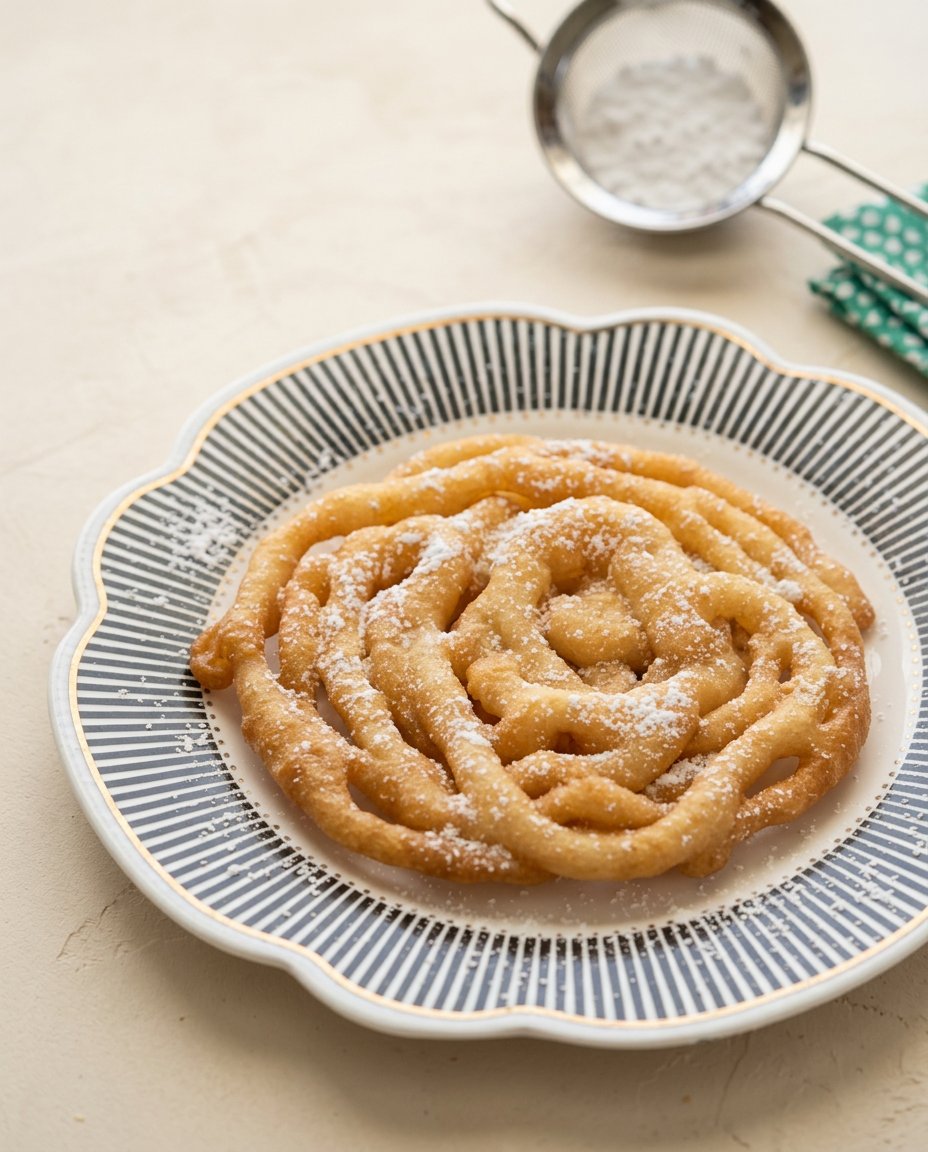
Cook the initial side for precisely sixty seconds until the bottom is a pale golden hue and the top bubbles have set. Slide a wide, flat slotted spatula or an offset palette knife underneath the disk and gently flip the pastry over to avoid splashing hot oil. Fry the second side for another thirty to sixty seconds, checking that the structure is rigid and uniform in colour. Lift the crisp disk from the oil, let the excess drain over the pan for five seconds, then transfer it to a paper towel-lined plate to cool slightly before dusting.
Pastry Bench Tips
Maintaining a steady oil temperature is critical because a drop of even fifteen degrees will cause the batter to absorb fat rather than seal. If your oil cools too much during piping, the exterior cannot gelatinise instantly, leading to a limp, grease-heavy pastry. Use a clip-on candy thermometer to monitor the temperature constantly, adjusting the flame slightly after each batch is removed.
Allow the hydrated batter to rest on the bench for exactly three minutes before piping to let the starches fully swell. This brief resting window helps the chemical leaveners initiate gas production, creating microscopic pockets that expand during frying. Skipping this rest results in ribbons that lack the delicate, airy interior texture that makes this recipe so satisfying.
If your funnel cake disintegrates into disjointed drops when it hits the oil, here is why and how to fix it: the batter is too thin or the oil temperature is too low. To correct this, whisk in one to two tablespoons of dry mix to restore the ribbon stage viscosity, and verify that your oil has returned to 350 degrees Fahrenheit. Testing a tiny drop of batter beforehand will show you if the structure is ready to hold together.
To create smaller, bite-sized portions instead of a single large disc, you can apply this exact technique to make classic funnel cake bites. Smaller drops fry much faster, requiring only forty seconds per side to reach their golden, airy state. Adjusting the portion size is an excellent way to feed a crowd without slowing down your production line.
For those seeking a deeper understanding of oil heat-retention dynamics, reviewing these expert frying instructions provides exceptional scientific clarity. Understanding how physical mass affects the heat-transfer rate of various oils helps prevent the grease-logging that ruins fried doughs. Applying these principles guarantees your homemade pastry achieves the same crispness as professional carnival vendors.
Dust the confectioners’ sugar onto the pastry while it is still warm, but not immediately after lifting it from the oil. Waiting approximately ninety seconds allows the surface steam to escape, preventing the fine sugar from melting into a wet glaze. A small, fine-mesh sieve is the best tool for distributing a thin, snowy layer evenly across the ridges.
Frequently Asked Questions
Can You Make Funnel Cake Out of Pancake Mix?
Yes, pancake mix is an excellent structural base for funnel cakes because it contains pre-formulated leavening agents and balanced flours. When hydrated correctly, the starches gelatinise rapidly in the hot oil, creating a crisp outer shell and a tender, hollow interior. This method bypasses the need to measure individual leaveners while maintaining pastry-shop quality.
How Do You Get the Batter to the Right Consistency?
The target consistency is the classic ribbon stage, which sits comfortably between a thin crepe batter and a thick cake batter. When you lift the whisk, the batter should flow in a continuous, heavy stream that leaves visible traces on the surface for three seconds before sinking. Adjust this by adding water or dry mix a single tablespoon at a time.
What Oil Temperature Is Best?
Maintaining the frying oil at exactly 350 degrees Fahrenheit is critical for achieving a crisp, non-greasy texture. If the oil is too cold, the batter will absorb fat and become soggy; if it is too hot, the exterior will burn before the interior fully cooks. Use a digital probe thermometer to monitor the heat constantly throughout the process.
How Do You Dispense the Batter Without a Funnel?
A disposable pastry bag fitted with a quarter-inch round nozzle provides the most precise flow control. Alternatively, a heavy-duty plastic freezer bag with one corner snipped to a matching width works exceptionally well. These tools allow you to direct the stream continuously without the dripping and spilling common with traditional metal funnels.
What Toppings Can You Put on a Funnel Cake?
While confectioners’ sugar is the classic choice, you can apply several considered finishes to suit your preference. A drizzle of warm dark chocolate ganache, fresh berry coulis, or salted caramel sauce offers a beautiful contrast to the crisp texture. For a seasonal approach, a light dusting of cinnamon sugar adds a comforting warmth.
How Do I Store Leftover Funnel Cake?
Fried pastries are highly sensitive to moisture and are best enjoyed warm within minutes of cooking. If you must store leftovers, keep them in a single layer on a cooling rack covered loosely with parchment paper. Reheat them in a 350-degree Fahrenheit oven for three to five minutes to restore their crisp outer shell.
Can I Make the Batter in Advance?
You can prepare the liquid emulsion and refrigerate the covered batter for up to twenty-four hours before frying. Note that the chemical leaveners will lose some of their potency over time, resulting in a slightly denser crumb structure. Give the rested batter a gentle whisk to restore homogeneity before pouring it into your piping bag.
Considered Adjustments
To introduce a rich, bitter complexity that balances the sweetness, you can whisk one tablespoon of Dutch-process cocoa powder into the dry mix. This adjustment requires an additional tablespoon of water to compensate for the drying properties of the cocoa solids. The resulting dark pastry pairs exceptionally well with a simple dusting of powdered sugar and a side of strong espresso.
For an aromatic, warming alternative, you can incorporate ground cinnamon, nutmeg, and ginger directly into your batter. This approach is reminiscent of our comforting pumpkin spice funnel cake recipe, which uses spices to balance the sweet profile of the fried starch. The warm spices react beautifully with the high heat of the oil, releasing their volatile oils just as the outer crust sets.
Adding the finely grated zest of one organic lemon or orange directly into the wet ingredients provides a brilliant top note that cuts through the richness of the fried batter. Verify the zest is grated very finely on a microplane so it passes smoothly through your piping nozzle without causing blockages. This small modification adds a refreshing, clean finish to the classic sweet profile.
Serving the Structure
Plating a freshly fried pastry requires immediate attention to retain the crispness of the outer shell. Set the warm disk on an elevated, wire cooling rack covered with a single layer of parchment paper to let any residual steam escape from the underside. This technical step prevents the bottom from becoming soft and damp while you dust the top with sugar. Serve each portion on a pre-warmed ceramic plate alongside a small pitcher of warm maple syrup or fruit coulis.
For an elevated dessert experience during a weekend gathering, pair this dish with a scoop of high-quality vanilla bean ice cream. The extreme contrast between the hot, crunchy pastry and the cold, melting emulsion of the cream is highly satisfying on the palate. If you are looking for a simpler preparation with fewer components, our 3 ingredient funnel cake provides a similar texture with minimal pantry items. Regardless of the toppings you choose, serving the pastry immediately after frying is the golden rule of dessert presentation.
Final Notes
Mastering the mechanics of frying transforms a simple breakfast staple into an elegant, satisfying dessert. By respecting the precise ratios of water to starch and maintaining a steady oil temperature, you control the texture completely. We prove that structure is what makes the melt possible, turning a casual kitchen experiment into a refined baking habit.
We encourage you to set up your frying bench this weekend and experience the transformation of these basic components yourself. Share your beautifully golden results with our baking community and let us know how your crispy ribbons turned out. If you want to compare this method to more traditional fair recipes, examine our guide on the classic carnival funnel cake to deepen your pastry knowledge.
To stay updated on our latest technical baking guides and pastry experiments, follow us on Pinterest, join our discussions on Facebook, or watch quick demonstrations on TikTok. We love seeing your progress and supporting your journey toward sweet precision on the bench.