Gelatinisation represents the precise moment starch granules absorb liquid and swell, a technical threshold that dictates the structural integrity of this Peach Cobbler Layer Cake.

Achieving a multi-tiered dessert that mirrors the rustic charm of a cobbler requires more than just flavor; it demands a calculated approach to crumb density and fruit moisture. This Peach Cobbler Layer Cake employs a cornmeal-fortified sponge to provide the necessary tension against a weighted peach filling. By roasting the fruit before assembly, we control the water activity to ensure the layers remain distinct and the structure holds under its own weight. Structure is what makes the melt possible.
What Makes the Peach Cobbler Layer Cake Texture Right
Prep: 60 min · Serves: 12 · Difficulty: Advanced
- Cornmeal provides a distinct and sturdy crumb structure.
- Roasted peaches ensure a concentrated and stable filling.
- The cobbler topping adds a necessary crunch layer.
- Buttermilk creates a tender yet very reliable sponge.
- Precision weights ensure every single layer stacks perfectly.
Investing time in the southern peach cake method ensures the crisp shell protects the creamy interior.
Get The Full Cake Recipe
Print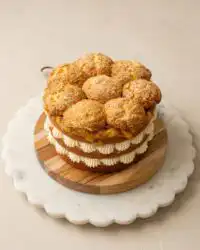
Peach Cobbler Layer Cake
- Total Time: 140 mins
- Yield: 12 servings
- Diet: Vegetarian
Description
This sophisticated layer cake combines a sturdy cornmeal-fortified sponge with a concentrated roasted peach filling. Designed for structural integrity and texture, it features a crisp cobbler-inspired topping that provides a perfect contrast to the tender, buttermilk-rich cake layers.
Ingredients
- 4.5 cups all-purpose flour
- 1.5 cups cornmeal
- Sugar (to taste)
- Baking powder
- Salt
- Buttermilk
- Eggs
- Lemon zest
- Vanilla extract
- Unsalted butter
- Fresh peaches
- Liquid pectin
- Lemon juice
- Whipping cream
Instructions
- Prepare the environment. Preheat your oven to 176 degrees Celsius and grease three 23-centimetre round cake pans, lining the bases with parchment paper.
- Combine dry ingredients. Weigh the flour and cornmeal, then sift together with sugar, baking powder, and salt to ensure even distribution.
- Emulsify the liquids. Whisk room-temperature buttermilk and eggs with lemon zest and vanilla until smooth, then incorporate into the dry mixture.
- Fold and bake. Pour the batter equally into the prepared pans and bake for 30 to 40 minutes until a probe emerges clean.
- Roast the fruit. Macerate peach wedges in sugar, strain the juice, and roast the fruit wedges at 176 degrees Celsius for 20 minutes to concentrate their texture.
- Develop the filling. Heat the reserved peach juice with liquid pectin and lemon juice, then toss with the roasted peaches and roast for an additional 20 minutes.
- Craft the topping. Mix flour, cornmeal, chilled butter, and cream into a dough, shape into a circle, and bake for 15 to 20 minutes until crisp.
- Assemble the cake. Level the cake layers, fill with the roasted peach mixture, and top with the baked cobbler disc for the final structure.
Notes
- Use a digital scale to ensure the ratio of cornmeal to flour remains consistent for a stable cake structure.
- Ensure the roasted fruit filling reaches room temperature before assembly to prevent it from softening the cake layers or melting the frosting.
- Clean your knife between every slice when cutting the cake to keep the peach filling from smearing against the sponge.
- Verify your baking powder’s effectiveness in hot water before starting to ensure the dense batter achieves a proper rise.
- Prep Time: 60 mins
- Cook Time: 80 mins
- Category: Dessert
- Method: Baking
- Cuisine: Southern
Weighed & Ready
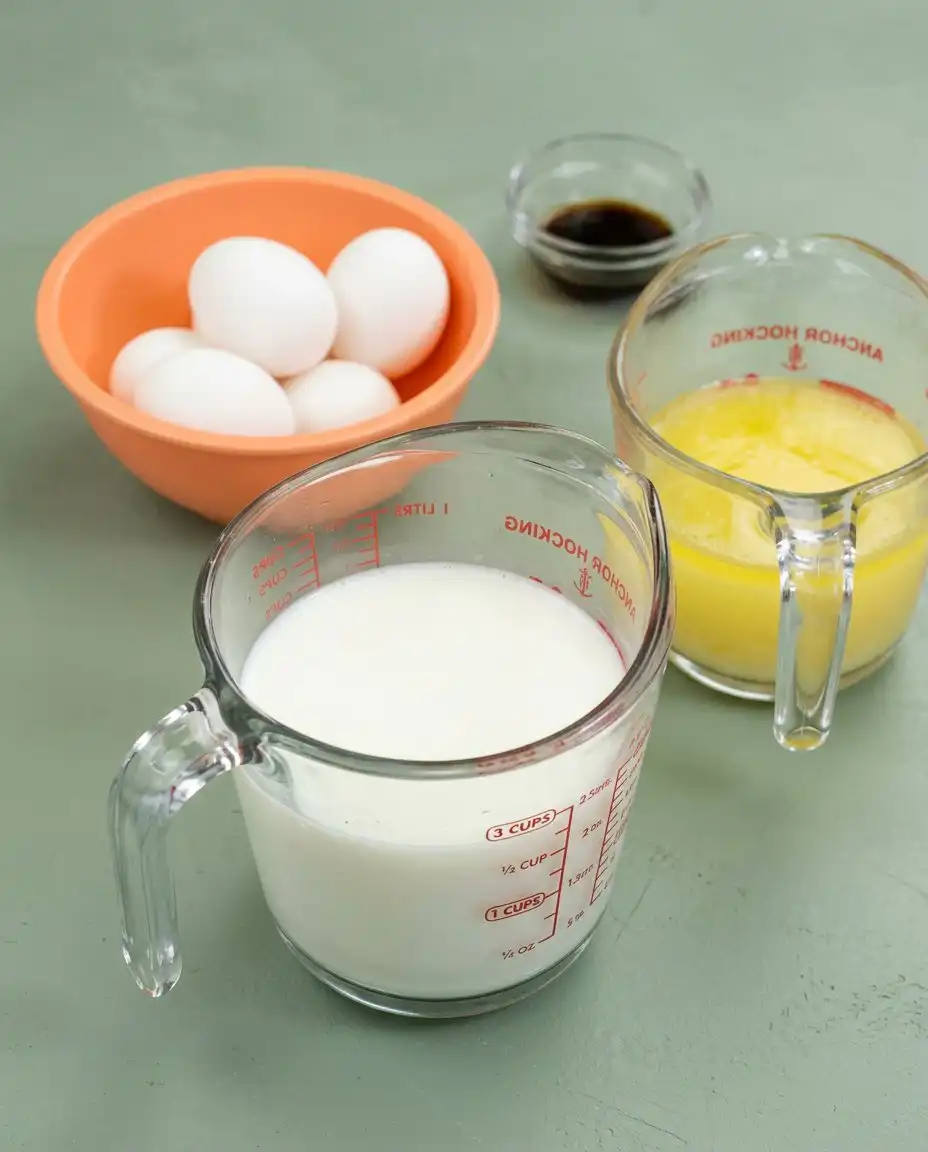
Success in pastry begins with the precise measurement of ingredients to ensure chemical reactions occur as intended. Every component in this recipe serves a specific structural or textural purpose, balancing the moisture of the fruit with the strength of the grain.
- All-purpose flour: This provides the gluten framework necessary to support the heavy fruit layers without collapsing.
- Cornmeal: The inclusion of cornmeal adds a specific toothsome grit that mimics the traditional cobbler base while reinforcing the cake walls.
- Buttermilk: The acidity reacts with the leavening agents to produce a tender crumb through controlled carbon dioxide release.
- Liquid pectin: This setting agent is vital for the peach filling, ensuring the juices do not migrate into the sponge and cause sogginess.
- Peaches: Fresh peaches are roasted to reduce water content and intensify the natural sugars before they are layered.
- Unsalted butter: Using butter with a high fat content ensures a rich mouthfeel and a stable emulsion in the batter.
| Ingredient | Why It Matters |
|---|---|
| Cornmeal | Adds structural tension and rustic texture |
| Liquid Pectin | Prevents fruit juice migration into the cake |
| Buttermilk | Tenderizes the crumb via acid reaction |
| Roasted Peaches | Concentrates flavor and manages moisture levels |
| Baking Powder | Provides the necessary lift for a dense batter |
From Bench to Bake
Step 1: Preparation of the Baking Environment and Equipment
Accuracy begins with the environment to ensure consistent thermal conduction across all layers. Preheat your oven to 176 degrees Celsius (350 degrees Fahrenheit) and grease three 23-centimetre round cake pans with precision. Line the bases with parchment paper to facilitate a clean release after the cooling phase, which prevents structural tearing.
Step 2: Sifting and Combining the Dry Structural Components
Place your digital scale on the bench and weigh 4.5 cups of all-purpose flour and 1.5 cups of cornmeal to ensure the ratio is exact. Sift these with the sugar, baking powder, and salt into a large bowl to aerate the mixture and remove any clumps. This step is critical for ensuring the leavening agents are distributed evenly, which prevents uneven rising during the bake.
Step 3: Emulsifying the Liquid Ingredients
In a separate vessel, whisk the room-temperature buttermilk and eggs until a complete emulsion is formed. The room temperature of these ingredients is vital; cold liquids can cause the melted butter to seize, resulting in a broken batter. Add the lemon zest and vanilla extract, ensuring the aromatic oils are fully incorporated into the liquid phase before joining the dry goods.
Step 4: Fold and Bake Your Peach Cobbler Layer Cake
Slowly pour the liquid emulsion into the dry ingredients while whisking steadily to avoid the formation of gluten pockets. Once the batter is cohesive, divide it equally among the three prepared pans to ensure even baking times across all tiers. Bake for 30 to 40 minutes, or until a probe inserted into the center emerges clean, indicating the internal structure has set.
Step 5: Preparing the Roasting Environment for the Fruit
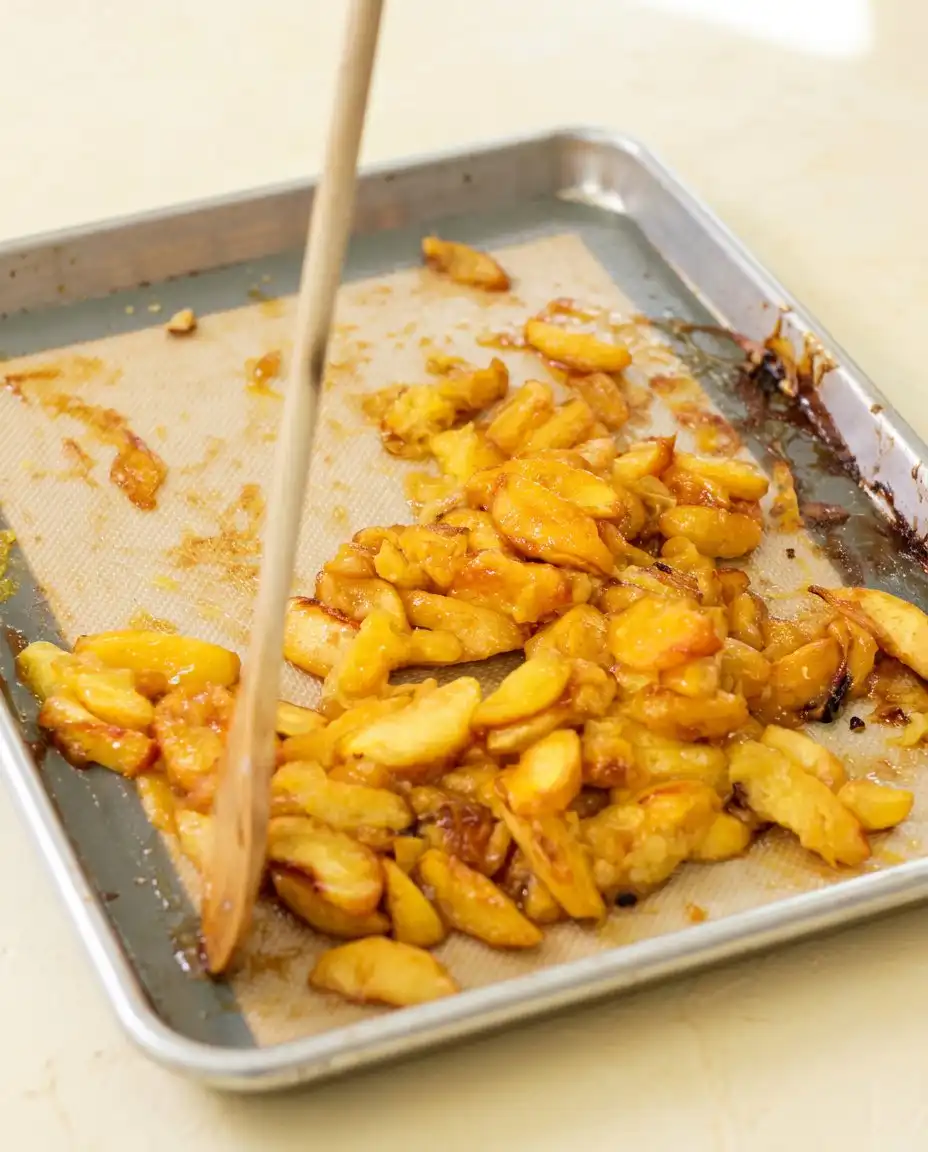
Toss the peeled and wedged peaches with sugar and allow them to macerate for 20 minutes to draw out excess moisture. Strain the fruit and reserve the juice, as this will be used to create the pectin-thickened syrup later in the process. Spread the wedges on a baking tray and roast at 176 degrees Celsius for 20 minutes to concentrate the cellular structure of the fruit.
Step 6: Developing the Pectin-Bound Filling
While the fruit roasts, combine the reserved juice with the liquid pectin and lemon juice in a small saucepan over low heat. Once the peaches have completed their first roast, toss them in this mixture and return them to the oven for another 20 minutes. This second roast allows the pectin to bond with the sugars, creating a stable filling that will not seep into the cake layers.
Step 7: Crafting the Textured Cobbler Disc
Prepare a single 23-centimetre pan by placing it upside down and greasing the exterior base to create a mold for the topping. Mix the flour, cornmeal, and chilled cubed butter until the mixture resembles coarse sand, then stir in the whipping cream. Scoop the dough into a circular flower pattern on the pan base and bake for 15 to 20 minutes until the exterior is golden and crisp.
Step 8: Final Assembly and Structural Alignment
Level the cooled cake layers using a serrated knife to ensure a flat surface for the fruit filling to rest upon. Spread a thin layer of your chosen frosting or cream between the cake and the roasted peach mixture to act as a moisture barrier. Place the baked cobbler disc on the final top layer, pressing gently to ensure it adheres to the structure without crushing the delicate crumb beneath.
Pastry Bench Tips
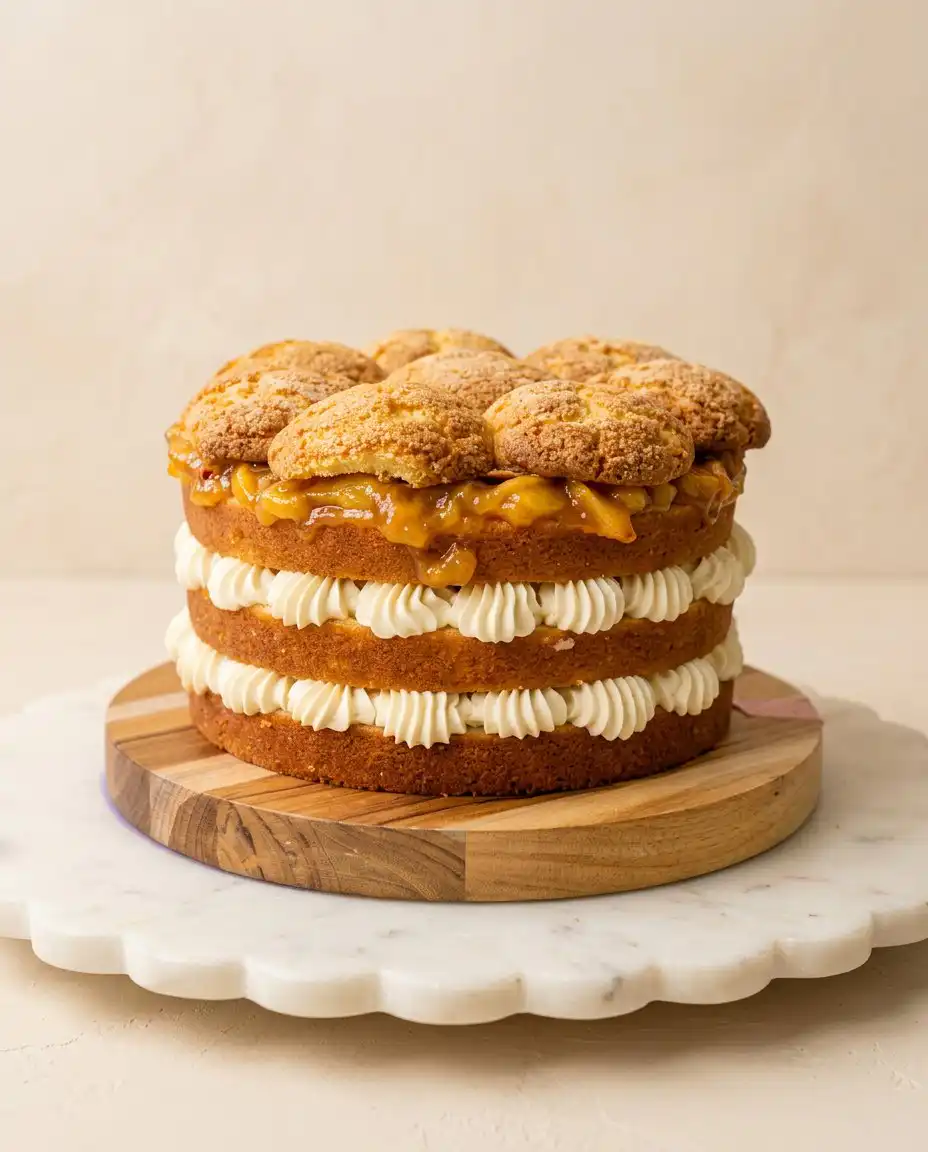
Precision for the sake of mouthfeel is best achieved by weighing every ingredient on a digital scale rather than using volumetric cups. This eliminates the variance caused by flour packing density and ensures the cornmeal ratio remains consistent across every bake.
If the peach filling is too runny, the pectin likely did not reach the required temperature of 100 degrees Celsius to activate properly. You must ensure the roasted peaches are tossed with the pectin mixture while they are still hot to trigger the thickening reaction immediately.
Temperature control is paramount when working with buttermilk and eggs; if these are added while cold, they will cause the melted butter to form small solids. This leads to an uneven crumb and may cause the cake to feel greasy rather than tender.
Utilizing an offset palette knife during the assembly process allows for greater control when spreading the fruit filling. This tool ensures the peaches are distributed in a level layer, which prevents the upper tiers from sliding or leaning during the setting period.
For those seeking a deeper understanding of fruit dynamics, reviewing balancing moisture in fruit-based cake fillings can provide further insight into sugar saturation. This technical knowledge prevents the common issue of bottom-layer compression in heavy fruit cakes.
Always allow the roasted peaches to cool to room temperature before placing them onto the cake. If the fruit is still warm, it will melt the surrounding frosting or fats within the cake, compromising the structural skin that protects the soft interior.
When preparing the fresh peach cake recipe, ensure your baking powder is fresh by testing a small amount in hot water. If it does not bubble vigorously, the leavening power is lost, and your dense cornmeal cake will fail to rise, resulting in a heavy, leaden texture.
Frequently Asked Questions
How do you peel peaches?
The most efficient technical method is the blanch and shock technique. Score a small ‘X’ at the base of each peach and submerge them in boiling water for exactly 30 seconds. Immediately transfer the fruit to an ice bath to stop the cooking process; the skins will then slip off without damaging the flesh beneath.
Can I halve this recipe?
Yes, but you must maintain the precise weight ratios for the leavening agents and cornmeal. When halving, use two smaller 15-centimetre pans instead of 23-centimetre pans to ensure the height of the layers remains consistent. Adjust the baking time by approximately 5 to 8 minutes, monitoring for internal temperature.
Why is my cake crumb gritty instead of tender?
This usually indicates that the cornmeal was too coarse or did not have enough time to hydrate in the buttermilk. Ensure you are using a fine-grind cornmeal and allow the batter to rest for ten minutes before baking to let the grains soften slightly. This produces a rustic texture that is toothsome rather than unpleasantly sandy.
Can I use frozen peaches for the filling?
Frozen peaches can be used if they are completely thawed and drained of all excess water before the roasting step. Note that frozen fruit often has a compromised cellular structure, so the roasting time may need to be increased to remove the extra moisture. The liquid pectin is even more critical here to prevent a soggy cake layer.
How should this cake be stored for maximum freshness?
Due to the high moisture content of the roasted fruit, the cake should be kept in an airtight container in the refrigerator for up to three days. Bring the cake to room temperature for at least 30 minutes before serving to allow the butter fats to soften. This ensures the mouthfeel is creamy rather than firm.
Why did my fruit filling sink into the cake?
This failure occurs if the pectin did not set or if the cake was too warm during assembly. If the fruit mixture was not fully cooled, it would melt the surface of the cake, allowing the wedges to migrate downward. Always ensure every component is at room temperature before you begin the stacking process.
Considered Adjustments
A common modification involves substituting the peach filling with nectarines, which possess a similar cellular density but a slightly higher acidity. This adjustment requires no change to the pectin levels but may benefit from a 5% reduction in added sugar to balance the natural tartness of the fruit.
For a faster assembly that maintains flavor integrity, the peach cobbler yellow cake mix method can be adapted. In this version, you still roast the fresh fruit to ensure the moisture levels do not compromise the pre-mixed dry components.
Incorporating browned butter into the cake batter can add a nutty depth that complements the toasted cornmeal notes. To do this, cook the butter until the milk solids turn amber, then cool it back to a liquid state before emulsifying it with the buttermilk and eggs.
Finishing & Plating
When serving this cake, use a long, thin serrated blade to cut through the crisp cobbler topping without crushing the layers below. Clean the blade between every slice to ensure the peach filling does not smear across the light-colored sponge, maintaining the visual distinction of the tiers.
A light dusting of powdered sugar over the cobbler disc just before serving adds a professional finish without adding excessive sweetness. This visual cue highlights the texture of the baked dough and provides a clean contrast against the deep orange of the roasted peaches.
Pairing a slice with the cream cheese peach cobbler pound cake elements can offer a varied dessert platter for large events. At the table, a small pour of chilled heavy cream or a scoop of high-fat vanilla bean ice cream complements the rustic grain of the cornmeal and the acidity of the fruit.

What the Technique Gives You
Mastering the Peach Cobbler Layer Cake requires patience and an appreciation for the structural mechanics of pastry. By treating the fruit filling as a controlled chemical set and the cake as a reinforced framework, you achieve a dessert that is both visually striking and texturally sophisticated. This method proves that precision for the sake of mouthfeel is always worth the additional steps on the bench.
As you assemble your tiers, remember that the 30-second window between a set filling and a runny one is determined by your attention to temperature. We encourage you to share your results and technical successes with our community of meticulous bakers. Following the peaches cream layer cake principles will further refine your skills in fruit-based cake construction.
Connect with us for more technical guides and pastry insights on Pinterest and Facebook. We look forward to seeing how your precision transforms these simple ingredients into a structured masterpiece.