A structural skin—a crisp shell of buttery streusel protecting a soft interior—requires rigid thermal precision to prevent the crumb from collapsing under its own weight.

This precise formulation for Carrot Cake Muffins with Streusel Topping demonstrates how controlled lipid distribution and starch hydration govern the final texture of high-moisture bakes. By balancing the high water output of freshly shredded root vegetables with a stable protein structure, we prevent the dense, sodden core that so often ruins home-baked muffins. A cold, heavy layer of streusel creates a calculated thermal barrier, encouraging the steam within the batter to lift the crumb before the top crust completely sets. The reward for your precision is a textbook contrast: an airy, spice-laden cake beneath a beautifully fractured, crisp crown.
Why Precision Pays Off Here for Carrot Cake Muffins with Streusel Topping
Prep: 15 min · Serves: 9 · Difficulty: Medium
Technical baking turns ordinary root vegetables into an architectural marvel of texture.
- Moisture balanced through precise resting times.
- Crisp structural crust from chilled butter.
- Unbroken cell structure prevents muffin collapse.
- Accurate lipid ratios ensure tender crumbs.
- Warm spices bloom through heated fats.
If you enjoy our carrot cake zucchini muffins, this precise formula will become your weekend standard. Weigh it, time it, trust it.
Get The Full Cake Recipe
Print
Carrot Cake Muffins with Streusel Topping
- Total Time: 2 hours 39 mins
- Yield: 9 large muffins
- Diet: Vegetarian
Description
These carrot cake muffins feature a moist, spiced crumb topped with a crisp, buttery streusel. By using precise measurements and chilled components, this recipe delivers professional-grade texture and flavor in every bite.
Ingredients
- 200g all-purpose flour
- 2 tsp ground cinnamon
- 1 tsp baking powder
- 200g light brown sugar
- 1 large egg
- 1 large egg yolk
- 120ml vegetable oil
- 1 tsp pure vanilla extract
- 200g freshly shredded carrots
- 90g all-purpose flour (for streusel)
- 1 tsp ground cinnamon (for streusel)
- 120g toasted chopped nuts
- 70g light brown sugar (for streusel)
- 70g warm melted unsalted butter
Instructions
- Sift dry ingredients. Sift 200g flour, 2 tsp cinnamon, and 1 tsp baking powder into a bowl, whisking to combine uniformly.
- Emulsify wet base. Whisk 200g sugar with the egg and yolk until the mixture is smooth and thickened.
- Integrate liquids. Drizzle in oil and vanilla while whisking, then fold in carrots and allow the mixture to rest for 10 to 15 minutes.
- Fold batter. Add the dry mixture to the wet, folding gently until just combined to avoid overworking the gluten.
- Chill the batter. Refrigerate the batter for 1 to 2 hours to allow for proper starch hydration and improved structural rise.
- Prepare streusel. Combine flour, cinnamon, nuts, sugar, and melted butter into a gravel-like texture and chill for 15 minutes.
- Assemble muffins. Preheat oven to 350°F, line a muffin pan, fill with batter, and top generously with the chilled streusel.
- Bake and cool. Bake for 20 to 24 minutes, rotating halfway, then allow the muffins to rest in the pan for 5 minutes before cooling on a wire rack.
Notes
- Ensure all eggs are at room temperature to prevent the fat from curdling during the mixing process.
- Use freshly shredded carrots instead of pre-packaged versions to maintain the correct moisture balance.
- Always use a kitchen scale to measure dry ingredients for the best structural results.
- Rotate your muffin tin halfway through baking to ensure even heat distribution and a consistent rise.
- Prep Time: 15 mins
- Cook Time: 24 mins
- Category: Baking
- Method: Oven-baked
- Cuisine: American
The Working Components
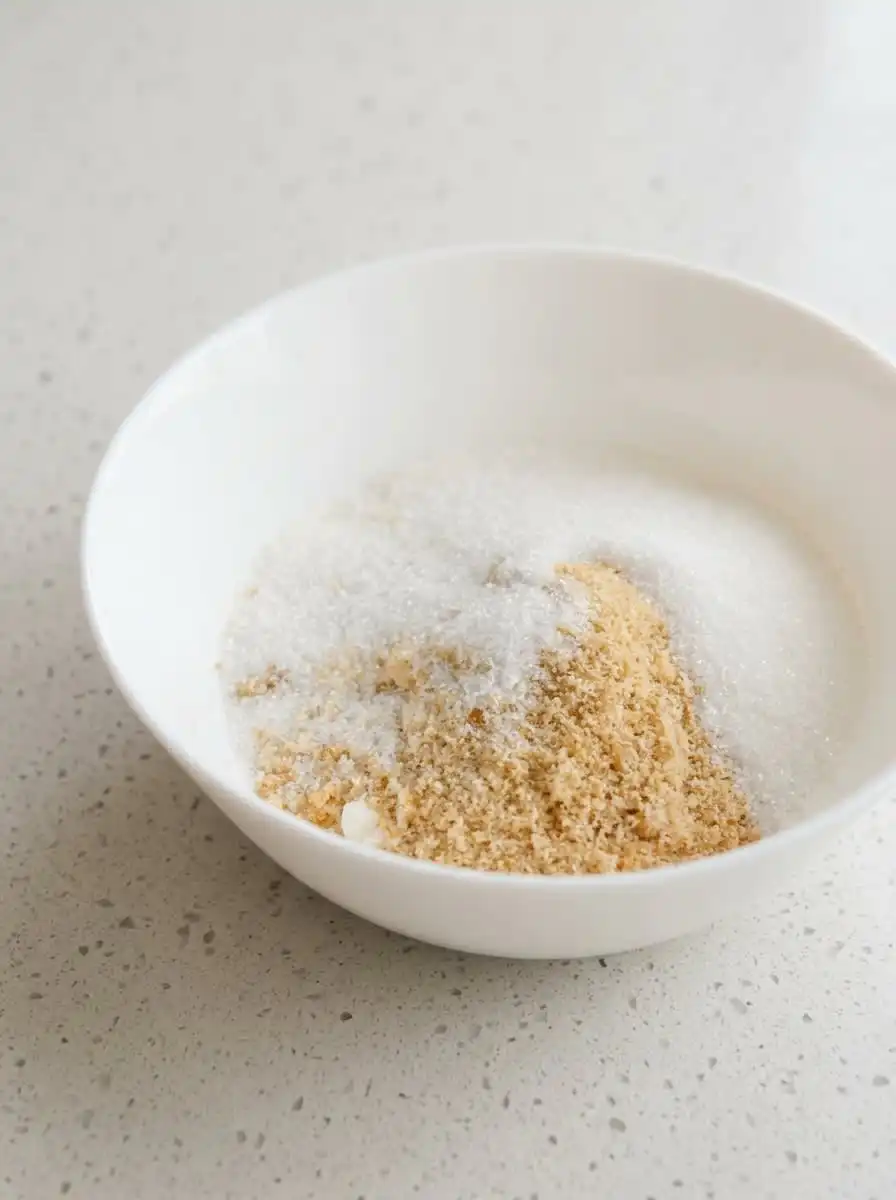
Understanding the chemical behavior of each ingredient is essential to achieving a balanced structure that tolerates high moisture. Every component in this formula serves a distinct structural or tenderizing purpose, preventing gluten overdevelopment while maintaining crumb integrity. We must weigh every gram precisely to manage the balance between hydration and structure.
- All-Purpose Flour (200g): Provides the gluten-forming proteins (approximately 11.5% protein content) necessary to build the structural walls that trap carbon dioxide during the bake.
- Freshly Shredded Carrots (200g): Adds moisture and natural sugars through starch gelatinisation, requiring a rested batter to absorb the raw vegetable water safely.
- Vegetable Oil (120ml): Coats flour proteins to inhibit excessive gluten development, delivering a reliable tenderness that remains soft even after cooling.
- Egg and Egg Yolk (1 Large + 1 Yolk): The white provides structural protein through coagulation, while the extra yolk contributes lecithin for emulsification and a rich crumb texture.
- Light Brown Sugar (200g in Batter, 70g in Streusel): Supplies sucrose for sweetness and molasses for hygroscopic moisture retention, keeping the crumb soft over time.
- Cold Unsalted Butter (70g): Forms the solid fat base for the streusel, creating distinct, crisp pockets of crumble as the water evaporates in the oven.
| Ingredient | Why It Matters |
|---|---|
| All-Purpose Flour | Establishes the structural network that prevents the muffin from collapsing under the weight of the carrots. |
| Vegetable Oil | Coats flour proteins to ensure a tender crumb that does not turn tough or dry. |
| Freshly Shredded Carrots | Delivers moisture and fiber, which soften the baked crumb when properly distributed. |
| Egg Yolk | Acts as an emulsifier, binding the liquid and fat components into a smooth, cohesive batter. |
| Unsalted Butter | Melts slowly in the streusel to form crispy, buttery crumbs that sit on top of the muffin. |
The Tested Procedure
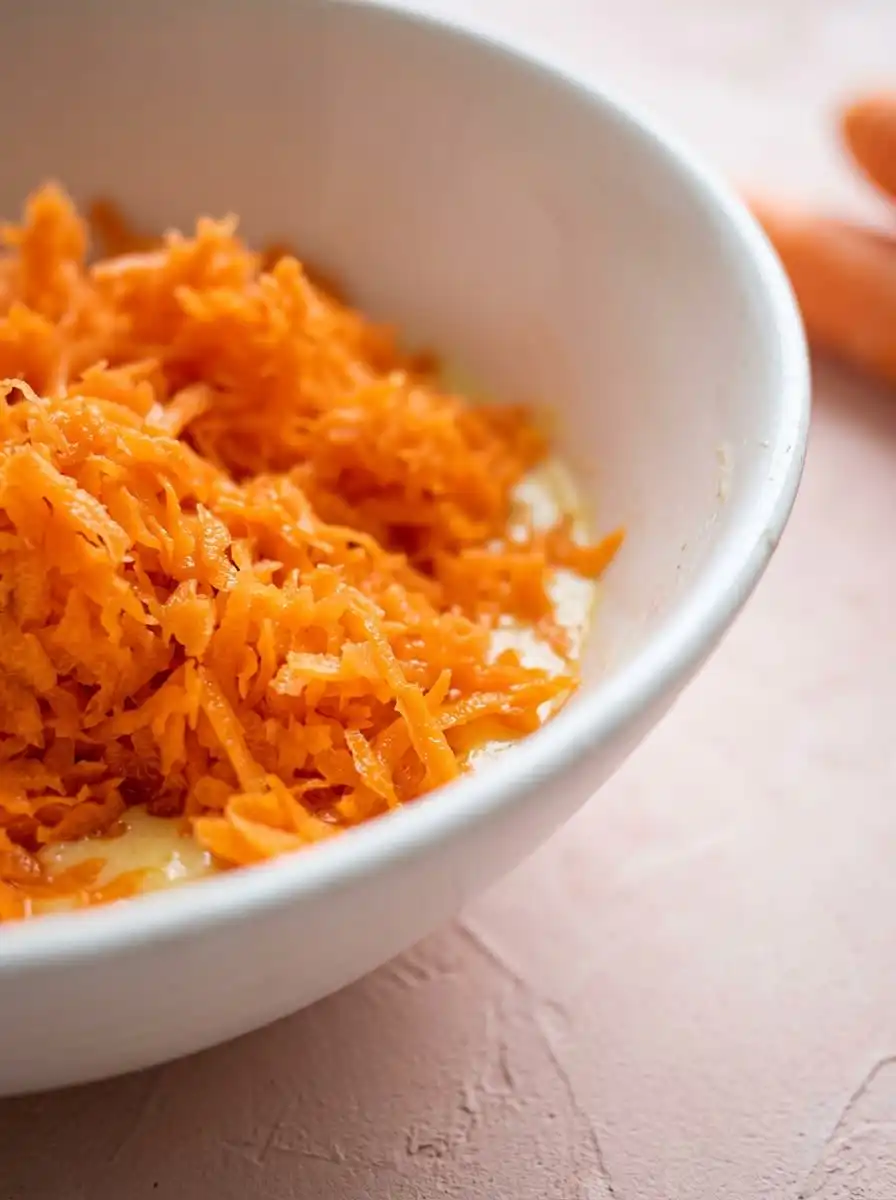
Step 1: Preparing the Dry Ingredients to Ensure Homogeneous Distribution
Sift 200 grams of all-purpose flour, 2 teaspoons of ground cinnamon, and 1 teaspoon of baking powder through a fine-mesh sieve into a medium mixing bowl. This process breaks up any compacted flour clumps and guarantees the chemical leavening agent is uniformly distributed throughout the starch molecules. Whisking dry components together briefly on the bench prevents uneven pockets of baking powder, which would otherwise cause localized, asymmetrical rising during baking. The mixture should appear completely uniform, with a pale tan hue and a light, aerated texture.
Step 2: Emulsifying the Sugars and Fats
In a separate, larger bowl, vigorously whisk together 200 grams of light brown sugar, one large room-temperature egg, and one large egg yolk until the mixture is cohesive. The mechanical action dissolves the sucrose crystals into the egg whites, initiating a weak emulsion that will later support the liquid fats. This stage is complete when the mixture is smooth and slightly thickened, falling from the whisk in a lazy ribbon stage that holds its shape for brief seconds. Room-temperature eggs are critical here, as cold proteins will reject the liquid fats and cause the mixture to curdle.
Step 3: Integrating the Structural Moisture Carriers
Gradually drizzle 120 milliliters of neutral vegetable oil and 1 teaspoon of pure vanilla extract into the egg mixture while whisking continuously to secure the emulsion. Once the liquid phase is glossy and stable, gently fold in 200 grams of freshly shredded carrots with a silicone spatula until they are thoroughly coated. Set this wet mixture aside on the bench for 10 to 15 minutes to allow the natural salts and sugars in the carrot cells to draw out moisture. This resting period verifies that the vegetable’s water is released into the sugar solution before the flour is added, avoiding starch oversaturation later.
Step 4: Hydrating the Flour Without Overworking
Pour the sifted dry ingredients into the wet carrot mixture, using a broad spatula to fold the components together only until the flour is hydrated. You must stop mixing the moment the dry flour pockets disappear, as excessive agitation activates the glutenin and gliadin proteins, making the baked muffin tough. The batter should look thick, somewhat lumpy, and saturated, with no visible streaks of dry flour remaining. A delicate touch during this step maintains a tender crumb structure, preserving the 30-second window between tender and tough, melted and seized.
Step 5: Chilling the Batter for Optimal Rise
Transfer the folded batter to the refrigerator to chill for 1 to 2 hours. This cold rest allows the starches in the flour to fully hydrate and the fats to slightly firm, which directly improves the height and dome of the baked muffins. As the starches swell, they build a more resilient cellular structure capable of holding the heavy carrot shred and the buttery streusel without sinking. You will notice the batter becomes visibly thicker, more cohesive, and slightly cold to the touch when ready for the oven.
Step 6: Constructing the Crisp Streusel Topping
While the batter is chilling, prepare the streusel by combining 90 grams of all-purpose flour, 1 teaspoon of ground cinnamon, 120 grams of toasted chopped nuts, and 70 grams of light brown sugar in a medium bowl. Drizzle 70 grams of warm melted unsalted butter over the dry mixture, using a fork to toss and press the ingredients together. Work the mixture with your fingertips until it forms a variable gravel-like texture with distinct, buttery clumps that hold their shape when squeezed. Chill this crumble mixture in the refrigerator for 15 minutes to firm up the butter, guaranteeing the topping remains crisp rather than melting into the batter.
Step 7: Assembling the Carrot Cake Muffins with Streusel Topping
Preheat your oven to 350°F (177°C) and line a standard muffin pan with paper liners. Retrieve your chilled batter and divide it evenly among the wells, filling them three-quarters full for 12 moderate muffins or all the way to the top rim for 9 large muffins. Distribute the chilled streusel generously over each portion, pressing it gently into the surface so it adheres to the raw batter. This firm contact makes certain the structural skin—a crisp shell protecting a soft interior—forms beautifully as the muffin rises.
Step 8: Baking with Thermal Control and Rotation
Place the pan on the center rack of your preheated oven and bake for 20 to 24 minutes, rotating the pan 180 degrees at the 10-minute mark to secure uniform heat exposure. Watch for the streusel to turn a deep golden brown and the muffin centers to spring back when touched lightly with a fingertip. Insert a metal cake tester or probe thermometer into the center of the middle muffin; it should come out clean or with a few dry crumbs, indicating the starches have completely set. Allow the baked muffins to rest in their pan for 5 minutes before transferring them to a wire rack to prevent steam buildup from making the bottom crust soggy.
Pastry Bench Tips
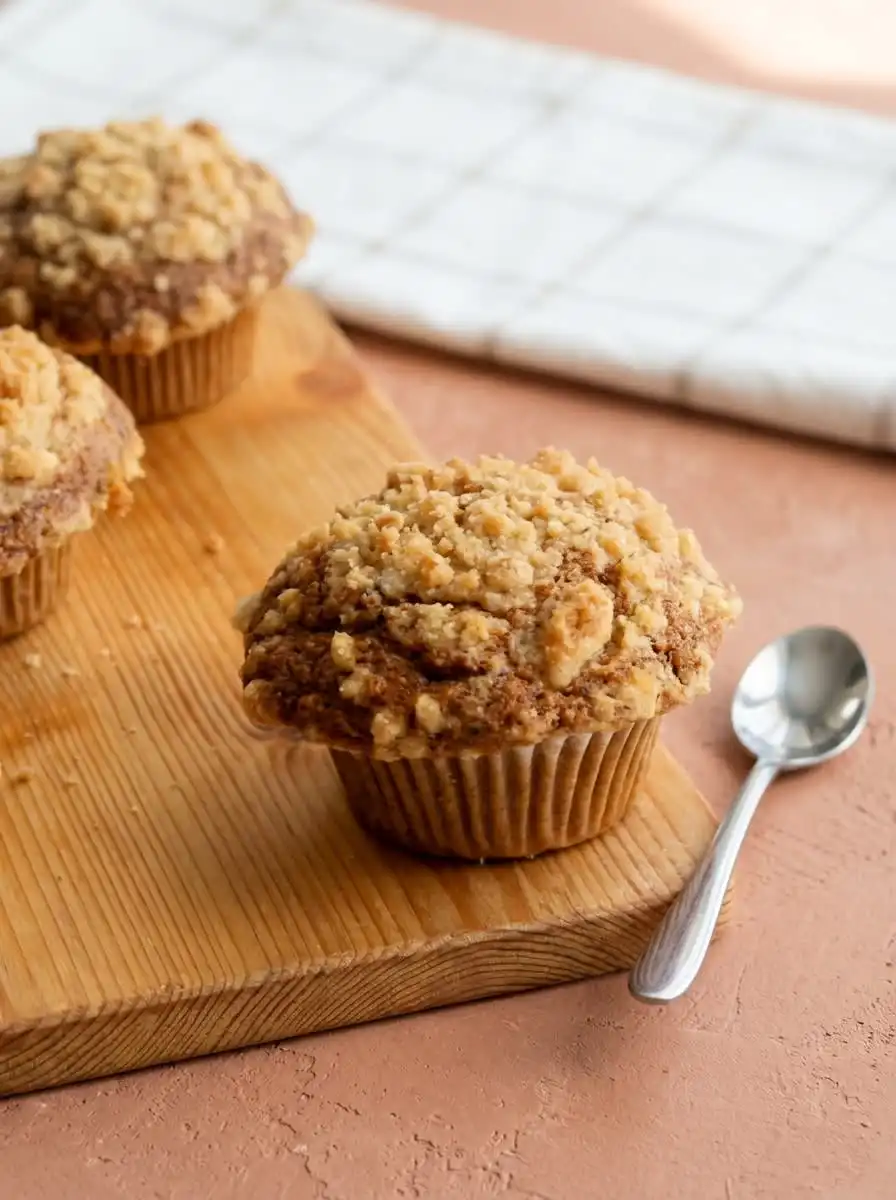
Invest in a digital scale to measure your ingredients by weight rather than volume. Flour density varies dramatically based on how it is packed, and even a 15-gram surplus of flour will yield a dry, bready muffin. Measuring by grams keeps the exact ratio of starch to fat intact, which helps guarantee a reliable rise.
Do not use pre-shredded carrots from the grocery store. These commercial products are treated with starch-binding agents and dehydrated to extend shelf life, meaning they will not release the essential moisture needed to soften the muffin crumb. Grate whole carrots on the medium holes of a box grater immediately before mixing to preserve their natural sugars and structure.
If your streusel melts into the muffins during baking, here is why and how to fix it. This failure occurs because the butter in the topping was too warm or the oven temperature was too low, causing the fat to liquify before the flour structure could set. Fix this by verifying the streusel is thoroughly chilled in the refrigerator before application, and verify your oven’s temperature with an independent thermometer.
If you plan to finish these pastries with a glaze, consider pairing them with our classic carrot cake cream cheese frosting piped elegantly onto the cooled streusel. Confirm the muffins are completely cooled to room temperature (below 72°F / 22°C) before applying any frosting, or the residual thermal energy will break the fat emulsion in the cheese and cause it to slide off.
Toast your chopped nuts at 325°F (163°C) for 8 to 10 minutes before adding them to the streusel. Toasting initiates the Maillard reaction, developing deep aromatic compounds and removing moisture so the nuts stay wonderfully crisp under the baking steam. Allow them to cool completely before mixing with the butter to avoid prematurely melting the streusel fat.
Use an external professional resource to understand how different lipids affect batter rise, such as this professional guide to balancing muffin moisture. Neutral vegetable oil remains liquid at room temperature, which guarantees that your baked pastries will feel soft to the palate even on the second day of storage.
Frequently Asked Questions
Should I use shredded carrots from the store or grate them myself?
You must always grate whole carrots yourself using a manual box grater or the shredding disk of a food processor. Store-bought shredded carrots are pre-dried and coated in starches to keep them separate in the bag, which prevents them from releasing the moisture needed to tenderize the muffin. Freshly grated carrots release natural juices during the resting phase, which is vital for hydrating the flour starches.
Should I use oil or butter in the muffin batter?
Vegetable oil is the superior choice for the batter because it remains completely liquid at room temperature, yielding a much softer and more tender crumb than butter. Butter contains water and solidifies when cooled, which can make oil-based quick breads feel dense and dry. We reserve the butter exclusively for the streusel, where its solidifying properties are required to form crispy, distinct crumbs.
Can I add mix-ins like raisins, pineapple, and nuts?
Yes, you can add up to 50 grams of mix-ins, but you must account for their moisture content to avoid ruining the muffin’s structure. Wet ingredients like crushed pineapple must be squeezed dry in a clean kitchen towel before being folded into the batter. Dry mix-ins like toasted nuts or desiccated coconut can be added directly, as they do not disrupt the delicate liquid-to-dry ingredient ratio.
Why did my streusel topping melt into the muffins?
This occurs when the butter in the streusel is too warm when the muffins enter the oven, or if the oven itself has not reached the correct baking temperature. When the oven is too cool, the butter liquefies and runs before the starch in the streusel flour can set its shape. Always chill your assembled streusel before topping the muffins, and use a reliable oven thermometer to confirm a true 350°F (177°C) bake.
Do these muffins need cream cheese frosting?
While these muffins are delicately balanced and structurally complete with only the crunchy streusel, they can be treated as individual cakes. If you desire a richer finish, a small pipe of tangy cream cheese frosting provides an excellent acidic contrast to the sweet carrots. Confirm the pastries are completely cold before decorating to prevent the heat from melting the frosting emulsion.
How do I store carrot cake muffins properly?
Keep the cooled muffins in an airtight container at room temperature for up to three days, placing a sheet of paper towel at the bottom to absorb excess humidity. Avoid refrigerating them, as the cold environment accelerates starch retrogradation, which recrystallizes the starch molecules and makes the crumb feel stale. If you wish to store them longer, wrap them individually in plastic film and freeze them for up to two months.
Considered Adjustments
For a deeper, more resinous spice profile, incorporate finely minced crystallized ginger or a pinch of ground cardamom into the flour mixture. This adjustment does not compromise the starch-to-fat balance, but adds a sharp, warm complexity that contrasts beautifully with the sweet carrot notes. If you want to compare how these spice profiles perform in a larger format, consult our structured carrot cake recipe for an alternative approach to cake chemistry.
You may introduce 50 grams of golden raisins or dried currants to the batter, but they must be hydrated first. Soak the dried fruit in hot water or orange juice for 15 minutes, then drain and pat them completely dry with a paper towel before folding them in. Unhydrated dried fruit will act like a sponge in your batter, drawing valuable moisture away from the starches and leaving the muffin dry.
Incorporating the finely grated zest of one organic orange into the sugar-and-egg mixture introduces bright, volatile oils that raise the warmth of the cinnamon. Rub the zest into the light brown sugar with your fingertips before whisking to release the essential oils through physical friction. This technique distributes the citrus flavor uniformly throughout the lipid phase of the batter without altering the overall hydration level.
Finishing & Plating
Serve these pastries slightly warm, ideally within two hours of baking when the streusel retains its maximum crispness. The contrast between the shattered, buttery topping and the soft, spiced crumb is most distinct at a temperature of approximately 100°F (38°C). If you are preparing these for a morning gathering, heat them in a 300°F (149°C) oven for 5 minutes to refresh the crust without drying out the interior.
For an elegant presentation, place each muffin on a small ceramic plate alongside a butter knife and a small dish of salted cultured butter. The salt in the butter cuts through the rich molasses of the brown sugar, heightening the earthy sweetness of the carrots and the warmth of the cinnamon. If you appreciate the aesthetic of classical pastry illustration, consider decorating the serving tray with small marzipan details, similar to the techniques showcased in our marzipan carrot topped cake.
Accompany these spiced bakes with a carefully brewed black tea, such as an Assam or a smoky Earl Grey. The astringency and tannins of the tea cleanse the palate of the rich lipids, preparing your taste buds for another bite of the textured streusel. Keep your workbench clear and serve with quiet confidence, allowing the technical precision of your bake to speak for itself.

What the Technique Gives You
Mastering the structural balance of a high-moisture batter is a significant milestone for any ambitious home baker. By respecting the resting periods and treating starch hydration as a vital chemical process, you create a muffin that avoids the common pitfalls of density and dampness. This systematic approach guarantees that every bake yields a stable, beautifully domed pastry with a crumb that melts beautifully on the tongue.
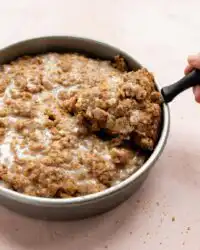
For those who wish to study the behavior of streusel further under different baking conditions, our classic streusel coffee cake offers a wonderful study of butter-to-flour ratios in larger cake structures. Apply these same principles of cold-fat integration to make certain your toppings always remain distinct, crunchy, and beautifully caramelized. With the correct weights and thermal controls, you can reliably reproduce these professional results on your own kitchen bench.
Share your baking successes with us and let us know how your textures turned out by posting your results on our social channels. Join our growing community of precision-minded bakers on Facebook or follow our technical process videos on TikTok for more pastry insights. You can also save this guide on Pinterest to keep this formula close at hand for your next morning bake.