During my early years training in a traditional British pastry kitchen, I learned that citrus is more than a flavour profile; it is a chemical participant in the baking process. This Key Lime Cake 2 represents a technical study in balancing high-acid juice with a stable crumb structure that refuses to collapse. By following a disciplined approach to aeration and emulsion, we create a cake that possesses both structural integrity and a delicate melt.

This particular method departs from the overly sweet, neon-green imitations found in many commercial bakeries. We focus instead on the authentic, tart profile of the fruit, supported by a velvety cream cheese frosting that provides the necessary fat to round out the palate. It is a sophisticated dessert for the baker who values precision over gimmicks.
Technical Mastery of Zest and Crumb
The victory of this recipe lies in its mouthfeel, achieved through a meticulously balanced ratio of fats and acids. Unlike standard sponges that can become tough when citrus is added, this version uses sour cream to provide a tenderizing lactic acid that softens gluten strands. You will appreciate the specific weight of the crumb—it is substantial enough to hold a thick layer of frosting while remaining remarkably light on the tongue. This is not just a cake; it is a demonstration of how precision in mixing times can produce a superior domestic bake.
Print
Key Lime Cake 2
- Total Time: 1 hour
- Yield: 12 servings
- Diet: Vegetarian
Description
This technically-driven Key Lime Cake 2 achieves a perfect balance between tart citrus notes and a sophisticated, tender crumb. Utilizing professional creaming methods and room-temperature ingredients, it results in a reliable, bakery-quality dessert finished with a velvety lime cream cheese frosting.
Ingredients
- 2 ⅔ cups all-purpose flour
- 2 ½ teaspoons baking powder
- ½ teaspoon baking soda
- 1 teaspoon salt
- 1 cup sour cream, room temperature
- ¾ cup unsalted butter, softened
- 1 ½ tablespoons lime zest
- ¼ cup lime juice
- ¼ cup vegetable oil
- ½ cup milk
- 1 teaspoon vanilla extract
- 2 ½ teaspoons lime extract
- Optional green gel food coloring
- 2 cups granulated sugar
- 3 large eggs
- 8 ounces full-fat cream cheese
- ½ cup unsalted butter, for frosting
- 4 cups confectioner’s sugar
- 1 teaspoon lime juice, for thinning frosting
Instructions
- Preheat the oven to 350°F (175°C) and coat a 13×9 inch glass pan with non-stick baking spray.
- Whisk the flour, baking powder, baking soda, and salt in a medium bowl until thoroughly combined.
- In a separate container, whisk together the sour cream, vegetable oil, lime zest, lime juice, milk, vanilla, lime extract, and optional green gel coloring.
- Cream the butter and sugar in a large bowl on high speed for 2 minutes using an electric mixer, then add eggs one at a time, mixing on medium for 20 seconds after each.
- Gradually integrate the dry and wet ingredients in five alternating additions, starting and ending with the dry mixture, mixing only until just combined.
- Pour the batter into the prepared pan and bake for 35-40 minutes until a toothpick inserted in the center comes out with a few moist crumbs.
- Transfer the pan to a wire rack and allow the cake to cool completely before applying frosting.
- Beat the room temperature cream cheese and butter until smooth, then mix in lime extract, salt, and confectioner’s sugar until a spreadable consistency is reached.
Notes
To prevent the frosting from thinning, ensure your cream cheese is slightly cooler than room temperature and the cake is entirely cold before application. For the most accurate crumb development, always weigh your flour or use the spoon-and-level method rather than scooping directly with a measuring cup.
- Prep Time: 20 mins
- Cook Time: 40 mins
- Category: Dessert
- Method: Baking
- Cuisine: American
The Technical Foundation
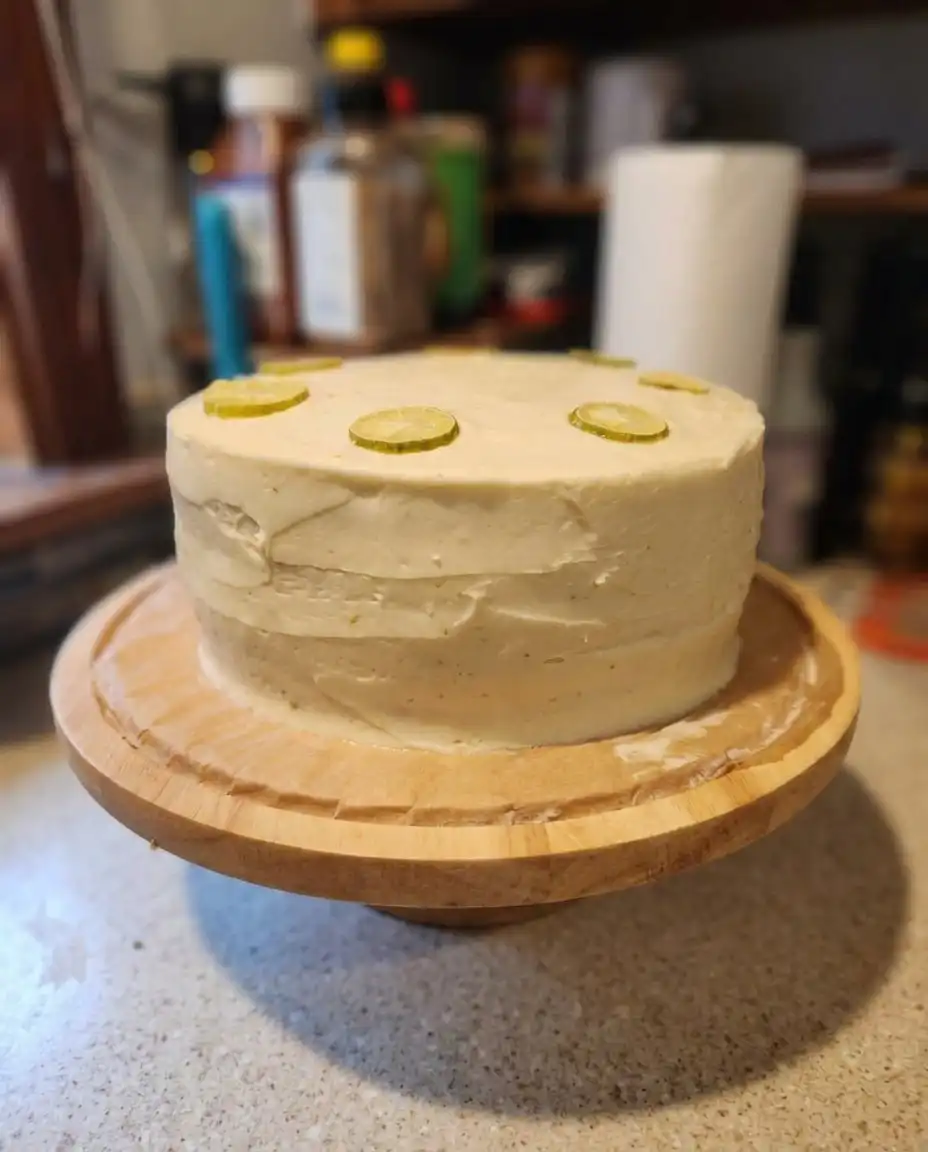
Every component in this Key Lime Cake 2 is selected for its specific contribution to the final structural outcome. Success begins with the quality of your fats and the accuracy of your measurements.
- All-Purpose Flour (2 ⅔ cups): Accuracy is paramount; spoon the flour into the cup and level it with a flat edge. Packing the flour leads to a dry, dense structure that lacks the intended melt.
- Leavening Agents: A combination of 2 ½ teaspoons baking powder and ½ teaspoon baking soda provides both lift and neutralization for the acidic lime juice.
- Sour Cream (1 cup): This must be at room temperature to maintain a stable emulsion. It contributes fat for moisture and acid for a tender crumb.
- Unsalted Butter (¾ cup): Ensure your butter is at 21°C (70°F) to allow for proper aeration during the creaming stage.
- Lime Components: We use both 1 ½ tablespoons of zest for aromatic oils and ¼ cup of juice for tartness. The addition of 2 ½ teaspoons of lime extract secures a consistent citrus depth throughout the bake.
- Cream Cheese (8 ounces): For the frosting, use a full-fat block. The structural stability of the frosting depends on the cheese being slightly cooler than room temperature to prevent thinning.
The Methodical Process
Step 1: Thermal Preparation and Pan Priming
Begin by preheating your oven to 350°F (175°C). Prepare a 13×9 inch glass pan by applying a thin, even layer of non-stick baking spray. This provides the necessary release for the delicate crumb while aiding in even heat distribution across the base of the cake.
Step 2: The Dry and Liquid Foundations
In a medium-sized vessel, whisk together the flour, baking powder, baking soda, and salt until the leavening agents are perfectly distributed. In a separate container, combine the sour cream, vegetable oil, lime zest, lime juice, milk, vanilla, lime extract, and optional green gel. This separation prevents premature chemical reactions and allows for a controlled integration later.
Step 3: Mechanical Aeration
In a large bowl, combine the butter and sugar. Using an electric mixer on high speed, cream the mixture for exactly 2 minutes. We are looking for a light, fluffy texture which indicates that air has been successfully trapped within the fat. Add the eggs one at a time, mixing on medium for 20 seconds after each addition to secure the emulsion. Scrape the bowl to guarantee no unmixed fat remains at the base.
Step 4: The Alternating Integration
This is the most critical technical stage. Add one-third of the dry mixture and mix on medium for only 10-15 seconds. Follow with half of the liquid mixture for another 10-15 seconds. Repeat this process, ending with the final third of the dry ingredients. This specific sequence prevents the proteins in the flour from over-developing, which would result in a rubbery texture. Stop mixing the moment the last streaks of flour disappear.
Step 5: The Bake and Thermal Stabilization
Pour the batter into the prepared pan and level the surface. Bake for 35-40 minutes. Test for doneness by inserting a toothpick into the center; it should emerge with a few moist crumbs. Transfer the pan to a wire rack and allow the cake to cool completely. Cooling is vital for the starch structure to set properly before frosting is applied.
Step 6: Constructing the Lime Cream Cheese Frosting
Beat the room temperature cream cheese and butter until smooth. Add the lime extract and salt, then gradually incorporate the confectioner’s sugar in two stages. If the consistency requires thinning, add lime juice one teaspoon at a time. The result should be a stable, spreadable medium that holds its shape. Spread the frosting evenly over the cooled cake surface.
Precision Secrets for the Perfect Bake
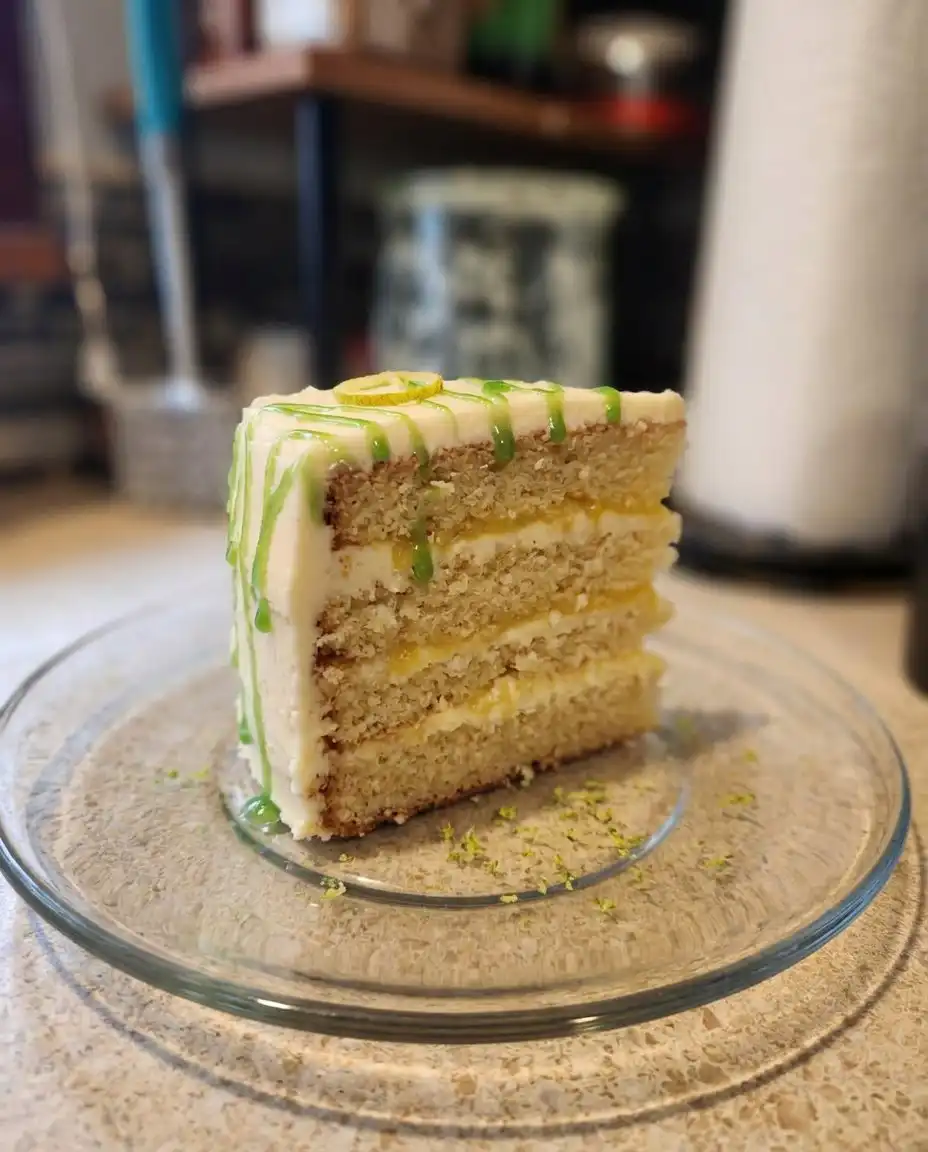
Temperature control is the difference between a professional result and a domestic failure. Always ensure your eggs and sour cream are at room temperature before you begin. Cold ingredients will cause the butter to seize, resulting in a broken emulsion and a greasy crumb. For more insights on balancing textures in bakes, review my guide on fruit cake to understand how moisture levels affect structural integrity. Furthermore, when adding the green gel food coloring, use a toothpick to add it incrementally; the goal is a soft pastel hue that suggests the fruit rather than a synthetic glow. If you find your cake rising unevenly, check that your oven is calibrated correctly using an external thermometer, as even a 10-degree variance can alter the crumb development. For further reading on scratch cake chemistry, this detailed resource provides excellent context on citrus interactions.
Advanced Structural Tweaks
If you wish to modify the presentation, this batter adapts well to a layered format. You can divide the batter between two 8-inch round pans, though you must reduce the baking time to approximately 25-30 minutes. Be sure to monitor the internal temperature to prevent drying out. For those seeking a different citrus profile, the lime extract can be replaced with lemon for a lemon rainbow cake variation that maintains the same excellent crumb structure. Another sophisticated modification involves adding a layer of graham cracker crumble between the cake and the frosting to introduce a textural contrast that mimics a traditional key lime pie. Simply pulse graham crackers with a touch of melted butter and sugar, then bake the crumbs separately before sprinkling them over the frosted surface.
Presentation and Textural Balance
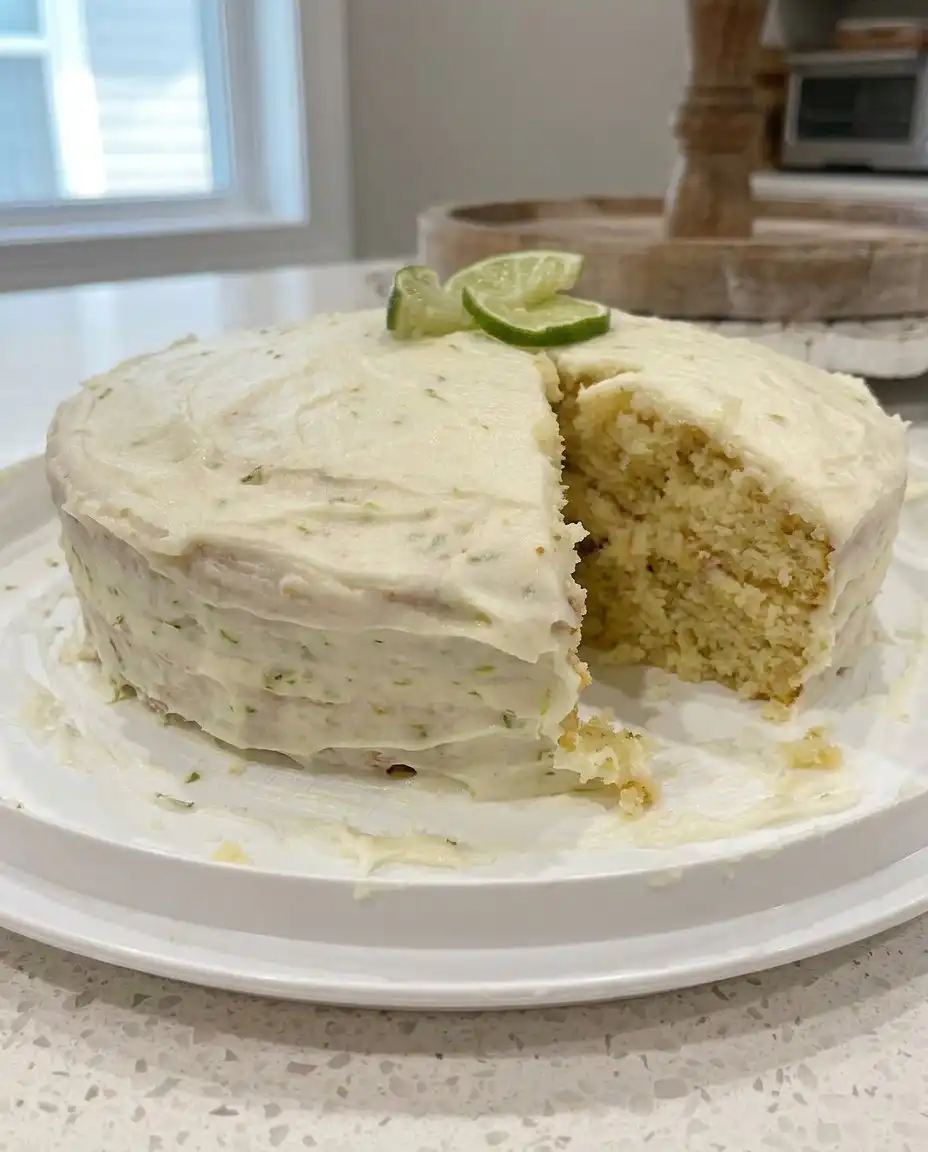
Because this cake contains a high proportion of butter, its texture is most receptive to the palate at room temperature. If the cake has been refrigerated, allow it to sit on the counter for at least 20 minutes before serving. This allows the fats to soften, providing that signature melt. For a formal presentation, serve a square slice alongside a dollop of unsweetened whipped cream to balance the tartness of the frosting. You might also consider a side of succulent fruit fusion to add a fresh, vibrant element to the plate. Use a sharp, thin-bladed knife dipped in hot water and wiped dry between each cut to produce the cleanest edges, showcasing the beautiful green hue of the crumb.
The Technical Truth
Mastering the Key Lime Cake 2 is a rewarding challenge for any baker who respects the science of pastry. By controlling your temperatures and honoring the mixing times, you produce a cake that stands as a testament to technical discipline. If you enjoyed the structural complexity of this bake, I highly recommend our raspberry white chocolate cake for your next project. For more pastry insights and to share your baking triumphs, please join our community on Facebook, Pinterest, and Instagram. Your journey toward pastry mastery is just beginning.